What is the Hotpoint Refrigerator CI error?#
CI on a Hotpoint refrigerator is an ice maker fault: no ice, hollow cubes, or the maker clicking without filling. Before assuming the ice-maker module has failed, know that CI often comes down to low water pressure at the fill valve rather than the module itself. Confirming water supply and pressure first saves many owners an unnecessary part.
CI on a Hotpoint Refrigerator: likely causes and repair cost#
On a Hotpoint Refrigerator, the CI code signals: ice maker fault.
| Likely cause | Typical likelihood |
|---|---|
| Ice maker module failure | Most common |
| Water inlet valve not filling | Common |
| Thermistor in ice maker failed | Less common |
Typical professional repair: $125–$300 · Difficulty: hard · usually a technician job
Symptoms that often accompany CI: No ice production; Partial or hollow ice cubes; Ice maker clicking but no water filling
Technician diagnostic sequence for CI:
- Power cycle the refrigerator for 60 seconds to reset the ice maker
- Verify the water supply line is connected and the valve is open
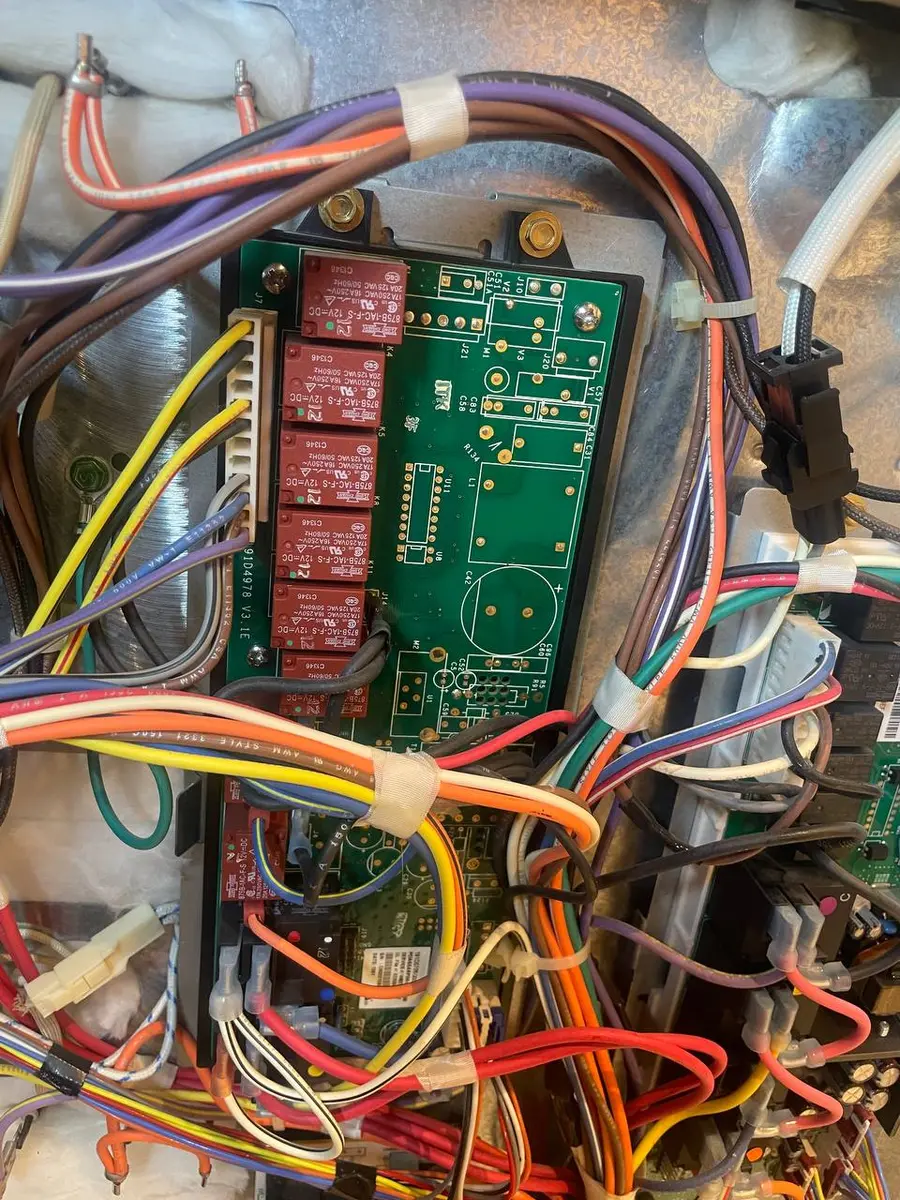
- Inspect the wiring harness between ice maker and main board for damage
- Check water inlet valve — run diagnostics or manually trigger a fill cycle
Parts a technician may check or replace: ice maker assembly; water inlet valve
Field note: CI often results from low water pressure to the ice maker rather than the module itself. Test water pressure at the valve — needs 20+ PSI for proper fill.
Do You Have the Right Tools?
Refrigerant gauges ($200+), vacuum pump ($250), leak detector ($150), and EPA-certified recovery equipment. Our technician arrives with $3,000+ in professional tools — your diagnostic is free.
Licensed & Insured · 90-Day Warranty · Same-Day Service
How to troubleshoot the CI error yourself#
Power-cycle the refrigerator for about a minute to reset the ice maker, then work the water side. Verify the supply line behind the unit is connected and its valve is fully open — a half-closed shutoff starves the fill. Inspect the wiring harness between the ice maker and the main board for obvious damage. The key check a technician makes is water pressure at the inlet valve: the maker needs roughly 20 or more PSI to fill properly, and a house below that will throw CI even with a perfect module. If the valve is not filling, it can be triggered through diagnostics or manually to see whether it opens. Only after water supply, pressure, and the harness check out do you look at replacing the ice-maker assembly.
Is the Hotpoint Refrigerator CI error worth fixing?#
CI is usually worth repairing, especially since the most common cause — low water pressure — costs nothing to correct. When parts are involved, the table above ranges a professional repair from $125–$300, covering the ice-maker assembly or the water inlet valve. Against a new refrigerator that is a modest figure, and an ice-maker fault does not touch the core cooling system, so the appliance itself is sound. I would only decline the repair if the fridge were old and the ice maker were one of several failing systems.
Safety First — Know the Risks
Refrigerant (R-134a/R-600a) requires EPA certification to handle. Improper discharge is a federal violation and health hazard. Our techs are licensed and insured — let them handle the risk.
Licensed & Insured · 90-Day Warranty · Same-Day Service
Hotpoint Refrigerator CI: frequently asked questions#
What does the CI error mean on a Hotpoint Refrigerator?#
It is an ice maker fault — no ice, partial cubes, or clicking without filling. Low water pressure or supply is a common cause, along with the module or inlet valve.
Is it safe to keep using a Hotpoint Refrigerator that shows the CI error?#
Yes. CI affects only ice production; the fresh-food and freezer cooling are unaffected, so you can use the refrigerator while you sort it out.
Can I clear the CI error myself, or do I need a technician?#
You can check the easy causes — reset the maker, open the supply valve fully, and inspect the harness. Testing the inlet valve and pressure or replacing the module is a technician task.
How much does it cost to repair the CI error on a Hotpoint Refrigerator?#
A professional repair runs $125–$300 per the table above. If the cause is a low-pressure supply, correcting that can cost nothing.
Which parts usually fail when a refrigerator throws the CI code?#
The ice-maker assembly and the water inlet valve are the parts a technician checks. Often the real issue is low water pressure rather than a failed part.
Is a Hotpoint Refrigerator with the CI error worth repairing?#
Usually yes. At $125–$300, and sometimes free if it is a supply issue, it is well under replacement and does not involve the sealed system.
Why does ice maker module failure trigger the CI error?#
The module and its fill valve must cycle water and freeze it on schedule. When the module or its water supply fails, the cycle stalls and the board posts CI.
Lead Appliance Repair Technician · 12 years experience
Experienced technician with 12 years specializing in washing machine and dryer repairs across all major brands.