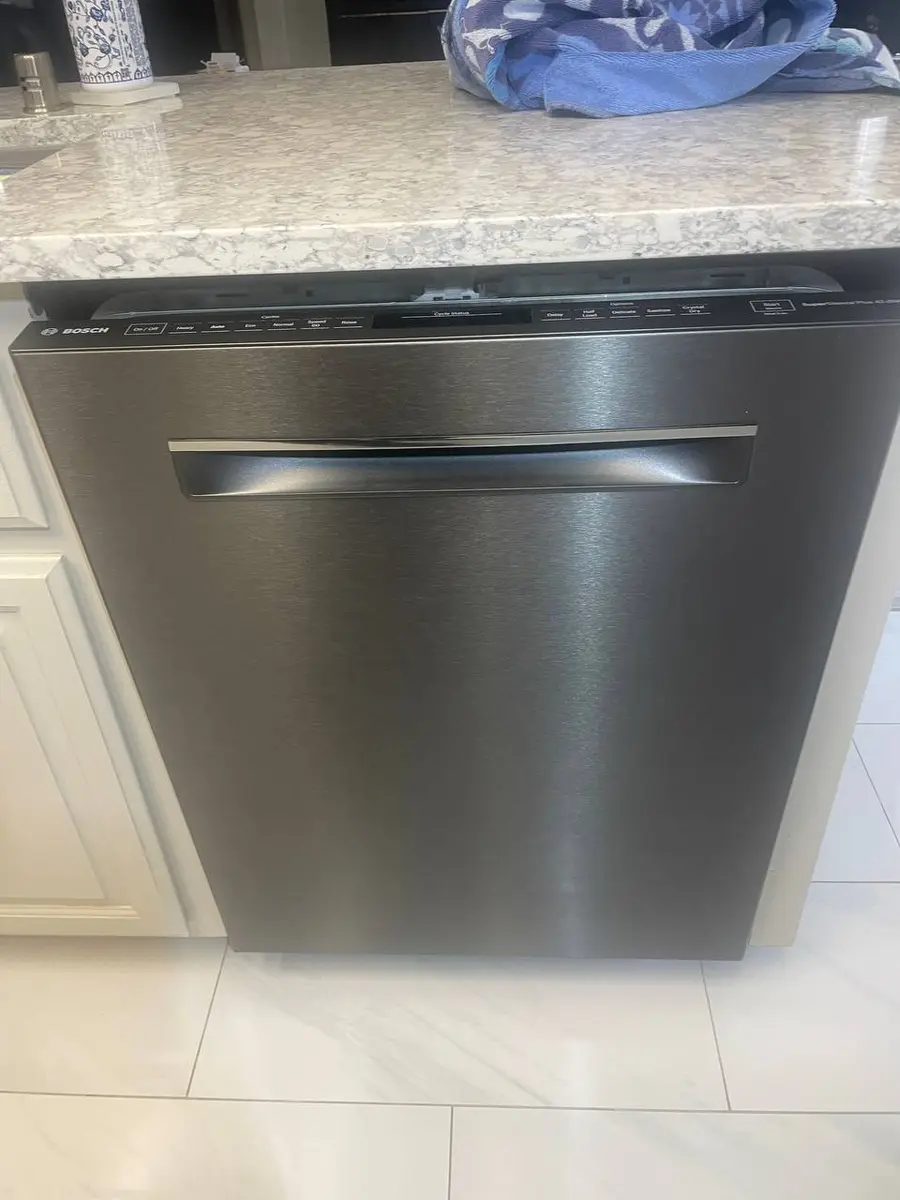
Hisense has entered the US dishwasher market with a growing lineup of full-size models that compete on features and price with established brands. Their dishwashers offer stainless steel tubs, adjustable racks, and multiple wash programs at price points typically varies by model and region below comparable Bosch, Samsung, or Whirlpool models. As with any newer brand in the US market, understanding error codes and troubleshooting is important since the service network is still developing. This guide covers every known Hisense dishwasher error code and provides practical repair guidance.
How Hisense Dishwasher Error Codes Work#
Hisense dishwashers use E and F error code prefixes displayed on the digital control panel. E-codes indicate sensor and mechanical component faults, while F-codes indicate electrical and communication issues. The control board monitors water fill, wash motor operation, drain performance, heating, drying fan operation, and door status throughout each cycle.
Reset procedure: Press and hold the Start/Cancel button for 3 seconds. If the code persists, turn off the circuit breaker supplying the dishwasher for 5 minutes, then restore power. Note: dishwashers are hardwired, so turning off the breaker is the equivalent of unplugging.
Do You Have the Right Tools?
Water pressure gauge ($60), spray arm tester, float switch multimeter ($85), and drain inspection camera. Our technician arrives with $3,000+ in professional tools — your diagnostic is free.
Licensed & Insured · 90-Day Warranty · Same-Day Service
E1 — Water Fill Timeout#
The dishwasher did not reach the required water level within the fill time limit (approximately 8 minutes).
Common causes:
- Water supply valve under the sink not fully open
- Kinked water supply line
- Clogged inlet screen filter (mineral deposits restricting flow)
- Failed water inlet valve solenoid
- Float switch stuck in the raised position (falsely indicating full)
How to fix:
- Check the supply valve under the kitchen sink — it must be fully open. This is the most common cause.
- Inspect the water supply line for kinks, particularly where it passes through the cabinet wall or behind the dishwasher.
- Turn off the supply valve, disconnect the supply line at the dishwasher end, and clean the inlet screen filter. Mineral deposits and sediment are common in areas with hard water.
- Check the float assembly inside the tub (small dome on the bottom, usually on the left). Lift it — it should move freely up and down. If stuck up, clean around and beneath the float.
- If mechanical checks pass, test the inlet valve solenoid with a multimeter — 500–1500Ω expected. Replacement valves cost varies by model and region.
E2 — Drain Error#
The dishwasher cannot pump water out after a cycle or between phases. Standing water remains in the tub.
Common causes:
- Clogged drain filter (food particles, grease, debris)
- Blocked drain hose or garbage disposal connection
- Failed drain pump motor
- Garbage disposal knockout plug not removed (new installations)
- Missing or inadequate high drain loop
How to fix:
- Clean the drain filter first. Remove the bottom dish rack and locate the cylindrical filter assembly at the bottom center of the tub. Twist counterclockwise, lift out, and rinse under running water. Scrub with a soft brush to remove grease and food residue. This single step resolves the majority of E2 codes.
- If connected to a garbage disposal, verify the knockout plug was removed during installation. Shine a flashlight into the disposal inlet — if a solid plastic disc is visible, it needs to be knocked out and retrieved.
- Check the drain hose for blockages — disconnect from the disposal or drain tailpiece and run water through it.
- Ensure the drain hose has a high loop (secured near countertop height under the sink) to prevent backflow.
- If everything is clear, the drain pump may need replacement (varies by model and region). Listen during the drain phase — the pump should produce an audible hum. Complete silence indicates motor failure.
Safety First — Know the Risks
Live 120V wiring in a wet environment is one of the most dangerous DIY scenarios. Water + electricity = serious shock risk. Our techs are licensed and insured — let them handle the risk.
Licensed & Insured · 90-Day Warranty · Same-Day Service
E3 — Water Heating Fault#
The heating element cannot raise the water temperature to the target level within the expected time, or the temperature sensor reports an abnormal reading.
Common causes:
- Burned-out heating element
- Failed temperature sensor (thermistor)
- Incoming water not hot enough (home water heater set too low)
- Heater relay failure on the control board
- Wiring issue to the heating element
How to fix:
- Check your water heater setting. Dishwashers perform best with incoming water at 120°F. Run the kitchen hot water faucet for 2 minutes before starting the dishwasher to prime the hot water line.
- Test the heating element: turn off the breaker, access the element terminals from underneath the tub. Measure resistance — a working element reads 10–30Ω. An open (OL/infinite) reading confirms the element is burned out.
- Visually inspect the element inside the tub for cracks, blistering, or discoloration.
- Test the thermistor — approximately 10kΩ at room temperature.
- Replacement heating elements cost varies by model and region. Professional installation runs varies by model and region.
E4 — Overflow / Flood Detection#
The flood sensor at the base pan detects water below the tub where it should not be. This is a critical safety alarm.
Common causes:
- Leaking door gasket
- Loose or cracked hose connection inside the unit
- Overfilling due to a stuck-open inlet valve
- Cracked tub (rare on newer units)
- Leaking water inlet fitting at the bottom of the unit
How to fix:
- Check the door gasket for tears, gaps, or food debris preventing a seal. Wipe clean and inspect for deformation.
- Turn off the breaker and water supply. Pull the dishwasher out from the cabinet and check underneath for water. Dry the base pan thoroughly.
- Inspect all internal hose connections — pump outlet, recirculation hose, and the water inlet fitting at the bottom.
- If the inlet valve is leaking, the fitting may need tightening or the valve replaced. If the tub is cracked, repair is typically not economical.
- Replacement door gaskets cost varies by model and region.
The Real Cost of DIY
Average DIY attempt: $150-400 in tools you may use once, plus the risk of further damage. Our diagnostic visit costs $0 — we find the problem and give you an honest quote.
Licensed & Insured · 90-Day Warranty · Same-Day Service
E5 — Wash Motor / Circulation Pump Error#
The wash motor that pumps water through the spray arms is not running or is not reaching the expected operating speed.
Common causes:
- Foreign object jamming the pump impeller (glass shards, bones, toothpicks)
- Failed wash motor (burned windings, seized bearings)
- Motor start capacitor failure
- Wiring issue to the motor
How to fix:
- Start a cycle and listen carefully after the fill stage. You should hear the wash motor engage and water spraying inside. If you hear only a hum (motor trying but unable to spin), something may be jamming the impeller.
- Remove the drain filter assembly and check the pump cavity below for debris. Small items like glass fragments, cherry pits, or broken plastic pieces can lodge in the impeller.
- If the motor is completely silent, check wiring connections.
- Test the motor windings — approximately 3–10Ω. An open reading indicates motor failure.
- Wash motors cost varies by model and region and require pulling the unit from the cabinet for access.
E6 — Rinse Aid Dispenser Fault#
The rinse aid dispenser is not opening during the rinse cycle or the dispenser motor/actuator has failed.
Common causes:
- Dried detergent or rinse aid residue jamming the dispenser door
- Failed dispenser motor or actuator
- Wiring fault to the dispenser assembly
How to fix:
- Clean the dispenser area thoroughly with warm water and a soft cloth. Dried residue frequently prevents the dispenser door from opening.
- Fill the rinse aid reservoir and run a cycle, watching through the door window (if equipped) to see if the dispenser opens during the rinse phase.
- If the dispenser remains stuck, the actuator motor inside the door panel may need replacement (varies by model and region).
- Note: This error does not prevent dishes from being washed — only the rinse aid will not be dispensed. Dishes may have water spots but will be clean. This is a lower-priority repair.
Don't Void Your Warranty
Opening your appliance yourself may void the manufacturer warranty. Our repair comes with a 90-day guarantee, and we document everything for warranty compliance.
Licensed & Insured · 90-Day Warranty · Same-Day Service
E7 — Door Latch / Switch Error#
The control board does not detect a properly closed and latched door.
Common causes:
- Door not fully closed and latched
- Broken or worn door latch
- Failed door switch (micro switch)
- Misaligned door relative to the tub opening
- Wiring issue to the door switch
How to fix:
- Close the door firmly until the latch clicks.
- Inspect the door latch at the top of the door for broken or cracked components. The latch must engage securely with the strike on the tub frame.
- Test the door switch with a multimeter — it should show continuity when the latch is engaged.
- If the door does not align properly (gaps visible when closed), adjust the dishwasher leveling legs and check the cabinet mounting brackets.
- Door latch assemblies cost varies by model and region.
E8 — Drying System Error#
The drying system (heated drying or fan-assisted drying) is not functioning. The specific component depends on the drying technology in your model.
Common causes:
- Drying fan motor failure (on fan-dry models)
- Heated dry element burned out (on heated dry models)
- Thermal fuse tripped (safety device protecting the drying circuit)
- Vent blockage restricting airflow
How to fix:
- Determine your model's drying method — heated dry (uses the bottom heating element) or fan-assisted dry (uses a separate fan and sometimes a dedicated heater).
- For heated dry models: the bottom heating element serves both wash heating and drying. Test per E3 instructions.
- For fan-dry models: listen during the dry phase for the fan motor. If silent, the motor may need replacement (varies by model and region).
- Check the thermal fuse — a one-shot safety device. If it has tripped (open circuit), replace it (varies by model and region) and investigate why it tripped (blocked vent, failed thermostat).
- Note: Like E6, this does not prevent washing. Dishes will be washed but not dried effectively.
Is It Worth Your Time?
Dishwasher issues overlap between drain pump, wash motor, inlet valve, and control board. DIY diagnosis averages 3-5 hours. Our technician diagnoses the issue in about 30 minutes — same-day appointments available.
Licensed & Insured · 90-Day Warranty · Same-Day Service
F1 — Control Board Self-Test Failure#
The main control board has detected an internal fault during its self-test routine.
Common causes:
- Power surge damage
- Failed capacitor, relay, or processor on the board
- EEPROM data corruption
- Water damage from a leak reaching the board
How to fix:
- Reset by turning off the breaker for 10 minutes.
- If F1 persists, the control board needs replacement. Access the board (behind the door panel or at the top of the inner door, depending on model) and inspect for visible damage.
- Hisense dishwasher control boards cost varies by model and region.
F2 — Communication Error#
The display board and main control board cannot communicate.
Common causes:
- Loose cable between boards
- Failed display or main board
- Connector corrosion
How to fix:
- Turn off the breaker and access both boards. Reseat all connectors.
- Inspect for burn marks or corrosion.
- Display boards cost varies by model and region. Main boards cost varies by model and region.
The Risk of Getting It Wrong
A wrong diagnosis often turns a simple fix into a costly replacement. Without proper diagnostic tools, you might replace the wrong part — or cause additional damage. Our free diagnostic eliminates the guesswork.
Licensed & Insured · 90-Day Warranty · Same-Day Service
F3 — Water Level Sensor Malfunction#
The water level sensor (pressure sensor) itself has failed — it is reporting inconsistent or no data.
Common causes:
- Failed pressure transducer
- Damaged or disconnected air hose from tub to sensor
- Sensor connector corrosion
How to fix:
- Check the pressure hose for kinks, holes, or disconnections. Blow through it gently — you should hear a click from the sensor.
- If the hose is intact, the sensor may need replacement (varies by model and region).
Hisense Dishwasher Maintenance Tips#
Regular maintenance prevents most error codes and extends the life of the machine:
- Clean the drain filter weekly (or after every 5–7 cycles). A dirty filter is the cause of most E2 and E5 codes.
- Spray arm inspection monthly: Remove the lower and upper spray arms (they usually twist off) and check the spray holes for clogs. Use a toothpick to clear any blocked holes.
- Door gasket cleaning: Wipe the door gasket monthly to prevent mold and ensure a good seal.
- Run the hottest cycle empty with vinegar monthly: Place 2 cups of white vinegar in a dishwasher-safe cup on the top rack and run a hot cycle. This dissolves grease and mineral deposits.
- Clean the exterior spray arm bearings: If spray arms wobble or do not spin freely, the bearing post in the center may have debris. Clean and lubricate.
Free Diagnostic Visit — Zero Risk
Our certified technician comes to your home, diagnoses the problem with professional tools, and gives you an honest quote — all at zero cost. No parts markup, no hidden fees. If you decide not to proceed, you pay nothing.
Licensed & Insured · 90-Day Warranty · Same-Day Service
Frequently Asked Questions#
Q: How do I reset my Hisense dishwasher? A: Press and hold Start/Cancel for 3 seconds. If the code remains, turn off the circuit breaker for 5 minutes and restore power. Most codes clear once the underlying problem is fixed and a successful cycle completes.
Q: My Hisense dishwasher is not cleaning well but shows no error code. What is wrong? A: Poor cleaning without an error code typically indicates clogged spray arm holes, a dirty drain filter restricting water recirculation, water temperature too low (run hot water before starting), too much or wrong detergent, or overloading the racks. Check all of these before suspecting a component failure.
Q: Where do I find parts for my Hisense dishwasher? A: Hisense dishwasher parts are available through Encompass Parts, RepairClinic, and Hisense USA customer support. Generic components (gaskets, heating elements, inlet valves) from major parts suppliers often fit Hisense models — verify by model number. Amazon carries common replacement parts from third-party manufacturers. Always use the exact model number when searching.
Q: Are Hisense dishwashers worth repairing? A: Hisense dishwashers retail for varies by model and region. Repairs a certain threshold (drain pump, inlet valve, door latch, heating element) are worth doing. Control board replacements (varies by model and region installed) are in the gray zone for units over 3 years old. If the repair cost exceeds 40–50% of replacement cost, buying new is usually more sensible, especially since newer models often include improved features and efficiency.
Q: How loud should a Hisense dishwasher be? A: Hisense dishwashers are rated at 44–52 dB depending on the model. If yours is noticeably louder than when new, check the wash motor bearings (grinding sound), spray arm spin (clicking), and drain pump (buzzing). A sudden increase in noise without an error code often precedes an eventual component failure.
When to Call a Professional#
Many dishwasher repairs require pulling the unit from the cabinet, which involves disconnecting water, drain, and electrical connections. Call a professional for:
- E5 wash motor replacement — Requires removing the dishwasher and working underneath in tight quarters.
- E4 with an unidentifiable leak — Leaks can originate from multiple points and may only appear during specific cycle phases.
- E3 heating element replacement — Involves electrical connections underneath the tub; improper work creates a shock hazard.
- F1 control board replacement — Model-specific wiring and incorrect installation can damage the new board.
- Any standing water under the dishwasher when pulled out — Water damage to cabinets and flooring gets expensive. Address leaks promptly.
Need help with a Hisense dishwasher error code? EasyBear technicians service all dishwasher brands, including Hisense. We offer free diagnostic visits — our tech will identify the root cause, provide transparent pricing, and complete most repairs in a single visit. Every repair is backed by our 90-day parts and labor warranty. Schedule your free diagnosis today.
Lead Appliance Repair Technician · 12 years experience
Experienced technician with 12 years specializing in washing machine and dryer repairs across all major brands.