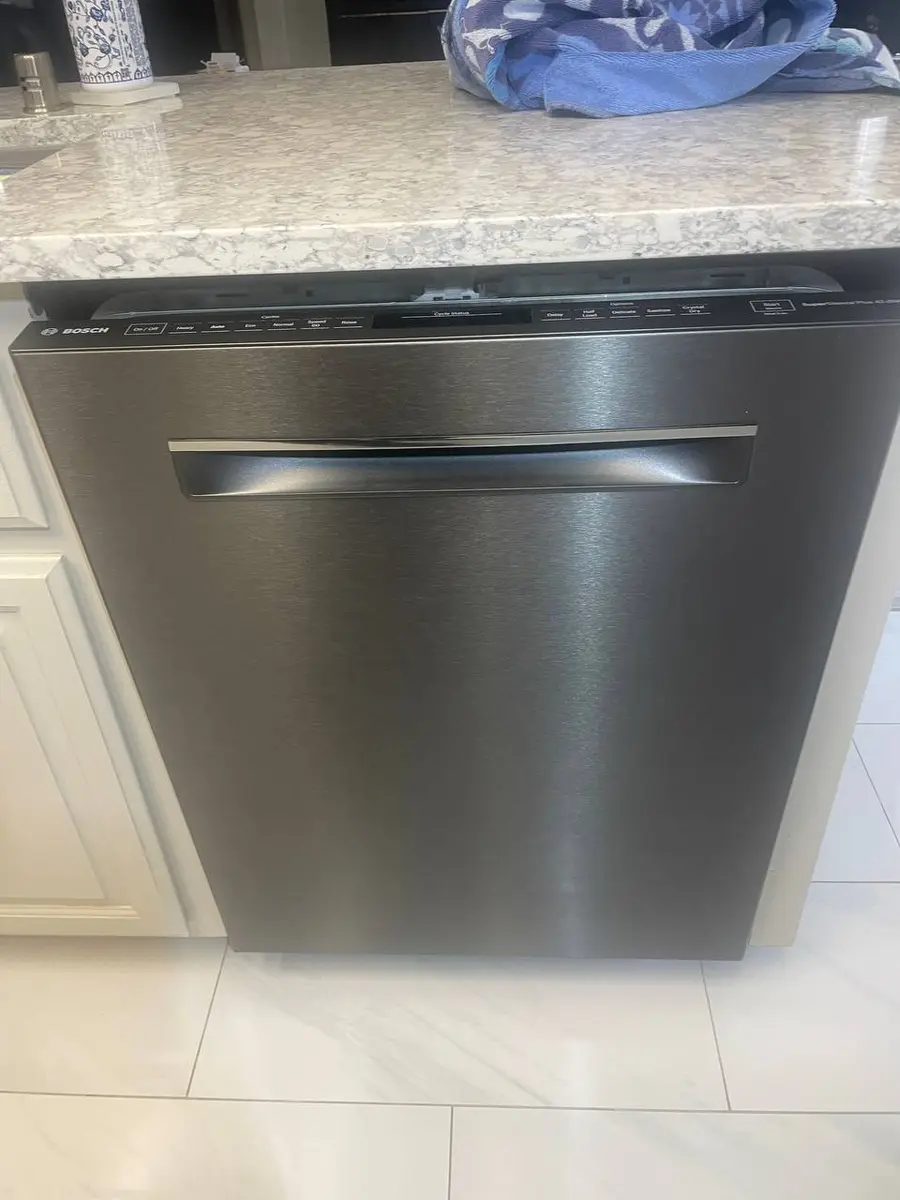
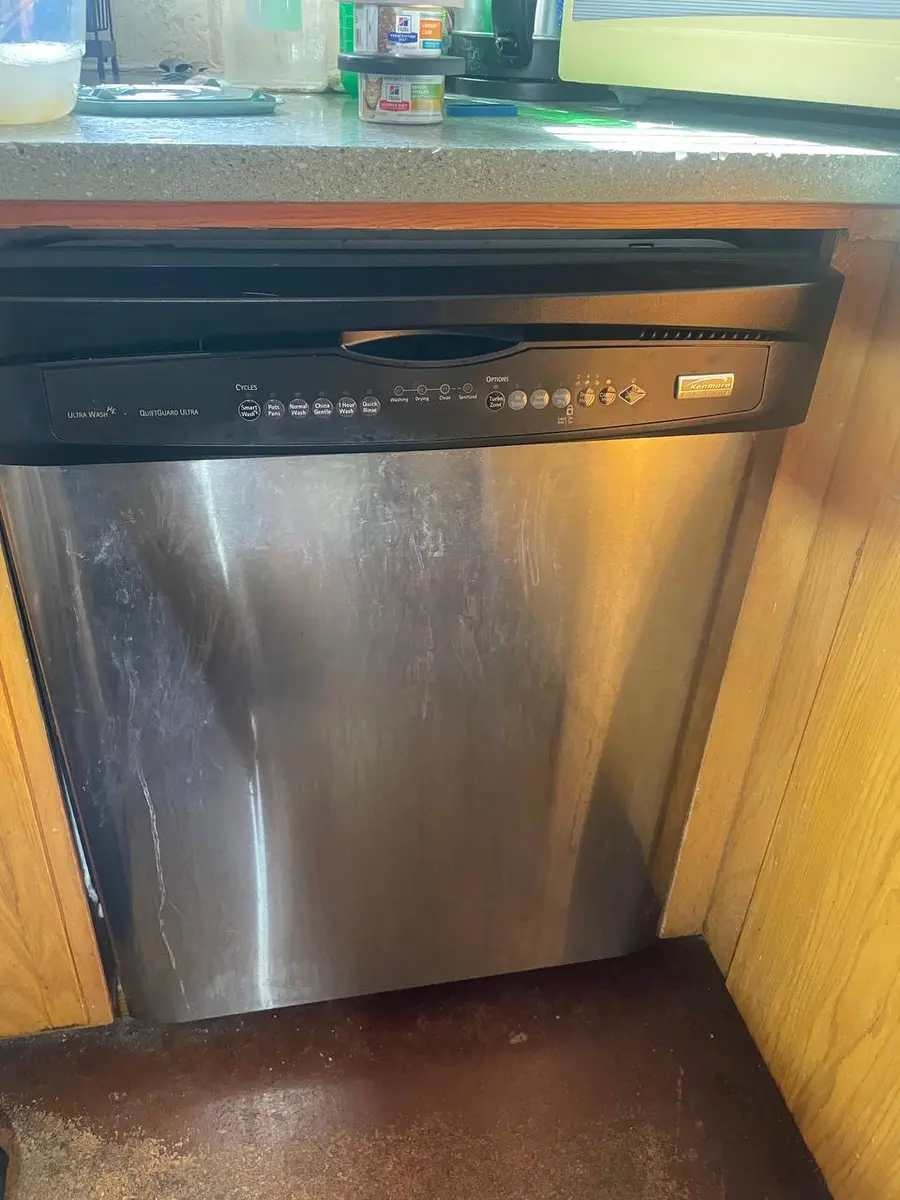
You press the start button, hear nothing, and your dishwasher sits there full of dirty dishes. A dishwasher that refuses to start is one of the most frustrating appliance failures because the cause could range from a tripped breaker to a failed control board. Before you start hand-washing everything, let's walk through the six most common reasons your dishwasher won't power on and what each fix actually involves.
1. Door Latch or Door Switch Failure#
The Problem: Every dishwasher has a safety interlock — the door latch assembly sends a signal to the control board confirming the door is sealed. If the latch mechanism is worn, bent, or the micro switch inside it has failed, the dishwasher will not start regardless of what buttons you press.
What to Check:
- Close the door firmly and listen for a definitive click
- Inspect the latch hook on the door for visible cracks or bending
- Check the strike plate on the tub frame for alignment issues
DIY or Pro: If the latch is visibly broken, replacement latches run varies by model and region for the part. Installation is straightforward on most Bosch, Whirlpool, and KitchenAid models — two screws hold the latch assembly to the inner door panel. If the micro switch behind the latch has failed, you'll need a multimeter to confirm continuity, and replacement involves disconnecting wiring harnesses.
Typical Cost: varies by model and region with a technician.
Do You Have the Right Tools?
Water pressure gauge ($60), spray arm tester, float switch multimeter ($85), and drain inspection camera. Our technician arrives with $3,000+ in professional tools — your diagnostic is free.
Licensed & Insured · 90-Day Warranty · Same-Day Service
2. Tripped Circuit Breaker or Blown Thermal Fuse#
The Problem: Dishwashers pull 10–15 amps during the heating cycle. A breaker that trips during a wash cycle is common in older Sacramento-area homes with 15-amp kitchen circuits. The thermal fuse — a one-time-use safety device mounted on the control board housing — blows if the unit overheats.
What to Check:
- Locate the dedicated dishwasher breaker in your panel (usually labeled)
- If the breaker trips repeatedly after resetting, you have an electrical fault — do not keep resetting it
- The thermal fuse is inside the door panel; you'll need to remove the inner door to access it
DIY or Pro: Resetting a breaker is simple. Replacing a thermal fuse (varies by model and region part) requires removing the inner door panel — manageable for a handy homeowner. If the breaker keeps tripping, call an electrician before calling an appliance tech.
Typical Cost: $0 for breaker reset; $90–$160 for thermal fuse replacement.
3. Defective Control Board#
The Problem: The main control board (PCB) is the brain of your dishwasher. Power surges, moisture intrusion, and age cause solder joints to crack or relays to fail. Common on Samsung and LG dishwashers after 5–7 years. Symptoms include no response from any button, random LED blinking, or partial cycle starts.
What to Check:
- Are any buttons responsive at all? Try holding the reset combination (varies by brand)
- Look for burn marks or corrosion on the board (requires opening the door panel)
- Check for error codes on the display, if equipped
DIY or Pro: Control board replacement is best left to a professional. The board itself cost varies by model and region depending on brand, and incorrect installation can damage wiring harnesses. For high-end models like Miele or Thermador, OEM boards can exceed $350.
Typical Cost: varies by model and region including labor.
Safety First — Know the Risks
Live 120V wiring in a wet environment is one of the most dangerous DIY scenarios. Water + electricity = serious shock risk. Our techs are licensed and insured — let them handle the risk.
Licensed & Insured · 90-Day Warranty · Same-Day Service
4. Failed Water Inlet Valve#
The Problem: Some dishwashers won't start the cycle if the water inlet valve doesn't open. The control board sends voltage to the solenoid; if the valve is stuck closed or the solenoid coil has burned out, the dishwasher detects no water fill and aborts the start sequence.
What to Check:
- Turn on the dishwasher and listen for a humming or buzzing near the bottom left (where the valve sits)
- Check that the water supply valve under the sink is fully open
- Look for kinks in the supply line
DIY or Pro: The valve itself cost varies by model and region and sits behind the lower access panel. Replacement involves disconnecting a water line and one electrical connector. Moderate DIY difficulty — watch for water spillage.
Typical Cost: varies by model and region with a technician.
5. Broken Start Button or Touchpad#
The Problem: Membrane touchpads on dishwasher doors degrade over time, especially in humid kitchen environments. The start button may require excessive pressure, respond intermittently, or not respond at all. On older models with physical buttons, the switch contacts inside the button assembly wear out.
What to Check:
- Try pressing other buttons — if none respond, the issue is likely the control board, not the touchpad
- If only the start button is unresponsive, the touchpad membrane is the likely culprit
- Look for moisture or condensation behind the outer door panel
DIY or Pro: Touchpad assemblies are often sold as a unit with the outer door panel overlay (varies by model and region). Replacement requires careful removal of the door panel. This is a moderate DIY project.
Typical Cost: varies by model and region with a technician.
The Real Cost of DIY
Average DIY attempt: $150-400 in tools you may use once, plus the risk of further damage. Our diagnostic visit costs $0 — we find the problem and give you an honest quote.
Licensed & Insured · 90-Day Warranty · Same-Day Service
6. Drive Motor Failure#
The Problem: The wash motor spins the spray arms and circulates water. If the motor's start winding has failed, the dishwasher may attempt to start, hum briefly, then shut off. Some models display an error code; others simply go silent. This is more common in units over 8 years old.
What to Check:
- Listen for a brief hum when you start a cycle — this suggests the motor is receiving power but can't turn
- A burning smell indicates a motor winding short
- Check for error codes that reference the motor or wash system
DIY or Pro: Motor replacement is a professional-level repair. The motor sits at the bottom of the tub and requires disconnecting the pump assembly, drain hose, and wiring. Parts run varies by model and region.
Typical Cost: varies by model and region including labor.
When to Call a Professional#
If you've confirmed power is reaching the dishwasher (breaker is on, outlet works with another device) and the unit still won't respond, the issue is internal. Control board and motor failures require professional diagnosis — these components interact with multiple systems, and incorrect troubleshooting can cause secondary damage. California homeowners in PG&E territory should also verify that their kitchen circuit meets current code requirements, especially in pre-1980 homes where shared circuits are common.
Don't Void Your Warranty
Opening your appliance yourself may void the manufacturer warranty. Our repair comes with a 90-day guarantee, and we document everything for warranty compliance.
Licensed & Insured · 90-Day Warranty · Same-Day Service
FAQ#
Q: My dishwasher has power (lights are on) but won't start a cycle. What's different? A: If the display or indicator lights work but pressing start does nothing, the issue is typically the door latch switch, the touchpad, or the control board's relay section. The power supply itself is fine — the problem is in the start signal chain.
Q: Can a power surge kill my dishwasher? A: Yes. Dishwasher control boards are sensitive to voltage spikes. SMUD and PG&E customers in the Sacramento area should consider a whole-house surge protector (varies by model and region installed) to protect all major appliances.
Q: Is it worth repairing a dishwasher that won't start? A: If the dishwasher is under 7 years old and the repair costs less than $350, repair almost always makes sense. A new mid-range dishwasher cost varies by model and region installed. If you're looking at a control board plus motor replacement on a 10-year-old unit, replacement is the better investment.
Q: How do I reset my dishwasher? A: Most dishwashers can be reset by turning off the breaker for 60 seconds, then turning it back on. Some brands (Bosch, KitchenAid) have specific button combinations — check your owner's manual. A reset clears error codes but won't fix hardware failures.
Appliance Repair Technician · 8 years experience
Experienced technician with 8 years specializing in dishwasher repairs and European appliance brands including Bosch and Thermador.