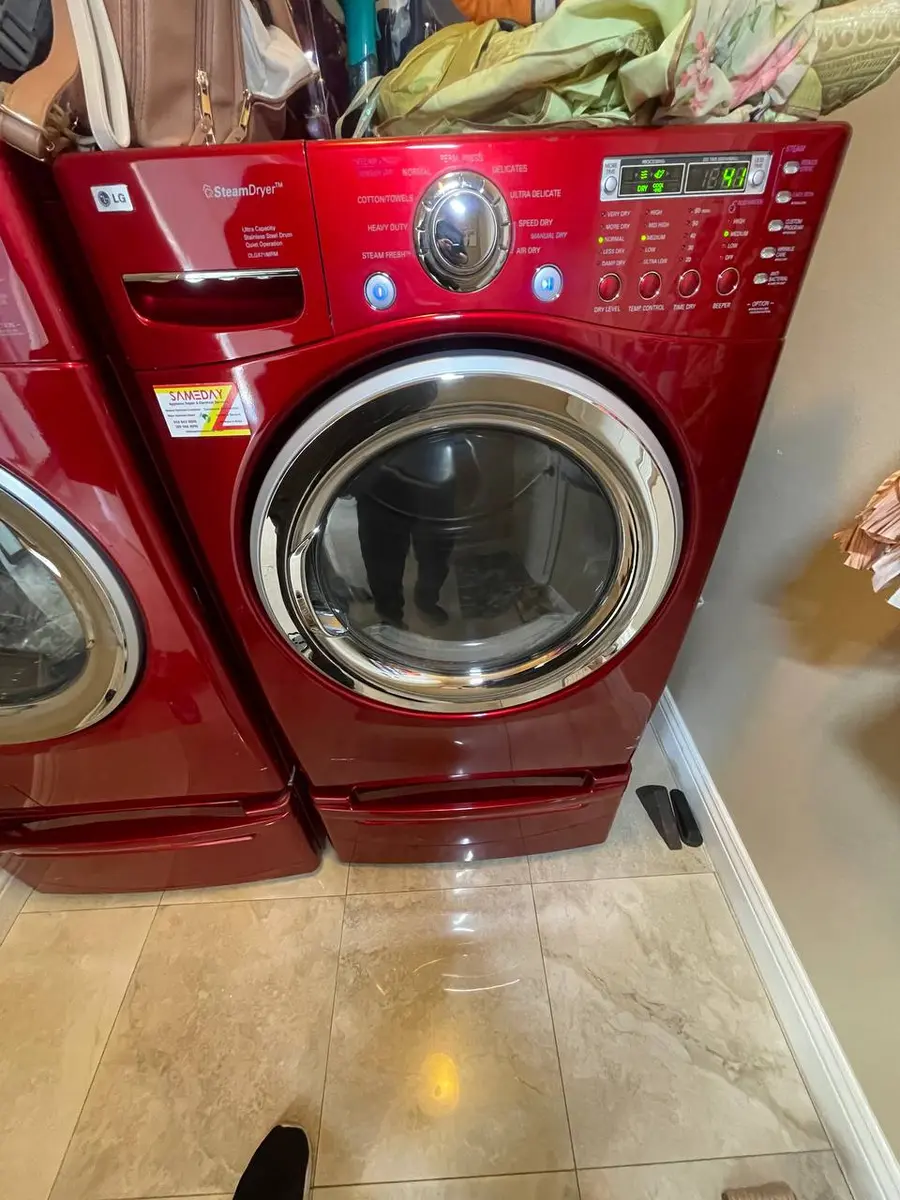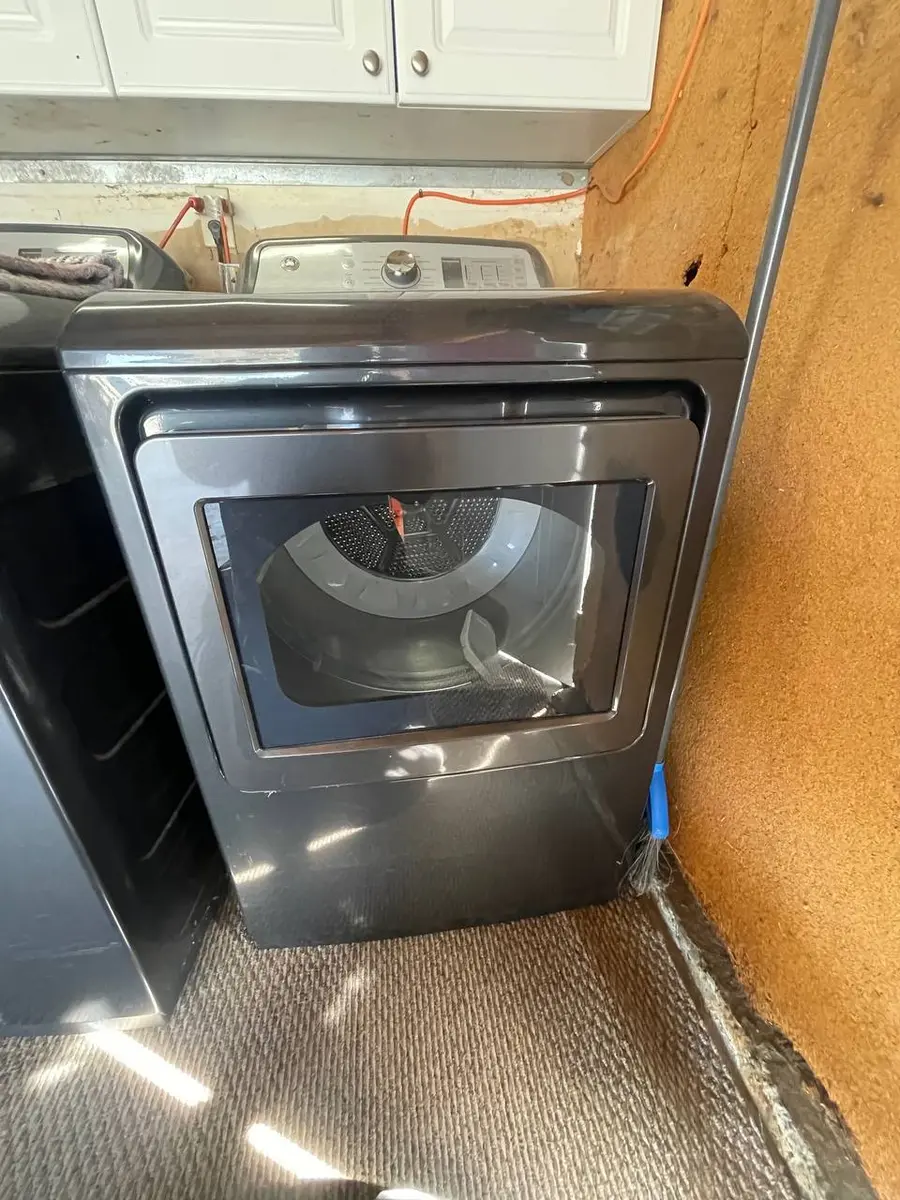
GE Dryer Burning Smell: Causes & Fix
The most common source of a burning smell in a GE dryer — about 35% of cases — is lint accumulation near the heating element, where trapped fibers scorch against the hot element. A slipping or glazing drive belt, an overheating motor, a blocked vent, burning wire insulation, and a failing control board make up the…
A Burning Smell Is a Stop-and-Check Symptom#
Unlike most dryer complaints, a burning smell deserves immediate caution: several of its causes are early signs of overheating that can escalate. If the smell is strong, sharp, or comes with visible smoke, stop the dryer, unplug it, and don't run it again until the cause is found.
Ranked Causes on GE Dryers#
| What you notice | Likely cause | Share of cases | Fix path |
|---|---|---|---|
| Hot, scorched-lint smell; worse on high heat | Lint accumulation near the heating element | 35% | Clean out the lint; inspect the element |
| Rubbery or hot smell with a squeal or thump | Belt slipping or glazing | 25% | Replace the drive belt |
| Hot-electrical smell; dryer runs hot then stops | Motor overheating | 15% | Service or replace the motor |
| Clothes hot and slow to dry; smell of hot lint | Blocked vent system | 12% | Clear the full vent run |
| Sharp electrical smell, sometimes at the terminal | Wiring insulation burning | 8% | Repair the damaged wiring — pro only |
| Faint hot-electronics smell near the console | Control board component | 5% | Replace the control board |
Lint near the heating element is both the most common and the most preventable. Fibers that escape the trap settle around the element housing and scorch, producing that unmistakable hot-lint smell. A slipping belt is the next suspect — as it glazes and drags across the drum or motor pulley, friction heats the rubber and you smell it, usually with a squeal or a thumping drum.
An overheating motor smells more electrical and often shuts the dryer down on a thermal trip. A blocked vent makes everything run hotter than designed, which both bakes lint and stresses the element. The two least common causes — burning wire insulation and a failing control-board component — smell sharply electrical and are repairs, not cleanups.
Do You Have the Right Tools?
Gas leak detector ($130), thermal fuse tester ($95), belt tension gauge, and vent inspection camera ($180). Our technician arrives with $3,000+ in professional tools — your diagnostic is free.
Licensed & Insured · 90-Day Warranty · Same-Day Service
Check the Vent and Lint First#
Start where it's safe and where the odds are best. Unplug the dryer, pull the lint screen, and clear any felted lint from the trap housing. Then check the full vent run — the flexible connector behind the dryer and the duct to the outside. A clogged or crushed vent traps heat and lint, and clearing it resolves a surprising share of burning-smell and slow-drying complaints at once. Confirm the exterior vent flap opens when the dryer runs.
If the vent and lint are clean but the smell returns, the cause is internal — the belt, motor, wiring, or board. Those involve opening the cabinet around the heating element and its high-voltage circuits, so leave them to a technician. Never keep running a dryer that smells of burning electrical or produces smoke.
Reading the Smell to Narrow the Cause#
The character of the smell is a surprisingly good diagnostic, and it decides how urgently to act. A hot, toasty, scorched-lint smell that rises with heat is the classic lint-on-the-element signature — the most common and the most fixable, since it's cleaned rather than repaired. A rubbery or hot-rubber smell paired with a squeal or a thumping drum is the drive belt glazing and dragging. A sharp, acrid, electrical smell is the one to respect most: it points at the motor overheating or, less often, wiring insulation or a control-board component cooking, and any of those can escalate. Use the pairing of smell and behavior to triage — a scorched-lint smell with normal operation is lower urgency than an electrical smell with a dryer that shuts itself off on a thermal trip. When in doubt, the safe default is to unplug it and stop running it, because a dryer is one appliance where a burning smell is never worth ignoring.
Safety First — Know the Risks
Gas dryers carry carbon monoxide and explosion risk. Even electric dryers involve 240V circuits that can deliver a fatal shock. Our techs are licensed and insured — let them handle the risk.
Licensed & Insured · 90-Day Warranty · Same-Day Service
Getting It Fixed#
A vent-and-lint cleanup fixes many cases; a belt, motor, or wiring fault needs service. Book a diagnostic and we'll find the source safely before the dryer runs again.
Senior Gas Appliance Specialist · 18 years experience
AGA-certified gas appliance specialist with 18 years of experience in residential and commercial oven, range, and cooktop repairs.