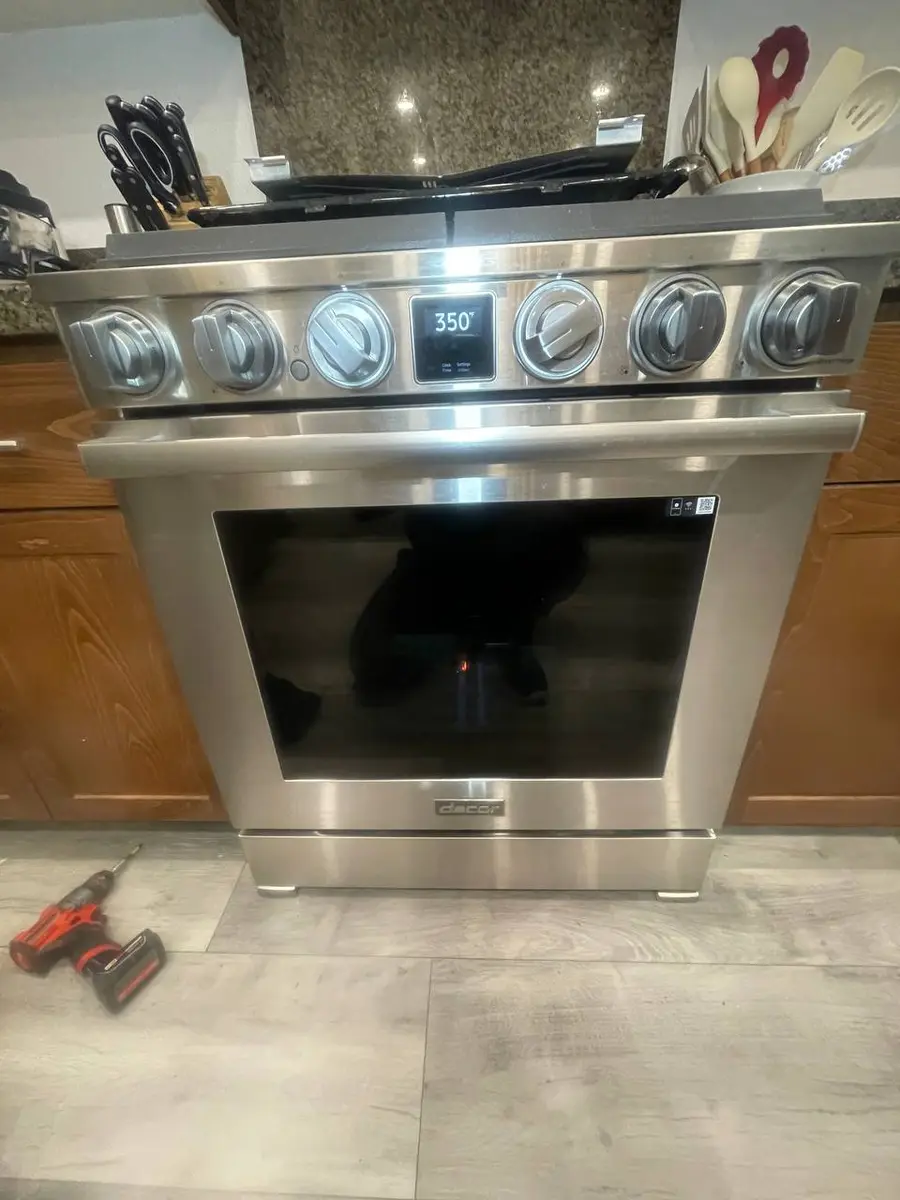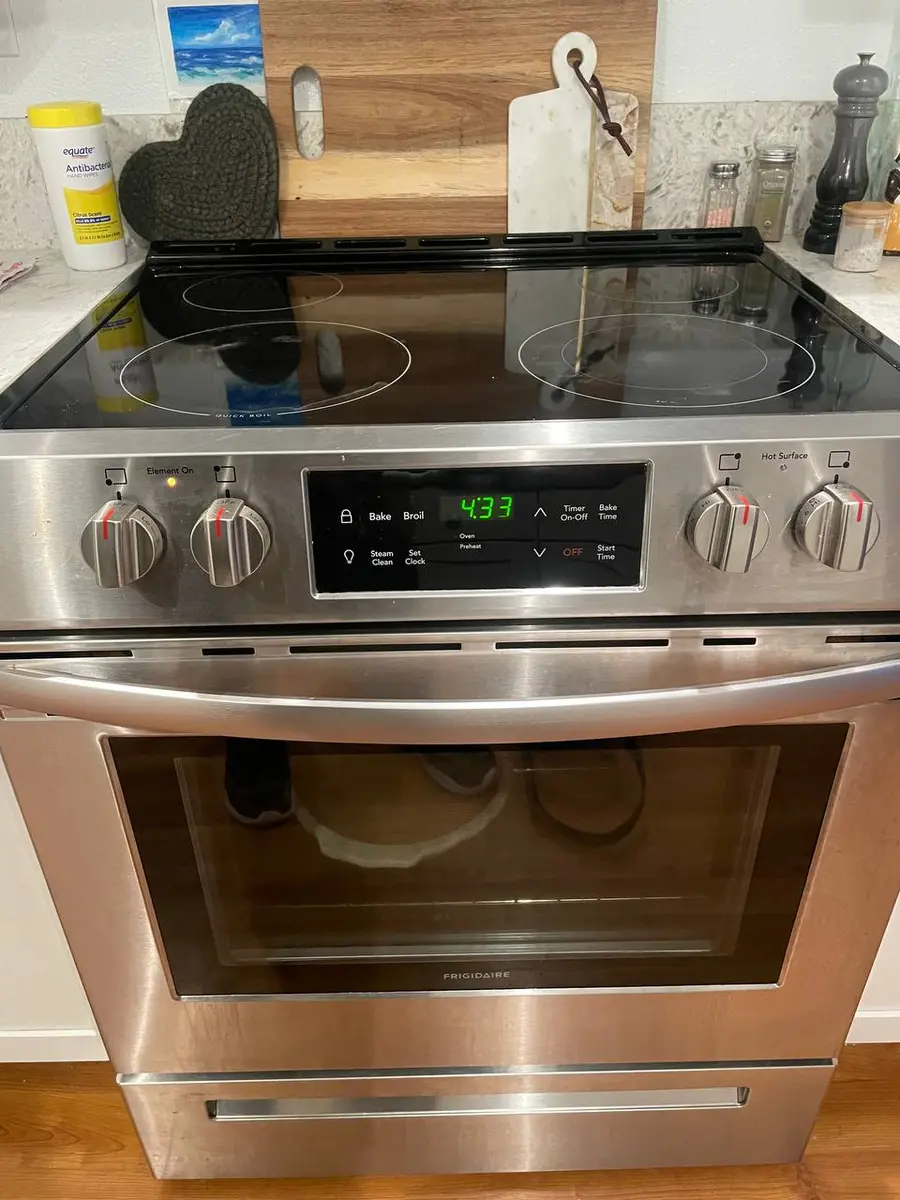
Gas vs Electric [Oven Repair](/bay-area/services/oven-repair): What Actually Breaks#
Short answer: Gas ovens fail at the igniter and cost a little less per repair; electric ovens fail at the heating elements and, increasingly, the control board. Over a full lifespan the two even out — both last 12-18 years — but the repair experience is very different, and so are the safety stakes.
Gas vs Electric Oven Repair Compared#
| Aspect | Gas oven | Electric oven |
|---|---|---|
| Most common failure | Igniter | Bake or broil element |
| Priciest common failure | Gas safety valve | Electronic control board |
| Parts on the truck | Usually — single-visit fix | Boards often ordered |
| Main safety risk | Gas leak / carbon monoxide | 240-volt shock / arcing |
| Typical lifespan | 12-18 years | 12-18 years |
Verdict: Per repair, gas is marginally cheaper and more often a same-day fix; electric has fewer failures but each one tends to cost more. Choose on cooking preference, not repair cost — the difference is small.
Do You Have the Right Tools?
Combustion analyzer ($300), igniter tester ($120), temperature calibrator ($150), and gas pressure manometer. Our technician arrives with $3,000+ in professional tools — your diagnostic is free.
Licensed & Insured · 90-Day Warranty · Same-Day Service
What Fails on a Gas Oven#
The igniter is the most-replaced part in any gas oven. It is a flat silicon-carbide bar that must draw enough current to open the gas safety valve; as it ages its resistance climbs, and eventually it glows orange yet no longer pulls enough current to release gas. That is the failure that fools owners — the igniter looks like it is working, the oven may smell faintly of gas, and still it never heats. Roughly 90% of no-heat gas-oven calls trace back to the igniter, and because every technician carries universal igniters, it is almost always a single-visit repair.
The gas safety valve itself fails far less often. When it does, it either stays shut or leaks slightly. A leaking gas valve is an emergency: shut off the gas supply to the oven immediately. Ovens built before 2000 may instead use a standing pilot and a thermocouple, which holds the valve open only while the pilot flame is sensed; that design is now rare in homes.
What Fails on an Electric Oven#
Electric ovens heat with exposed nichrome coil elements — a bake element below, a broil element above — that eventually break from thermal fatigue after thousands of heat-and-cool cycles. A failing element often shows a bright arc or a visible burn-through. If you see arcing, turn the oven off at the breaker; a shorted element is both a fire and a shock risk. Element swaps are quick, but the bigger story on modern electric ovens is the control board, which modulates element power, convection timing, and the self-clean cycle. Boards fail more often here than on gas ovens and are usually model-specific, so they are the repair most likely to need a part ordered.
The self-clean cycle is the hidden board-killer. It runs the cavity at 850 to 1,000 degrees for two to four hours, and that heat punishes capacitors, the door-lock solenoid, and thermal fuses. Service calls spike right after self-clean use, so run it sparingly and skip it altogether on an oven past eight years old.
Safety First — Know the Risks
Gas ovens involve live gas lines — a loose connection creates explosion and carbon monoxide risk. Electric ovens run on 240V circuits. Our techs are licensed and insured — let them handle the risk.
Licensed & Insured · 90-Day Warranty · Same-Day Service
Safety Comes First on Either Fuel#
- Gas: any work on the line, valve, or connections must be leak-tested afterward. A yellow or orange flame and soot on cookware can signal carbon monoxide from a bad burner, and a barely-opening igniter can release small amounts of unburned gas on each ignition attempt.
- Electric: ovens run on 240-volt circuits, so both legs of the breaker must be off and verified dead with a meter before any internal work. A shorted element can sustain an arc that damages wiring.
Which Lasts Longer, and the Dual-Fuel Note#
Both types run 12-18 years. Gas ovens are mechanically a touch simpler, but the igniter is a maintenance item every 5-8 years. Electric elements last 8-12 years and boards 10-15, and when a board dies on a unit past twelve, its cost often meets the replacement threshold. Dual-fuel ranges fold both failure sets into one appliance, so their repairs trend about 10-20% higher because a technician may need gas and electrical expertise on the same visit. In the field, gas oven calls close in one trip roughly 90% of the time, while electric calls need a part ordered about 30% of the time.
Senior Gas Appliance Specialist · 18 years experience
AGA-certified gas appliance specialist with 18 years of experience in residential and commercial oven, range, and cooktop repairs.