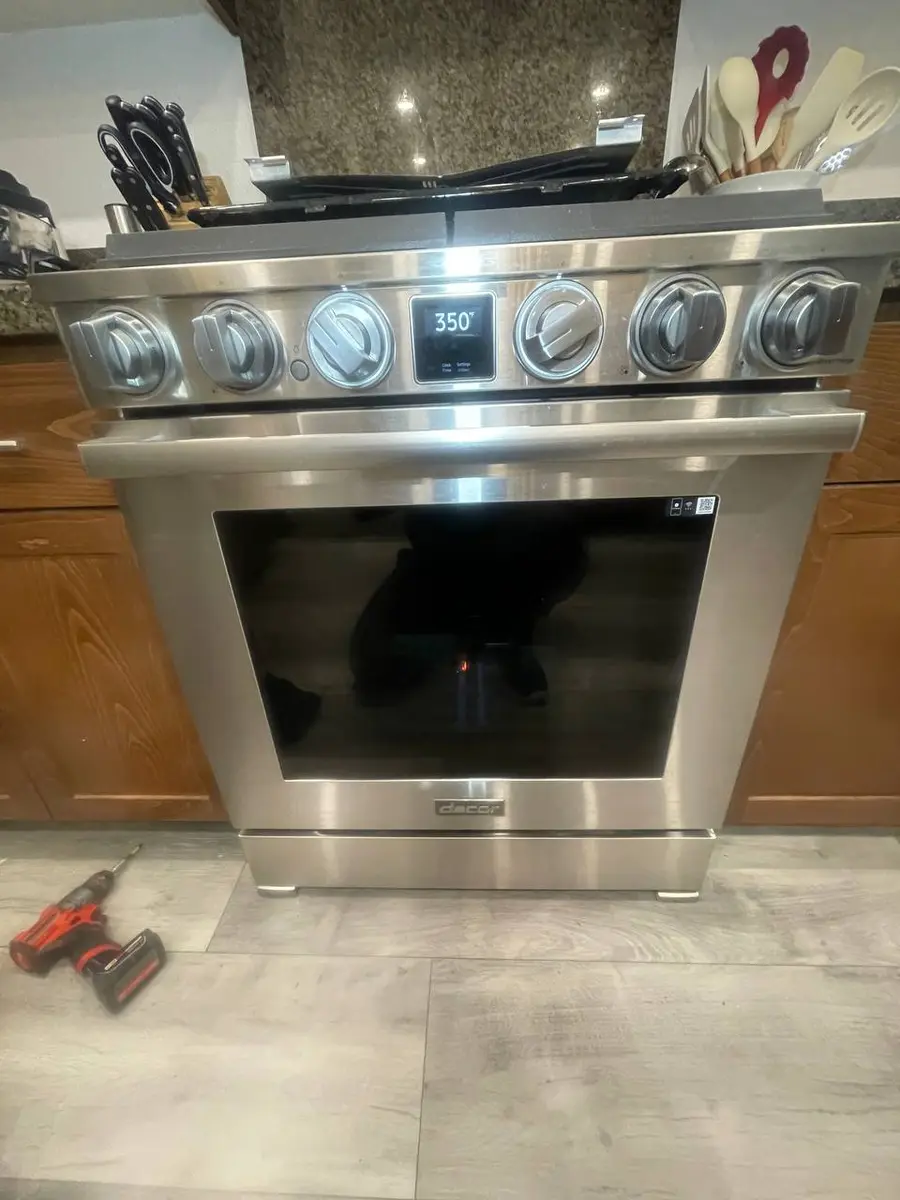
<p>Gas stoves are among the most durable kitchen appliances, but every component has a finite lifespan. This timeline maps the most common gas stove failures by age — so you know exactly what to expect, what it will cost, and when to start planning for replacement.</p>
<p>Average gas stove lifespan: <strong>15-20 years</strong>. Premium brands (Wolf, Thermador, Viking) often exceed 20 years. Budget models (Amana, Hotpoint) land at 13-17 years. Maintenance shifts the entire timeline by 3-5 years in your favor.</p>
<h2>Gas Stove Failure Timeline — Complete Breakdown</h2>
<table>
<thead><tr><th>Age</th><th>Most Likely Failure</th><th>How Common</th></tr></thead>
<tbody>
<tr><td>0-2 years</td><td>Manufacturing defects (warranty covers)</td><td>Rare</td></tr>
<tr><td>2-4 years</td><td>Igniter</td><td>Very common</td></tr>
<tr><td>3-6 years</td><td>Oven temperature sensor</td><td>Common</td></tr>
<tr><td>4-7 years</td><td>Gas valve (burner)</td><td>Common</td></tr>
<tr><td>5-9 years</td><td>Door hinges and gasket</td><td>Common</td></tr>
<tr><td>6-10 years</td><td>Control board / electronic ignition module</td><td>Common</td></tr>
<tr><td>8-13 years</td><td>Gas safety valve (oven)</td><td>Occasional</td></tr>
<tr><td>10-15 years</td><td>Thermostat assembly</td><td>Occasional</td></tr>
<tr><td>15-20 years</td><td>Gas manifold / regulator</td><td>Occasional</td></tr>
<tr><td>18+ years</td><td>Wiring harness deterioration</td><td>Occasional</td></tr>
</tbody>
</table>
<h2>Year 0-2: Warranty Period</h2>
<p>Manufacturing defects and infant mortality. Most issues in this period are covered by the manufacturer warranty. If your gas stove fails within 1-2 years, contact the manufacturer first — the repair should be covered.</p>
<p>Common failures in this period:</p>
<ul>
<li><strong>Manufacturing defects (warranty covers)</strong> (0-2 years): (warranty) — rare occurrence. Typically involves misaligned burner caps, faulty igniters, or cosmetic defects. All covered under standard warranty.</li>
</ul>
<h2>Year 2-4: First Wear Items</h2>
<p>The igniter is the most common early failure on gas stoves. Igniters glow to open the gas safety valve and ignite the burner. They are exposed to extreme heat cycles and degrade with every use. This is the single most frequent [gas stove repair](/bay-area/services/gas-stove-repair) across all brands.</p>
<p>Common failures in this period:</p>
<ul>
<li><strong>Igniter</strong> (2-4 years): Costs vary — very common occurrence. Signs include slow preheating, clicking without ignition, or <a href="https://www.cpsc.gov/Safety-Education/Safety-Guides/General-Information/Carbon-Monoxide-Information-Center" rel="nofollow noopener" target="_blank">gas smell</a> without flame. A straightforward repair that most technicians complete in under an hour.</li>
</ul>
<h2>Year 3-7: Early Wear Items</h2>
<p>Temperature sensors, burner valves, and control knobs reach their first stress threshold. These are consumable components designed to withstand thousands of heating cycles. Repairs in this window are typically affordable and represent normal wear.</p>
<p>Common failures in this period:</p>
<ul>
<li><strong>Oven temperature sensor</strong> (3-6 years): Costs vary — common occurrence. Symptoms include uneven cooking, temperature fluctuations, or error codes on digital displays. The sensor itself is inexpensive; labor is the primary cost.</li>
<li><strong>Gas valve (burner)</strong> (4-7 years): Costs vary — common occurrence. Burner valves control gas flow to individual burners. Symptoms include uneven flame, inability to adjust heat precisely, or burners that will not light.</li>
</ul>
<h2>Year 5-10: Mid-Life Failures</h2>
<p>Door components, control boards, and electronic ignition modules enter their failure window. These are the highest-cost repair years for gas stoves. A single mid-life repair is expected and cost-effective. Two or more major repairs in this window suggest the unit is aging faster than average.</p>
<p>Common failures in this period:</p>
<ul>
<li><strong>Door hinges and gasket</strong> (5-9 years): Costs vary — common occurrence. Heat-damaged gaskets cause heat loss, increasing cooking time and gas consumption. Door hinges loosen from repeated open/close cycles.</li>
<li><strong>Control board / electronic ignition module</strong> (6-10 years): Costs vary — common occurrence. Power surges are the leading cause. A surge protector can prevent this failure entirely. Symptoms include erratic behavior, error codes, or total non-response.</li>
</ul>
<h2>Year 8-15: Late-Life Repairs</h2>
<p>Safety valves, thermostats, and gas delivery components approach end of life. Repairs in this window can be significant. The repair-vs-replace decision becomes meaningful.</p>
<p>Common failures in this period:</p>
<ul>
<li><strong>Gas safety valve (oven)</strong> (8-13 years): Costs vary — occasional occurrence. The safety valve prevents gas flow when the igniter is not hot enough. A failing safety valve is a safety concern — do not delay this repair.</li>
<li><strong>Thermostat assembly</strong> (10-15 years): Costs vary — occasional occurrence. The thermostat regulates oven temperature. Failure causes significant temperature inaccuracy, typically running too hot or not maintaining set temperature.</li>
</ul>
<h2>Year 15-20+: End-of-Life Territory</h2>
<p>Gas manifold assemblies, regulators, and wiring harnesses degrade beyond reliable repair. Repairs in this window can be significant, and another failure is likely within 1-2 years.</p>
<p>Common failures in this period:</p>
<ul>
<li><strong>Gas manifold / regulator</strong> (15-20 years): Costs vary — occasional occurrence. The manifold distributes gas to all burners. When it fails, multiple burners are affected simultaneously.</li>
<li><strong>Wiring harness deterioration</strong> (18+ years): Replace unit — occasional occurrence. Heat exposure over decades degrades wire insulation. This is not a cost-effective repair on a unit this old.</li>
</ul>
<h2>How Does Maintenance Shift the Timeline?</h2>
<p>Proactive maintenance shifts the gas stove failure timeline by 3-5 years. The highest-impact actions are regular burner cleaning, annual gas connection inspection, and keeping drip pans and burner ports clear of debris.</p>
<p>Key maintenance actions:</p>
<ul>
<li><strong>Clean burner ports monthly:</strong> Clogged ports cause uneven flames and incomplete combustion, accelerating igniter and valve wear.</li>
<li><strong>Inspect door gasket quarterly:</strong> A damaged gasket wastes gas and stresses temperature components.</li>
<li><strong>Annual professional gas line inspection:</strong> A modest annual investment for a safety check that catches leaks and connection issues before they become hazards.</li>
<li><strong>Use a surge protector:</strong> A small upfront investment prevents costly control board failures.</li>
</ul>
<h2>How Does Gas Stoves vs Electric: Reliability Compare?</h2>
<p>Gas stoves have fewer electronic components than electric ranges, which generally means fewer control board failures. However, gas stoves have additional failure points (igniters, gas valves, safety valves) that electric stoves lack entirely. Overall, gas stoves last 15-20 years vs 13-18 years for electric ranges, primarily because gas burners have no heating elements to burn out.</p>
<h2>How Do Different Brands Compare?</h2>
<p>Not all brands follow the same failure timeline. Here is how the major brands compare for gas stove reliability:</p>
<ul>
<li><strong>Wolf / Viking:</strong> Commercial-grade components shift most failures 3-5 years later. Igniters still fail at similar rates due to universal design.</li>
<li><strong>GE / Whirlpool / Maytag:</strong> Follow the standard timeline closely. Well-documented parts availability keeps repair costs predictable.</li>
<li><strong>Samsung / LG:</strong> More electronic features mean more potential control board failures. Igniter and gas valve timeline is similar to industry average.</li>
<li><strong>Amana / Hotpoint:</strong> Simpler designs with fewer electronic components. Lower initial cost but thinner metal construction can lead to cosmetic wear earlier.</li>
</ul>
<h2>How Do You Decide Based on Unit Age?</h2>
<ul>
<li><strong>Under 8 years old:</strong> Almost always repair. The unit has significant life remaining.</li>
<li><strong>8-14 years old:</strong> Repair if cost is under 50% of a new unit's price and this is the first or second major repair.</li>
<li><strong>14-18 years old:</strong> Only repair for simple fixes within budget. Major component failures at this age favor replacement.</li>
<li><strong>Over 18 years old:</strong> Replace. Even if the repair is affordable, another failure is likely within 1-2 years.</li>
</ul>
<h2>Frequently Asked Questions</h2>
<h3>What breaks first on a gas stove?</h3>
<p>The most common early failure on gas stoves is the igniter at 2-4 years, with costs varying by model to repair. This is the single most frequent gas stove repair across all brands and a straightforward fix.</p>
<h3>How long do gas stoves last?</h3>
<p>Gas stoves typically last 15-20 years with proper maintenance. Premium brands (Wolf, Thermador) can exceed 20 years. The average is about 2-3 years longer than electric ranges due to fewer electronic components and no heating elements to burn out.</p>
<h3>What is the most expensive gas stove repair?</h3>
<p>The most expensive gas stove repair is typically control board replacement, usually occurring at 6-10 years. Gas manifold replacement at 15-20 years is comparable but rarely cost-effective at that age.</p>
<h3>Are gas stove igniters expensive to replace?</h3>
<p>Gas stove igniter replacement varies by model including parts and labor. The igniter itself varies by model; the remainder is diagnostic and labor. This is one of the most affordable gas stove repairs and is completed in under an hour.</p>
<h3>Can regular maintenance prevent gas stove breakdowns?</h3>
<p>Yes. Consistent maintenance shifts the typical failure timeline by 3-5 years. The most impactful actions are cleaning burner ports monthly, inspecting the door gasket quarterly, and scheduling annual professional gas line inspections.</p>
<p>Based on EasyBear service data, these failure patterns match what our technicians see daily. Book a free diagnostic to assess your specific gas stove’s condition and remaining lifespan.</p>
<hr>
<p><strong>Preventive maintenance extends your gas stove's lifespan by 20-30% — and our certified technicians can diagnose issues before they become expensive repairs.</strong><a href="/book">Book your maintenance appointment today</a>.</p>
<p>Our service data across the [Sacramento](/sacramento/sacramento) and Bay Area markets confirms gas stove failure timeline — what breaks and when
gas stoves are among the most durable kitchen appliances, but.</p>
4.85 (232 verified reviews)
Same-Day Appliance Repair
Fixed or It's Free
Free Service Call & Diagnosis — no hidden fees, offer ends Jun 10
MG
Maria Gonzalez
Appliance Repair Technician · 8 years experience
EPA 608 UniversalNASTeC Certified
Experienced technician with 8 years specializing in dishwasher repairs and European appliance brands including Bosch and Thermador.