Built-In vs Freestanding Refrigerator: The Repair-Cost Gap#
Short answer: A built-in refrigerator costs several times more to repair than a freestanding one — not because it is unreliable, but because proprietary parts, cabinetry-level access, and dual-compressor systems all carry a premium. The upside is a longer service life that usually makes repair the right call anyway.
Built-In vs Freestanding at a Glance#
| Factor | Freestanding | Built-in |
|---|---|---|
| Parts ecosystem | Wide aftermarket | Proprietary, authorized only |
| Service access | Rolls out on wheels | Flush-mounted in cabinetry |
| Cooling system | Usually single compressor | Often dual compressors |
| Typical lifespan | 10-14 years | 20-plus years |
| Repair-vs-replace | Balanced | Almost always repair |
Verdict: Built-ins cost more per repair but are engineered to last decades, so repair almost always beats the enormous cost of replacing one.
Do You Have the Right Tools?
Refrigerant gauges ($200+), vacuum pump ($250), leak detector ($150), and EPA-certified recovery equipment. Our technician arrives with $3,000+ in professional tools — your diagnostic is free.
Licensed & Insured · 90-Day Warranty · Same-Day Service
Why Built-In Repairs Cost More#
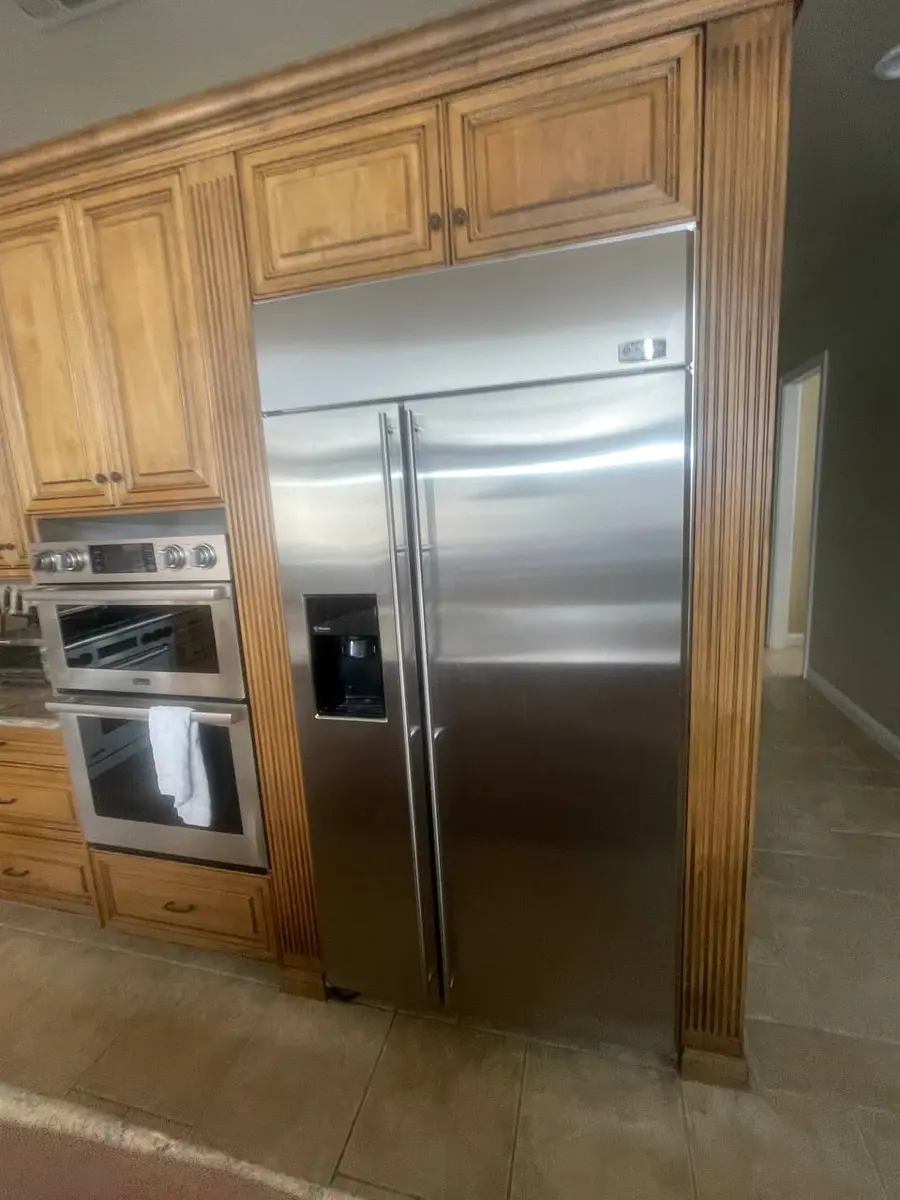
Three forces stack up. First, parts: Sub-Zero components come only through authorized distributors with no aftermarket to pull prices down and lead times of several business days, while Viking and Thermador parts are engineered to premium specifications and priced accordingly. Second, access: a built-in is flush-mounted in custom cabinetry and weighs far more than a freestanding unit — pulling it out without damaging floors or trim, and removing expensive custom door panels, adds real labor to jobs that are trivial on a freestanding model. Third, the sealed system: many built-ins run dual compressors, doubling the diagnostic surface, and because both compressors share the same runtime you can face two replacements within a few years of each other.
The Technician-Expertise Premium#
Built-in work also demands specialized knowledge that few shops carry. The sealed systems use different refrigerants — including flammable isobutane in some models, where incorrect handling is a fire hazard — and run at pressures unlike consumer units. Some luxury lines use vacuum insulation panels that must never be pierced during service, and their control diagnostics require manufacturer-specific software or key sequences. Many repair companies decline built-in work outright, and those that accept it charge a diagnostic premium that reflects the training and specialized tools involved. That scarcity of qualified labor is itself part of the cost.
Safety First — Know the Risks
Refrigerant (R-134a/R-600a) requires EPA certification to handle. Improper discharge is a federal violation and health hazard. Our techs are licensed and insured — let them handle the risk.
Licensed & Insured · 90-Day Warranty · Same-Day Service
Built-In Reliability Beats Its Reputation#
Despite the premium, built-ins are generally more reliable than mid-range freestanding units. Sub-Zero targets a 20-25 year life with heavily over-engineered components and easily cleaned front-mounted condenser coils; Viking and Thermador run 15-20 years, with Thermador benefiting from its Bosch parentage. Their service-call rate within the first five years — around 20-25% — is similar to premium freestanding models. The higher lifetime repair spend on a built-in comes mostly from owning it two decades rather than one, not from any fragility.
What Built-In Ownership Really Asks of You#
If you own or are buying a built-in, plan for the repair reality up front. Budget for a qualified specialist rather than the general appliance shop down the street, and confirm before you need one that a technician in your area actually services your brand — that scarcity is a genuine cost. Keep the front-mounted condenser coils clean, since on a Sub-Zero that single habit does more for compressor life than anything else. And weigh the dual-compressor trade-off honestly: independent temperature control and the ability to run one section if the other fails are real benefits, but two compressors sharing the same runtime hours can mean two replacements within a few years. None of this makes a built-in a poor choice — it simply rewards owners who maintain it to the standard it was engineered for.
The Real Cost of DIY
Average DIY attempt: $150-400 in tools you may use once, plus the risk of further damage. Our diagnostic visit costs $0 — we find the problem and give you an honest quote.
Licensed & Insured · 90-Day Warranty · Same-Day Service
The Replacement Math, and When Freestanding Wins#
Replacing a built-in is not just a new unit — it is custom cabinet-matched panels, careful removal, precise installation, and often cabinetry modification, which is exactly why repair almost always wins: even a compressor replacement is only about 10-14% of a full replacement project. We recommend replacing a built-in only when it is past 20 years old with multiple concurrent failures. Freestanding makes more sense for turnover properties, tighter budgets, and short-term owners — a high-quality freestanding unit delivers roughly 90% of the functionality at 20-30% of the built-in cost, and its repair premium never applies.
Senior Appliance Repair Technician · 15 years experience
EPA-certified technician with 15 years of experience specializing in refrigerator and cooling system repairs.