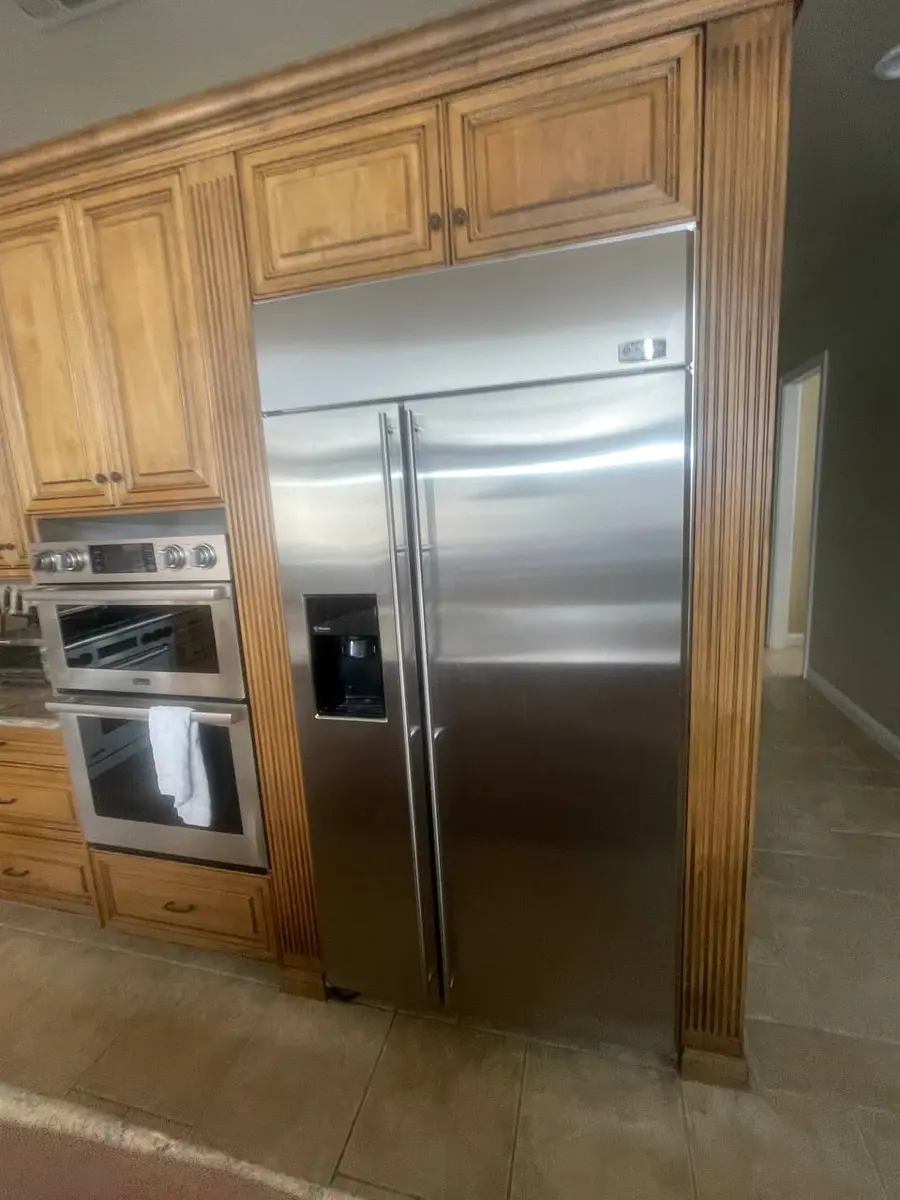
A burning smell from a Samsung refrigerator almost always comes from the electrical hardware at the back of the unit, and the location of the odor is the fastest clue to the cause. Behind or below the fridge points at the start relay, condenser fan motor, or main board; inside the fridge section points at a defrost heater stuck on. Because these are electrical faults rather than gas, there is no explosion risk — but a scorching component can progress to smoke, so it is worth acting on quickly.
Immediate safety step#
If the smell is strong or you see any smoke from the lower rear panel, unplug the refrigerator before you diagnose anything, and be ready to call the fire department if smoke is visible. Once it is unplugged and cool, you can safely inspect the rear compartment. The checks below assume the unit is unplugged.
Do You Have the Right Tools?
Refrigerant gauges ($200+), vacuum pump ($250), leak detector ($150), and EPA-certified recovery equipment. Our technician arrives with $3,000+ in professional tools — your diagnostic is free.
Licensed & Insured · 90-Day Warranty · Same-Day Service
Quick Answer#
Quick answer: Most likely the compressor start relay has overheated and is producing an electrical burning smell at the rear, so unplug the unit and inspect the relay on the compressor. A seized condenser fan motor or a scorched spot on the main PCB are the next most common sources; a smell from inside the fridge points instead at a defrost heater running non-stop.
Most Likely Causes, Ranked#
| Cause | Where the smell is | How likely |
|---|---|---|
| Start relay failure | Rear, at the compressor | 35% |
| Condenser fan motor seized | Lower rear, near the coils | 25% |
| Main PCB component burn | Rear control housing | 20% |
| Overload protector overheating | Rear, at the compressor | 12% |
| Defrost heater running excessively | Inside the fridge section | 8% |
Safety First — Know the Risks
Refrigerant (R-134a/R-600a) requires EPA certification to handle. Improper discharge is a federal violation and health hazard. Our techs are licensed and insured — let them handle the risk.
Licensed & Insured · 90-Day Warranty · Same-Day Service
The start relay and overload protector#
The compressor start relay (part DA35-00099A) plugs directly onto the compressor terminal, and when its internal contact welds or its PTC element burns out, it produces a distinct electrical burning smell right at the compressor. Closely related is the overload protector: when the compressor cannot start — because of a failing relay, a locked rotor, or a voltage issue — it cycles rapidly and the protector heats up with each failed attempt, eventually overheating itself. Both live at the rear on the compressor and account for a large share of burning-smell calls.
The condenser fan motor and main board#
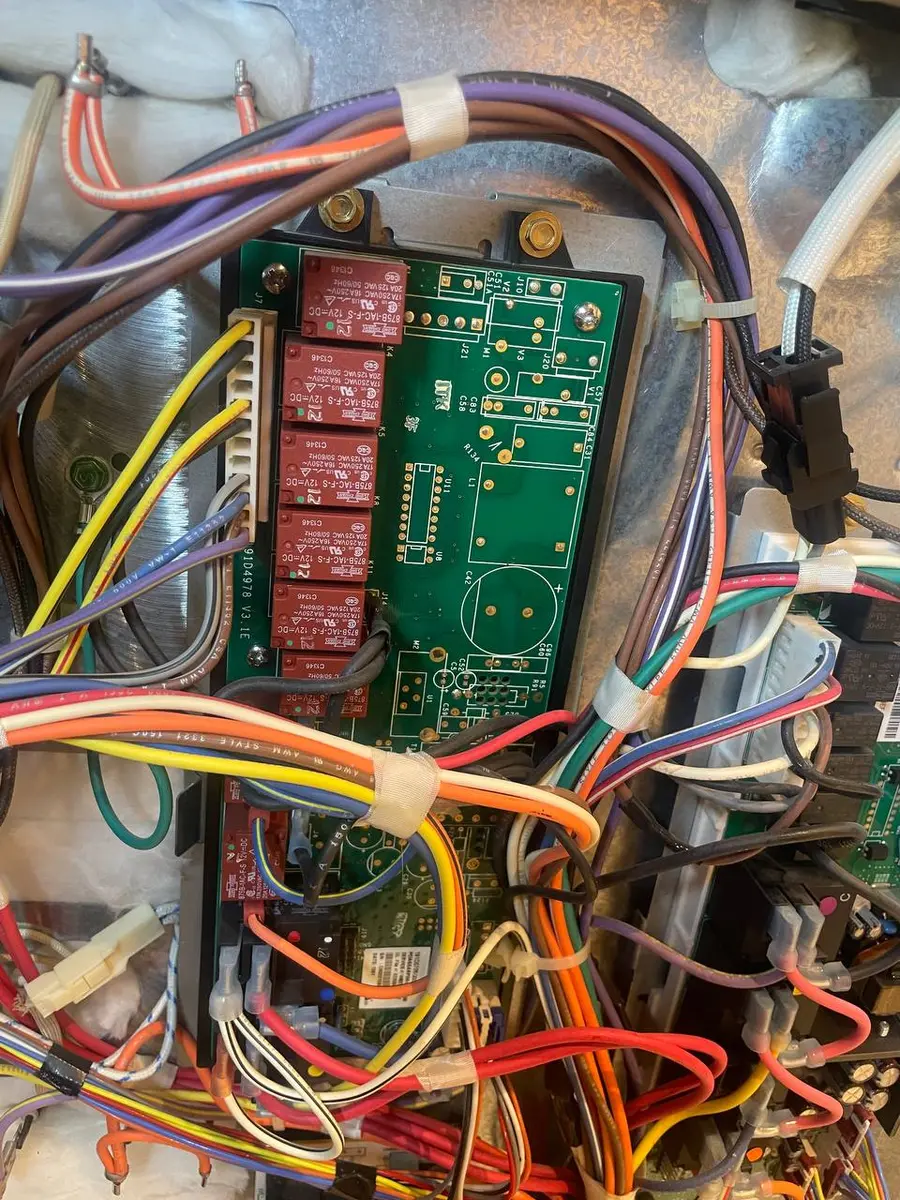
The condenser fan motor (part DA31-00028E) runs whenever the compressor operates, and when its bearings seize the windings keep drawing power and overheat, giving off a hot electrical smell from the lower rear. Separately, a power surge can blow a component on the main PCB, and Samsung boards use electrolytic capacitors and small fuses that release a pungent burnt-electronics smell when they let go. A visual check of the rear housing for scorch marks or a swollen capacitor usually tells you if the board is the source.
The Real Cost of DIY
Average DIY attempt: $150-400 in tools you may use once, plus the risk of further damage. Our diagnostic visit costs $0 — we find the problem and give you an honest quote.
Licensed & Insured · 90-Day Warranty · Same-Day Service
A defrost heater stuck on#
If the defrost relay on the main board welds shut, the glass-tube defrost heater runs continuously instead of cycling off after its normal interval. Run long enough, the heater can get the surrounding evaporator housing plastic hot enough to smell — and unlike the other causes, this odor comes from inside the fridge section rather than the rear. A smell located inside, not behind, the unit is the tell for this one.
How to check it yourself#
- Unplug the refrigerator and let it cool before inspecting.
- Locate the smell — rear/below is electrical hardware; inside is the defrost heater.
- Inspect the start relay on the compressor for scorching or a melted body.
- Spin the condenser fan by hand to check for a seized motor.
- Look over the main PCB for burnt spots or a swollen capacitor.
Don't Void Your Warranty
Opening your appliance yourself may void the manufacturer warranty. Our repair comes with a 90-day guarantee, and we document everything for warranty compliance.
Licensed & Insured · 90-Day Warranty · Same-Day Service
DIY or call a pro?#
Locating the smell and inspecting the rear compartment are safe once the unit is unplugged, and a start relay is a part some owners replace. A seized fan motor, a scorched control board, or a welded defrost relay is a repair better left to a technician working with the sealed system and board wiring. Because a burning electrical component can progress to smoke, do not run the fridge while you investigate — book a diagnostic and we will confirm the failed part before ordering it.
Senior Appliance Repair Technician · 15 years experience
EPA-certified technician with 15 years of experience specializing in refrigerator and cooling system repairs.