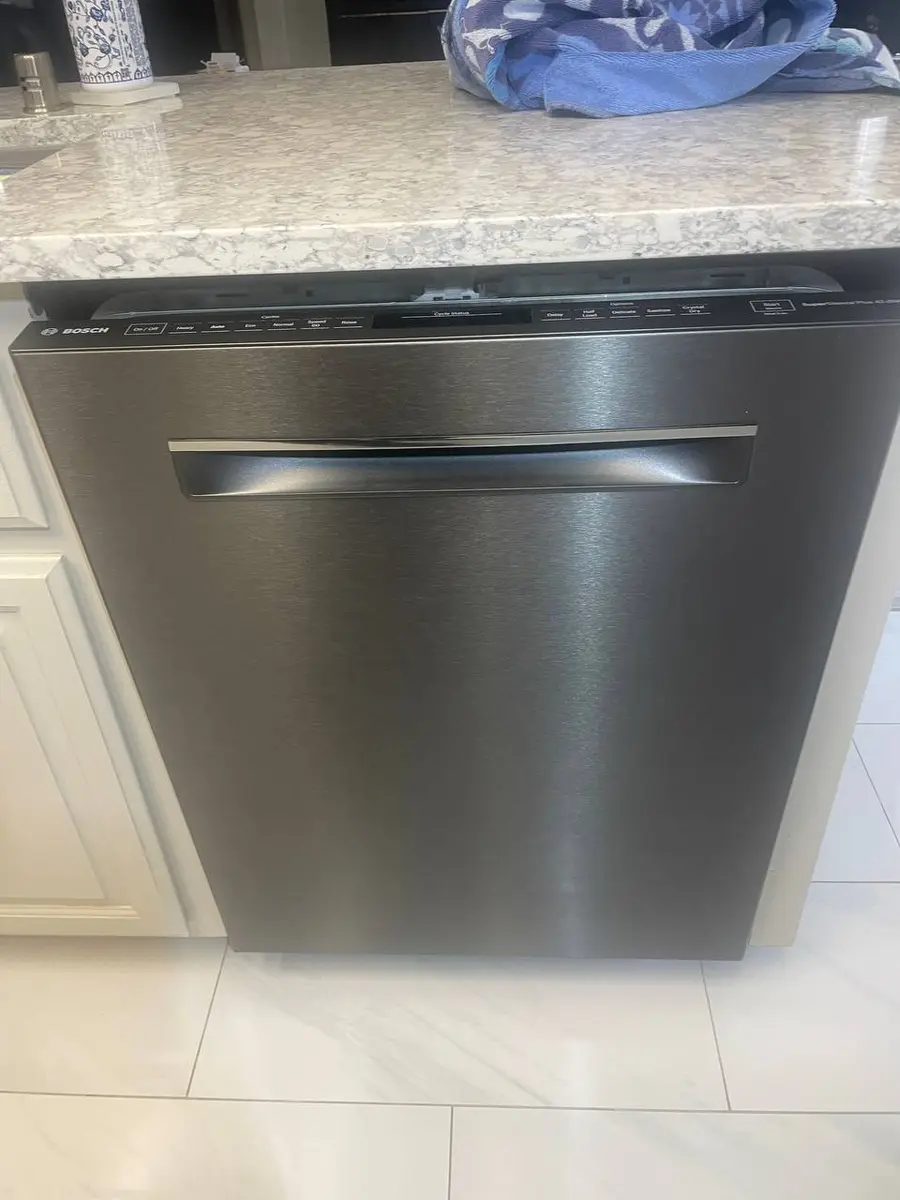
Before assuming the worst, it helps to know that on a Bosch dishwasher this problem usually traces to a short list of brand-specific parts. Below is what actually fails on Bosch, how to check it safely, and what the repair tends to cost.
The short answer: Bosch Dishwasher not drying dishes#
On a Bosch dishwasher, not drying dishes most often traces to bosch condensation drying relies — a genuinely bosch-specific weak point, not one of the generic causes every brand shares. If that comes back clean, the next thing I look at is empty rinse-aid dispenser removing the sheeting. It is a design quirk, so the usual suspects are only worth chasing once this one is ruled out. The table puts this at $100–$250, and which end you hit is a question of parts and access.
The failure modes below are specific to Bosch dishwashers — they are what set Bosch apart from the generic not drying dishes checklist.
| Likely Bosch-specific cause | How often we see it | Typical repair |
|---|---|---|
| Bosch condensation drying relies on a hot final rinse and a cool stainless tub | Most likely | $250 |
| Empty rinse-aid dispenser removing the sheeting action condensation drying depends on entirely | Common | $100–250 |
| AutoAir or PureDry door-vent flap sticking so humid air never releases at cycle end | Common | $100–250 |
| CrystalDry zeolite mineral unit degraded on 800-series models so it no longer converts moisture to heat | Possible | $100–250 |
| Rinse-aid dispenser cap cracked or set to the lowest dose, starving the sheeting agent | Possible | $100–250 |
Do You Have the Right Tools?
Water pressure gauge ($60), spray arm tester, float switch multimeter ($85), and drain inspection camera. Our technician arrives with $3,000+ in professional tools — your diagnostic is free.
Licensed & Insured · 90-Day Warranty · Same-Day Service
What you can safely check first#
Run these quick checks before spending on a call-out. Safety first — unplug the dishwasher — then take each item in turn.
- Bosch condensation drying relies. It tends to track the fault closely, so it earns an early look before you move on to anything harder to reach.
- Empty rinse-aid dispenser removing the sheeting. It is easy to spot once you know it is a weak point here; a worn part usually shows visible wear or play.
- AutoAir or PureDry door-vent flap sticking. On Bosch it is the first thing I confirm before ordering a part, since it is quick to rule in or out.
- CrystalDry zeolite mineral unit degraded. Owners miss it because the generic guides never mention it, yet it is one of the more common bosch culprits.
- Rinse-aid dispenser cap cracked or set. If this comes back clean you have narrowed the field a lot, and the remaining suspects get easier to isolate.
- Note your exact model before buying anything — the SHPM88Z75N, SHEM63W55N, SHXM4AY55N, SHP865ZD5N units look alike but are not identical under the panel.
Repair cost and when to call an EasyBear technician#
The $100–$250 range is not hedging — it maps to two genuinely different repairs. A minor culprit such as rinse-aid dispenser cap cracked or set is low-cost; the difference is all in access and part price. A confirmed diagnosis is worth more than it sounds, because it stops you paying twice for the same symptom. Once you have run the checks, a lingering fault is worth an EasyBear diagnostic — one visit pins the cause before any money goes on parts.
Appliance Repair Technician · 8 years experience
Experienced technician with 8 years specializing in dishwasher repairs and European appliance brands including Bosch and Thermador.