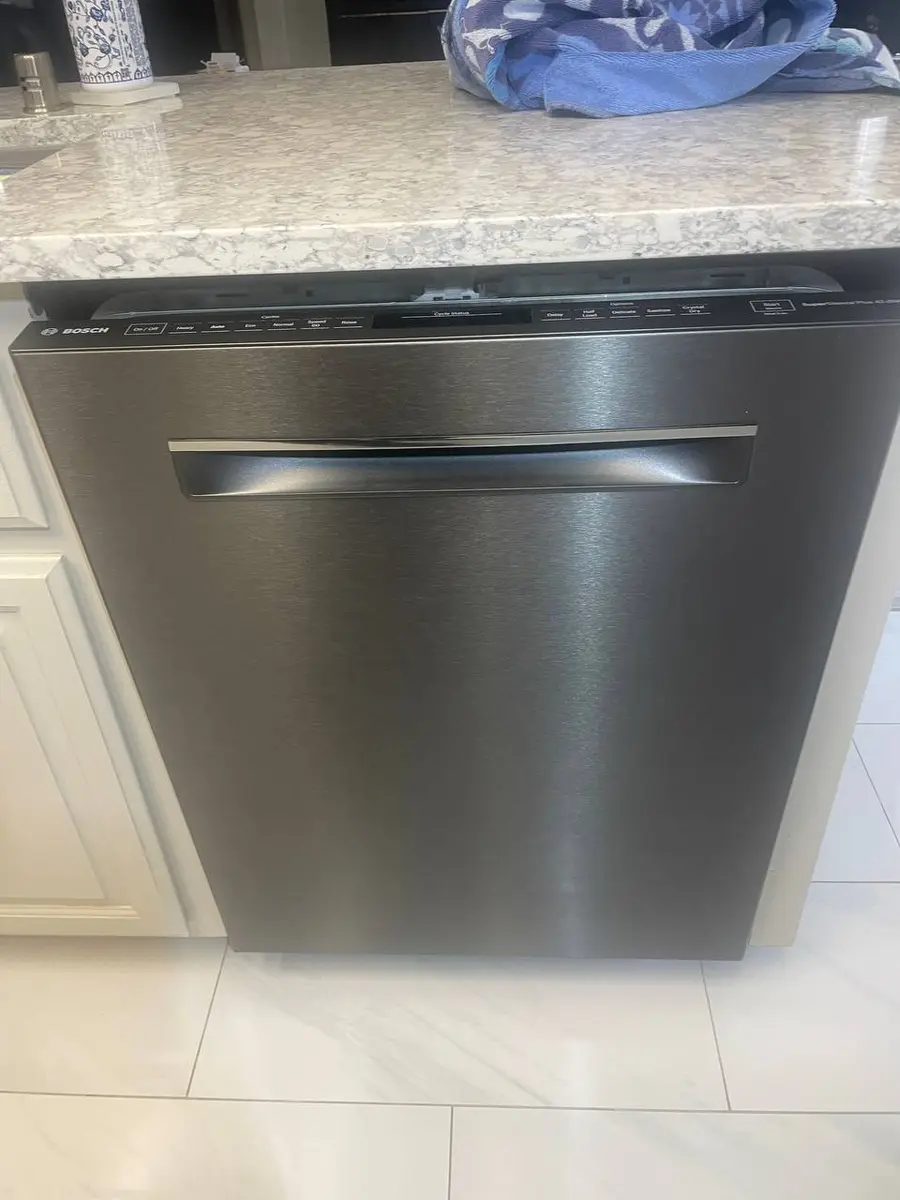
Quick take: on a Bosch [dishwasher](/blog/repair-or-replace-dishwasher) under roughly ten years old, replacing the circulation pump and wash motor is usually worth it. On an older machine, measure the quote against the 50% rule before you commit.
Bosch dishwashers are premium machines with a distinctive motor design, and understanding that design is the key to the repair decision. Below is the age-and-cost picture, why a Bosch motor job carries a bit more parts cost, and the longevity that makes the repair pay off.
Motor verdict by dishwasher age#
Find your dishwasher's age, then the column matching the quote against a new Bosch. The bands are the 50% rule in table form.
| Dishwasher age | Under a quarter of new | A quarter to half | Over half |
|---|---|---|---|
| Under 3 years | Fix | Fix | Fix |
| 3 to 5 years | Fix | Fix | Fix |
| 5 to 8 years | Fix | Fix | Case-by-case |
| 8 to 12 years | Fix | Case-by-case | Replace |
| Over 12 years | Case-by-case | Replace | Replace |
Condensed: fix the motor while the quote stays under 25% of a new dishwasher, treat the 25 to 50% band as a judgment call, and replace the machine once the number tops 50% on an aging unit.
Why a Bosch motor job costs a little more#
Bosch builds the wash motor, circulation pump, and a flow-through heater into one integrated assembly. When the motor fails, that whole assembly is replaced, which is why a Bosch motor job reads higher on paper than a brand with separate, individually swappable parts. The upside is that you get a correctly matched heating-and-washing system rather than a patchwork, and the integration is part of why Bosch machines wash and dry the way they do. Genuine parts run 10 to 30% above generic equivalents, but on an integrated assembly the exact fit is what keeps the system working as designed.
The longevity that justifies the fix#
Bosch dishwasher motors are brushless and typically last ten to fifteen years, and the machines are engineered in Germany for twenty-year service lives. Motor failure before about eight years is uncommon, so a mid-life Bosch with a dead motor is usually a machine with plenty of life left in the tub, racks, and controls — exactly the case where restoring one assembly beats buying a whole new unit. That engineering headroom is what tips the age math toward repair well past the point where a budget dishwasher would be written off.
Before you approve the assembly#
Confirm the motor is truly the fault first. Weak washing can trace to clogged spray arms, a dirty filter, or low incoming water temperature, none of which need a motor. A failing motor is usually audible — a grind or a loud hum — while quiet, poor cleaning points elsewhere. Once the diagnosis is confirmed, get a second quote if the first feels steep, and factor in the friction of replacement: a new dishwasher means delivery, haul-away, and possible cabinet or plumbing tweaks for a different body.
Is a premium dishwasher worth keeping?#
Beyond the raw numbers, a Bosch is a machine people buy for quiet, thorough washing and expect to keep for years. When only the motor assembly has failed and the tub, racks, door, and controls are all sound, restoring that one part brings back the performance the machine was chosen for. Replacing the whole unit often means stepping down in quietness or breaking up a matched kitchen, a cost that never appears on a quote. That is why, short of the very oldest units, a Bosch with a dead motor is usually a repair rather than a write-off.
Unsure the motor is really gone? A professional diagnosis separates a dead assembly from a clogged arm and prices the exact part for your model.
Appliance Repair Technician · 8 years experience
Experienced technician with 8 years specializing in dishwasher repairs and European appliance brands including Bosch and Thermador.