Whirlpool Oven/Range Switch Replacement
Each surface burner on a Whirlpool electric range has its own infinite switch that rapidly cycles the element on and off to hold the heat you dial in. When one fails, replace only that switch — they are independent — after disconnecting the range, because these circuits carry **240V**.
"Infinite" means continuous variable control rather than fixed Low/Medium/High steps. The switch is a bimetallic thermal relay: it connects power for a percentage of each duty cycle and disconnects for the rest. On High the element is on 100% of the time; on lower settings it cycles on and off, which is exactly why you see a coil glow bright, dim, bright, dim on medium. Gas ranges use mechanical burner valves instead and are not covered here.
Symptoms of a failing switch#
- One burner never heats — the switch failed open; the element itself may be fine
- One burner stays on full heat at every knob position — the contacts welded shut, so the element only turns off, never down. Treat this as a hazard and unplug the range when the burner is not in use
- Loud clicking behind the console — the bimetallic mechanism is cycling audibly and may be near the end of its life
- Knob spins loosely — the switch shaft has broken internally
- Intermittent heat — corroded contacts are making inconsistent connection
Do You Have the Right Tools?
Combustion analyzer ($300), igniter tester ($120), temperature calibrator ($150), and gas pressure manometer. Our technician arrives with $3,000+ in professional tools — your diagnostic is free.
Licensed & Insured · 90-Day Warranty · Same-Day Service
Testing#
The fastest check is functional: set the burner to High and confirm the element heats, then set it to Medium and watch for cycling. If High works but Medium never cycles, the switch is failing. For a bench check with power disconnected, each infinite switch has two to four terminals; using the wiring diagram on the tech sheet, confirm continuity across the element terminals in a heat position and an open circuit at Off. Before you blame the switch, rule out a burned element — disconnect it and measure resistance, where roughly 20 to 80 ohms is normal and an open reading means the element is done. A failed element will not heat no matter how many switches you fit. If every burner is dead at once, look upstream at the incoming 240V supply or a tripped double-pole breaker rather than at the individual switches, since a single failed switch only affects its own burner.
Part numbers and replacement#
| Component | Part number |
|---|---|
| Infinite switch (coil-top) | WP3148953, WP3149404 |
| Infinite switch (glass-top) | WPW10434452 |
| Oven selector switch | WP3149400 |
- Unplug the range — never work on a 240V appliance still connected.
- Pull the control knobs straight off their shafts.
- Remove the console back panel (typically four to six screws).
- Identify the switch for the failed burner using the color-coded wires and the tech sheet.
- Photograph every wire connection, then pull the push-on spade terminals.
- Remove the two mounting screws, fit the new switch, and transfer the wires one at a time from your photo so each terminal matches exactly.
- Reassemble, reinstall the knobs, and test each heat level.
Mismatched terminals are the classic mistake here — they can route power through the wrong circuit and bypass a safety limiter — so trust your photo, not memory.
Safety First — Know the Risks
Gas ovens involve live gas lines — a loose connection creates explosion and carbon monoxide risk. Electric ovens run on 240V circuits. Our techs are licensed and insured — let them handle the risk.
Licensed & Insured · 90-Day Warranty · Same-Day Service
Glass-top caution and lifespan#
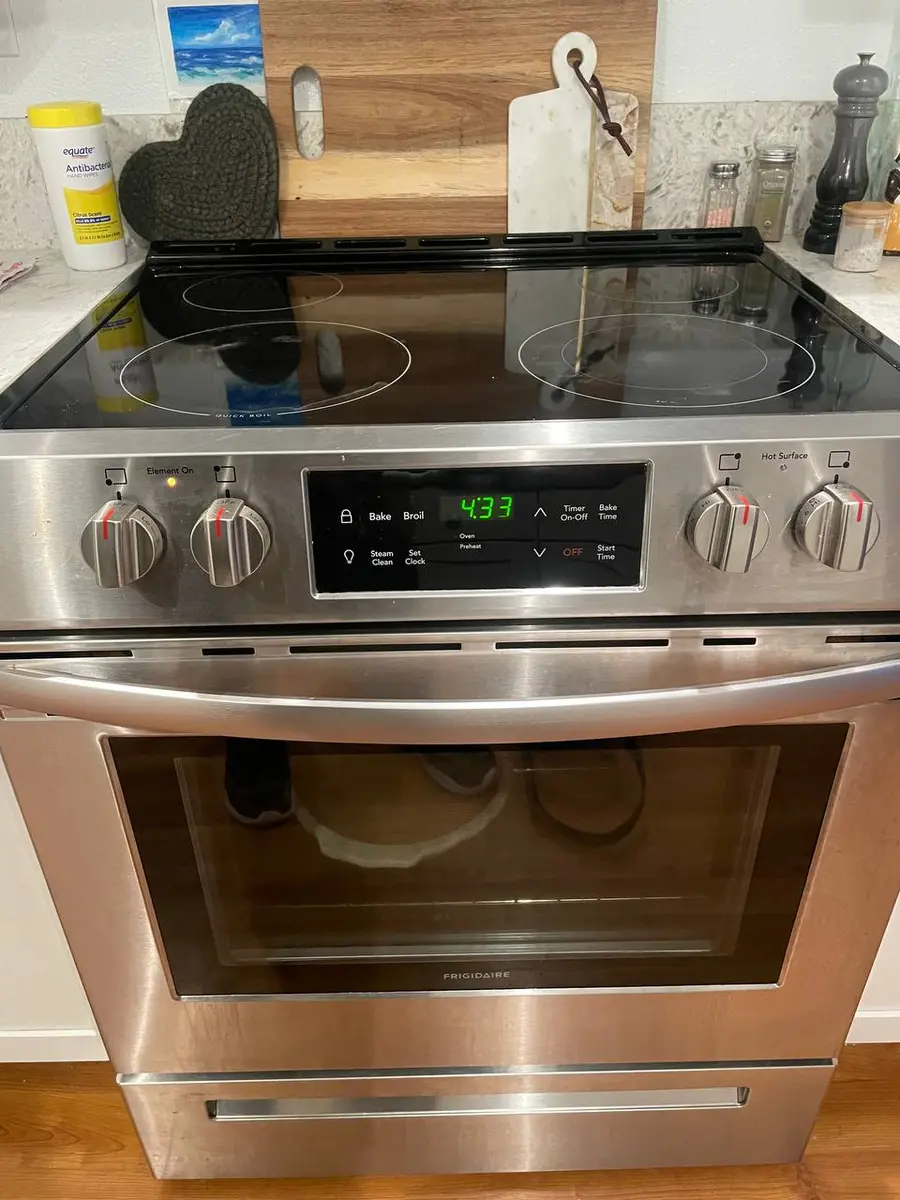
Smooth-top ranges use radiant elements under glass, and their infinite switches include a limiter tuned to the element wattage. Never fit a coil-top switch on a glass-top range — it can overheat and crack the cooktop, turning a cheap switch job into an expensive glass replacement. Infinite switches generally last 8 to 15 years; heavy High-heat use wears them faster because the contacts stay closed continuously instead of cycling. The oven's own selector switch, which routes power between bake and broil, is a separate part (WP3149400) and fails far less often than the surface switches.
Senior Gas Appliance Specialist · 18 years experience
AGA-certified gas appliance specialist with 18 years of experience in residential and commercial oven, range, and cooktop repairs.