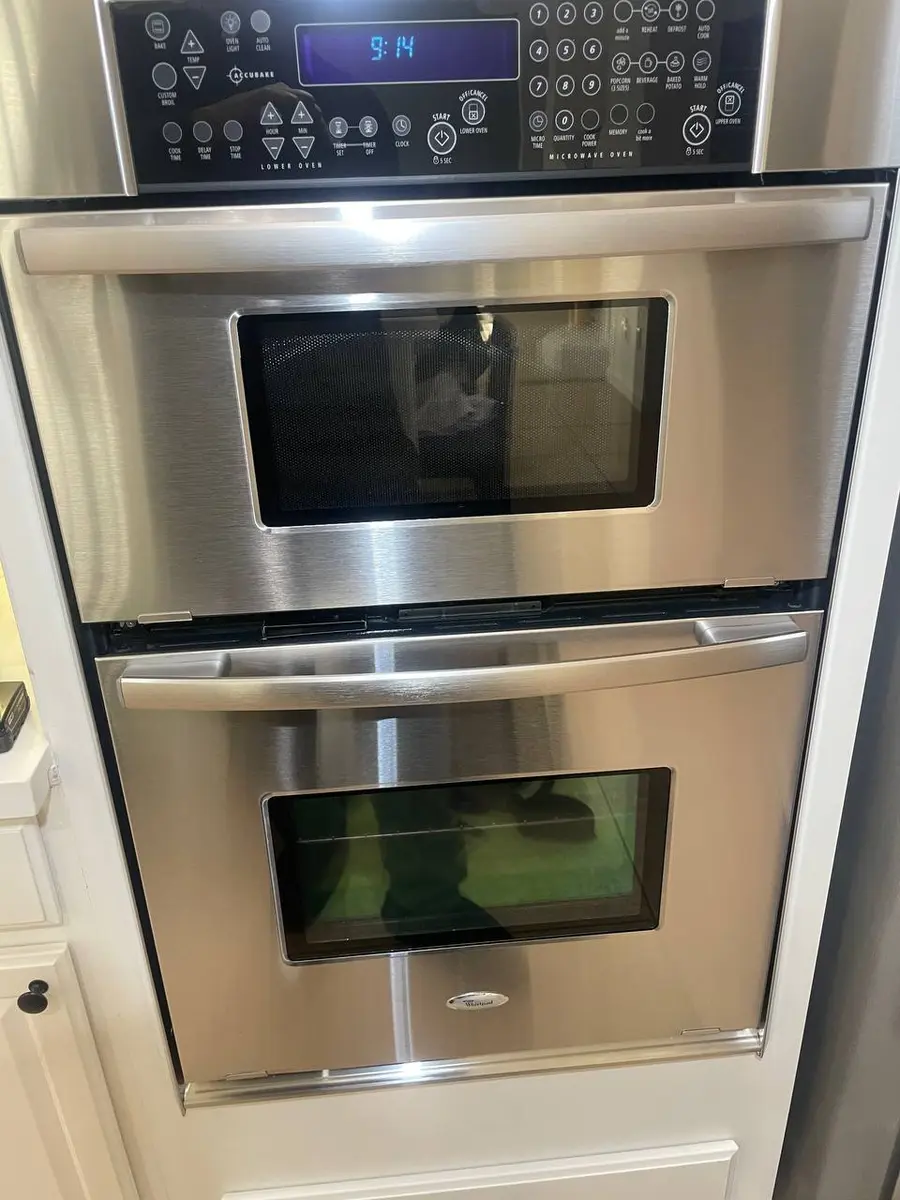
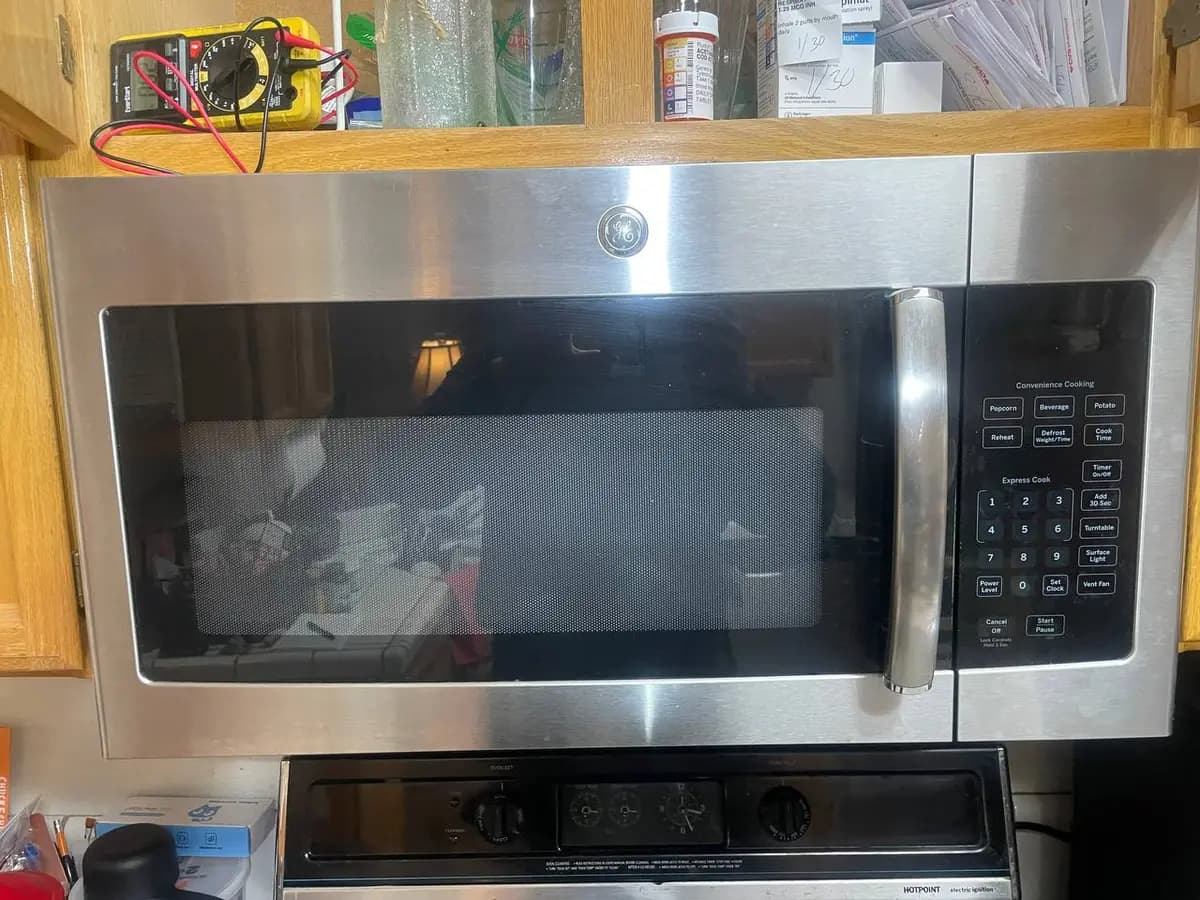
You hit start and see flashes of light arcing inside your microwave. Sparking inside a microwave is alarming, but in most cases the cause is identifiable and fixable. The sparks are electrical arcs caused by microwaves concentrating on a conductive point — metal fragments, damaged paint, or a burned-out waveguide cover. Some causes are harmless and DIY-fixable; others indicate component failure that needs professional attention. Here's how to tell the difference.
1. Damaged Waveguide Cover#
The Problem: The waveguide cover is a thin, square piece of mica or cardboard mounted on the interior wall (usually the right side or top) of the microwave cavity. It protects the magnetron opening from food splatter. When food residue burns onto the cover or the cover develops holes from repeated heating, microwaves concentrate at the damage points and arc — producing visible sparks and a burning smell.
What to Check:
- Locate the waveguide cover — a small rectangular panel (roughly 3" x 5") on the interior wall
- Look for burn marks, holes, dark spots, or charring on the cover surface
- Food buildup on the cover acts as a fuel source for arcing
DIY or Pro: Waveguide covers cost varies by model and region and are the easiest microwave repair. Most are held in place by one or two clips or screws. Remove the old cover, clean the area behind it, and snap in the replacement. You can order generic mica sheets and cut to size. Stop the sparking immediately — continued arcing can damage the magnetron, which is a much more expensive component.
Typical Cost: varies by model and region DIY; varies by model and region with a technician.
Do You Have the Right Tools?
High-voltage capacitor discharge tool ($90), magnetron tester ($200), microwave leakage detector ($150). Our technician arrives with $3,000+ in professional tools — your diagnostic is free.
Licensed & Insured · 90-Day Warranty · Same-Day Service
2. Metal or Metallic Objects Inside#
The Problem: Any metal inside the cavity concentrates microwave energy and creates arcing. Common culprits: aluminum foil, twist ties, cups with gold or silver trim, stainless steel travel mugs left inside, or metal staples on tea bag tags. Even small metallic fragments from a damaged rack can cause dramatic sparking.
What to Check:
- Remove all items from the microwave and inspect for forgotten metal
- Check the turntable for metallic paint chips or fragments
- Inspect bowls and plates for metallic trim or decoration (common on older china)
DIY Fix: Remove the metal object. Run the microwave empty for 30 seconds with a cup of water inside (never run a microwave completely empty) to confirm the sparking has stopped. If sparking continues with no metal present, the cause is internal.
Typical Cost: $0.
3. Damaged Interior Paint or Cavity Coating#
The Problem: The interior of a microwave is coated with a special paint that reflects microwaves evenly. When this coating chips, scratches, or rusts (common around the turntable track and door seal area), exposed metal concentrates microwave energy and arcs. Rust spots are particularly problematic because they expand over time as arcing burns away surrounding paint.
What to Check:
- Look for rust spots, peeling paint, or bare metal inside the cavity
- Check around the turntable track, door frame, and ceiling where steam condenses
- Touch up chips immediately before they spread
DIY or Pro: Microwave-safe cavity paint is available for varies by model and region. Clean the damaged area, sand lightly, and apply 2–3 thin coats. The paint must be FDA-compliant microwave-safe — do not use regular appliance paint. If rust has eaten through the cavity wall, the microwave should be replaced for safety reasons.
Typical Cost: varies by model and region for paint; replacement if cavity is perforated.
Safety First — Know the Risks
Microwave capacitors store lethal voltage (4,000V+) even when unplugged. This is the single most dangerous DIY appliance repair. Our techs are licensed and insured — let them handle the risk.
Licensed & Insured · 90-Day Warranty · Same-Day Service
4. Faulty Stirrer or Mode Stirrer Motor#
The Problem: Many microwaves use a stirrer — a metal blade behind a cover at the top of the cavity that distributes microwave energy evenly. If the stirrer motor fails or the blade becomes damaged, microwaves concentrate in one area instead of being distributed. This can cause arcing at hot spots and uneven cooking. You may notice that food heats unevenly — scalding hot in some spots, cold in others.
What to Check:
- Listen for the stirrer motor running — it produces a faint humming sound during operation
- If the turntable works but the top of the cavity is quiet, the stirrer motor may have failed
- Remove the stirrer cover (if accessible) and check the blade for damage or grease buildup
DIY or Pro: Stirrer motors cost varies by model and region. Accessing the motor requires removing the top cover of the microwave cabinet. Microwave repair safety warning: the high-voltage capacitor inside a microwave can hold a lethal charge even when unplugged. Never open the microwave cabinet unless you know how to safely discharge the capacitor.
Typical Cost: varies by model and region with a technician.
5. Worn or Faulty Magnetron#
The Problem: The magnetron is the component that generates microwaves. A failing magnetron can produce erratic microwave output that causes arcing inside the cavity. Symptoms include sparking combined with reduced heating power, unusual buzzing or humming sounds louder than normal, and the microwave taking much longer to heat food.
What to Check:
- If food takes 2–3x longer to heat than usual AND you see sparking, the magnetron may be failing
- Listen for abnormal buzzing — a healthy magnetron produces a steady, quiet hum
- If the waveguide cover is clean and undamaged and there's no metal inside, the magnetron is the next suspect
DIY or Pro: Magnetron replacement is strictly a professional repair. The component handles 4,000+ volts and requires proper discharge of the high-voltage capacitor before handling. Magnetrons cost varies by model and region. Given that a new microwave cost varies by model and region magnetron replacement is often not cost-effective unless the microwave is a built-in or over-the-range unit.
Typical Cost: varies by model and region with a technician; consider replacement for countertop models.
The Real Cost of DIY
Average DIY attempt: $150-400 in tools you may use once, plus the risk of further damage. Our diagnostic visit costs $0 — we find the problem and give you an honest quote.
Licensed & Insured · 90-Day Warranty · Same-Day Service
When to Call a Professional#
Replace the waveguide cover first — it's a $5 fix that resolves most sparking issues. If sparking continues after replacing the cover and confirming no metal is present, the cause is internal (stirrer motor, magnetron, or wiring). Do not attempt internal microwave repairs yourself — the high-voltage capacitor stores enough charge to cause serious injury or death even when the microwave is unplugged. This applies to all microwave brands and models. Sacramento and Bay Area homeowners with built-in or over-the-range microwaves should always call a professional due to the added complexity of working in a cabinet installation.
FAQ#
Q: Is a sparking microwave dangerous? A: Sparking from a damaged waveguide cover or metal inside the cavity is not immediately dangerous — but stop the microwave immediately. Continued arcing can damage the magnetron (significant cost repair) or, in extreme cases, melt cavity components. Sparking from a failing magnetron or exposed wiring is a fire and safety hazard.
Q: Can I still use my microwave if it sparked once? A: Identify the cause first. If a metal object was inside, remove it and test with a cup of water — the microwave is fine. If the waveguide cover is damaged, replace it before using the microwave again. If you can't identify the cause, have it inspected.
Q: My microwave sparks only when empty. Is that normal? A: Never run a microwave empty. With no food to absorb the microwave energy, it bounces back to the magnetron and can cause arcing or magnetron damage. Always place at least a cup of water inside when testing.
Q: How do I prevent waveguide cover damage? A: Cover food when microwaving to prevent splatter. Clean the interior monthly, paying attention to the waveguide cover area. Wipe splatter immediately — baked-on food is harder to remove without damaging the cover. Replace the cover at the first sign of discoloration or charring (varies by model and region).
Appliance Repair Technician & Diagnostics Specialist · 10 years experience
Electronics and diagnostics specialist with 10 years of experience in modern smart appliance repair, specializing in LG and Samsung.