What this page measures#
Every number below comes from fw_models certified registries: 105 catalogued side-by-side refrigerators from 28 brands.
A certified-product listing is a manufacturer filing, so this is a census of what is CERTIFIED — not of what is on sale, not of what is installed, and not of every brand on the market. Read each row as "of the 105 side-by-side refrigerators in this corpus", never as "of all side-by-side refrigerators". Each row states its own count, because not every listing fills in every field. Method: /methodology.
The short answer for side-by-side refrigerators#
The 105 side-by-side refrigerators catalogued here come from 28 brands, and every one of them states all five specs in the table, which is unusual and makes the rows directly comparable. The middle listing is 35.9 inches wide and 70.1 inches tall, with a total volume of 24.8 cubic feet; the full ranges are 31.3 to 48 inches wide, 65.6 to 84 inches tall, and 15.6 to 29.5 cubic feet. Adjusted volume — the figure that weights freezer space more heavily than fresh-food space, because a freezer costs more to hold — sits at a median of 31.6 against a range of 20.2 to 37.3. Annual energy use runs from 420 to 805 kilowatt-hours a year around a middle listing of 640. Each of those medians is a real filing's value, and all of them describe this catalogue of certified listings rather than what is on sale or installed.
Do You Have the Right Tools?
Refrigerant gauges ($200+), vacuum pump ($250), leak detector ($150), and EPA-certified recovery equipment. Our technician arrives with $3,000+ in professional tools — your diagnostic is free.
Licensed & Insured · 90-Day Warranty · Same-Day Service
How side-by-side refrigerators measure#
Lowest, middle and highest value stated by the side-by-side refrigerators in this corpus. The middle value is a median, so a real listing holds it.
| Spec | Lowest | Median | Highest | Models stating it | Brands |
|---|---|---|---|---|---|
| Adjusted volume (cu ft) | 20.2 | 31.6 | 37.3 | 105 of 105 | 28 |
| Annual energy use (kWh/yr) | 420 | 640 | 805 | 105 of 105 | 28 |
| Total volume (cu ft) | 15.6 | 24.8 | 29.5 | 105 of 105 | 28 |
| Height (in) | 65.6 | 70.1 | 84 | 105 of 105 | 28 |
| Width (in) | 31.3 | 35.9 | 48 | 105 of 105 | 28 |
Every row above is a claim about one corpus — fw_models certified registries: 105 catalogued side-by-side refrigerators from 28 brands (a certified-product census is not a census of units in service, and not every brand on the market is certified). Not every listing fills in every field, so the "Models stating it" and "Brands" columns are that ROW's own denominators: they count the models that state THAT spec, never the corpus total. Method: /methodology.
How to use these numbers#
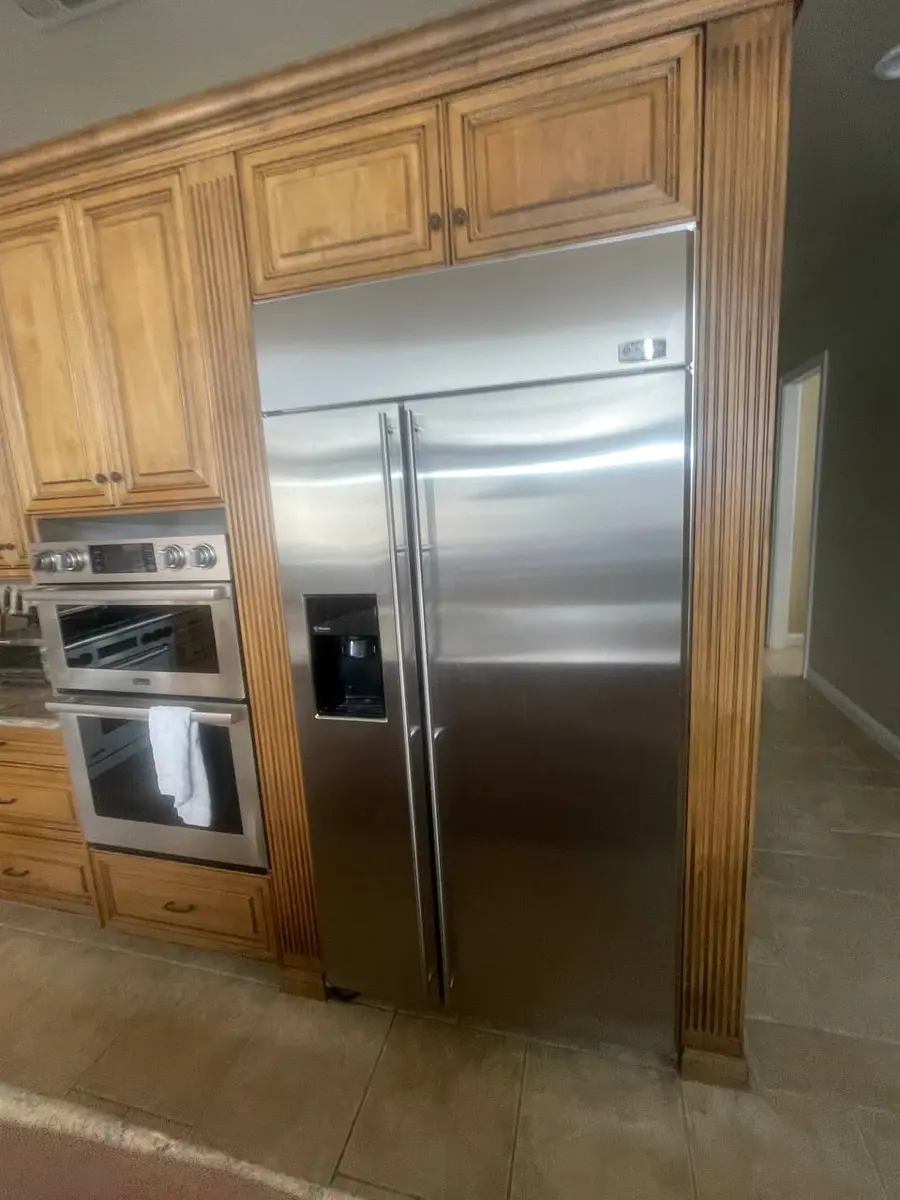
Start with the width, because on this appliance it is the number that decides everything else. The median of 35.9 inches is effectively the standard opening a kitchen is built around, and it is worth noticing how tight the middle of this distribution is: from 31.3 at the bottom to 48 at the top, but with the middle listing sitting barely above thirty-five and a half. The listings up at the top of that range are a different proposition — built-in and counter-depth units designed into cabinetry rather than slid into a gap — so the maximum is not a figure to plan around unless you already know that is what you are buying.
Height carries the same warning in a quieter form. A median of 70.1 inches clears most cabinetry, but the range reaches 84 inches, and a unit near the top will not fit under a soffit that a median-height one clears easily.
The two volume rows repay reading together. Total volume is the physical space inside; adjusted volume weights the freezer portion upward, which is why the adjusted figures run higher on the same machines. Comparing one listing's total against another's adjusted is the easy mistake, and it makes the second look bigger than it is. Remember too that a side-by-side's usable space is shaped by its narrow doors — a wide platter that fits a 24.8 cubic foot cabinet on paper may not pass its shelf openings.
Energy use is a comparison tool rather than a forecast. It assumes a standard test protocol, not your kitchen, its door-opening habits or its ambient temperature. Two households with the same model will not match the figure; what it earns is a fair comparison between listings measured the same way.
Senior Gas Appliance Specialist · 18 years experience
AGA-certified gas appliance specialist with 18 years of experience in residential and commercial oven, range, and cooktop repairs.