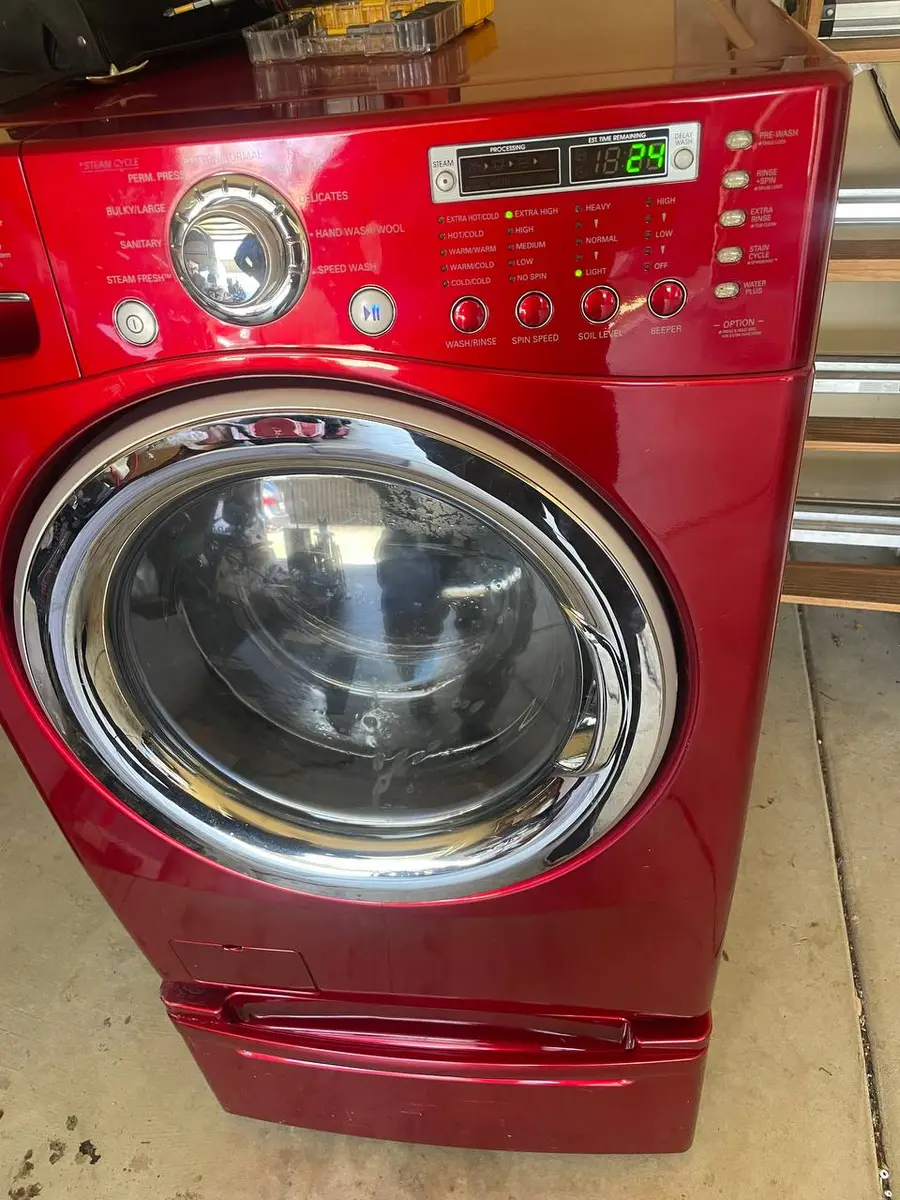
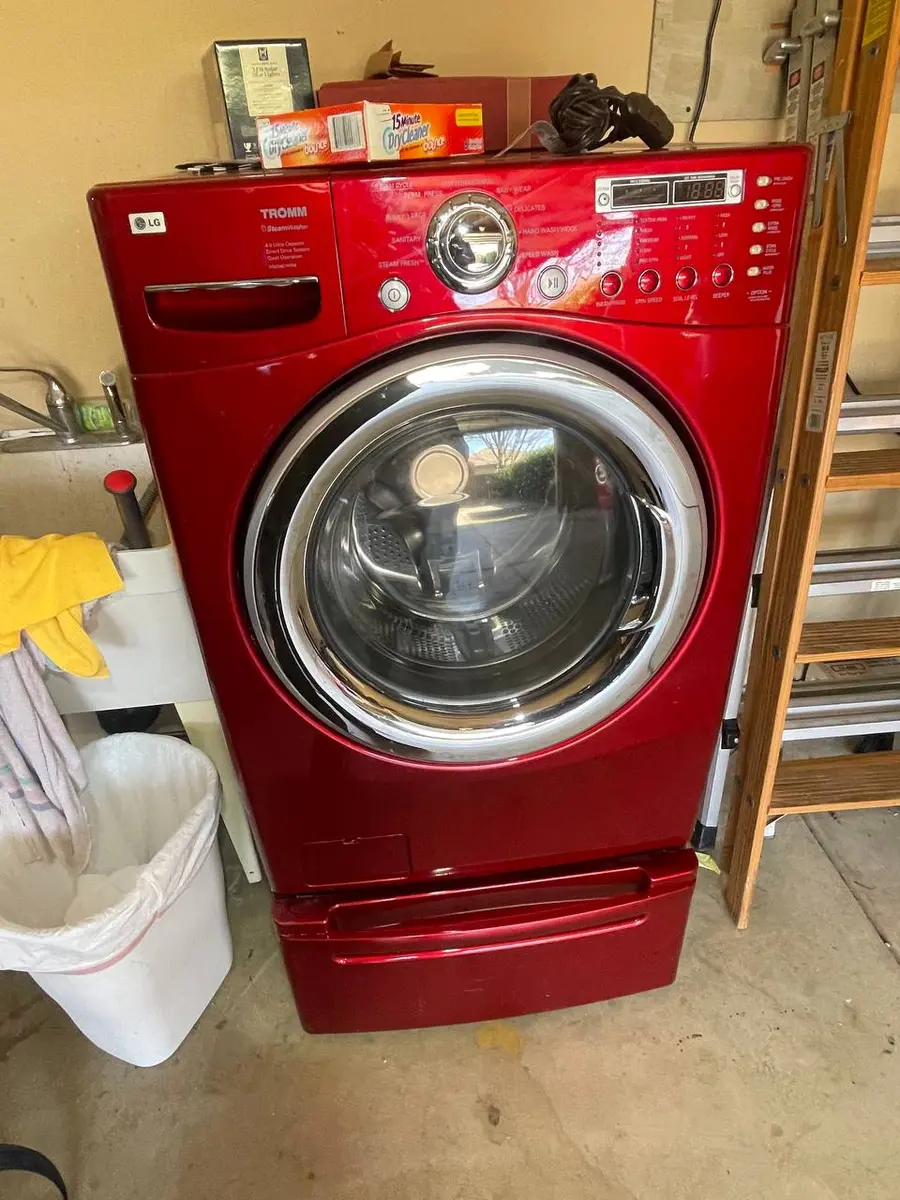
<p>When your [Samsung washer](/blog/samsung-washer-dryer-combo-error-codes) refuses to spin, clothes come out soaking wet and the cycle never completes. Samsung's front-load WF45R6100AW and top-load WA50R5400AW series both use direct drive motors that eliminate the belt — but introduce their own failure points. The VRT Plus vibration reduction system adds another layer of complexity that generic guides miss entirely.</p>
<h2>Quick Answer</h2>
<p>Samsung washers that won't spin are most commonly caused by a faulty hall sensor on the direct drive motor (40% of cases), a failed door lock assembly preventing cycle progression, or the VRT Plus balance sensor incorrectly detecting an imbalance. Check for error codes dC (door), UE/Ub (unbalanced), or 3E (motor) on the display first.</p>
<h2>Identify Your <a href="https://www.samsung.com/us/support/troubleshooting/" rel="nofollow noopener" target="_blank">Samsung Washer</a> Type</h2>
<p>Samsung uses two distinct washer platforms, and the spin failure causes differ significantly:</p>
<ul>
<li><strong>WF-series front-loaders (WF45R, WF50R, WF45T):</strong> Direct drive motor with hall sensor, VRT Plus balance system, door lock interlock required before spin.</li>
<li><strong>WA-series top-loaders (WA50R, WA52J, WA45T):</strong> Direct drive with pulsator, suspension rods with dampers, lid lock required.</li>
</ul>
<p>Check the model number on the sticker inside the door frame or under the lid to identify your type.</p>
<h2>What Are the Most Common Causes?</h2>
<h3>1. Hall Sensor Failure on Direct Drive Motor (40% of Cases)</h3>
<p>Samsung's direct drive system relies on a hall sensor to track rotor position. When this sensor fails, the control board cannot determine motor speed and refuses to enter high-speed spin. Error code 3E, 3E1, 3E2, 3E3, or 3E4 typically displays. The sensor is a part mounted on the stator assembly behind the rear panel.</p>
<p>Our repair teams consistently find wear on the primary failure component as the leading trigger for this issue on Samsung appliances.</p>
<p>On WF45R6100AW models specifically, the hall sensor connector is prone to vibration-induced loosening — sometimes simply reseating the connector resolves the issue without part replacement.</p>
<p><strong>DIY Difficulty:</strong> Moderate — requires rear panel removal<br/>
<strong>Parts <br/>
<strong>Professional</p>
<h3>2. Door Lock Assembly Failure (25% of Cases)</h3> <p>Samsung front-loaders require the door lock to fully engage before the spin cycle activates. A worn lock mechanism or failed PBA (Printed Board Assembly) within the lock prevents the interlock signal from reaching the control board. Error code dC, dC1, or dE displays. Common on WF45 models after 3-4 years of daily use.</p> <p><strong>DIY Difficulty:</strong> Moderate<br/><strong>Parts <br/>
<strong>Professional</p>
<h3>3. VRT Plus Balance Sensor Malfunction (15% of Cases)</h3> <p>Samsung's Vibration Reduction Technology Plus uses accelerometers to detect drum imbalance. When these sensors fail or their calibration drifts, the washer repeatedly attempts to redistribute the load and eventually abandons the spin cycle entirely. Error code UE or Ub displays even with a properly balanced load. This is distinct from an actual imbalance — if redistributing clothes manually does not resolve UE, the sensor itself has likely failed.</p> <p><strong>DIY Difficulty:</strong> Professional recommended<br/><strong>Parts <br/>
<strong>Professional</p>
<h3>4. Worn Tub Bearings (12% of Cases)</h3> <p>After 5-7 years, the main bearing and seal assembly wears, causing a grinding noise during spin. Eventually the bearing seizes and the drum cannot rotate at spin speed. Samsung WF-series bearings are pressed into the rear tub half, making this a tub-replacement job on most models — unlike brands that use a bolt-in bearing.</p> <p><strong>DIY Difficulty:</strong> Professional only<br/><strong>Parts (rear tub assembly)<br/>
<strong>Professional</p>
<h3>5. Suspension Rod Dampers (WA Top-Loaders, 8% of Cases)</h3> <p>Samsung WA-series top-loaders use four suspension rods with damper assemblies. When dampers wear out, the tub bounces excessively during spin, triggering the out-of-balance switch. The washer may spin briefly then stop, or refuse to reach full speed. Replace all four rods as a set — partial replacement causes uneven damping.</p> <p><strong>DIY Difficulty:</strong> Easy-Moderate<br/><strong>Parts (set of 4)<br/>
<strong>Professional</p>
<h2>Step-by-Step Diagnosis</h2> <ol> <li><strong>Check for error codes</strong> — note the exact code on the display panel (3E, dC, UE, Ub).</li> <li><strong>Test door lock</strong> — on front-loaders, listen for the click when the door closes. No click = lock failure.</li> <li><strong>Run a small test load</strong> — 2-3 towels only. If it spins fine, the issue is load-related (dampers or balance sensor).</li> <li><strong>Listen during spin attempt</strong> — grinding = bearings; humming but not turning = motor/hall sensor; clicking = door lock.</li> <li><strong>Check drain</strong> — if the washer does not fully drain before spin, the extra water weight prevents spin. Clean the debris filter (front-bottom panel).</li> <li><strong>Samsung Smart Washer app</strong> — on WiFi-connected models (WF45R6300AW), run SmartThings diagnostics for detailed sensor readings.</li> </ol> <h2>Should You DIY or Call a Professional?</h2> <table> <tr><th>Issue</th><th>DIY?</th><th>Parts Cost</th><th>Professional Cost</th></tr> <tr><td>Hall sensor</td><td>Moderate</td><td></td><td></td></tr> <tr><td>Door lock assembly</td><td>Moderate</td><td></td><td></td></tr> <tr><td>VRT balance sensor</td><td>Professional</td><td></td><td></td></tr> <tr><td>Tub bearings</td><td>Professional</td><td></td><td></td></tr> <tr><td>Suspension rods (WA)</td><td>Easy-Moderate</td><td></td><td></td></tr> </table> <h2>FAQ</h2> <p><strong>Q: My Samsung washer shows UE but the load is balanced. What's wrong?</strong></p> <p>A persistent UE code with a properly distributed load indicates the VRT Plus balance sensor has failed or lost calibration. On models older than 4 years, sensor replacement ( part) is the fix. On newer models, try a factory reset first: power off, hold Start/Pause + Delay End for 5 seconds while powering back on.</p> <p><strong>Q: Is the Samsung washer 3E error always the hall sensor?</strong></p> <p>Not always. 3E indicates a motor-related issue — it could be the hall sensor (most common), a wiring harness break between motor and board, or the stator assembly itself. A multimeter reading on the hall sensor connector (should read 5-10 kohms between pins) isolates the specific component.</p> <p><strong>Q: Should I replace bearings on a 6-year-old Samsung washer?</strong></p> <p>Bearing replacement on Samsung front-loaders varies by model and condition professionally because the bearing is pressed into the rear tub half. A new WF45 varies by model and condition. If the washer is otherwise functioning well and you value the features, repair is reasonable. Over 7 years old, replacement is often more cost-effective.</p> <hr/> <p><em>Need help with your Samsung washer? EasyBear technicians carry Samsung-specific diagnostic tools and OEM parts on every service call. <a href="/book">Schedule service</a></em></p>4.85 (232 verified reviews)
Same-Day Appliance Repair
Fixed or It's Free
Free Service Call & Diagnosis — no hidden fees, offer ends Jun 10
MR
Mike Rodriguez
Senior Appliance Repair Technician · 15 years experience
EPA 608 UniversalNASTeC Certified
EPA-certified technician with 15 years of experience specializing in refrigerator and cooling system repairs.