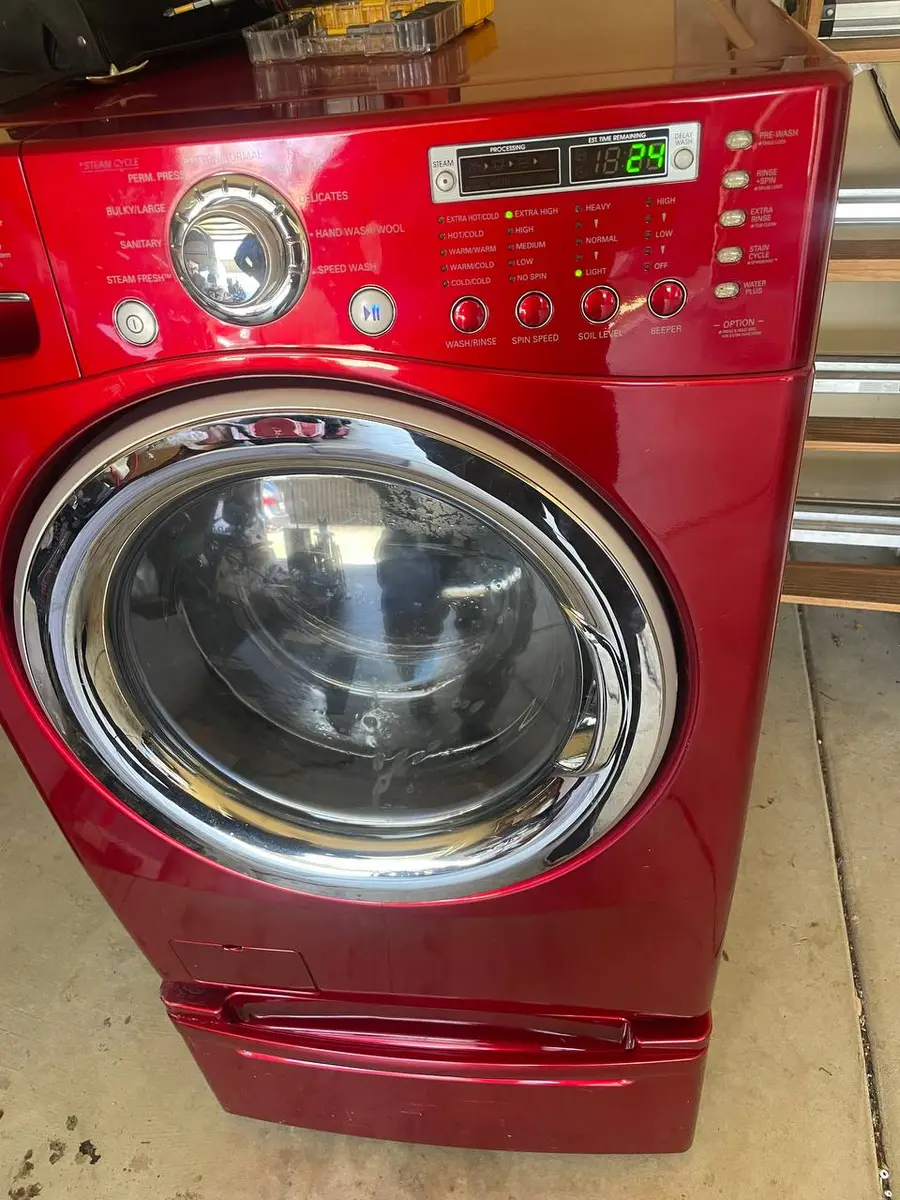
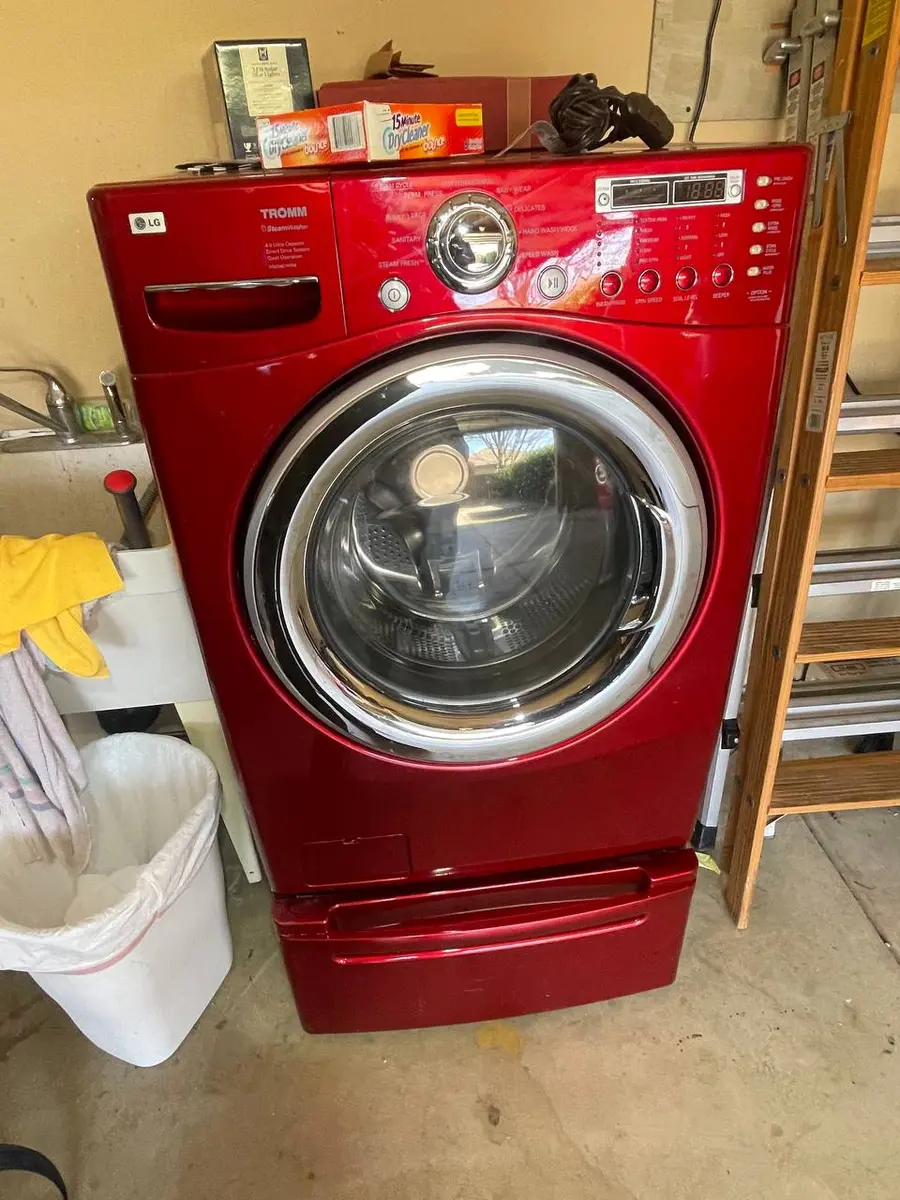
What this LG vs Whirlpool comparison is based on#
These two records sit at opposite ends of one axis. Whirlpool's is the most concentrated washer corpus in this class — its leading component takes 14% of the reports — and LG's is the flattest, topping out at 5%. Both cover 2011 to 2026, and both are CPSC SaferProducts incident reports: 295 naming an LG washer, 115 naming a Whirlpool one.
The usual caveat holds on both sides. A report is a submission, filed by an owner, a retailer, an agency or a manufacturer; no report exists for a washer that works; and the CPSC publishes no count of machines sold or in service. So nothing here is a rate, and the comparison is between two piles of complaints.
A 9-point gap built on 16 documents against 14#
The control board separates the two columns by more than any component on any page in this class outside the very smallest corpora: 14% of the Whirlpool reports against 5% of the LG ones. Then look underneath. 16 Whirlpool filings against 14 LG ones — two documents apart.
Nothing in that row describes a difference between the machines. It describes 115 in one denominator and 295 in the other. It is the single best illustration in the whole set of why a percentage without its count is not enough information, and it happens to be the widest gap on this page.
The same thing happens to the cord#
The wiring or power cord reads 8% for Whirlpool against 3% for LG, a 5-point gap. The counts are 9 filings on each side — identical. Two rows on this page, the two widest, and between them the paperwork differs by two documents in total.
The rows that do hold#
Three components separate the records in a way that survives being read in documents. The drain pump or hose is at 5% of the Whirlpool reports against 1% of the LG ones, on 6 filings against 3 — a Whirlpool lead from the smaller corpus, which the denominator does not manufacture. The motor runs the other way at 4% for LG against 2% for Whirlpool, on 13 filings against 2. So does the igniter, at 3% against 1%, on 8 filings against 1.
Those three are the honest content of this comparison. One leans Whirlpool, two lean LG, and each rests on counts that point the same way as the shares.
Concentration against spread#
Whirlpool's list descends steeply: 14%, then 8%, then the drain pump or hose and lint trap or vent tied at 5%, the heating element at 3%, and five components at 2% or 1%. Its top two entries carry 25 filings between them out of 115.
LG's barely descends at all. The control board at 5%, the motor at 4%, then the wiring or power cord, igniter and lint trap or vent tied at 3%, the water valve or line at 2%, the drain pump or hose at 1%, and four components rounding to 0% on one filing apiece. Eleven components, and the distance from top to bottom is 5 points.
Some of that contrast is arithmetic — a corpus of 115 concentrates more readily than one of 295 — and some of it is real, since Whirlpool's leader holds 16 documents in a record less than half the size of LG's.
It is worth being precise about what "concentrated" means for a record this size. 115 documents divided among ten components leaves each entry standing on single or low double figures, so the shape of that column is decided by a small number of filings and would redraw itself if a dozen more arrived. LG's column, spread across 295 documents, is the steadier of the two even though it says less.
Where the two agree quietly#
The lint trap or vent splits 3% for LG against 5% for Whirlpool, on 8 filings against 6. The heating element splits 0% against 3%, on 1 filing against 3. The thermostat or sensor splits 0% against 2%, on 1 against 2. The drive belt and the water valve or line sit inside the table's one-report noise band, at 1 filing against 1 and 5 against 1.
Those rows are built from a handful of documents each, and the table treats most of them accordingly.
The practical read#
Both records begin at the control board, and on the Whirlpool side that is the strongest single concentration in this class at 14%. After it, a Whirlpool washer's record points at the cord on 9 filings and the drain pump or hose on 6. An LG washer's record offers five candidates between 5% and 3% and no clear order among them, with the motor the best-supported at 13 filings.
Two very different shapes, and — once the counts are read alongside the shares — a much smaller difference in substance than the difference column suggests.
LG vs Whirlpool washers: what the reports mention#
Both columns are shares of their own corpus, and the corpora differ in size. LG: CPSC SaferProducts incident reports for LG washers, 2011-2026, n=295. Whirlpool: CPSC SaferProducts incident reports for Whirlpool washers, 2011-2026, n=115. A difference no larger than one report on either side is marked "within one-report noise".
| Component mentioned | LG | Whirlpool | Difference |
|---|---|---|---|
| Control Board | 5% (14 of 295) | 14% (16 of 115) | 9 points more often for Whirlpool |
| Wiring or Power Cord | 3% (9 of 295) | 8% (9 of 115) | 5 points more often for Whirlpool |
| Drain Pump or Hose | 1% (3 of 295) | 5% (6 of 115) | 4 points more often for Whirlpool |
| Heating Element | 0% (1 of 295) | 3% (3 of 115) | 3 points more often for Whirlpool |
| Igniter | 3% (8 of 295) | 1% (1 of 115) | 2 points more often for LG |
| Lint Trap or Vent | 3% (8 of 295) | 5% (6 of 115) | 2 points more often for Whirlpool |
| Motor | 4% (13 of 295) | 2% (2 of 115) | 2 points more often for LG |
| Thermostat or Sensor | 0% (1 of 295) | 2% (2 of 115) | 2 points more often for Whirlpool |
| Drive Belt | 0% (1 of 295) | 1% (1 of 115) | 1 point more often for Whirlpool (within one-report noise) |
| Water Valve or Line | 2% (5 of 295) | 1% (1 of 115) | 1 point more often for LG (within one-report noise) |
About the corpus: these are CPSC SaferProducts reports — incidents someone chose to report, not units sold — so the shares on this page are shares of the reports and never a failure rate. The corpus is weighted toward safety events: 12,007 of its 20,581 records (58%) are fire, smoke, burn or melt reports, which over-represents the components that burn and under-represents the ones that merely stop working.
Do You Have the Right Tools?
Bearing puller set ($120), drum spider wrench ($85), multimeter ($85), and diagnostic software. Our technician arrives with $3,000+ in professional tools — your diagnostic is free.
Licensed & Insured · 90-Day Warranty · Same-Day Service
LG washers: the reported component split#
LG washers — every share in this table is a share of: CPSC SaferProducts incident reports for LG washers, 2011-2026, n=295.
| Component mentioned | Share of reports | Reports |
|---|---|---|
| Control Board | 5% | 14 of 295 |
| Motor | 4% | 13 of 295 |
| Wiring or Power Cord | 3% | 9 of 295 |
| Igniter | 3% | 8 of 295 |
| Lint Trap or Vent | 3% | 8 of 295 |
| Water Valve or Line | 2% | 5 of 295 |
| Drain Pump or Hose | 1% | 3 of 295 |
| Condenser | 0% | 1 of 295 |
| Drive Belt | 0% | 1 of 295 |
| Heating Element | 0% | 1 of 295 |
| Thermostat or Sensor | 0% | 1 of 295 |
Shares of reports, not failure rates — see the corpus note above.
Whirlpool washers: the reported component split#
Whirlpool washers — every share in this table is a share of: CPSC SaferProducts incident reports for Whirlpool washers, 2011-2026, n=115.
| Component mentioned | Share of reports | Reports |
|---|---|---|
| Control Board | 14% | 16 of 115 |
| Wiring or Power Cord | 8% | 9 of 115 |
| Drain Pump or Hose | 5% | 6 of 115 |
| Lint Trap or Vent | 5% | 6 of 115 |
| Heating Element | 3% | 3 of 115 |
| Motor | 2% | 2 of 115 |
| Thermostat or Sensor | 2% | 2 of 115 |
| Drive Belt | 1% | 1 of 115 |
| Igniter | 1% | 1 of 115 |
| Water Valve or Line | 1% | 1 of 115 |
Shares of reports, not failure rates — see the corpus note above.
Safety First — Know the Risks
High-voltage components and pressurized water lines create flood and shock risk. A single loose fitting can cause thousands in water damage. Our techs are licensed and insured — let them handle the risk.
Licensed & Insured · 90-Day Warranty · Same-Day Service
How to use these numbers#
What this comparison can settle: which components the reported incidents of each brand actually concentrate on, for this appliance. What it cannot settle: which brand fails more often. That would need units sold, and no public source states it. Use the component split to plan for the repair each brand is most reported for, not to rank the two.
Senior Gas Appliance Specialist · 18 years experience
AGA-certified gas appliance specialist with 18 years of experience in residential and commercial oven, range, and cooktop repairs.