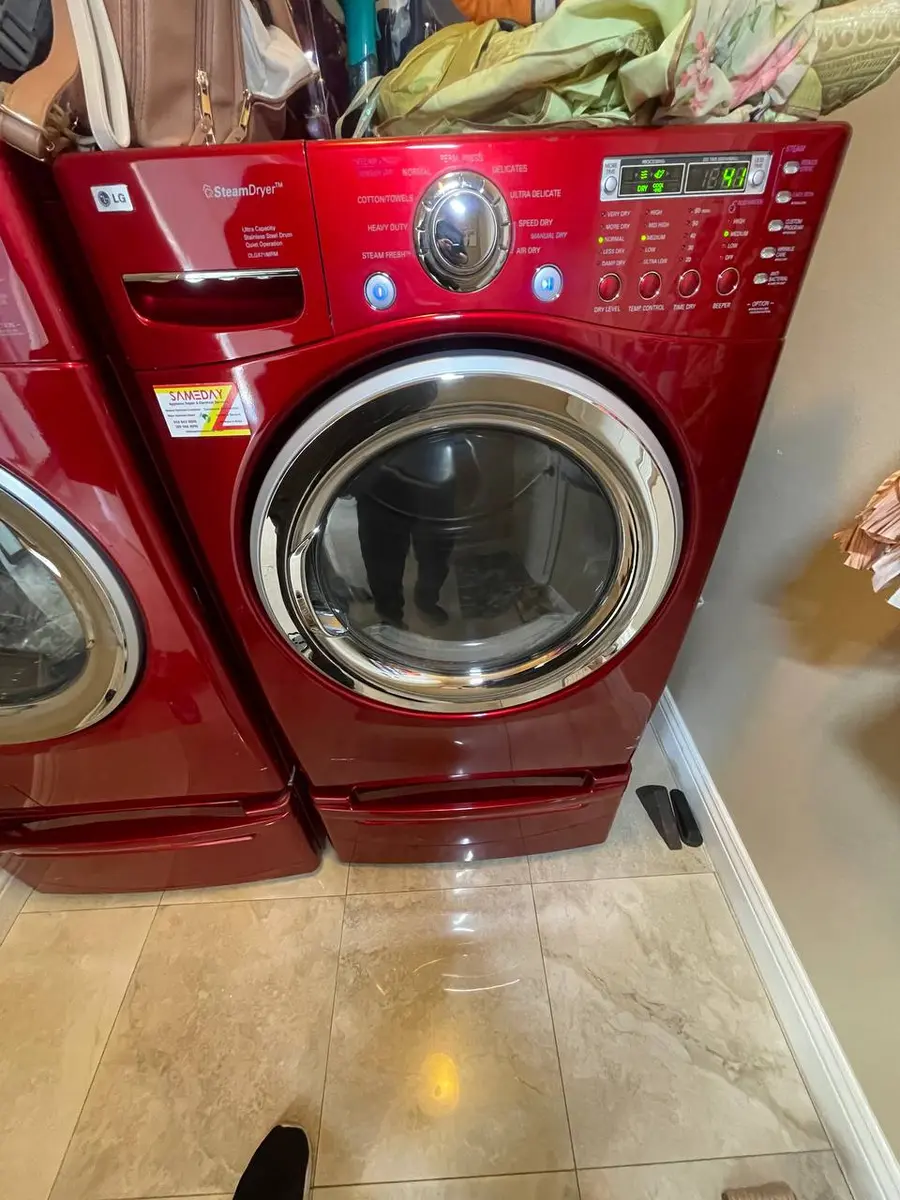
The LG dryer leaking issue has several possible causes, ranked here from most common to least common. LG Dual Inverter Heat Pump dryers (DLHX series) use a condensation system that produces water by design — leaks on these models have different causes than conventional dryers. Understanding which type you own determines the diagnosis path.
Quick Answer#
The LG dryer leaking issue has several possible causes, ranked here from most common to least common. LG Dual Inverter Heat Pump dryers (DLHX series) use a condensation system that produces water by design — leaks on these models have different causes than conventional dryers.
Do You Have the Right Tools?
Gas leak detector ($130), thermal fuse tester ($95), belt tension gauge, and vent inspection camera ($180). Our technician arrives with $3,000+ in professional tools — your diagnostic is free.
Licensed & Insured · 90-Day Warranty · Same-Day Service
Vented LG Dryers (DLEX/DLE/DLGX) — Water Should Not Be Present#
Standard LG vented dryers exhaust moisture as humid air through the vent duct. Water inside the dryer indicates:
1. Exhaust Vent Condensation (40% of cases)#
When the exhaust duct runs through an unheated space (attic, crawlspace, exterior wall), the temperature difference between hot exhaust air and cold duct walls causes condensation inside the duct. This water can flow back toward the dryer, collecting inside the cabinet or dripping from the vent connection.
When our technicians encounter this on a LG, wear on the primary failure component turns out to be the root cause more often than not.
LG-Specific Symptoms: Water puddle behind or under dryer, moisture at vent connection, worse in cold weather, FlowSense d80/d90 indicator may light (condensation restricts airflow).
Fix: Insulate the exhaust duct in unheated sections with duct insulation wrap. Ensure duct slopes slightly downward toward the exterior exit so condensation flows out rather than back. Replace any sagging duct sections that create low spots where water pools.
Parts Cost: (insulation) Professional Repair Cost: DIY Difficulty: Easy to Moderate
2. Blocked Exterior Vent Cap (25% of cases)#
If the exterior vent cap flap is stuck closed (ice, debris, lint), exhaust air backs up. The humid air cools inside the duct and condenses. Water flows back into the dryer cabinet.
Fix: Inspect and clean the exterior vent cap. Ensure the flap opens freely. In cold climates, check for ice buildup in winter. Replace damaged caps.
Parts Cost: (vent cap) DIY Difficulty: Easy
3. Overloaded or Extra-Wet Clothes (20% of cases)#
If the [washing machine](/blog/repair-or-replace-washer) is not spinning properly, clothes enter the dryer excessively wet. The dryer generates more moisture than normal, overwhelming the vent's ability to exhaust it. Water collects inside the drum and drips from the door seal or vent connection.
Fix: Verify washer is spinning properly (clothes should be damp, not dripping). Run washer through a spin-only cycle if clothes seem too wet. Reduce dryer load size.
4. Steam Function Malfunction (15% — select models)#
LG dryers with TrueSteam or Steam Fresh features inject steam for wrinkle release and sanitization. If the steam system's water inlet valve doesn't close properly, water continues entering the drum after the steam cycle ends.
Fix: Check steam inlet valve. Run a steam cycle and listen for water flowing after the steam injection period ends — continued flow indicates a stuck valve. Replace inlet valve if defective.
Parts Cost: (steam valve) Professional Repair Cost:
LG Dual Inverter Heat Pump Dryers (DLHX Series) — Condensation Is Normal#
DLHX heat pump dryers work differently: instead of venting moist air outside, they condense moisture from the air internally and collect it in a drain tank or drain it via a hose. Water is expected in this system.
Leaks on DLHX models indicate:
- Drain tank full: Empty the condensation tank (typically accessible at the top or bottom of the unit). Set a reminder to empty regularly.
- Drain hose blocked/kinked: If plumbed to a drain, check the hose for kinks, clogs, or improper routing.
- Condenser lint filter clogged: DLHX models have an internal condenser filter that must be cleaned monthly. Clogged condenser = poor condensation efficiency = water in wrong places.
- Door seal gap: If the gasket is worn, condensation inside the drum leaks from the door opening.
Prevention for DLHX models:
- Clean condenser lint filter monthly (inside the unit, accessible via bottom panel)
- Empty drain tank after every use if not plumbed
- Clean door gasket monthly to ensure tight seal
Safety First — Know the Risks
Gas dryers carry carbon monoxide and explosion risk. Even electric dryers involve 240V circuits that can deliver a fatal shock. Our techs are licensed and insured — let them handle the risk.
Licensed & Insured · 90-Day Warranty · Same-Day Service
General Prevention Tips#
- Ensure exhaust duct runs downhill toward exterior
- Insulate ducts running through unheated spaces
- Clean entire vent system annually
- Verify washer is spinning properly before loading dryer
- On DLHX models: establish a monthly condenser filter cleaning routine
FAQ#
Q: Is water leaking from my LG dryer dangerous? Not immediately dangerous, but water near electrical components creates shock and corrosion risk. Water around the dryer also promotes mold growth in the laundry area. Address the leak source promptly.
Q: My LG dryer drips water from the door only in winter — why? Cold weather increases condensation in the exhaust duct. The water flows back and collects at the lowest point — often where the duct connects to the dryer or at the drum door seal. Insulate the duct to prevent this seasonal issue.
LG dryer acting up? Our technicians diagnose and repair same-day across [Sacramento](/sacramento/sacramento) and the Bay Area. Book your repair
When Should You Call a Professional?#
Contact a certified appliance repair technician if:
- The issue persists after the basic troubleshooting steps above
- You notice electrical burning smell, sparking, or any sign of electrical damage
- The repair involves gas connections or high-voltage components
- Your LG dryer is within warranty — professional diagnosis preserves warranty coverage
- You are uncomfortable working with electrical or gas-connected appliances
EasyBear technicians carry LG OEM parts and model-specific diagnostic tools on every service call, eliminating return visits for parts ordering.
What Does the Repair Cost Breakdown Look Like?#
Here is what LG dryer leaking repair cost varies by component:
- Diagnostic fee: Covers inspection, testing, and identifying the root cause
- Parts: depends on which component has failed; OEM parts for LG may cost more than aftermarket
- Labor: most repairs take 30-90 minutes on-site
Total estimated range varies by model and repair complexity. EasyBear technicians provide an upfront quote after diagnosis — no hidden fees. The diagnostic fee is waived when you proceed with the repair.
The Real Cost of DIY
Average DIY attempt: $150-400 in tools you may use once, plus the risk of further damage. Our diagnostic visit costs $0 — we find the problem and give you an honest quote.
Licensed & Insured · 90-Day Warranty · Same-Day Service
Frequently Asked Questions#
Is water leaking from my LG dryer dangerous?#
Not immediately dangerous, but water near electrical components creates shock and corrosion risk. Water around the dryer also promotes mold growth in the laundry area. Address the leak source promptly.
My LG dryer drips water from the door only in winter — why?#
Cold weather increases condensation in the exhaust duct. The water flows back and collects at the lowest point — often where the duct connects to the dryer or at the drum door seal. Insulate the duct to prevent this seasonal issue.
How much does LG dryer leaking repair cost?#
LG dryer leaking repair cost varies depending on parts and labor. The diagnostic fee is waived when you proceed with the repair. OEM LG parts may be at the higher end of the range. EasyBear provides an upfront quote after diagnosis with no hidden fees.
Senior Appliance Repair Technician · 15 years experience
EPA-certified technician with 15 years of experience specializing in refrigerator and cooling system repairs.