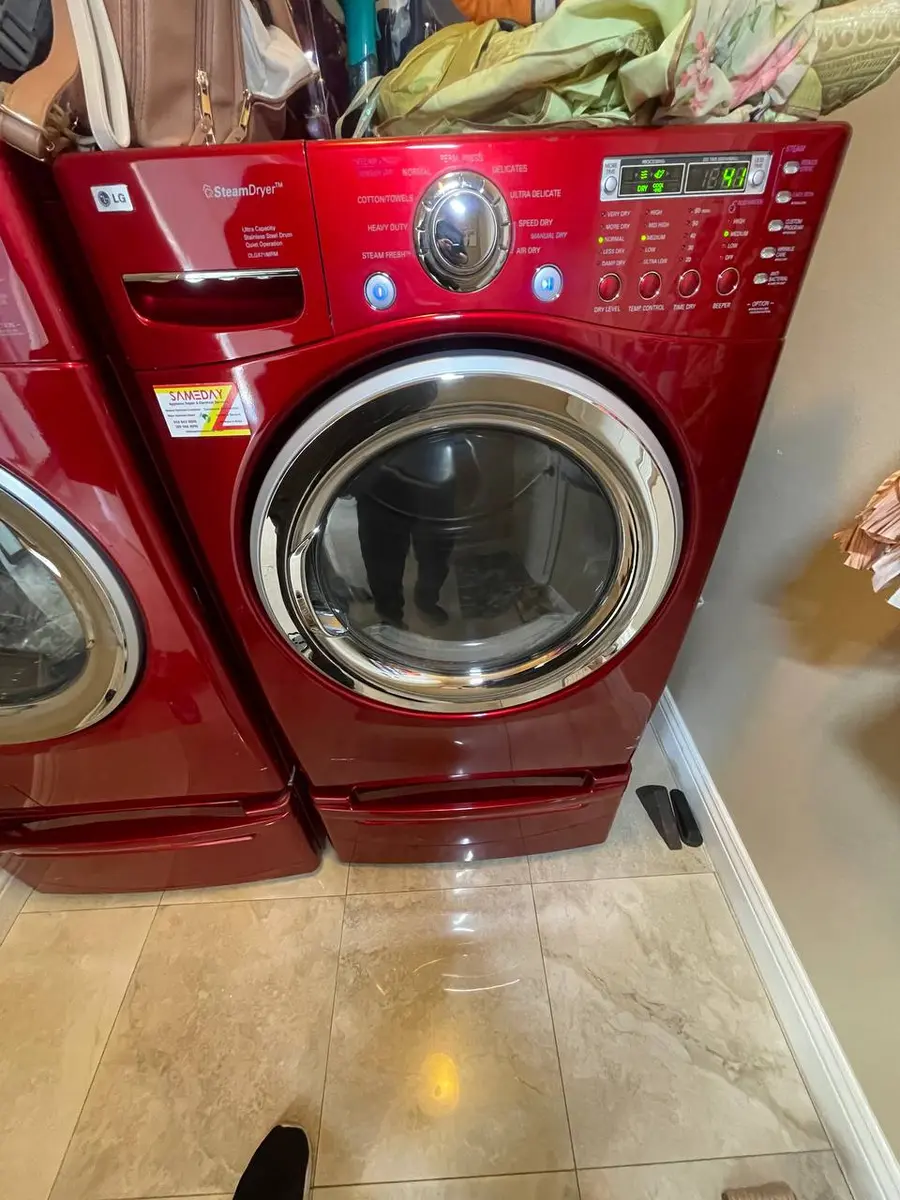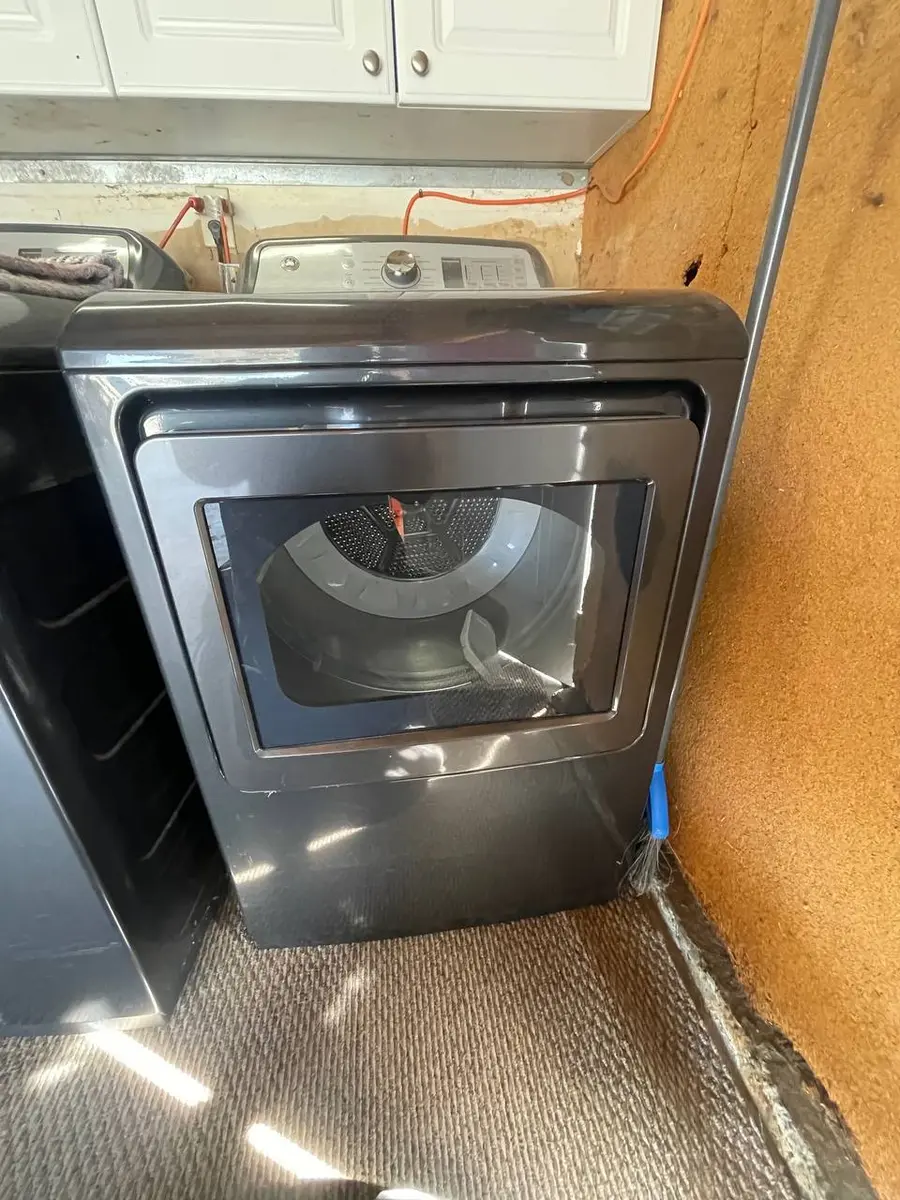
Is replacing the heating element worth it?#
Usually yes — but confirm it is actually the element first. On a Kenmore dryer the heating element is an inexpensive, commonly replaced part, and swapping it on a machine that still tumbles and runs is far cheaper than a new dryer. It is also one of the friendliest DIY repairs.
The catch: a blown thermal fuse, a dead leg of the 240V circuit, or a clogged vent all produce the same no-heat symptom for less money — sometimes for free. Rule those out before you spend on an element.
How the element works and which one you have#
An electric Kenmore dryer heats air with a nichrome coil that glows when energized. Whirlpool-built dryers (110-prefix) use a coil-in-can assembly in the rear or a lower heater box; LG-built Kenmore Elite dryers (796-prefix) use a duct heater in the airflow path. A gas Kenmore has no element at all — it uses a burner and igniter instead.
Check your outlet: a large 240V plug means electric (and an element); a standard 120V plug with a gas line means gas.
Do You Have the Right Tools?
Gas leak detector ($130), thermal fuse tester ($95), belt tension gauge, and vent inspection camera ($180). Our technician arrives with $3,000+ in professional tools — your diagnostic is free.
Licensed & Insured · 90-Day Warranty · Same-Day Service
Read the model plate first — Kenmore is a badge, not a builder#
A Kenmore dryer was built by somebody else, and which somebody decides the heater, its location, and the part number you need. The model plate is usually in the door well, behind the door on the frame, or on the back panel near the top. Read the first three digits and find your row.
| What the plate and the back of the machine say | What is inside | What that means for the part |
|---|---|---|
| Model number starting 110, large 240-volt plug | A Whirlpool-built dryer with a coil-in-can element — a nichrome coil in a metal housing, at the rear or in a lower heater box | The common case, and the one most parts listings assume. Confirm rear versus lower box before ordering. |
| Model number starting 796, large 240-volt plug | An LG-built Kenmore Elite with a duct heater sitting in the airflow path, not a coil-in-can | A different part in a different place. A 110-series element will not fit it, whatever the listing says. |
| A gas line behind the machine and a standard 120-volt plug | A burner and igniter. There is no heating element anywhere in the machine | Nothing on this page fits your dryer. Price the ignition parts instead. |
| Plate is unreadable or missing | Unknown until you find it | Look in the door well, on the frame behind the door, and on the upper back panel before ordering by photograph. |
| Element tests good, and there is still no heat | A blown thermal fuse, or one dead leg of the 240-volt supply | Free or cheap. Both produce exactly the no-heat symptom an element does. |
| Loads need two or three cycles, but they do dry | A partly broken coil — or a vent that has slowly filled | Clear the vent first. It costs nothing and it is the more common of the two. |
| The element was replaced not long ago and has failed again | The vent restriction that killed the first one is still there | Do not fit another until the duct is clear. The element is the symptom in this case. |
| Drum will not tumble at all | Not a heat fault yet | Belt, motor or door switch. Nothing in the heater circuit is in the picture. |
Denominator: the two prefixes above, 110 and 796, are the two builder families this guide documents behind the Kenmore badge, with a coil-in-can heater in the first and a duct heater in the second. Two families, not the whole Kenmore catalogue — Sears sourced dryers from more than one manufacturer over the years, so a prefix outside these two is a machine this page does not describe, and the plate is the only authority for which one you own.
Confirm it before you replace it#
Signs that point to the element:
- The drum tumbles and the blower runs, but clothes stay damp
- Loads take two or three cycles to dry (a partly broken coil)
- Visible damage when you open it up — a gap in the coil, sagging wire touching the housing, or burn marks
The honest test is a multimeter: unplug the dryer, disconnect one element wire, and read across the terminals. A good element shows continuity; an open (infinite) reading means a broken coil, and near-zero means it is shorted to the housing.
Before all that, though: if the dryer only runs a few minutes then quits, check the thermal fuse. And on a 240V dryer, a single tripped breaker leg lets the motor spin on 120V while the element stays cold — check both breakers.
Safety First — Know the Risks
Gas dryers carry carbon monoxide and explosion risk. Even electric dryers involve 240V circuits that can deliver a fatal shock. Our techs are licensed and insured — let them handle the risk.
Licensed & Insured · 90-Day Warranty · Same-Day Service
Replacing the element yourself#
On Whirlpool-built models this is a beginner-to-moderate job: unplug, pull the dryer out, remove the rear service panel, unplug the two element wires, unbolt the housing, and slide it out — often as one self-contained unit. Fit the replacement, reconnect, and run a timed cycle to confirm heat in the first few minutes. LG-built models take more disassembly to reach the duct heater but follow the same idea.
If the element burned out, replace the thermal fuse at the same time as cheap insurance — and if elements keep failing, fix the real cause: restricted exhaust airflow.
Repair or replace the dryer?#
Replace the element on any Kenmore dryer that runs well otherwise — it is one of the best-value appliance repairs there is. Think about a new dryer only if the machine is old and other systems are failing too. And if the true culprit was a thermal fuse or a clogged vent, you have kept a good dryer running for almost nothing.
The Real Cost of DIY
Average DIY attempt: $150-400 in tools you may use once, plus the risk of further damage. Our diagnostic visit costs $0 — we find the problem and give you an honest quote.
Licensed & Insured · 90-Day Warranty · Same-Day Service
Kenmore dryer heating element: FAQ#
My Kenmore dryer runs but has no heat — is it the element?#
Maybe, but check three things in order first: both breaker legs on a 240V dryer, the thermal fuse on the blower housing, and then the element itself. The thermal fuse is the single most common no-heat cause and is cheaper than an element.
How do I test the heating element?#
Unplug the dryer, access the element, disconnect one wire, and read across the terminals with a multimeter. Continuity is good; an open circuit means a broken coil, and a near-zero reading means it has shorted to the housing.
Why does my heating element keep burning out?#
Recurring element failure almost always means restricted exhaust airflow. Clean the full vent duct from the dryer to the outside wall and check for a crushed or kinked hose behind the machine, or the new element will fail early too.
Can a dead breaker leg cause no heat?#
Yes. An electric dryer needs both 120V legs of its 240V circuit to heat. If one breaker leg trips, the motor still runs on 120V but the element cannot warm up, so check both breakers before condemning the element.
Is this a good DIY repair?#
On Whirlpool-built (110-prefix) Kenmore dryers it is one of the most accessible repairs — rear-panel access and basic hand tools. LG-built models take a bit more disassembly but are still doable for a careful DIYer.
How long should a Kenmore dryer heating element last?#
Many years of normal use, since the coil slowly fatigues from thousands of heat-and-cool cycles. Restricted airflow is the biggest lifespan killer, so annual vent cleaning meaningfully extends it.
Appliance Repair Technician · 11 years experience
Experienced technician with 11 years specializing in Frigidaire and Electrolux refrigerator and dryer repair with a focus on safety.