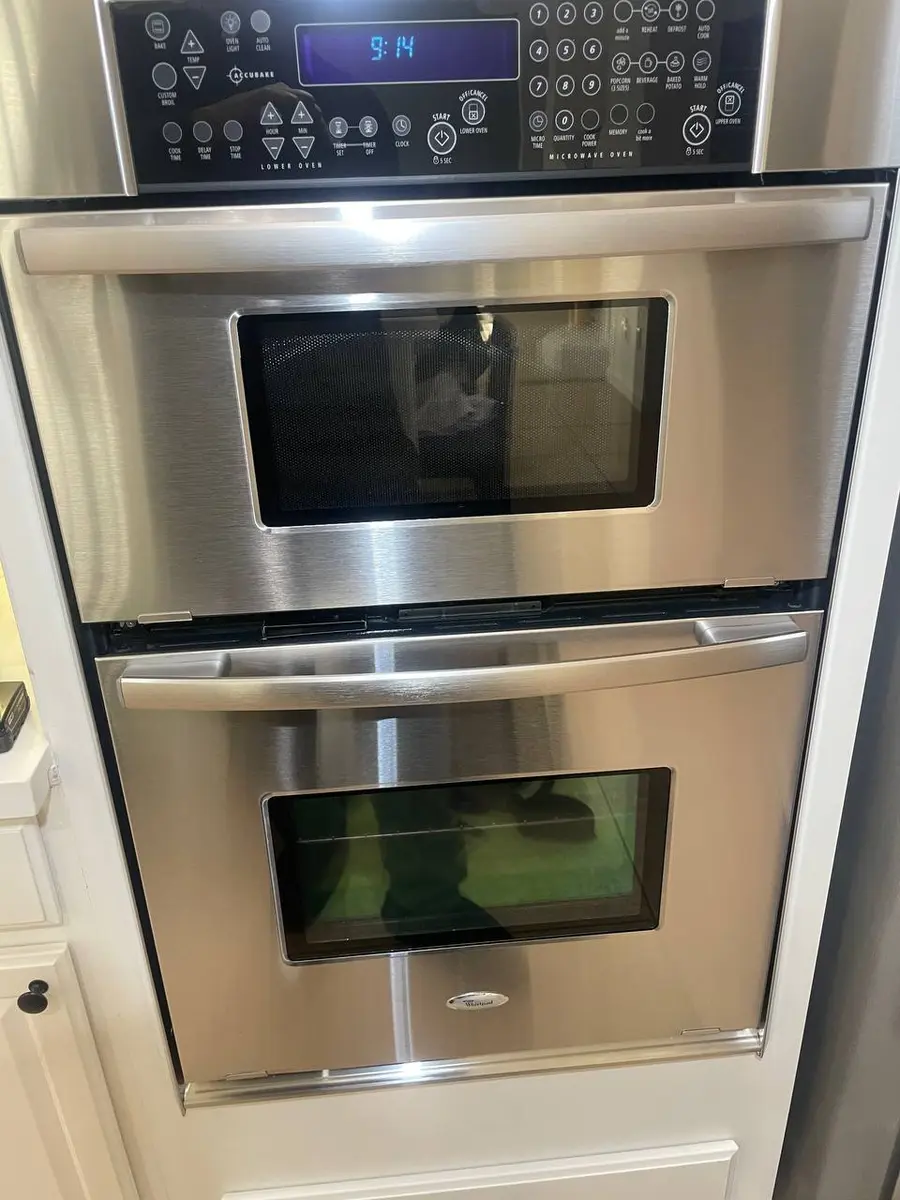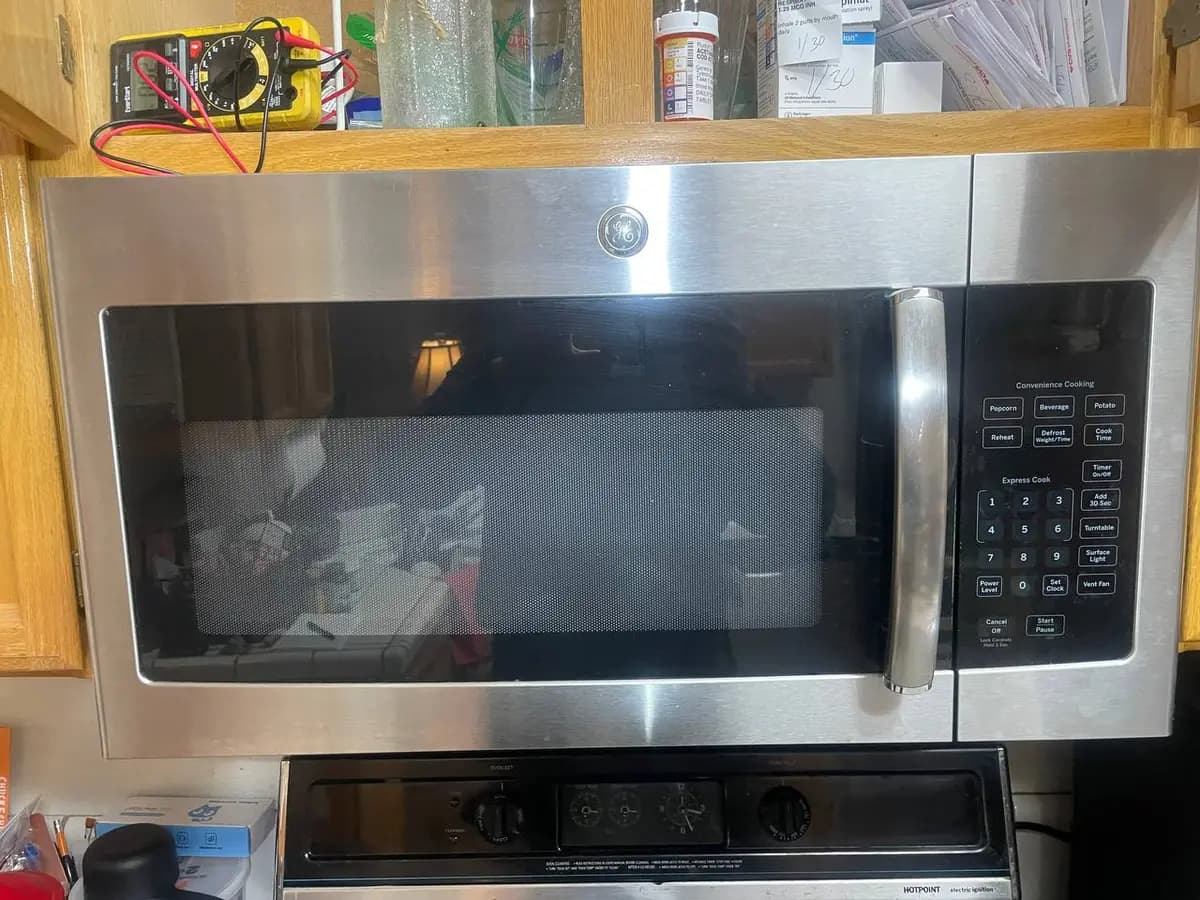
How to Replace a Maytag Microwave Light Bulb
A dark Maytag microwave cavity is usually just a burned-out bulb — most often a 40-watt, 130-volt appliance bulb — and swapping it is a beginner job of 5 to 15 minutes. If a fresh bulb still will not light, the door switch that powers it is the next suspect.
Which bulb your Maytag takes#
The standard interior lamp is a 40-watt, 130-volt incandescent appliance bulb, though some newer models use a 25W bulb. On over-the-range units the same lamp, or a second one, doubles as the cooktop surface light below. Getting the wattage and base right matters: too much wattage overheats the socket and melts the lens.
Safety warning: Unplug the microwave before replacing the bulb. Allow the old bulb to cool if the microwave was recently used. On OTR models, the bulb may be accessible from below without disassembly.
What you need#
| Category | Detail |
|---|---|
| Tools | Phillips screwdriver if a cover must come off, a cloth or gloves so skin oils never touch a halogen bulb |
| Part | A 40-watt, 130-volt appliance bulb in the correct base — often an E17 intermediate or E26 standard base; match the old bulb or your manual |
| Time and level | 5 to 15 minutes, Beginner |
Do You Have the Right Tools?
High-voltage capacitor discharge tool ($90), magnetron tester ($200), microwave leakage detector ($150). Our technician arrives with $3,000+ in professional tools — your diagnostic is free.
Licensed & Insured · 90-Day Warranty · Same-Day Service
Step by step#
1 - Find the bulb and its access. Maytag places the lamp in one of three spots: behind a lens cover inside the cavity, behind the grille or a bottom cover on over-the-range models (reached from below after taking out the grease filter), or behind the cabinet shell on a few designs. Most give direct access without pulling the cabinet.
2 - Unplug and let it cool. Always unplug first — the socket is live when the unit is plugged in — and give a recently used bulb about ten minutes to cool.
3 - Remove the cover. For an interior lamp, open the door and free the lens cover by its single screw or clip so it drops away. For a cooktop lamp on an over-the-range model, take out the grease filter or release the small bottom lens.
4 - Take out the old bulb and read it. Unscrew it counterclockwise, or pull it straight out on a bayonet base, and note the wattage, voltage and base printed on it — commonly a 40-watt 130-volt bulb on an E17 or E26 base, or a 25W on smaller models. A higher wattage than specified overheats the socket; lower is safe but dimmer.
5 - Fit the new bulb. Screw it in clockwise until just snug, never overtight. On a halogen or specialty bulb, handle the glass through a cloth, since skin oils create hot spots that shorten its life. Confirm it is the right size so the lens still fits back on.
6 - Refit the cover and test. Clip or screw the lens back, or refit the grease filter on an over-the-range model, then plug in. Open the door and the lamp should light; run the microwave briefly to confirm it stays on, and test the cooktop light button if that bulb serves it.
7 - If a new bulb still will not light. Recheck the bulb type and that it is fully seated. If it is good, the fault is upstream — the door switch that triggers the lamp, the socket wiring, or a control-board relay. A dead lamp with a good bulb usually points at the door-activated switch.
Common gotchas#
- New bulb flickers or dims while cooking: a loose bulb or corroded socket contacts — reseat it and clean the contacts.
- Bulb burns out every month: too high a wattage or line surges; a bulb rated 130V outlasts a 120V one in the hot cavity.
- Light works on the door but not while cooking: normal on some models; on others a control-board relay drives it and may have failed.
- Melted or discoloured lens: a past over-wattage bulb cooked it — replace the lens and use the correct wattage.
Safety First — Know the Risks
Microwave capacitors store lethal voltage (4,000V+) even when unplugged. This is the single most dangerous DIY appliance repair. Our techs are licensed and insured — let them handle the risk.
Licensed & Insured · 90-Day Warranty · Same-Day Service
When to call a professional#
Bring in a technician if the socket itself is melted, arced or broken, if the real fault is the door switch or control board rather than the bulb, if you cannot reach the bulb without full cabinet removal, or if an over-the-range unit must be dismounted, which is a two-person job.
Senior Gas Appliance Specialist · 18 years experience
AGA-certified gas appliance specialist with 18 years of experience in residential and commercial oven, range, and cooktop repairs.