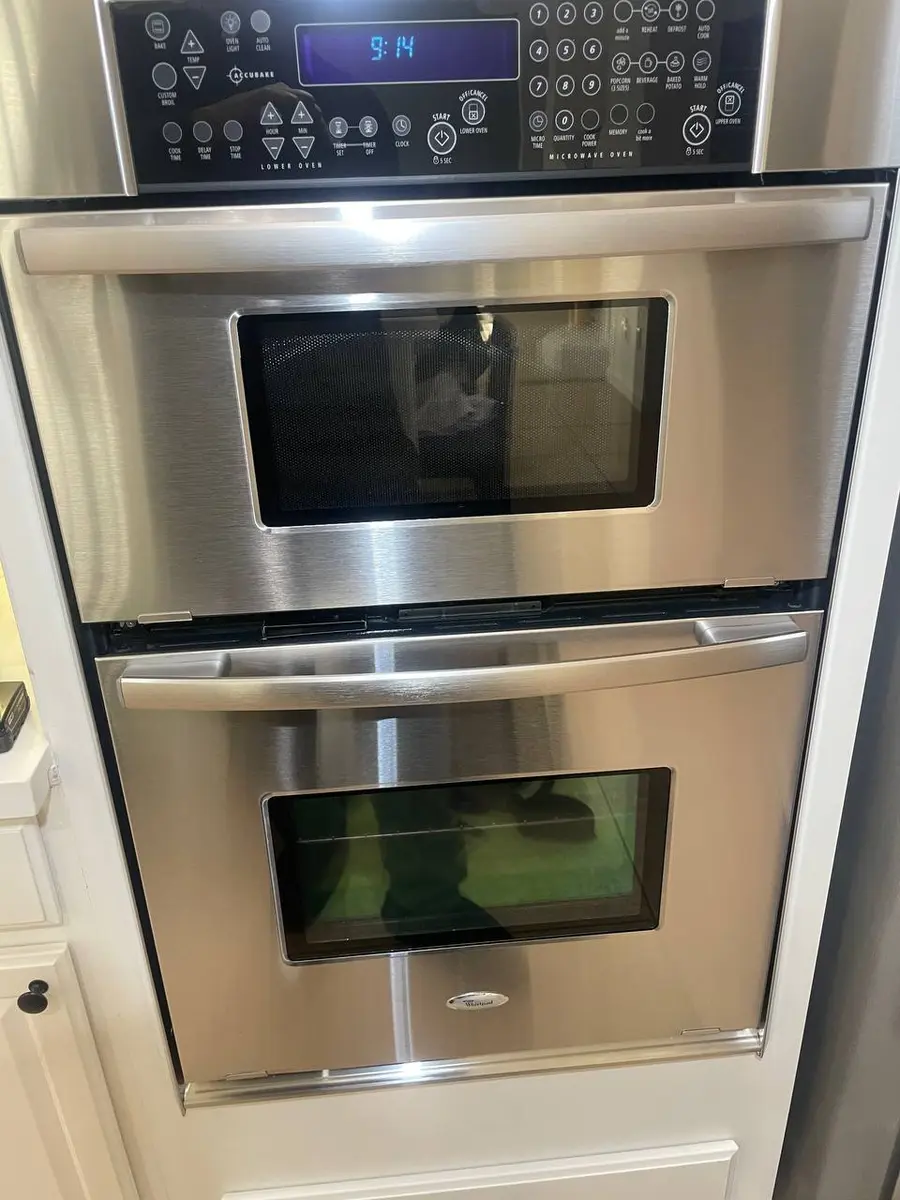
How to Replace a Maytag Microwave Main Fuse
A completely dead Maytag microwave usually means a blown main ceramic fuse. Testing and swapping it runs about 20-30 minutes at an intermediate level, but the cabinet must come off and the high-voltage capacitor must be discharged first, even though the fuse itself is one of the cheapest parts on the appliance.
The main fuse sits ahead of every other component, so when it blows the whole microwave goes silent, not just the display. Maytag shares Whirlpool Corporation fuse ratings and locations, so the same approach fits any microwave on that platform. The catch is that a fuse rarely dies on its own, so you also have to find why it blew or the new one goes just as fast.
Before you start#
| Category | What you need |
|---|---|
| Tools | Phillips #2 screwdriver, multimeter for continuity, insulated screwdriver for capacitor discharge, 1/4" nut driver |
| Parts | Ceramic fuse rated 250V 20A (check the blown fuse body; some models use 15A or 25A) |
| Time and level | 20-30 minutes, Intermediate |
Safety warning: Unplug microwave completely. Even for fuse replacement, you must discharge the high-voltage capacitor before working inside — it retains lethal charge regardless of the fuse state.
Do You Have the Right Tools?
High-voltage capacitor discharge tool ($90), magnetron tester ($200), microwave leakage detector ($150). Our technician arrives with $3,000+ in professional tools — your diagnostic is free.
Licensed & Insured · 90-Day Warranty · Same-Day Service
Step-by-step#
1 - Confirm it is truly dead. A blown main fuse means no display, no sounds, and no response to any button or the door, with the outlet proven good against a lamp or charger. A dim or partial display, or individual dead buttons, points at the control board or keypad instead.
2 - Open up and discharge the capacitor. Unplug the unit and remove the outer cabinet screws along the sides and rear. Even with the fuse blown, the capacitor can still hold charge from the last run, so bridge both terminals with the insulated screwdriver and confirm 0V on the meter before touching anything else.
3 - Find the main line fuse. It usually mounts in a holder near where the power cord enters the internal wiring, on a small bracket behind the control area or low in the cabinet. Look for a white or tan ceramic cylinder about 1.5 inches long with metal end caps, either clipped in or wired with spade terminals.
4 - Remove and test it. Unclip the fuse or pull its spade connectors, set the meter to continuity, and read it: a good fuse shows zero ohms and a blown one reads open. A darkened window, a visibly broken internal wire, or scorched end caps confirm failure. Record the rating printed on the body, typically 250V 20A.
5 - Fit an exact-rating replacement. Install a fuse of the identical voltage and amperage. Never fit a higher amperage, which defeats the protection and invites fire or component damage; never use a lower voltage rating, which blows prematurely; and never bridge with foil or wire. Push it firmly into the clips or reconnect the spades.
6 - Find out why it blew. Common culprits on Maytag microwaves are a shorted door switch, a failed magnetron, a shorted HV capacitor or diode, a stalled turntable motor, a power surge, or simple age. If the new fuse blows the instant you plug in, a live short exists that must be found before running the unit.
7 - Reassemble and test. Refit the cabinet and all screws, plug in, reset the clock, and heat a cup of water on HIGH for 30 seconds to confirm normal cooking. If the fuse blows on power-up or first use, unplug at once and chase the short, most often a door switch or HV component.
If something is still off#
- New fuse blows the moment you plug in: a hard short exists, most often a door switch failed in the shorted state; test each switch for continuity in both door positions.
- New fuse blows only when cooking starts: the short is in the high-voltage circuit; test the magnetron, diode, and capacitor for a short to ground.
- Fuse tests good but the unit is dead: look for a separate thermal fuse on the magnetron or cavity wall and test it too.
Safety First — Know the Risks
Microwave capacitors store lethal voltage (4,000V+) even when unplugged. This is the single most dangerous DIY appliance repair. Our techs are licensed and insured — let them handle the risk.
Licensed & Insured · 90-Day Warranty · Same-Day Service
When to call a professional#
EasyBear technicians serving Sacramento and the Bay Area carry Maytag-specific diagnostic tools and replacement parts on every service call.
- The new fuse blows immediately and you cannot locate the short.
- The fuse keeps blowing alongside a burning smell, meaning an active short with fire potential.
- The microwave must be dismounted from an over-the-range bracket, which needs two people.
Appliance Repair Technician & Diagnostics Specialist · 10 years experience
Electronics and diagnostics specialist with 10 years of experience in modern smart appliance repair, specializing in LG and Samsung.