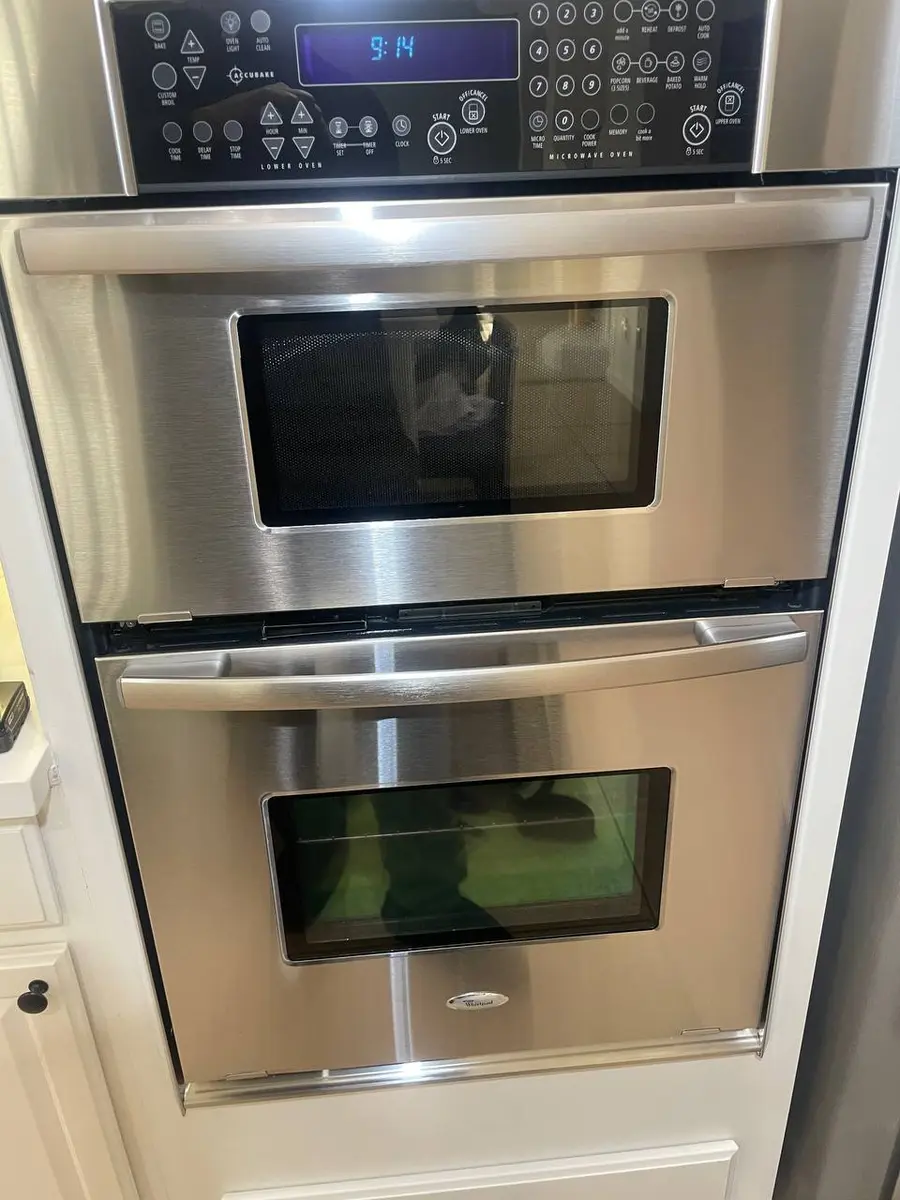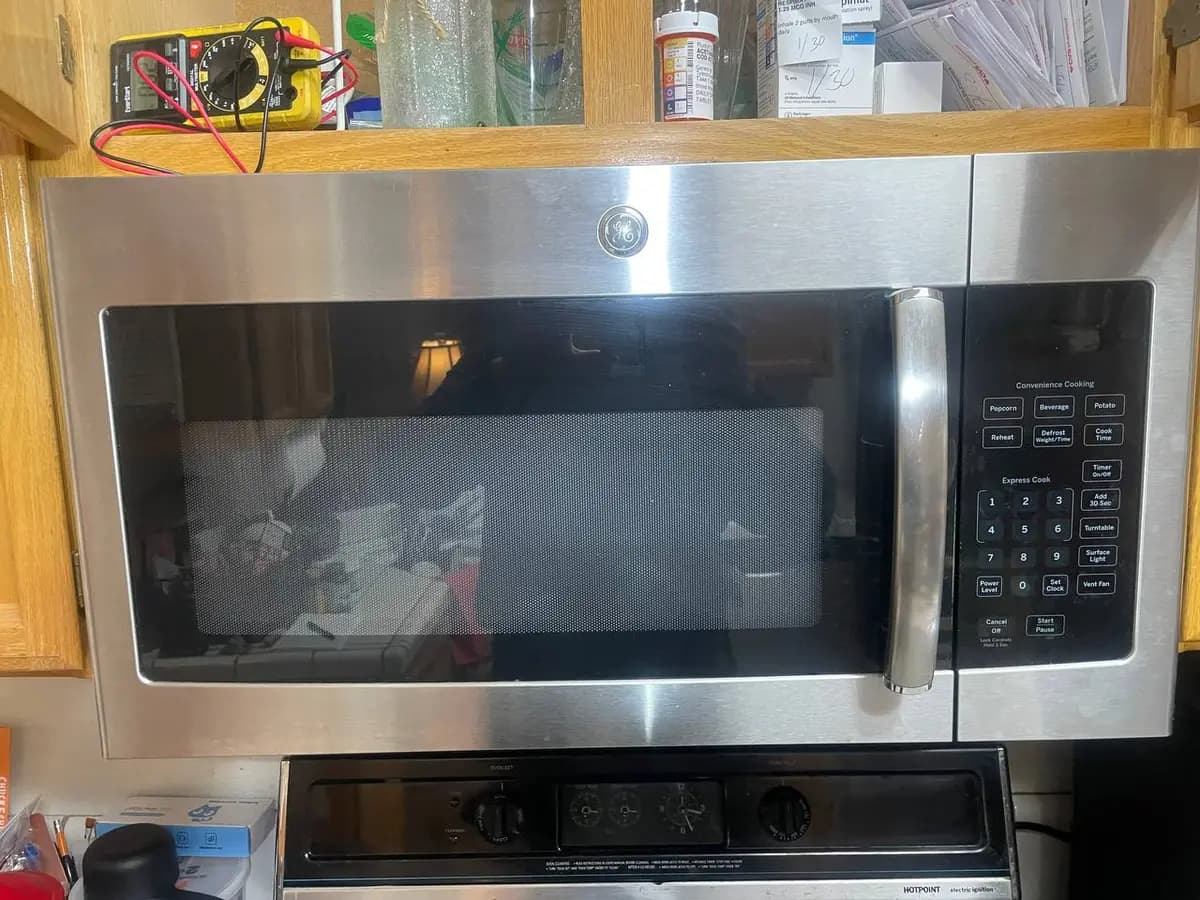
Bottom line: Replacing the high-voltage capacitor in a Maytag over-the-range microwave is an advanced job of about 25-40 minutes, and it is the single most dangerous appliance repair in the house. The capacitor holds a lethal charge long after the unit is unplugged, so only attempt it if you can confirm a full discharge with a meter.
When this capacitor weakens the microwave stops heating, heats only on and off, or hums and buzzes loudly while it runs. Maytag units use the standard Whirlpool Corporation high-voltage circuit, so the part cross-references to Whirlpool and KitchenAid microwaves of the same wattage under WP-prefix numbers. This component also stores lethal electrical energy even when the microwave is unplugged, making it the most dangerous component to work on in any household appliance.
Tools and parts#
| Category | What you need |
|---|---|
| Tools | Phillips #2 screwdriver, an insulated-handle screwdriver for discharge, a multimeter with a capacitance range, a 1/4 inch nut driver, needle-nose pliers |
| Part | High-voltage capacitor matched on uF and voltage, typically 0.95uF at 2100VAC for 1000W models; some higher-wattage units use 1.0-1.05uF |
| Time | 25-40 minutes |
| Skill | Advanced, experienced DIYers only |
Safety warning: This capacitor stores LETHAL electrical energy (4,000+ volts) even when the microwave is unplugged for hours. You MUST discharge it before touching ANY internal component. Use an insulated screwdriver to short across both terminals simultaneously while the unit is unplugged. This step is MANDATORY — failure to discharge has caused fatalities.
Do You Have the Right Tools?
High-voltage capacitor discharge tool ($90), magnetron tester ($200), microwave leakage detector ($150). Our technician arrives with $3,000+ in professional tools — your diagnostic is free.
Licensed & Insured · 90-Day Warranty · Same-Day Service
Step by step#
1. Unplug, wait, and open the cabinet#
Pull the plug at the wall and wait at least 5 minutes. The internal bleed resistor drains some charge, but do not rely on this alone. Back out the side- and rear-panel screws and slide the outer shell off. The capacitor is the cylindrical metal canister, silver or black and roughly 3-4 inches tall, mounted beside the transformer with two terminals on top and sometimes a separate ground lug.
2. Discharge it — mandatory#
Lay the shaft of the insulated screwdriver across BOTH terminals at the same time. A loud pop or a spark is simply the stored energy releasing safely through the tool. Repeat three times, then set your meter to DC volts and confirm 0V across the terminals. If a third ground lug is present, short each main terminal to it as well. Only after verified zero-voltage discharge should you touch any component or wire.
3. Photograph, then remove the old capacitor#
Take a photo of the wiring first. Note which lead goes to which terminal — one typically feeds the diode, the other the transformer output, and there may be a ground wire. Unclip the leads, back out the bracket screw, and lift the canister free. Bulging, oil weeping, or scorched terminals confirm physical failure.
4. Match the replacement to spec#
The new part has to match capacitance (uF), meet or exceed the original voltage rating (typically 2,100V AC), and fit the same bracket. A higher voltage rating is fine and adds margin. Too little capacitance cuts heating power; too much overstresses the magnetron, so match the uF value exactly.
5. Fit the new capacitor#
Seat the part in the bracket and tighten the screw. Reconnect the leads to the correct terminals from your photo and push each spade on until it clicks home. If the old unit had a bleed resistor bridging the two main terminals, make sure the new one has it too, or transfer it across.
6. Trace the high-voltage path before closing up#
Follow the circuit by eye: transformer output to capacitor, to diode, to magnetron. Confirm the ground lead reaches chassis ground and that no wire is pinched, frayed, or resting against a sharp edge. This wiring carries enough energy to arc through damaged insulation.
7. Reassemble and test heating#
Refit the shell and every screw, then heat a cup of water on HIGH for 60 seconds. It should come out very hot with no buzzing, humming, or arcing. Watch the first few cycles — a healthy capacitor runs quietly.
If it still misbehaves#
- No heat after the swap: test the diode, the most common co-failure. It should conduct in one direction only; if it is shorted, replace both, since a surge often takes them together.
- Loud buzzing continues: a shorted transformer winding can vibrate. A soft operating hum is normal, a harsh new buzz is not.
- The new capacitor runs hot: verify the uF rating matches the original. An undersized value works harder and overheats; also rule out a shorted magnetron.
Safety First — Know the Risks
Microwave capacitors store lethal voltage (4,000V+) even when unplugged. This is the single most dangerous DIY appliance repair. Our techs are licensed and insured — let them handle the risk.
Licensed & Insured · 90-Day Warranty · Same-Day Service
When to call a pro#
Bring in a technician if you are not fully confident in the discharge step, if the transformer is scorched or smells acrid, if several high-voltage parts failed together, or if you cannot verify 0V across the terminals. There is no partial safety with this component.
For the repair-versus-replace math on an older unit, see our microwave repair cost guide. Prefer to hand it off? EasyBear can book a same-day repair.
Appliance Repair Technician & Diagnostics Specialist · 10 years experience
Electronics and diagnostics specialist with 10 years of experience in modern smart appliance repair, specializing in LG and Samsung.