How to Replace a KitchenAid Interior Light Bulb
Replacing the cavity light in a KitchenAid microwave is a beginner job that runs about 10-15 minutes once the unit is unplugged. You reach the socket behind a small cover, back out the dead bulb, and thread in a matching 40W 130V appliance bulb.
KitchenAid builds its microwaves on the shared Whirlpool Corporation platform, so bulb access is consistent across the line. The lamps are ordinary appliance bulbs — typically 40W at 130V with either a medium E26 base or the smaller intermediate E17 base — and are stocked at any hardware store. The trick is not the bulb; it is knowing which of two access routes your model uses and staying clear of the magnetron and capacitor while you work.
Tools and parts#
| Item | Detail |
|---|---|
| Phillips #2 screwdriver | Removes the cover screws |
| 1/4-inch nut driver | Needed on some models |
| Replacement bulb | 40W 130V appliance lamp, E26 or E17 base |
| Clean cloth or gloves | For handling halogen capsules if fitted |
Safety warning: Unplug the microwave from the wall before beginning. Although the light bulb itself does not involve high voltage, opening access panels on some models exposes the capacitor area. If you can access the bulb from inside the cavity through an internal cover, you can skip capacitor concerns. If external panel removal is required, follow capacitor safety protocol.
Do You Have the Right Tools?
High-voltage capacitor discharge tool ($90), magnetron tester ($200), microwave leakage detector ($150). Our technician arrives with $3,000+ in professional tools — your diagnostic is free.
Licensed & Insured · 90-Day Warranty · Same-Day Service
Step-by-step#
1. Work out your access route#
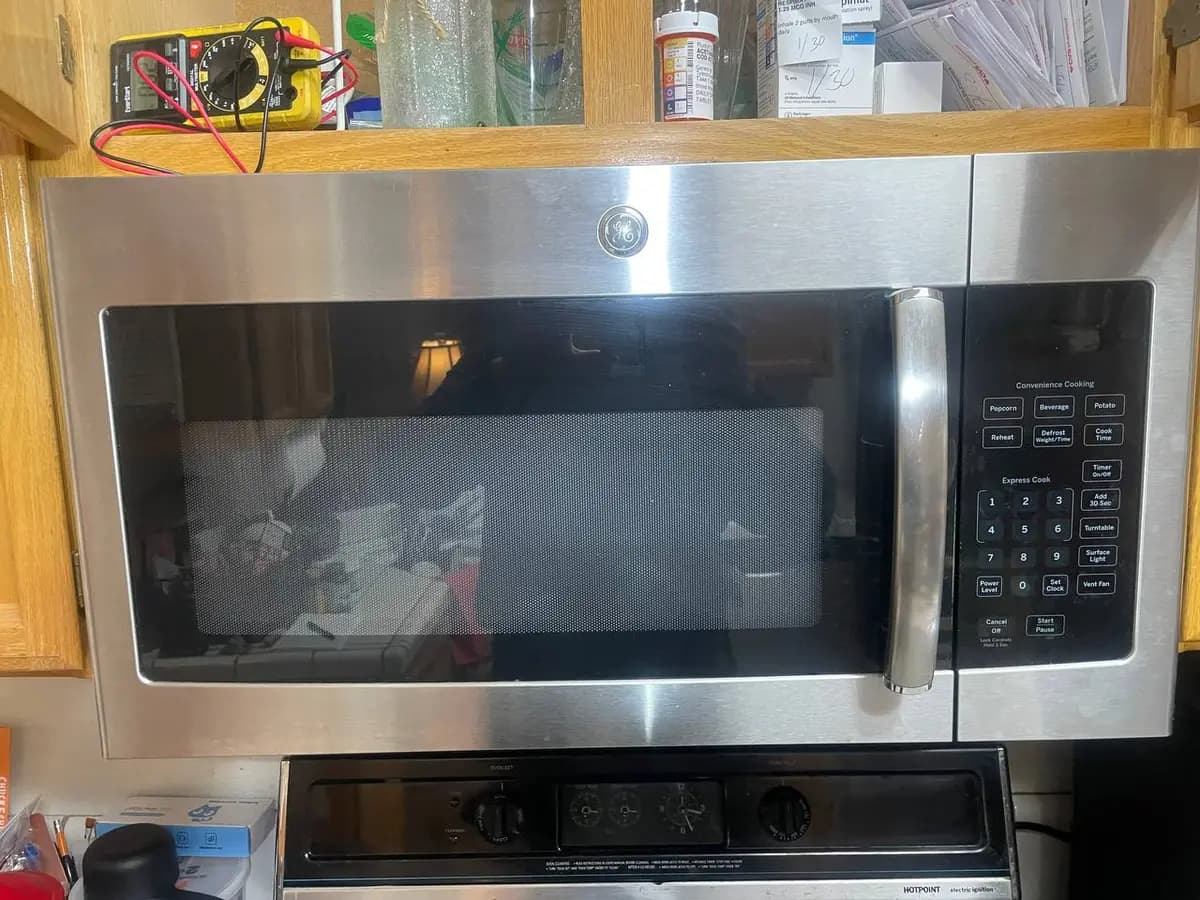
Newer KitchenAid models put the bulb behind a small rectangular cover on the ceiling or upper-rear wall inside the cavity — that route never touches high-voltage parts. Some over-the-range units instead hide the socket behind a panel on the underside of the cabinet, which lights the cooktop below. Over-the-range models often carry two lamps: one interior, one cooktop. When in doubt, use the interior cavity route; it is always the safest.
2. Open the bulb cover#
With the microwave unplugged, open the door and find the light cover inside the cavity. If it is screwed, back out the one or two Phillips screws and pull it straight out; if it is press-fit, ease a flat tool under one edge and let the clips release. For an external cooktop lamp, drop the underside panel by its one or two screws.
3. Back out the old bulb#
Let the lamp cool first — bulbs hold heat for several minutes after a cook cycle. Turn it counter-clockwise to release it. Corrosion from cooking steam can seize the base; wrap it in a dry cloth or use a rubber jar grip for extra torque rather than forcing it bare-handed. If the glass shears off and leaves the metal base in the socket, grip the base rim with needle-nose pliers and unscrew it — with the unit still unplugged.
4. Fit the correct replacement#
Match the old lamp exactly. Wattage should stay at 40W; a higher figure bakes the socket and can melt nearby plastic. Voltage should be 130V rather than a plain 120V lamp — the higher rating simply lasts longer in the vibration and heat of an appliance. Confirm the base: E26 is the standard medium screw, E17 the smaller intermediate common on compact units. Skip household LED and CFL lamps — microwave energy upsets LED drivers, and CFLs carry mercury and are not built for the vibration. Thread the new bulb in clockwise until it just seats; do not over-tighten. Handle halogen capsules with a cloth so skin oils do not create hot spots.
5. Close up and test#
Refit the cover fully so it cannot rattle, then plug the unit back in. The lamp should light when the door opens; run the empty cavity for about 10 seconds to confirm it also lights during a cook cycle. On models with a cooktop lamp, press the cooktop light button to check that one too.
Troubleshooting#
- New bulb dark: confirm power and try the old lamp once more — if that also stays dark, the fault is the socket or wiring, not the bulb.
- New bulb flickers: with the unit unplugged, gently lift the center contact tab in the socket by a millimetre or two to restore spring pressure.
- Burns out within days: a high-resistance socket is overheating the lamp — clean the threads, check the center contact, and confirm you fitted the rated wattage. Some compact models use a 25W lamp, so verify before assuming 40W.
Safety First — Know the Risks
Microwave capacitors store lethal voltage (4,000V+) even when unplugged. This is the single most dangerous DIY appliance repair. Our techs are licensed and insured — let them handle the risk.
Licensed & Insured · 90-Day Warranty · Same-Day Service
When to call a professional#
EasyBear technicians serving Sacramento and the Bay Area carry KitchenAid-specific diagnostic tools and replacement parts on every service call. Call one if the socket wiring shows burn marks or melted insulation, if both the interior and cooktop lamps died at once (a shared-circuit or board fault rather than a burnt bulb), or if reaching the lamp means opening the cabinet and exposing the capacitor and you are not trained to discharge it.
Need Professional Help?#
Not sure you want to DIY this? Book a diagnostic and we'll confirm the fix before any work starts.
Appliance Repair Technician · 8 years experience
Experienced technician with 8 years specializing in dishwasher repairs and European appliance brands including Bosch and Thermador.