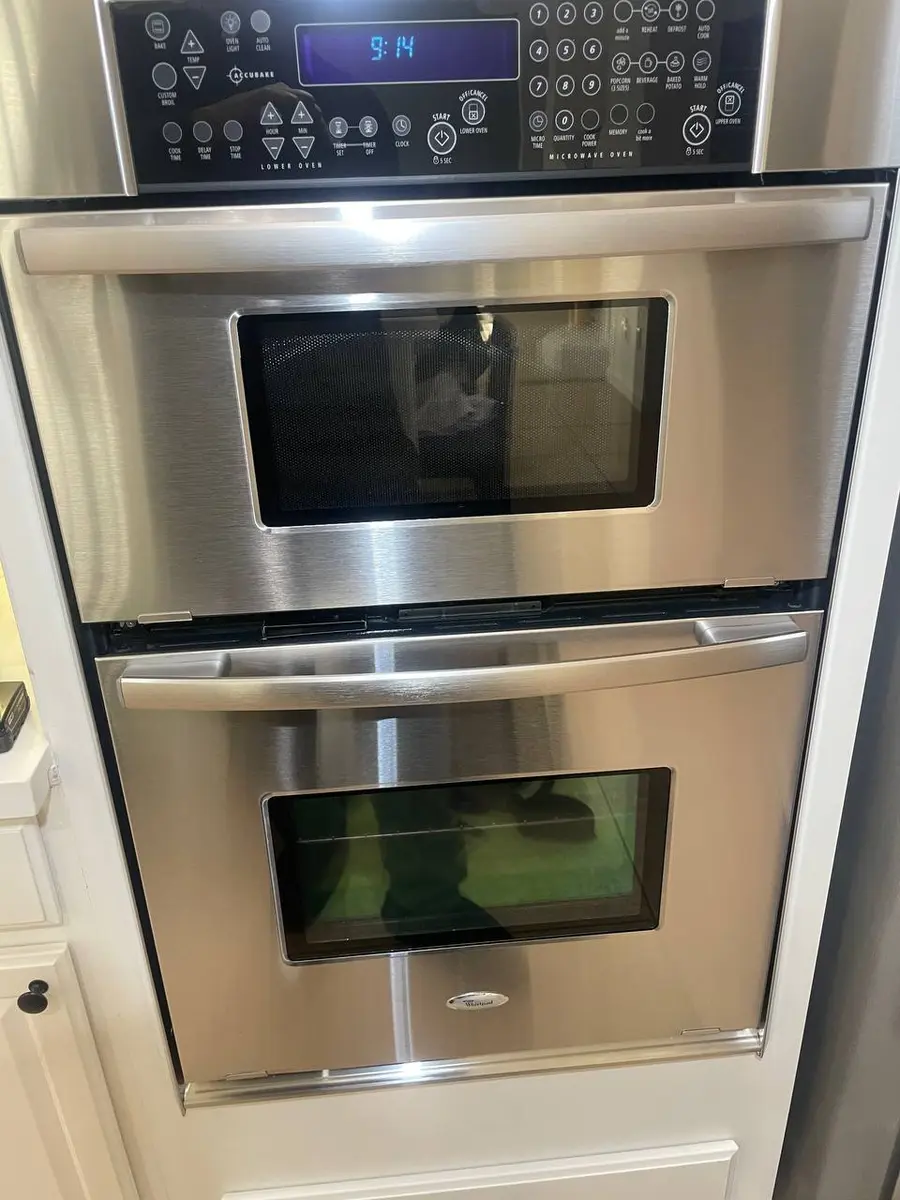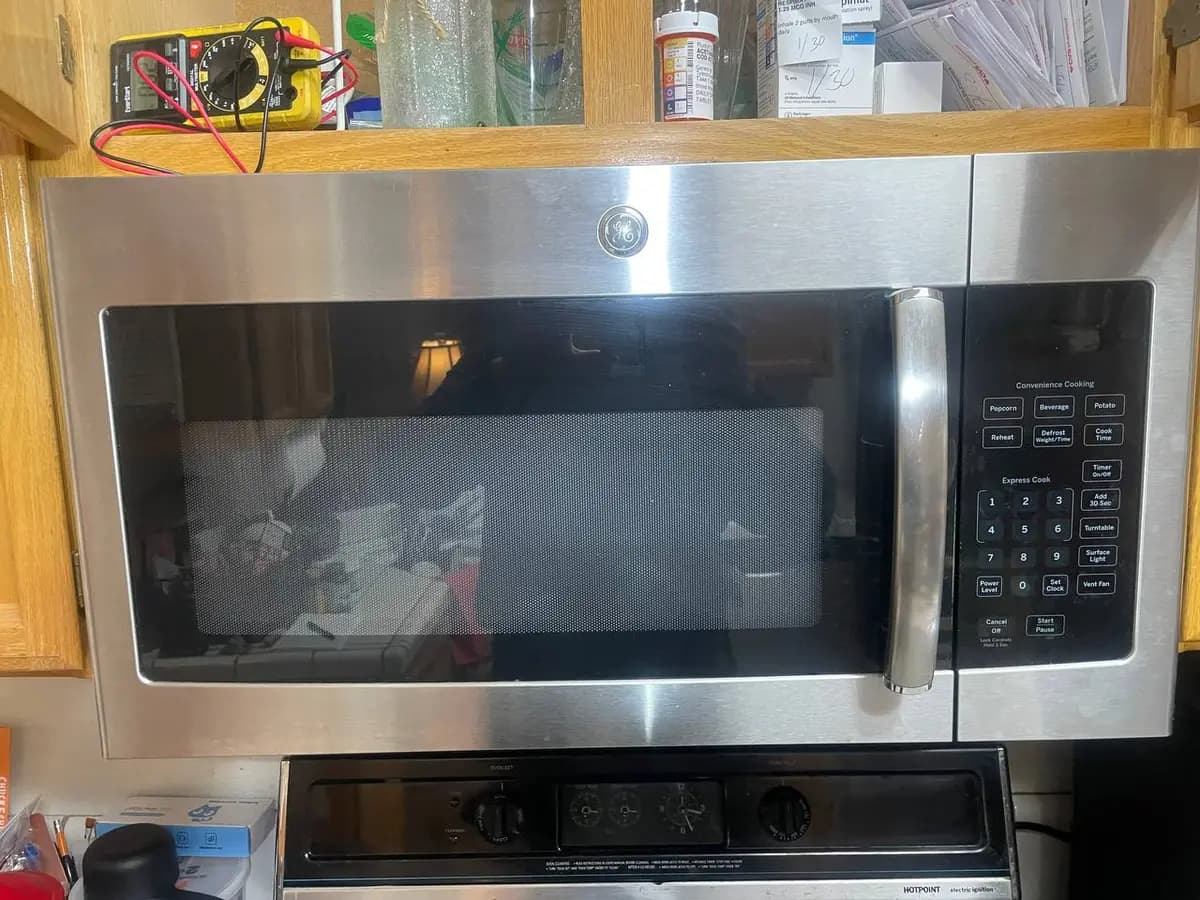
How to Repair a Maytag Microwave
A Maytag over-the-range microwave shares the Whirlpool chassis, so a short list of parts — the door switches, the high-voltage diode and magnetron, and the fuses — covers most repairs. The work is intermediate at about 30 to 60 minutes, but the high-voltage capacitor makes safety the first and most important step.
Maytag does not build a separate microwave line; its over-the-range units use identical Whirlpool and KitchenAid chassis, magnetrons, boards, and door mechanisms, and parts cross-reference on WP and W10 numbers. Error codes follow the same F#E# format across the family. What sets microwave repair apart from any other appliance is the capacitor: it holds a lethal charge even unplugged, so discharge it before you touch anything inside.
Tools and Parts#
| Item | Purpose |
|---|---|
| Phillips #2 and Torx T15 | Cabinet and chassis screws |
| Multimeter | Continuity and diode tests |
| Insulated screwdriver | Discharge the capacitor |
| Door switch WP W10269458 | Common failure part |
Do You Have the Right Tools?
High-voltage capacitor discharge tool ($90), magnetron tester ($200), microwave leakage detector ($150). Our technician arrives with $3,000+ in professional tools — your diagnostic is free.
Licensed & Insured · 90-Day Warranty · Same-Day Service
Before You Start#
Safety warning: UNPLUG the microwave completely before any internal work. CRITICAL: The high-voltage capacitor retains a LETHAL charge (4,000+ volts) even when unplugged. Before touching any internal component, discharge the capacitor by shorting across its terminals with an insulated-handle screwdriver with the microwave unplugged. Microwave repair carries higher danger than other appliances.
Step-by-Step#
1. Sort the symptom, then discharge#
Group the fault first: dead unit, power but no heat, intermittent operation, an F#E# code, cavity sparking, or a stalled turntable. Then, before opening the cabinet, unplug and wait 5 minutes, and once inside, discharge the capacitor across its terminals with the insulated screwdriver. This is a genuine life-safety step, not a formality.
2. Check the door switches#
Three door interlock switches must all engage for the microwave to run, and a failed one gives anything from a dead panel to a start-then-stop. Remove the outer cabinet (a screw under each side and several at the rear), find the switches by the latch, and meter each for continuity — they should toggle as the latch actuators move.
3. Test the high-voltage circuit#
If it lights and the fan runs but food stays cold, work the high-voltage circuit, most-likely-first: diode, magnetron, then capacitor. With the capacitor already discharged, test the diode — it should conduct one way and block the other, and equal readings both ways mean it is shorted. Meter the magnetron for less than 1 ohm across its terminals and infinite from either terminal to the case.
4. Check the fuses#
A fully dead microwave usually means the main line fuse — a ceramic fuse rated 20A 250V near the cord entry — which reads open when blown. A thermal fuse on the magnetron or cavity blows from overheating, so if it keeps blowing, clear the blocked vents or failed cooling fan behind it first.
5. Inspect the magnetron and cooling fan#
The magnetron generates the microwave energy and fails from age or overheating; look for burn marks on the waveguide cover, carbon in the cavity, or a burning smell. Its cooling fan must run whenever it operates, and on over-the-range units that same fan doubles as the exhaust, so it wears faster — confirm it spins freely.
6. Handle turntable and cavity issues#
A dead turntable is usually the plastic coupler cracking or the motor failing (about 20 to 40 ohms on continuity). Sparking in the cavity points at the waveguide cover, the mica panel on the side wall — food splatter or a burn-through lets the antenna arc to the wall, so replace the cover before running it again.
7. Reassemble and test#
With the failed part replaced, rebuild the cabinet, plug in, and heat a cup of water for 60 seconds — it should come out clearly warm. Confirm the clock, light, door release, turntable, and exhaust fan all work, and listen for arcing or buzzing over the first several uses.
Safety First — Know the Risks
Microwave capacitors store lethal voltage (4,000V+) even when unplugged. This is the single most dangerous DIY appliance repair. Our techs are licensed and insured — let them handle the risk.
Licensed & Insured · 90-Day Warranty · Same-Day Service
Troubleshooting#
- Runs but no heat: the high-voltage diode is the most common cause and fails more often than the magnetron, so test it first.
- Dead, and a new fuse blows instantly: a dead short remains, usually a stuck door switch or a shorted capacitor.
- Starts then stops: one of the three interlocks is making inconsistent contact — find and replace it, and check the latch alignment.
When to Call a Pro#
Call a technician if you cannot safely discharge the capacitor, if the magnetron needs replacing (incorrect installation risks radiation leakage), if several high-voltage parts failed together, or if an over-the-range unit must come off its wall brackets, since those are a two-person lift.
The Real Cost of DIY
Average DIY attempt: $150-400 in tools you may use once, plus the risk of further damage. Our diagnostic visit costs $0 — we find the problem and give you an honest quote.
Licensed & Insured · 90-Day Warranty · Same-Day Service
Senior Gas Appliance Specialist · 18 years experience
AGA-certified gas appliance specialist with 18 years of experience in residential and commercial oven, range, and cooktop repairs.