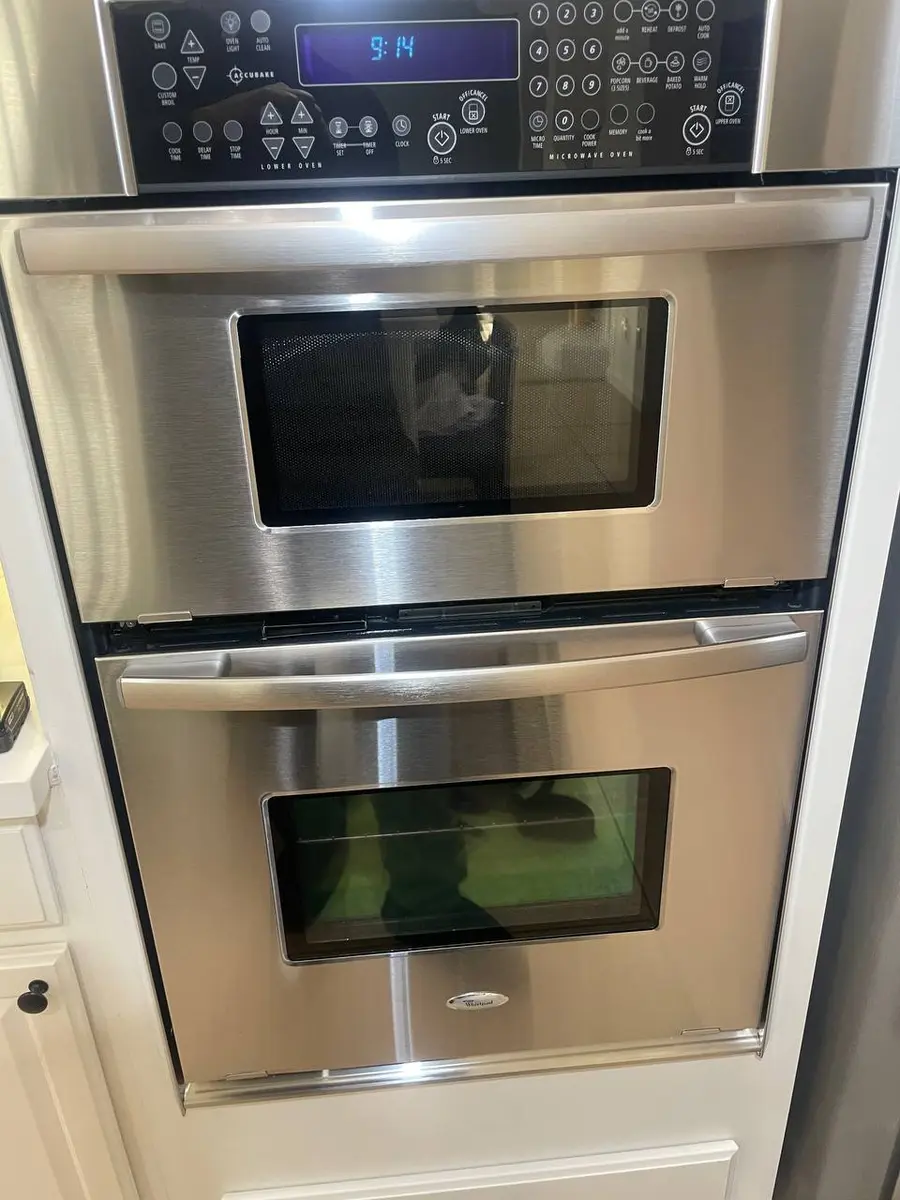
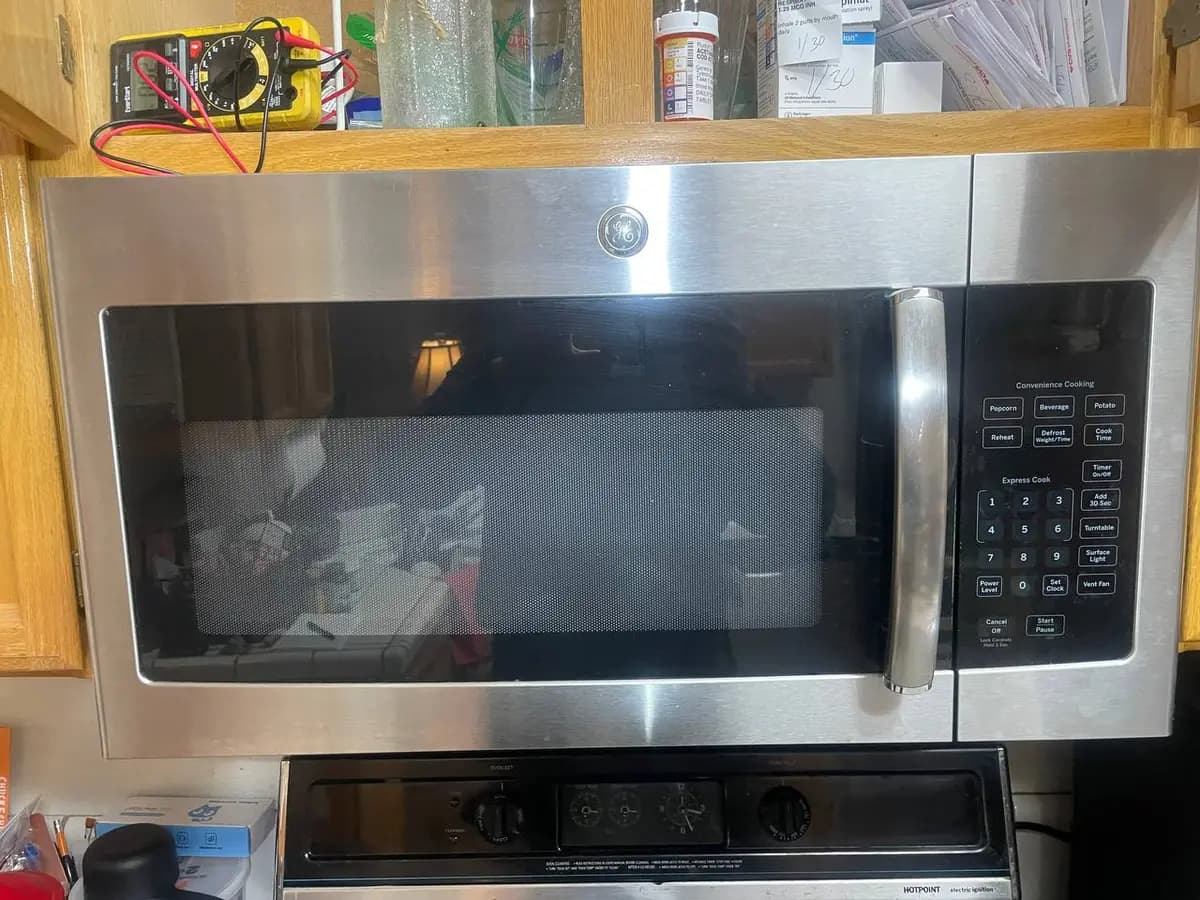
How to Replace Bosch Microwave High-Voltage Diode
A Bosch microwave that runs but produces no heat at all often has a failed high-voltage diode — part of the voltage-doubler that feeds the magnetron. Discharge the capacitor first, then test and swap the diode in 25-40 minutes. Difficulty: intermediate. LETHAL VOLTAGES are present.
The diode converts the transformer and capacitor output into the roughly 4,000 volts of DC the magnetron needs. When it fails open, the magnetron gets too little voltage and makes no microwaves, so the oven runs normally — fan, light, turntable — but never heats. This applies across Bosch built-in and countertop models; only the diode's mounting differs.
Tools & parts#
| Item | Detail |
|---|---|
| Torx T15 / T20 | shell and mounting screws |
| Insulated screwdriver | discharging the capacitor |
| Multimeter (diode function) | testing the diode and magnetron |
| Needle-nose pliers, 1/4-inch nut driver | connectors and ground screw |
| Part | HV diode (BSH number by model; generic CL01-12 type, 12kV 350mA) |
Do You Have the Right Tools?
High-voltage capacitor discharge tool ($90), magnetron tester ($200), microwave leakage detector ($150). Our technician arrives with $3,000+ in professional tools — your diagnostic is free.
Licensed & Insured · 90-Day Warranty · Same-Day Service
Safety first#
LETHAL VOLTAGE — The high-voltage capacitor stores enough energy to kill even when the microwave is unplugged. You MUST discharge the capacitor before touching any component in the high-voltage section. If you are not experienced with electronics, do not attempt this repair.
Step-by-step#
Step 1: Confirm it is the diode#
The diode signature is a complete no-heat with otherwise normal operation — fan, light, and turntable all work, no louder-than-usual transformer buzz, and no burning smell. Weak heat instead points at the magnetron; new loud humming points at the capacitor.
Step 2: Unplug and open the unit#
Pull the plug from the wall, never trusting a switch. On built-ins, remove the 4 Torx T20 mounting screws and slide the unit out; on countertops, take out the shell screws (one per side, 2-3 at the rear) and slide the shell back.
Step 3: Discharge the capacitor#
This is the critical safety step. Find the capacitor — a metal cylinder near the transformer and magnetron with two spade terminals. With one hand behind your back, touch an insulated-handle screwdriver to one terminal, then slide it to bridge both; expect a spark and pop. Hold three seconds, then confirm 0V across the terminals on your meter. Never trust a built-in bleeder resistor to have done it.
Step 4: Remove the diode#
The diode sits near the capacitor, running from one capacitor terminal to chassis ground — a small cylinder the size of an AA battery with a lead at each end and a banded cathode. Note its orientation, unclip the spade connector, and remove the ground screw with the 1/4-inch nut driver so it comes free.
Step 5: Test the old diode#
Set the meter to diode test. A good HV diode reads open (OL) in the forward direction on many meters because their test voltage is too low, though higher-voltage meters may show 100-200; reverse must read OL. Low resistance both ways means shorted, and any reverse continuity means breakdown. An analog meter on its highest ohm range should deflect slightly forward and not at all in reverse.
Step 6: Install the new diode#
Match the rating — at least 12kV and 350mA, standard for microwave HV diodes, with a generic CL01-12 electrically identical to the BSH part. Bolt the ground end to the chassis for solid metal-to-metal contact, connect the other end to the capacitor terminal, and keep the leads clear of the chassis and other components.
Step 7: Verify the repair#
With no loose wires or tools left inside, reassemble, plug in, and heat 250ml of water for one minute on full power — a proper magnetron gives a 15-25 degree C rise. No heat means recheck the diode orientation, the capacitor connections, and then the magnetron itself.
Safety First — Know the Risks
Microwave capacitors store lethal voltage (4,000V+) even when unplugged. This is the single most dangerous DIY appliance repair. Our techs are licensed and insured — let them handle the risk.
Licensed & Insured · 90-Day Warranty · Same-Day Service
Troubleshooting#
| Symptom | Likely cause |
|---|---|
| New diode, still no heat | the magnetron also failed — under 1 ohm across terminals, open to chassis |
| Trips the breaker | diode installed backward, or the capacitor is also shorted |
| Louder humming after repair | a degrading capacitor — check for 0.9-1.1 uF if your meter reads capacitance |
| Diode fails again in weeks | the magnetron is arcing internally and destroying diodes — replace it |
When to call a pro#
Call a technician if you are not comfortable around lethal high-voltage parts, if the magnetron, diode, and capacitor all test bad (likely transformer damage), or if a built-in unit cannot be safely extracted from its cabinet.
For a repair-versus-replace budget, see our microwave repair cost guide.
Senior Gas Appliance Specialist · 18 years experience
AGA-certified gas appliance specialist with 18 years of experience in residential and commercial oven, range, and cooktop repairs.