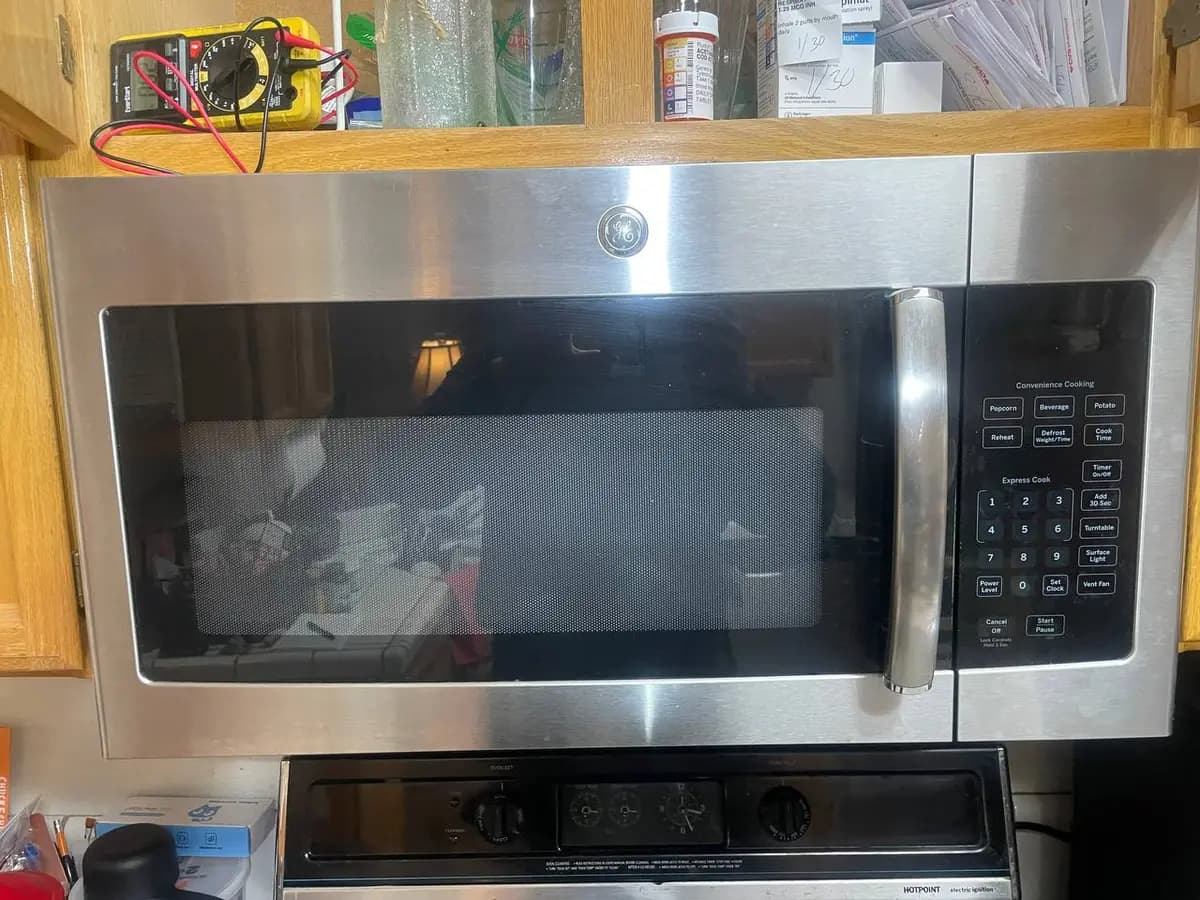
How to Clean a GE Microwave Interior
Cleaning a GE microwave cavity and dabbing microwave-safe enamel over any chips keeps the interior from rusting and, more important, keeps bare metal from arcing. The cleaning is a beginner job of about 30 minutes, plus 24-hour cure time if applying enamel.
Two things happen inside a hard-used microwave: grease and splatter bake onto the walls, and the factory enamel eventually chips where dishes knock it. A chip that reaches bare metal becomes an arc point — a spark that pits the cavity and can damage the magnetron — so cleaning and touch-up go together, not as separate chores.
The reason enamel touch-up matters more in a microwave than in an oven is arcing. In a conventional oven a bare spot just rusts; in a microwave the exposed metal concentrates the field and throws sparks, which char the coating wider and stress the magnetron every time you run it. That is also why the cleaning half of this job forbids metal scrapers and steel wool — a fresh scratch is a fresh arc point, so you loosen grime with steam and lift it with soft cloths instead of digging at it.
Supplies#
Gather microfiber cloths, a non-abrasive sponge, fine-grit sandpaper (220-grit), and a small artist brush. The one part that matters is a small tin of microwave-safe appliance enamel touch-up paint — look for FDA-compliant, microwave-safe designation, because standard appliance paint is NOT safe for microwave interiors. If a worn turntable coupler is part of the mess, GE lists the drive parts under numbers like JX81J.
Do You Have the Right Tools?
High-voltage capacitor discharge tool ($90), magnetron tester ($200), microwave leakage detector ($150). Our technician arrives with $3,000+ in professional tools — your diagnostic is free.
Licensed & Insured · 90-Day Warranty · Same-Day Service
Safety#
Unplug the microwave before cleaning or painting. Never use metal tools or abrasive pads inside the microwave cavity — scratches create arcing points.
Clean, then repair#
- Unplug and pull the turntable. Take out the glass tray and the roller ring so nothing hides splatter underneath, and wash them separately in the sink.
- Steam-clean the interior. Heat a bowl of water until the cavity fogs, then let it sit a few minutes; the steam softens baked-on grease so it wipes instead of scrubs.
- Wipe every surface. Work the softened residue off the ceiling, walls, and floor with a microfiber cloth, folding to a clean face as it loads up.
- Clean the door seal and edges. Wipe the perimeter and the door's inner face carefully — buildup here breaks the seal and traps odors — using only the soft sponge, never anything abrasive.
- Inspect for enamel damage. With the cavity clean and dry, look under good light for chips, bubbles, or rust spots, especially on the floor where dishes land.
- Prep the damaged spots. Feather the edge of each chip with the 220-grit paper just enough to remove loose enamel and rust, then wipe the area clean and dry.
- Apply the microwave-safe paint. Brush a thin coat of the touch-up enamel over each bare spot with the artist brush, keeping it to the damage rather than flooding the surrounding coating.
- Cure and verify. Let the paint cure the full time on the tin — plan on 24 hours — before running the microwave, then confirm the repaired spots are hard and there is no sparking on a short water-heat test.
Safety First — Know the Risks
Microwave capacitors store lethal voltage (4,000V+) even when unplugged. This is the single most dangerous DIY appliance repair. Our techs are licensed and insured — let them handle the risk.
Licensed & Insured · 90-Day Warranty · Same-Day Service
When to call a pro#
If arcing continues after touch-up, or the cavity floor has rusted through, the interior is no longer safe and the unit should be replaced rather than patched. Any burning smell or sparking from the walls themselves — not a dish — is a magnetron or waveguide problem for a technician.
Appliance Repair Technician & Diagnostics Specialist · 10 years experience
Electronics and diagnostics specialist with 10 years of experience in modern smart appliance repair, specializing in LG and Samsung.