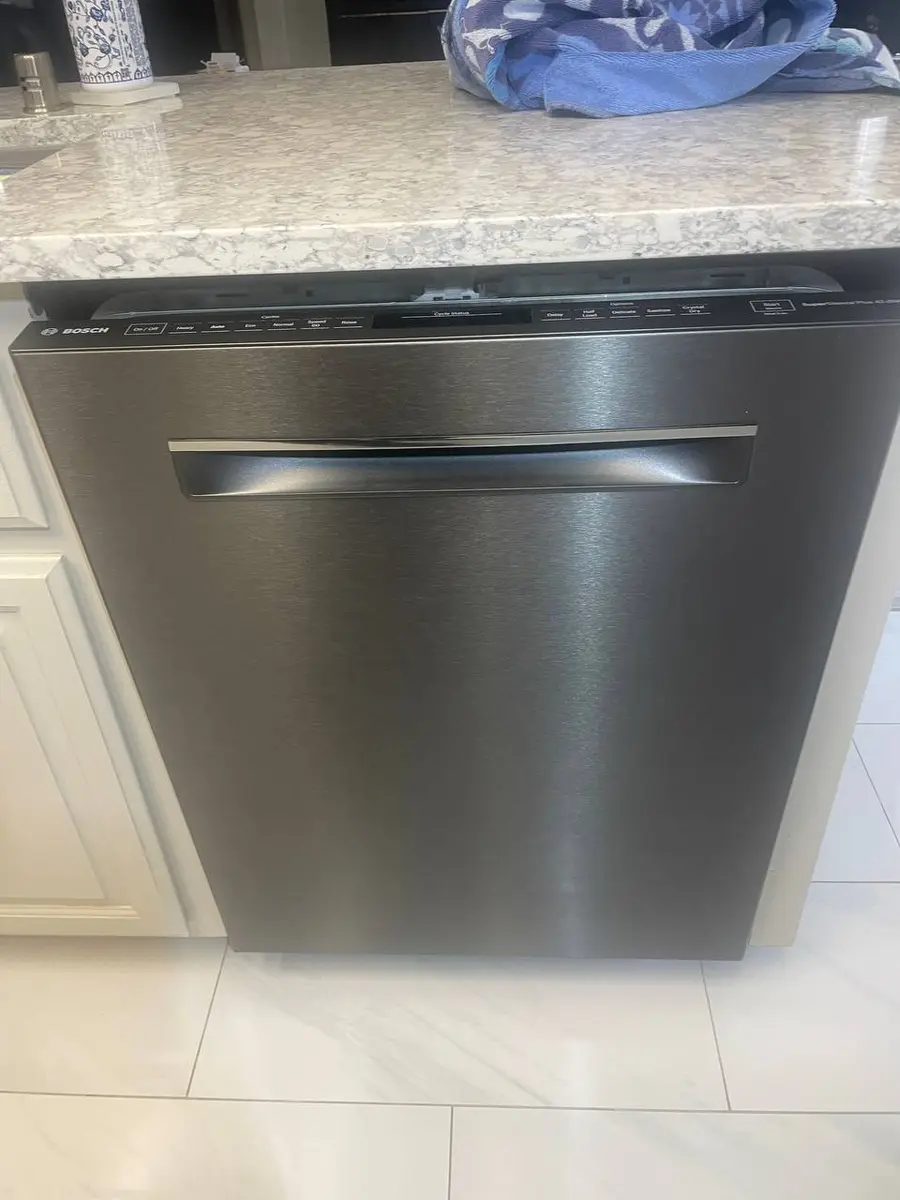
Hotpoint dishwashers are built on the GE platform, which means they share the same control board architecture, error code system, and many of the same parts as their GE counterparts. This is good news for troubleshooting — GE's diagnostic system is well-documented and uses straightforward alphanumeric codes displayed on the control panel or communicated through blinking LED patterns on models without a digital display.
When your Hotpoint dishwasher encounters a problem, the control board halts the cycle and displays an error code. Understanding what these codes mean can save you hundreds of dollars in unnecessary service calls — many common issues have simple DIY fixes that take minutes.
It is a GE platform — here is what that changes#
The single most useful fact about a Hotpoint dishwasher is what it shares with a GE: control board architecture, error code system, and many of the same parts. Each row below turns that fact into something you can act on.
| Your situation | What the GE platform means | What to do |
|---|---|---|
| A code you cannot find in Hotpoint documentation | the diagnostic system is GE and it is well documented | search the code as a GE code. C1, C3 and C4 are GE codes on a Hotpoint fascia, which is why they are straightforward alphanumerics rather than a brand-specific scheme. |
| A part quoted as unavailable or discontinued | many parts are shared with the GE equivalent | ask for the GE part number rather than accepting the Hotpoint one is gone. The shared control board architecture is the reason this works. |
| No digital display on your model | the LED pattern is the code | the Start/Reset light flashes a set number of times, pauses, and repeats. Digital models like the HDF310PGRBB or HDP36DEFWW show the characters directly. |
| Any code, before diagnosing anything | the reset is universal across the platform | hold Start/Reset for 3 seconds, wait 2 minutes for the pump to drain, and if it persists cut the breaker for 60 seconds. A code surviving that is a real fault. |
| C1 — stuck key or control panel | a moisture problem more often than a hardware one | power off at the breaker for 2 minutes so steam moisture dissipates, then wipe the panel dry, paying attention to the edges of buttons. If C1 returns, reseat the ribbon cable between keypanel and control board — and if disconnecting it clears the code, the membrane is the failed part. |
| C3 — pump pressure | a filter and debris story before it is a pump story | twist off the lower spray arm, pull the coarse and fine filters, and clean them — hard water leaves heavy deposits here. Check the sump for glass or bone fragments jamming the impeller, then run an empty cycle with 2 cups of white vinegar. Only after that is the pump motor the answer. |
| C4 — fill timeout | the same inlet-screen story GE dishwashers have | the hot water supply valve under the sink must be fully open. Disconnect the supply line into a bucket to check flow, clean the mesh inlet screen, and if flow is strong and C4 stands, test the solenoid — 500-1500 ohms is healthy, infinite means replace the valve. Household pressure below 20 PSI is its own cause. |
| C6 or C7 — turbidity sensor | the water-clarity sensor, reading out of range or gone silent | C6 is out-of-range values; C7 means it has lost communication with the control board entirely. The distinction decides whether you are chasing a dirty sensor or a wiring fault. |
| PF — power failure | the supply was interrupted during an active cycle | this is a record of something that happened rather than a fault to fix. If PF keeps appearing, the problem is the circuit or the connection, not the dishwasher. |
| A Start light blinking every 2 seconds, no display | the LED-only way of saying it cannot drain | treat it as the drain code it is: filters, sump, hose. The pattern rate is the identifier here, so count it rather than reading it as a general fault light. |
| The Clean light flashing 7 times, then pausing | the LED-only heating error | the water did not reach target temperature in the expected time. Same fault a display model would name, communicated by count. |
| C8 — detergent dispenser circuit | the dispenser wax motor or its wiring | check whether the motor actuates at all before replacing the assembly — a dispenser that never opens and a dispenser that opens late present identically at the end of a cycle. |
| You are about to order a cosmetic part on the GE number | here the platform argument stops | door panels, handles and keypanel overlays differ between Hotpoint and GE even where the internal components are identical. Cross-reference internals by GE number; verify anything cosmetic against your own Hotpoint model number. |
| C4 keeps returning and the supply looks fine | household water pressure may be the cause rather than the machine | below 20 PSI the dishwasher cannot fill inside its window no matter how healthy the valve is. That is a plumbing finding, and no part on the dishwasher will fix it. |
| Hard water and a machine that cleans worse every month | mineral deposits, before any code appears | run an empty cycle with 2 cups of white vinegar to dissolve buildup in the pump and spray arms. In the Sacramento and Bay Area this is maintenance rather than a repair, and it is the same deposit load that eventually produces C3. |
| You want to test the pressure switch yourself | it is one of the few checks that needs no meter | blow gently into its hose — the switch should toggle. A switch that does not respond is the fault; one that toggles cleanly sends you back to the filters and the sump. |
| The code is gone but you want to know it will not return | the reset order matters | hold Start/Reset for 3 seconds, then give the pump a full 2 minutes to drain before judging anything. Cutting power first hides whether the drain actually completed, which is exactly the information the next code depends on. |
| You are ordering internals and want to be sure | verify against your own model number even on shared parts | most internals cross-reference to GE, but the guidance is to confirm with the Hotpoint model number rather than assume. The parts that genuinely differ are the cosmetic ones, and those are the ones people order by mistake. |
| A burning smell, or a tripped breaker | this is the one row that overrides everything above it | do not restore power. An electrical fault needs the wiring and the heating element inspected before the machine runs again, and no code on this page is worth chasing ahead of that. |
| Water leaking from the base | a failed pump seal, a cracked tub, or a loose hose clamp | cabinetry and flooring damage escalates faster than the dishwasher fault does. This is a call rather than a diagnosis, whatever the display is showing. |
| All LEDs flashing at once | control board failure rather than any single code | board replacement needs proper part matching and connector management, and it is the one component where the GE cross-reference is worth confirming rather than assuming. |
| C1 came back after a new keypanel | the keypanel was probably not the fault | a repeat C1 after replacement points at the control board behind it. That is the sequence worth knowing before buying a second keypanel. |
| C3 and the pump motor does not spin at all | a seized pump, not a restriction | the cleaning steps above address restriction. A motor that will not turn means accessing the underside of the machine and working with electrical connections, which is where the DIY line falls on this code. |
Twenty-three rows built on the one structural fact this page opens with — the GE platform — because that fact changes how you search a code, how you order a part, and who can service the machine, and none of those are obvious from the badge on the door. Three of the rows are the codes this guide documents (C1, C3, C4) and four are the platform consequences that apply to all of them. Every resistance, pressure and timing figure quoted is from those code sections; the model numbers named are the display-equipped examples this guide already cites.
Do You Have the Right Tools?
Water pressure gauge ($60), spray arm tester, float switch multimeter ($85), and drain inspection camera. Our technician arrives with $3,000+ in professional tools — your diagnostic is free.
Licensed & Insured · 90-Day Warranty · Same-Day Service
How Hotpoint Dishwasher Error Codes Work#
Hotpoint dishwashers use the same GE diagnostic platform. On models with a digital display (like the HDF310PGRBB or HDP36DEFWW), codes appear directly as alphanumeric characters. On models with LED indicators only, errors are communicated through specific blinking patterns — typically the Start/Reset light flashing a set number of times, pausing, then repeating.
Universal reset procedure:
- Press Start/Reset and hold for 3 seconds.
- Wait 2 minutes for the pump to drain.
- If the code persists, turn off the breaker for 60 seconds.
- Restore power and run a new cycle.
If the error returns after a full reset, the underlying issue needs repair. Use the detailed guides below for your specific code.
C1 — Stuck Key / Control Panel Error#
The control board detects a button on the control panel that is continuously pressed or shorted. The dishwasher may beep continuously or refuse to accept input.
Common causes:
- Moisture from steam migrating behind the control panel membrane
- Grease or food residue causing a conductive bridge between contacts
- Worn keypanel membrane with delaminating layers
- Loose ribbon cable between keypanel and control board
How to fix:
- Power off at the breaker for 2 minutes, then restore power. Steam moisture often dissipates during the cooling period.
- Wipe the control panel thoroughly with a dry cloth. Pay attention to the edges of buttons where moisture collects.
- If C1 returns, open the inner door panel to inspect the ribbon cable connection between the keypanel and control board. Reseat the connector firmly.
- Disconnect the ribbon cable entirely and power on — if C1 clears, the keypanel membrane is faulty and needs replacement.
Part cost: Keypanel overlay assembly varies by model and repair complexity. Professional repair including labor is varies by part.
Safety First — Know the Risks
Live 120V wiring in a wet environment is one of the most dangerous DIY scenarios. Water + electricity = serious shock risk. Our techs are licensed and insured — let them handle the risk.
Licensed & Insured · 90-Day Warranty · Same-Day Service
C3 — Pump Pressure Switch Error#
The control board cannot verify proper water pressure from the wash pump, indicating the pump is either not running or not generating adequate pressure.
Common causes:
- Clogged fine filter restricting water flow to the pump
- Debris lodged in the sump or pump impeller (glass shards, food particles)
- Failed wash pump motor
- Faulty pressure switch or disconnected pressure switch wiring
- Hard water mineral buildup in the pump housing
How to fix:
- Remove the lower spray arm by twisting counterclockwise and lifting out. Remove the coarse and fine filter assembly. Clean thoroughly — Sacramento and Bay Area hard water creates heavy mineral deposits.
- Inspect the sump area beneath the filter for broken glass, bones, or other debris that could jam the pump impeller.
- Run an empty cycle with 2 cups of white vinegar to dissolve mineral buildup in the pump and spray arms.
- If C3 persists after cleaning, the wash pump motor likely needs replacement. The pump is accessed from below the dishwasher — tilt the unit back or lay it on its side.
- Test the pressure switch for continuity — it should toggle when you blow gently into its hose.
Part cost: Wash pump assembly varies by model and repair complexity. Professional repair varies by model and repair complexity including labor.
C4 — Fill Timeout Error#
The dishwasher failed to detect the proper water level within the expected fill time (typically 90–120 seconds).
Common causes:
- Water supply valve under the sink not fully open
- Kinked or clogged water supply line
- Failed water inlet valve (solenoid)
- Low household water pressure (below 20 PSI)
- Clogged inlet screen (mesh filter inside the inlet valve)
How to fix:
- Check the hot water supply valve under the sink — it must be fully open. Hotpoint dishwashers connect to the hot water line.
- Disconnect the water supply line from the inlet valve at the bottom of the dishwasher. Place the end in a bucket and briefly open the supply valve to test flow. Low flow indicates a kinked line or partially closed valve.
- Inspect the inlet screen — a small mesh filter inside the inlet valve connection point. Remove it with needle-nose pliers and clean sediment buildup.
- If water flow is strong but C4 persists, the inlet valve solenoid is likely failed. Test with a multimeter — the solenoid should read 500–1500 ohms. If open (infinite resistance), replace the valve.
Part cost: Water inlet valve varies by model and repair complexity. Professional repair varies by model and repair complexity.
The Real Cost of DIY
Average DIY attempt: $150-400 in tools you may use once, plus the risk of further damage. Our diagnostic visit costs $0 — we find the problem and give you an honest quote.
Licensed & Insured · 90-Day Warranty · Same-Day Service
C6 / C7 — Turbidity Sensor Error#
C6 indicates the turbidity (water clarity) sensor is reading values outside the expected range. C7 indicates the sensor has lost communication with the control board entirely.
Common causes:
- Mineral deposits coating the sensor lens (extremely common in hard water areas)
- Failed turbidity sensor element
- Corroded wiring connector
- Control board communication fault (C7 specifically)
How to fix:
- Run an empty cycle with a commercial dishwasher cleaner or 2 cups of white vinegar to dissolve mineral buildup on the sensor.
- Remove the lower spray arm and filter assembly. The turbidity sensor is a small optical sensor in the sump area — clean its lens with a soft cloth and vinegar.
- Inspect the sensor wiring connector for corrosion. Green or white buildup on pins indicates corrosion — clean with electrical contact cleaner.
- If C6 persists after cleaning, replace the turbidity sensor (varies by model and region).
- If C7 appears, check the wiring harness between sensor and control board before replacing either component.
Part cost: Turbidity sensor varies by model and repair complexity. Professional repair varies by model and repair complexity.
PF — Power Failure#
The dishwasher experienced an interruption in power supply during an active cycle.
Common causes:
- Actual power outage or brownout
- Tripped circuit breaker
- Loose electrical connection at the junction box (hardwired models)
- Shared circuit with high-draw appliance causing voltage drop
How to fix:
- Press Start/Reset to clear the code and restart the interrupted cycle.
- Check the circuit breaker — Hotpoint dishwashers should be on a dedicated 20-amp circuit.
- For hardwired installations, check the junction box under the dishwasher for loose wire nut connections. Tighten all connections securely.
- If PF appears repeatedly without actual outages, the dishwasher may share a circuit with a garbage disposal or other appliance that draws enough current to trip the breaker or cause a voltage dip.
Part cost: Usually $0 — this is typically an electrical circuit issue, not a dishwasher part failure. If the control board is damaged from power surges, replacement runs $100–$200.
Don't Void Your Warranty
Opening your appliance yourself may void the manufacturer warranty. Our repair comes with a 90-day guarantee, and we document everything for warranty compliance.
Licensed & Insured · 90-Day Warranty · Same-Day Service
Blinking Start Light — Drain Issue#
On Hotpoint models without a digital display, a continuously blinking Start light (flashing every 2 seconds) indicates the dishwasher cannot drain properly.
Common causes:
- Clogged drain hose or garbage disposal knockout plug not removed
- Kinked drain hose under the sink
- Failed drain pump
- Clogged air gap (if installed)
- Food debris blocking the drain path inside the tub
How to fix:
- Check if the dishwasher was recently installed — the garbage disposal knockout plug must be punched out for the dishwasher drain hose to connect. This is the number one cause of drain failures on new installations.
- Inspect the drain hose under the sink for kinks. The hose should loop up to the countertop level (high loop) or connect through an air gap before descending to the disposal or drain.
- Run the garbage disposal to clear any blockage at the drain connection.
- Clean the filter and sump area inside the dishwasher — food debris can block the drain path.
- If the drain pump hums but does not expel water, the pump impeller may be jammed or the pump motor may be failing.
Part cost: Drain pump varies by model and repair complexity. Professional repair varies by model and repair complexity.
Flashing Clean Light — Heating Error#
The Clean light flashing 7 times in succession, then pausing, indicates the dishwasher detected a problem with the water heating system. The water did not reach the target temperature within the expected time.
Common causes:
- Failed heating element (most common)
- Faulty thermistor/temperature sensor
- Control board not sending power to the heater
- Very cold incoming water (run hot water at the kitchen sink before starting the dishwasher)
How to fix:
- Before suspecting a part failure, run hot water at the kitchen sink until it is hot to the touch. Then start the dishwasher — this ensures hot water reaches the unit immediately.
- Test the heating element with a multimeter — disconnect power first, then measure resistance across the heating element terminals. Expected reading: 10–30 ohms. If infinite (open), the element is broken.
- Check the thermistor resistance — at room temperature, it should read approximately 50,000 ohms (50k ohms). If the reading is 0 or infinite, replace the thermistor.
- Inspect the wiring between the heating element, thermistor, and control board for burns or disconnections.
Part cost: Heating element varies by model and repair complexity. Thermistor varies by model and repair complexity. Professional repair varies by model and repair complexity.
Is It Worth Your Time?
Dishwasher issues overlap between drain pump, wash motor, inlet valve, and control board. DIY diagnosis averages 3-5 hours. Our technician diagnoses the issue in about 30 minutes — same-day appointments available.
Licensed & Insured · 90-Day Warranty · Same-Day Service
Additional Codes Quick Reference#
- C8 — Detergent dispenser circuit error. Check dispenser wax motor and wiring. Replace dispenser assembly if motor does not actuate.
- Flashing Normal Wash LED — Water temperature sensor error. Same root causes as the flashing Clean light heating error above.
- All LEDs flashing — Control board failure. Power cycle at breaker for 5 minutes. If all LEDs continue flashing, the main control board needs replacement (varies by model and region).
- Beeping with no display — Door latch not fully engaged. Close the door firmly until the latch clicks. If the latch mechanism is worn, replace the door latch assembly (varies by model and region).
Hotpoint vs. GE: Parts Compatibility#
Since Hotpoint dishwashers are manufactured on the GE platform, most parts are interchangeable. When ordering replacement parts, you can often cross-reference GE part numbers. However, always verify using your specific Hotpoint model number — cosmetic parts (door panels, handles, keypanel overlays) differ between brands even when the internal components are identical.
Your model number is located on the left side of the tub interior, visible when you open the door. It typically starts with "HDF" or "HDP" followed by additional characters.
The Risk of Getting It Wrong
A wrong diagnosis often turns a simple fix into a costly replacement. Without proper diagnostic tools, you might replace the wrong part — or cause additional damage. Our free diagnostic eliminates the guesswork.
Licensed & Insured · 90-Day Warranty · Same-Day Service
Frequently Asked Questions#
Q: Are Hotpoint dishwasher error codes the same as GE? A: Yes, Hotpoint uses the same GE control board platform, so the error codes (C1, C3, C4, C6, PF, etc.) are identical in meaning. The troubleshooting steps and most replacement parts are also the same. Hotpoint models with LED-only displays use the same blinking patterns as their GE equivalents.
Q: How do I reset my Hotpoint dishwasher? A: Press and hold Start/Reset for 3 seconds. Wait 2 minutes for the drain pump to run. If the error persists, turn off the circuit breaker for 60 seconds, restore power, and start a new cycle. For stubborn errors, unplug or de-energize for a full 5 minutes to clear the control board memory.
Q: Why does my Hotpoint dishwasher keep beeping? A: Continuous beeping typically indicates either a stuck key (C1 error), a door latch not fully engaged, or a cycle complete notification. Check the door latch first — push the door firmly until it clicks. If beeping continues with the door properly latched, try a full power reset at the breaker.
Q: My Hotpoint dishwasher fills but does not wash. What is wrong? A: This is typically a C3 (pump pressure) issue. The wash pump motor may have failed, or debris is blocking the pump impeller. Remove the lower spray arm and filter to inspect the sump for obstructions. Glass shards from broken dishware are a common culprit. If the sump is clear, the pump motor likely needs replacement.
Q: How long do Hotpoint dishwashers last? A: Hotpoint dishwashers are positioned as GE's value brand and typically last 7–10 years with regular maintenance. The most common failure points are the wash pump motor (5–8 years), heating element (6–9 years), and control board (7–10 years). Regular filter cleaning and running a cleaning cycle monthly can extend lifespan significantly.
When to Call a Professional#
While many Hotpoint dishwasher issues have straightforward DIY fixes, some situations require professional diagnosis:
- C3 with a seized pump — If the pump motor does not spin at all, replacement involves accessing the underside of the dishwasher and working with electrical connections.
- Repeated C1 after keypanel replacement — May indicate a control board issue rather than the keypanel itself.
- Water leaking from the base — Could indicate a failed pump seal, cracked tub, or loose hose clamp. Water damage to cabinetry and flooring can escalate quickly.
- Burning smell or tripped breaker — Indicates an electrical fault. Do not restore power until a technician inspects the wiring and heating element.
- Control board failure (all LEDs flashing) — Board replacement requires proper part matching and connector management.
Dealing with a Hotpoint dishwasher error code you cannot resolve? EasyBear technicians are factory-trained on the GE/Hotpoint platform and carry common parts in stock. We offer free diagnostic visits — our tech identifies the problem, explains your options, and completes the repair on the spot in most cases. Every repair includes our 90-day parts and labor warranty. Schedule your free diagnosis today.
Q: Are Hotpoint and GE dishwasher parts interchangeable? A: Many of them are. Hotpoint dishwashers are built on the GE platform and share the control board architecture, the error code system and a large share of the parts. The practical consequence is that a part quoted as discontinued under a Hotpoint number is often still stocked under the GE one, and any technician familiar with GE diagnostics is already familiar with yours.
Q: My Hotpoint has no display. How do I get the code? A: Watch the Start/Reset light. On models without a digital display the errors come through as a blinking pattern — the light flashes a set number of times, pauses, then repeats. Models with a digital display, like the HDF310PGRBB or HDP36DEFWW, show the alphanumeric code directly. Either way, run the universal reset first: hold Start/Reset for 3 seconds, wait 2 minutes, then cut the breaker for 60 seconds if it persists.
Lead Appliance Repair Technician · 12 years experience
Experienced technician with 12 years specializing in washing machine and dryer repairs across all major brands.