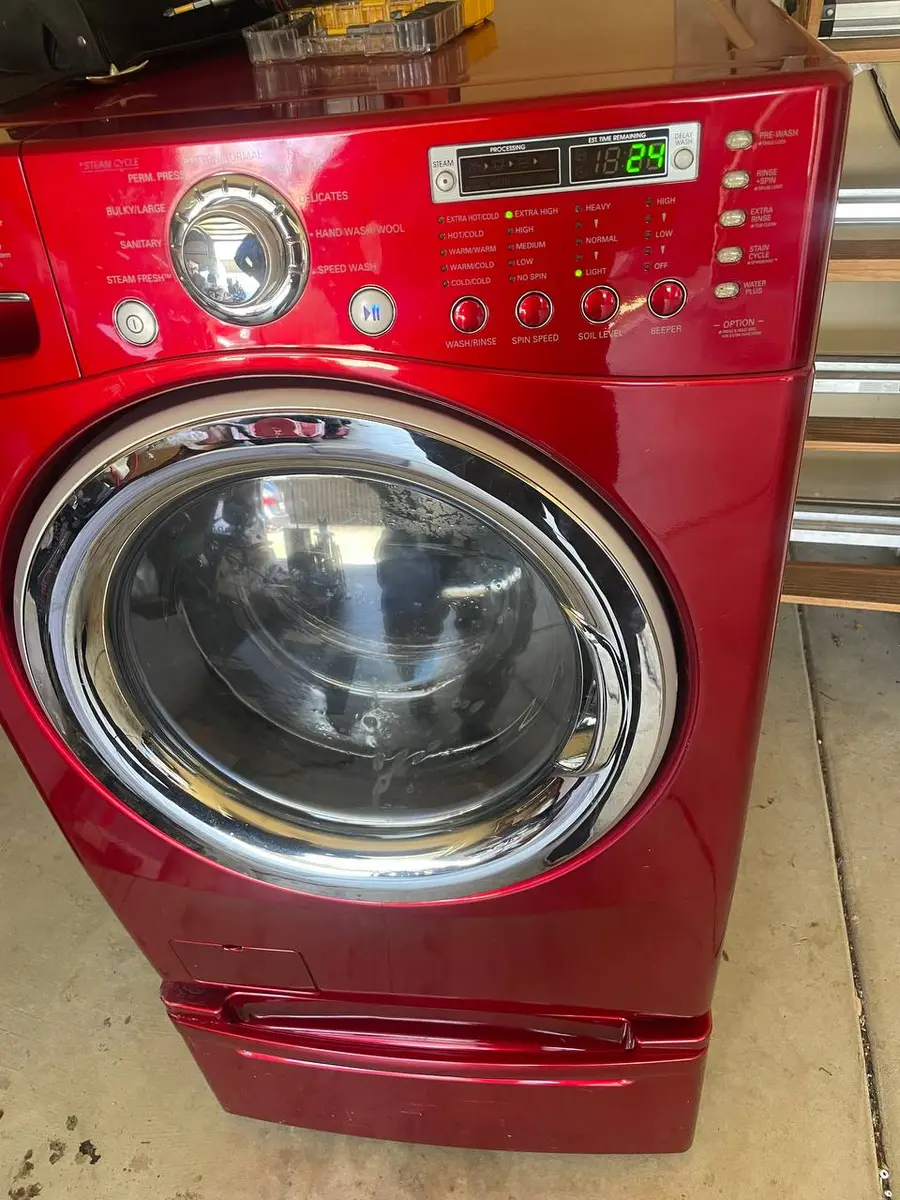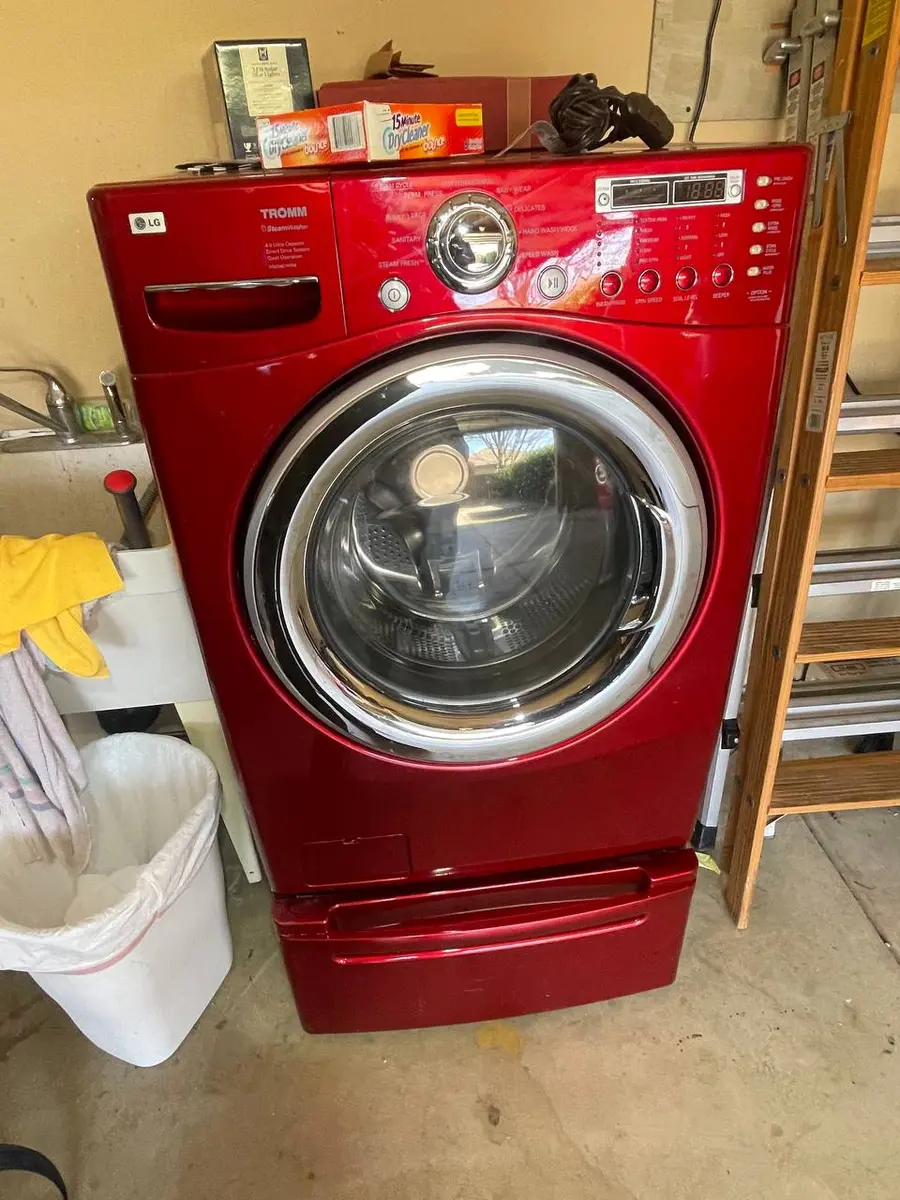
GE washers span a wide range — from traditional Top Load agitator models to high-efficiency Front Load units with SmartHQ WiFi connectivity. When the control board detects a fault, it halts the cycle and displays an error code on the LED panel. On models without a digital display (some basic Top Load units), the code is indicated by a combination of flashing status LEDs. This guide covers every GE washer error code with real part numbers, diagnostic steps, and repair costs.
How GE Washer Error Codes Work#
GE washers use a main electronic control board mounted behind the rear panel (top-loaders) or behind the top panel (front-loaders). This board communicates with a secondary user interface board on the control panel. When a sensor reading exceeds tolerance or a component fails to respond within the expected time window, the board stops the cycle and posts an error code.
SmartHQ diagnostics (WiFi models): Open the GE SmartHQ app, select your washer, and tap "Appliance Health." The app pulls real-time sensor data, active fault codes, and historical errors directly from the control board — including intermittent faults that may have cleared from the display.
Service Mode entry (all electronic models): Turn the cycle selector knob to the 12 o'clock position. Rotate the knob counterclockwise one click, then clockwise three clicks, counterclockwise one click, and clockwise one click. The service LED indicators will illuminate, confirming entry into diagnostic mode. Press Start to cycle through test routines.
To reset most GE washer error codes:
- Press Power to turn off the washer.
- Unplug from the wall outlet for 60 seconds.
- Plug back in and run a Rinse & Spin cycle to test.
Do You Have the Right Tools?
Bearing puller set ($120), drum spider wrench ($85), multimeter ($85), and diagnostic software. Our technician arrives with $3,000+ in professional tools — your diagnostic is free.
Licensed & Insured · 90-Day Warranty · Same-Day Service
E2 — Drain Error#
The E2 code means the washer cannot drain water within the expected time (typically 8 minutes for GE models). This is the single most common GE washer error code.
Common causes:
- Clogged drain pump filter — coins, hair ties, lint, and small clothing items are the top culprits
- Kinked or clogged drain hose
- Drain pump motor failure (part WH23X28418)
- Standpipe or house drain blockage
- Drain hose inserted too far into the standpipe (maximum insertion depth is 8 inches)
How to fix:
- Clean the drain pump filter: On GE front-load models (GFW550, GFW650, GFW850 series), locate the small access panel at the bottom-right of the front panel. Place towels and a shallow pan underneath. Turn the filter cap counterclockwise slowly — residual water will drain out. Remove any debris from the filter screen and the pump cavity behind it. On GE top-load models, the drain filter is accessed from the bottom of the cabinet.
- Check the drain hose: Pull the washer away from the wall. Disconnect the drain hose from the standpipe. Run water through the hose to check for blockage. Straighten any kinks. Ensure the hose height does not exceed 96 inches from the floor.
- Test the drain pump: With the washer unplugged, access the pump from the bottom (front-loaders) or rear panel (top-loaders). Check that the impeller spins freely. Measure motor resistance with a multimeter — expect 5–15 ohms. If resistance is open or the impeller is jammed, replace the pump assembly.
Part cost: Drain pump assembly (WH23X28418) varies by model and repair complexity. Drain hose (WH41X26871) varies by model and repair complexity. Professional repair varies by model and repair complexity.
E4 — Unbalanced Load#
The E4 code triggers when the washer detects excessive drum vibration during the spin cycle. GE washers use an accelerometer on the outer tub that measures vibration amplitude and halts spinning if it exceeds the safety threshold.
Common causes:
- Single heavy item (comforter, jeans, bath mat) bunched on one side of the drum
- Washing a single item alone — the drum cannot balance a single mass
- Washer not level — all four feet must be firmly on the floor with no rocking
- Worn suspension rods (part WH01X27538 — 4-pack) or shock absorbers
- Shipping bolts not removed on new installation (front-loaders)
How to fix:
- Pause the cycle, open the lid or door, and redistribute the load evenly around the drum.
- If washing a single large item, add 2–3 towels to help the drum balance during spin.
- Check leveling: place a bubble level on top of the washer front-to-back and side-to-side. Adjust the front leveling legs and tighten the lock nuts. On GE top-loaders, the rear legs are self-leveling — tilt the washer forward about 4 inches and set it back down to let them re-engage.
- If E4 appears frequently with normal, balanced loads, the suspension system is worn. Push down firmly on the drum — if it bounces more than once before settling, the suspension rods (top-loaders) or shock absorbers (front-loaders) need replacement.
Part cost: Suspension rod kit 4-pack (WH01X27538) varies by model and repair complexity. Leveling leg (WH01X24697) varies by model and repair complexity. Professional repair varies by model and repair complexity.
Safety First — Know the Risks
High-voltage components and pressurized water lines create flood and shock risk. A single loose fitting can cause thousands in water damage. Our techs are licensed and insured — let them handle the risk.
Licensed & Insured · 90-Day Warranty · Same-Day Service
E8 — Overflow Error#
The E8 code is a critical safety alert — the washer detects water level above the maximum threshold. The control board immediately attempts to activate the drain pump.
Common causes:
- Water inlet valve stuck open (part WH12X26034) — the valve fails to close when the control board cuts power, allowing water to fill continuously
- Pressure switch failure (part WH12X22716) — the board cannot read water level accurately
- Cracked or disconnected pressure hose (part WH41X24709) — the air line between the tub and pressure switch leaks, causing false readings
- Sacramento hard water calcification inside the inlet valve is the leading regional cause of stuck valves
How to fix:
- Immediately unplug the washer and turn off both hot and cold water supply valves behind the unit.
- Check for visible water overflow from the tub — mop up standing water to prevent floor damage.
- Test the inlet valve: Unplug the washer and turn the water supply back on briefly. If water continues to flow into the tub with the washer unplugged, the inlet valve is mechanically stuck open and must be replaced immediately.
- Inspect the pressure system: Locate the pressure switch mounted on the control board housing. Trace the thin rubber hose from the outer tub up to the pressure switch. Check for cracks, holes, or disconnections. Blow gently into the hose — you should hear a faint click from the pressure switch.
- Replace the inlet valve (WH12X26034) if it fails to shut off, or the pressure switch (WH12X22716) if it fails the click test.
Part cost: Water inlet valve (WH12X26034) varies by model and repair complexity. Pressure switch (WH12X22716) varies by model and repair complexity. Pressure hose (WH41X24709) varies by model and repair complexity. Professional repair varies by model and repair complexity.
Warning: E8 is a flood risk code. Turn off water supply valves immediately. If water has reached electrical outlets or appliances, do not touch the washer — call an electrician first.
E1 — Water Fill Timeout#
The washer did not reach the required water level within the allotted fill time (typically 10 minutes).
Common causes:
- Water supply valves not fully open
- Kinked inlet hoses
- Clogged inlet screens (mesh filters at the hose connection points)
- Faulty water inlet valve (part WH12X26034)
- Low household water pressure (GE requires minimum 20 PSI)
How to fix:
- Verify both hot and cold water valves behind the washer are fully turned on — this is the most common cause.
- Turn off the water, disconnect both inlet hoses, and inspect the mesh screens at both the hose ends and the valve ports on the washer. Clean mineral deposits with an old toothbrush and white vinegar.
- Check water pressure: detach a hose and hold it over a bucket, then briefly open the valve. Strong, steady flow indicates adequate pressure. A trickle suggests a plumbing issue.
- If screens are clean and water pressure is adequate, the inlet valve solenoid may have failed. Measure resistance across the valve coils — expect 500–1,500 ohms per coil. Open reading means the coil is burned out.
Part cost: Water inlet valve (WH12X26034) varies by model and repair complexity. Inlet hose (WH41X10207) varies by model and repair complexity. Professional repair varies by model and repair complexity.
The Real Cost of DIY
Average DIY attempt: $150-400 in tools you may use once, plus the risk of further damage. Our diagnostic visit costs $0 — we find the problem and give you an honest quote.
Licensed & Insured · 90-Day Warranty · Same-Day Service
E5 — Lid Lock / Door Lock Error#
The washer cannot confirm that the lid (top-load) or door (front-load) is properly secured. The cycle will not start.
Common causes:
- Lid or door not fully closed — clothing caught in the gasket or hinge area
- Faulty lid lock/switch assembly (top-load part WH44X28694, front-load part WH44X24114)
- Broken door strike or latch mechanism
- Wiring harness issue between the lock and control board
- Lid switch interlock worn out from repeated use (top-loaders over 5 years old)
How to fix:
- Open the lid or door fully and check that nothing is preventing it from closing. On front-loaders, inspect the rubber door boot gasket for foreign objects wedged in the seal.
- Close the lid or door firmly until you hear a distinct click from the lock mechanism.
- Test the lid lock (top-loaders): The lid lock assembly is mounted under the top panel near the front-right corner. Access by removing the control panel or top clips. Measure continuity across the lock switch terminals — it should show continuity when locked, open when unlocked. Also check the solenoid coil resistance (expect 300–1,000 ohms).
- Test the door lock (front-loaders): Peel back the door boot gasket on the right side to access the lock. Check for burnt contacts, cracked plastic, or melted components. Measure solenoid resistance.
Part cost: Top-load lid lock (WH44X28694) varies by model and repair complexity. Front-load door lock (WH44X24114) varies by model and repair complexity. Professional repair varies by model and repair complexity.
E6 — Motor / Drive Error#
The control board cannot properly drive the motor or has detected an overcurrent condition during operation.
Common causes:
- Overloaded drum — too many clothes exceeding the weight capacity
- Motor control board failure — the inverter section that drives the motor has failed
- Motor winding failure or rotor position sensor (hall sensor) malfunction
- Foreign object lodged between the drum and outer tub (coins, underwire from bras)
- Worn carbon brushes on older GE models with universal motors
How to fix:
- Reduce the load size. GE front-load washers should be filled to about 75 percent of drum capacity by volume, not packed tight.
- Turn the drum by hand with the washer off and power disconnected. It should rotate freely with minimal resistance. Grinding or hard spots indicate a foreign object or bearing wear.
- Enter service mode and run the motor test. If the motor does not spin, check the motor control board for visible damage (burnt MOSFETs, swollen capacitors).
- If the drum turns freely manually but E6 persists during powered operation, the rotor position sensor (hall sensor) is the most likely culprit. This small sensor is mounted on the stator at the rear of the drum and cost varies by model and region to replace.
Part cost: Hall sensor varies by model and repair complexity. Motor control board varies by model and repair complexity. Motor assembly varies by model and repair complexity. Professional repair varies by model and repair complexity.
Don't Void Your Warranty
Opening your appliance yourself may void the manufacturer warranty. Our repair comes with a 90-day guarantee, and we document everything for warranty compliance.
Licensed & Insured · 90-Day Warranty · Same-Day Service
Additional GE Washer Error Codes Quick Reference#
- E3 — Water temperature error. The thermistor reads outside normal range. Test resistance: approximately 50k ohms at 77 degrees F. Part WH12X27616, cost varies by model and region.
- E7 — Motor speed sensor error. Hall effect sensor failure or wiring issue. Check rotor position sensor and wiring. Costs varies by model and region for the sensor.
- E9 — Overflow protection activated. Similar to E8 but triggered by the physical overflow tube rather than the pressure switch. Check inlet valve and pressure system.
- PF — Power failure during cycle. Press Start to resume the interrupted cycle or select a new cycle.
- dL — Door lock timeout. The door lock mechanism did not engage within 30 seconds. Closely related to E5 — check the lock assembly.
- rL — Items detected in drum during Clean Washer cycle. Remove all clothing and restart the Clean Washer cycle.
GE Washer Diagnostic Mode#
GE washers have a comprehensive built-in diagnostic mode:
-
Service Mode (knob models): With the washer off, rotate the cycle selector to 12 o'clock. Then rotate: 1 click counterclockwise, 3 clicks clockwise, 1 click counterclockwise, 1 click clockwise. Service LEDs will illuminate. Press Start to begin automatic test sequence — the washer cycles through fill, agitate, drain, and spin tests while displaying any stored error codes.
-
Service Mode (electronic panel models): Press and hold the Signal and Delay Start buttons simultaneously for 3 seconds. The display shows the last stored error code. Press Start to advance through the diagnostic tests.
-
SmartHQ App (WiFi models): Open the app, select your washer, tap Appliance Health. The app retrieves real-time sensor data including water temperature, motor RPM, drum position, and door lock status. It also shows historical fault logs that have cleared from the display.
Is It Worth Your Time?
Washer problems have dozens of possible causes from bearings to control boards. Average DIY troubleshooting: 3-5 hours plus parts ordering delays. Our technician diagnoses the issue in about 30 minutes — same-day appointments available.
Licensed & Insured · 90-Day Warranty · Same-Day Service
Frequently Asked Questions#
Q: How do I reset my GE washer after an error code? A: Power off the washer, unplug it for 60 seconds, then plug it back in and run a short cycle. For stubborn codes, try entering service mode and running the reset sequence. Most error codes clear automatically once the underlying issue is fixed and a successful cycle completes. On SmartHQ models, you can also reset codes through the app.
Q: Why does my GE top-load washer keep showing E4 with small loads? A: Persistent E4 with small or balanced loads indicates worn suspension components. GE top-loaders use four suspension rods with damper pads that absorb vibration during spin. After 5–7 years of regular use, these pads wear down and the drum bounces excessively during high-speed spin. Replace the entire 4-rod kit (WH01X27538, varies) — replacing just one rod creates uneven damping.
Q: My GE front-load washer smells and shows E2 occasionally. Are these related? A: Yes. A partially clogged drain system causes slow draining (triggering intermittent E2) and allows stagnant water to sit in the pump cavity and drain hose, creating a mildew smell. Clean the drain pump filter thoroughly, run a Clean Washer cycle with a washer cleaning tablet (or 1 cup of white vinegar on hot), and leave the door slightly open between loads to prevent mildew buildup. Bay Area humidity exacerbates this issue.
Q: Are GE washer parts covered by warranty? A: GE provides a 1-year full parts and labor warranty on all washer components. The stainless steel wash basket is warranted for the lifetime of the washer against manufacturing defects (rust-through). No extended warranties apply to electronics or mechanical components beyond year 1 unless you purchased a GE Protection Plan.
Q: Can I use any detergent in my GE front-load washer? A: No. GE front-load washers require HE (High Efficiency) detergent. Regular detergent creates excessive suds that interfere with the pressure sensor, trigger false overflow errors (E8/E9), and leave residue in the drum and gasket. Use only HE-rated detergent and follow the dosing instructions — most people use two to three times more than necessary.
When to Call a Professional#
Some GE washer error codes require specialized knowledge or tools:
- E8 with a stuck-open inlet valve — If water continues flowing with the washer unplugged, you need the water supply shut off and a valve replacement. A stuck valve is also a potential flood hazard that should be addressed immediately.
- E6 with a seized drum — May indicate bearing failure, which requires removing the outer tub and pressing out the bearing assembly with a hydraulic press. One of the most labor-intensive washer repairs.
- Repeated E2 after filter cleaning — If the drain pump filter is clean but E2 persists, the pump motor may need replacement, or there is a blockage deeper in the plumbing that requires a drain snake.
- Multiple simultaneous error codes — Two or more codes at once often indicate a main control board failure requiring board replacement.
- Any burning smell or visible sparking — Disconnect power immediately and do not attempt DIY repair.
A professional technician with GE-specific training can access advanced diagnostic routines, read stored error history, and identify failing components before they cause secondary damage.
Tired of dealing with GE washer error codes? EasyBear's certified technicians specialize in GE washer repair for both Top Load and Front Load models. We arrive with the most common GE parts in stock — drain pumps, inlet valves, lid locks, suspension rods, and control boards. We offer free diagnostic visits — our tech will identify the exact cause, explain your options, and complete the repair on the spot in most cases. Every repair is backed by our 90-day parts and labor warranty. Schedule your free diagnosis today.
Lead Appliance Repair Technician · 12 years experience
Experienced technician with 12 years specializing in washing machine and dryer repairs across all major brands.