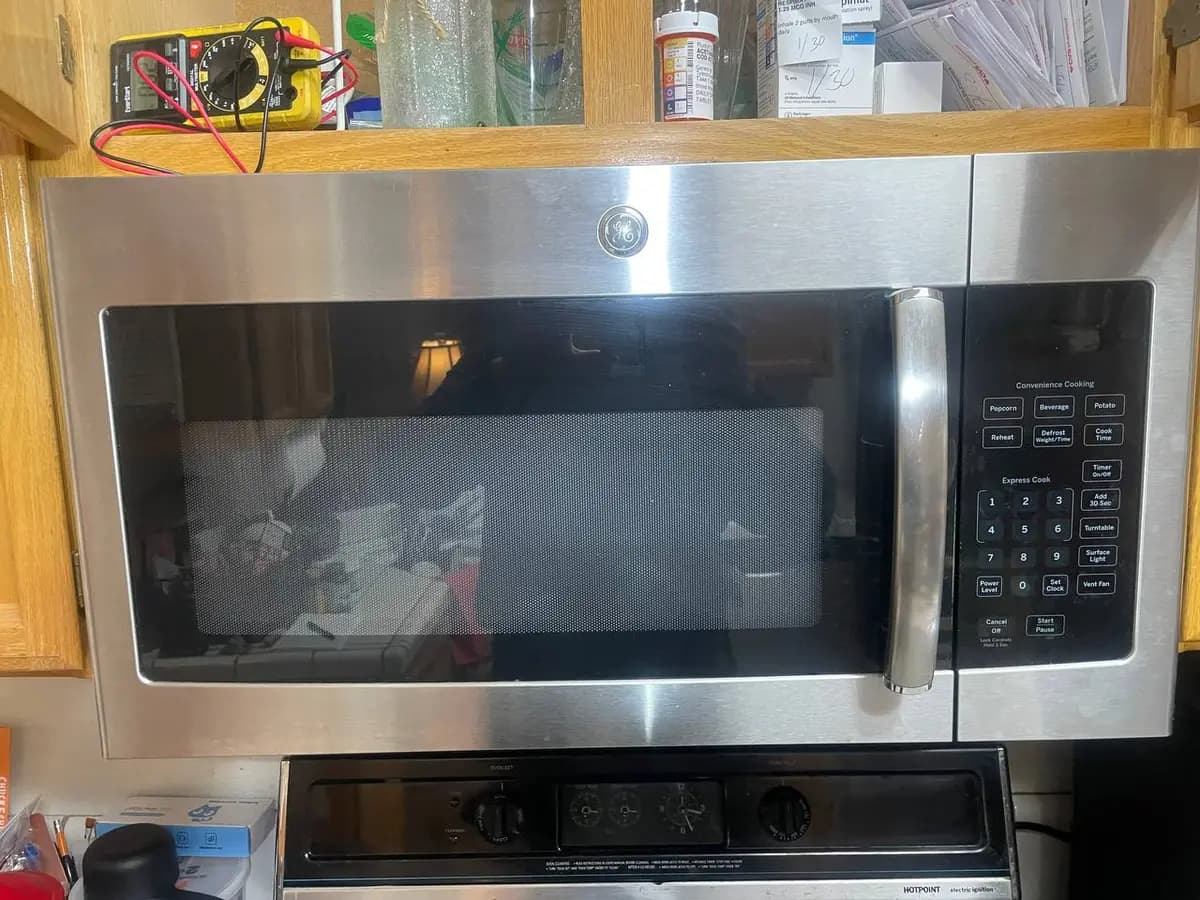
Quick Answer: What Your GE Microwave's Noise Means#
Most likely: an aging magnetron. It drones or buzzes louder than the normal cooking hum, only while the microwave is actually heating, and gets worse over weeks. But before anything else, rule out the one noise that cannot wait: a sharp snapping or popping is electrical arcing, and you should stop the microwave immediately — it is a fire risk. For everything else, two clues pinpoint the part with no disassembly: what the sound is, and when it happens — only while cooking, only when the fan runs, or in time with the turntable.
Likely Causes at a Glance#
| Sound | When it happens | Likely cause |
|---|---|---|
| Loud buzzing or droning | only while cooking | aging magnetron (WB27X10880 on JVM3160, WB27X11079 on newer) |
| High-pitched screaming or whining | while cooking | high-voltage transformer or magnetron nearing failure |
| Grinding or scraping | whenever the fan runs | exhaust fan motor bearing (WB26X10252) |
| Rhythmic clicking or thumping | in time with the turntable | turntable motor, roller ring, or a chipped tray |
| Snapping or popping | during cooking | electrical arcing — stop immediately |
Do You Have the Right Tools?
High-voltage capacitor discharge tool ($90), magnetron tester ($200), microwave leakage detector ($150). Our technician arrives with $3,000+ in professional tools — your diagnostic is free.
Licensed & Insured · 90-Day Warranty · Same-Day Service
Walking Through the Diagnosis#
Start by separating normal from abnormal, because GE microwaves make several healthy sounds: a low steady hum from the magnetron, a fan whoosh that can run on a minute or two after cooking, soft relay clicks at start and stop, and periodic clicking at low power as the magnetron cycles on and off. A new noise that stands out from those is what you are chasing.
Then let timing lead. A loud buzz or drone only while cooking is the magnetron aging — on GE it rides on rubber isolation grommets (WB27X10880 on the JVM3160, WB27X11079 on newer units), and when those grommets harden the vibration transfers to the cabinet and amplifies. A high-pitched scream or whine during cooking points at the high-voltage transformer resonating or the magnetron's internal structure loosening, and it signals an impending high-voltage failure, so schedule it within days. Grinding or scraping whenever the fan runs is the exhaust fan motor bearing (WB26X10252) — confirm it by running the vent fan alone without cooking; if the grind is there, the fan motor is the source, whereas a grind only during cooking is the separate internal cooling fan (WB26X10246). A rhythmic click or thump synchronized with the turntable is mechanical: pull the glass tray and roller ring and run it briefly, and if the noise stops it was the ring or tray, while a noise still coming from the motor area is a stripped turntable-motor gear. A rattle that changes when you tap the cabinet is simply a loose internal part, often a snap-fit duct section. The exception to all of this is arcing: a sharp electrical snap or pop, unlike any mechanical sound, means a burned waveguide cover or bare metal in the cavity — stop the microwave at once.
Repair or Replace? The Short Version#
Most of these are targeted parts on a microwave that still works — a fan motor, a turntable motor, or a loose duct clipped back in are inexpensive fixes clearly worth doing. The magnetron and high-voltage transformer are the costlier calls, and on an over-the-range unit the labor adds up, so weigh those against the microwave's age. The one hard rule is arcing: do not keep using a microwave that snaps or pops, since that is a fire hazard — have it checked before the next use. book a repair.
Safety First — Know the Risks
Microwave capacitors store lethal voltage (4,000V+) even when unplugged. This is the single most dangerous DIY appliance repair. Our techs are licensed and insured — let them handle the risk.
Licensed & Insured · 90-Day Warranty · Same-Day Service
Frequently Asked Questions#
My GE microwave buzzes loudly only while cooking — what is it?#
A loud buzz or drone that appears only while the microwave is heating is the classic sign of an aging magnetron. On GE it is worsened by hardened rubber mounting grommets that let the tube's vibration reach the cabinet. It will progress to failure over weeks to months, so plan the repair.
Is a popping or snapping sound dangerous?#
Yes — stop the microwave immediately. A sharp electrical snap or pop is arcing, usually from a burned waveguide cover or exposed metal in the cavity, and it is a fire risk. Do not keep cooking; have the cavity and waveguide cover inspected before using it again.
How do I tell the exhaust fan from the magnetron?#
Timing separates them. Run the vent fan alone without cooking: a grinding or scraping noise present with just the fan is the exhaust fan motor bearing (WB26X10252). A buzz or drone that appears only while cooking is the magnetron, since it is energized only during heating.
The clicking happens in time with the turntable — is that serious?#
Usually not, but it is worth checking. A click or thump synchronized with the turntable is mechanical — remove the glass tray and roller ring and run it briefly; if the noise stops, the ring or a chipped tray hub was the cause. If it continues from the motor area, the turntable motor's gears are wearing.
Senior Gas Appliance Specialist · 18 years experience
AGA-certified gas appliance specialist with 18 years of experience in residential and commercial oven, range, and cooktop repairs.