Burning smell on a GE microwave rarely comes out of nowhere — a specific part or condition is behind it, and pinning that down turns a guess into a real fix.
The short answer#
Most likely: damaged or arcing waveguide cover. When food residue builds up on this cover, it absorbs microwave energy and carbonizes, eventually arcing — producing visible sparks and a sharp electrical burning smell. The waveguide cover is a thin mica or cardboard panel inside the microwave cavity (typically on the right wall or ceiling) that protects the magnetron opening from food splatter. If that checks out, look next at overheated magnetron.
Do You Have the Right Tools?
High-voltage capacitor discharge tool ($90), magnetron tester ($200), microwave leakage detector ($150). Our technician arrives with $3,000+ in professional tools — your diagnostic is free.
Licensed & Insured · 90-Day Warranty · Same-Day Service
Safety first#
Microwaves contain high-voltage components (up to 5,000V DC) that retain charge even when unplugged — most internal repairs require a certified technician. Unplug the unit or turn off its circuit breaker.
Causes, ranked by likelihood#
Here is how the causes stack up, most common first:
| Likely cause | How common | What you'll notice / what to check |
|---|---|---|
| Damaged or Arcing Waveguide Cover | 35% of cases | The waveguide cover is a thin mica or cardboard panel inside the microwave cavity (typically on the right… |
| Overheated Magnetron | 25% of cases | The magnetron generates the microwave energy that heats food. |
| Failing High-Voltage Diode | 20% of cases | The diode converts AC power to DC and doubles the voltage for the magnetron. |
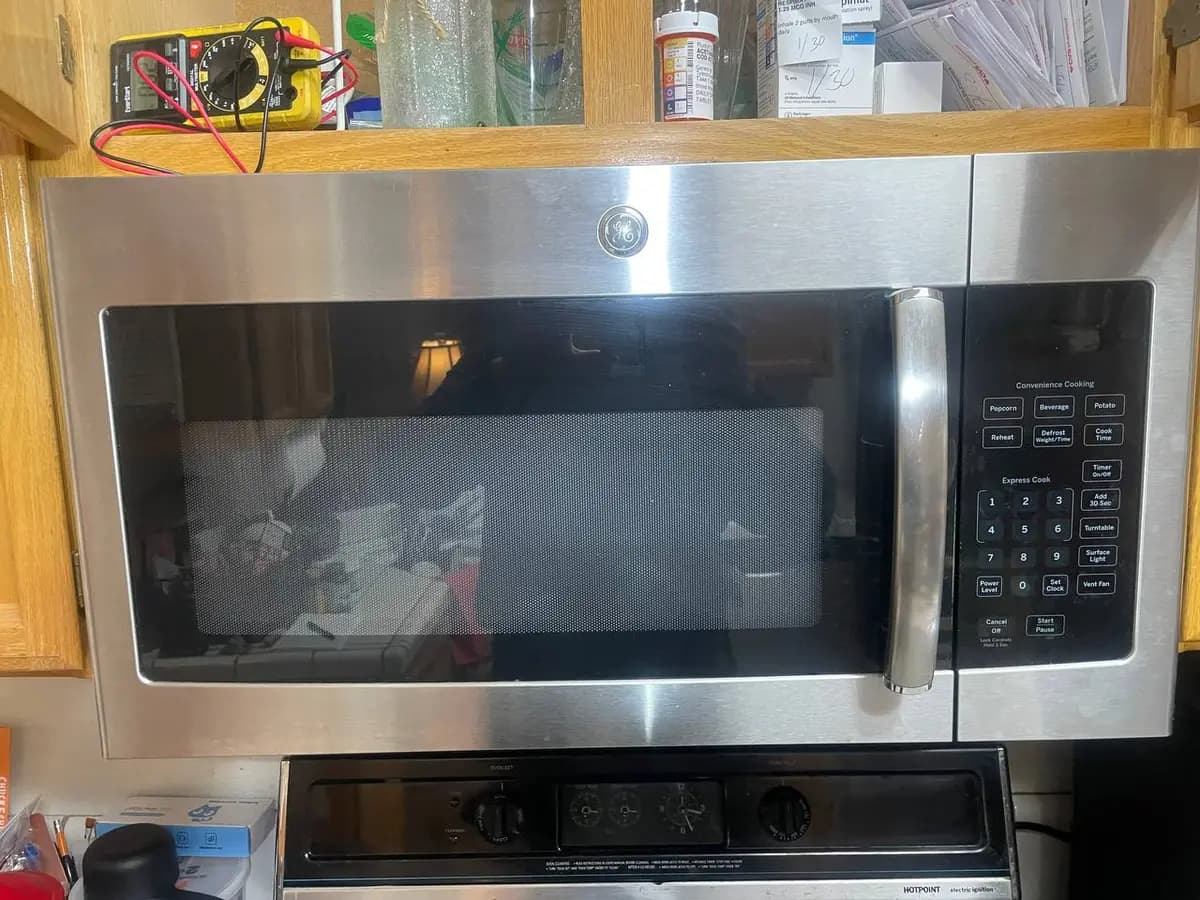
| Grease-Saturated Charcoal Filter — OTR Models | 15% of cases | GE JVM over-the-range microwaves use a charcoal recirculating filter (in non-ducted installations) and a mesh grease filter. |
| Halogen Bulb or Convection Element Failure | 5% of cases | GE Advantium speed-ovens combine microwave energy with halogen heat lamps and optional convection. |
Safety First — Know the Risks
Microwave capacitors store lethal voltage (4,000V+) even when unplugged. This is the single most dangerous DIY appliance repair. Our techs are licensed and insured — let them handle the risk.
Licensed & Insured · 90-Day Warranty · Same-Day Service
Working through it yourself#
Move through these in order — the first match is usually the fix.
1. Damaged or Arcing Waveguide Cover (35% of cases)#
Under the hood, the waveguide cover is a thin mica or cardboard panel inside the microwave cavity (typically on the right wall or ceiling) that protects the magnetron opening from food splatter. When food residue builds up on this cover, it absorbs microwave energy and carbonizes, eventually arcing — producing visible sparks and a sharp electrical burning smell. On GE JVM over-the-range models, the waveguide cover is a rectangular mica sheet approximately 4" x 5" held by one or two small screws or friction clips. With the unit unplugged, inspect this part for visible wear or a loose connection and test it before replacing.
2. Overheated Magnetron (25% of cases)#
When the magnetron tube deteriorates (typically after 8–12 years of regular use), it becomes less efficient — drawing more current while producing less output. The excess energy converts to heat in the magnetron itself, producing a hot electrical/metallic burning smell. The magnetron generates the microwave energy that heats food. Check the element or igniter for visible damage and continuity before replacing it.
3. Failing High-Voltage Diode (20% of cases)#
Behind the scenes, the diode converts AC power to DC and doubles the voltage for the magnetron. When a diode fails, it often shorts — drawing excessive current that overheats the component and gives off a burning electrical smell. A visually burned diode may show blackening or a cracked housing. With power off, test the heating component for continuity; an open reading means no heat is being produced.
4. Grease-Saturated Charcoal Filter — OTR Models (15% of cases)#
GE JVM over-the-range microwaves use a charcoal recirculating filter (in non-ducted installations) and a mesh grease filter. When the charcoal filter becomes saturated with grease from stovetop cooking below, running the exhaust fan at high speed can heat the accumulated grease, producing a burning grease smell that appears to come from the microwave itself. GE recommends replacing the charcoal filter every 6 months, but many homeowners never fit a new it. Clear the filter and vent path fully — restricted airflow drives many of these symptoms.
5. Halogen Bulb or Convection Element Failure (5% of cases)#
In practice, gE Advantium speed-ovens combine microwave energy with halogen heat lamps and optional convection. The halogen bulbs operate at extremely high temperatures and can produce a burning smell when the reflector coating deteriorates or when food splatter on the bulb carbonizes during the intense heat cycle. Diagnosis: Run the Advantium in speedcook mode and observe through the door. With power off, test the heating component for continuity; an open reading means no heat is being produced.
The short checklist#
Here is the whole diagnosis on one line each:
- Damaged or Arcing Waveguide Cover — 35% of the time; rule it in or out with a visual check and a continuity test where possible.
- Overheated Magnetron — 25% of the time; with power off, test the heating component for continuity.
- Failing High-Voltage Diode — 20% of the time; check the element or igniter for visible damage and continuity before replacing it.
- Grease-Saturated Charcoal Filter — OTR Models — 15% of the time; pull and clean the filter.
- Halogen Bulb or Convection Element Failure — 5% of the time; check the element or igniter for visible damage and continuity before replacing it.
The Real Cost of DIY
Average DIY attempt: $150-400 in tools you may use once, plus the risk of further damage. Our diagnostic visit costs $0 — we find the problem and give you an honest quote.
Licensed & Insured · 90-Day Warranty · Same-Day Service
What fixing it usually involves#
The repair path is predictable: diagnose, access, replace, and verify. A tech confirms the damaged or arcing waveguide cover or works down the list, fits the right part, and runs a cycle to be sure it holds.
Keeping it from coming back#
A little routine care goes a long way: keep the microwave clean, level, and free of buildup, and this symptom is far less likely to return.
Don't Void Your Warranty
Opening your appliance yourself may void the manufacturer warranty. Our repair comes with a 90-day guarantee, and we document everything for warranty compliance.
Licensed & Insured · 90-Day Warranty · Same-Day Service
When it is a job for a pro#
Call a technician if the symptom persists after the checks above, if the repair means reaching power, gas, or sealed components, or if your GE microwave is still under warranty — DIY work can void it. What you pay comes down to the failed component and the labor for your unit — a diagnostic visit confirms the number up front.
If the fix is beyond a quick DIY, request a technician who works on GE microwaves and can diagnose it in one visit.
Senior Gas Appliance Specialist · 18 years experience
AGA-certified gas appliance specialist with 18 years of experience in residential and commercial oven, range, and cooktop repairs.