Quick Answer: Why Your GE Dryer Has Water in It#
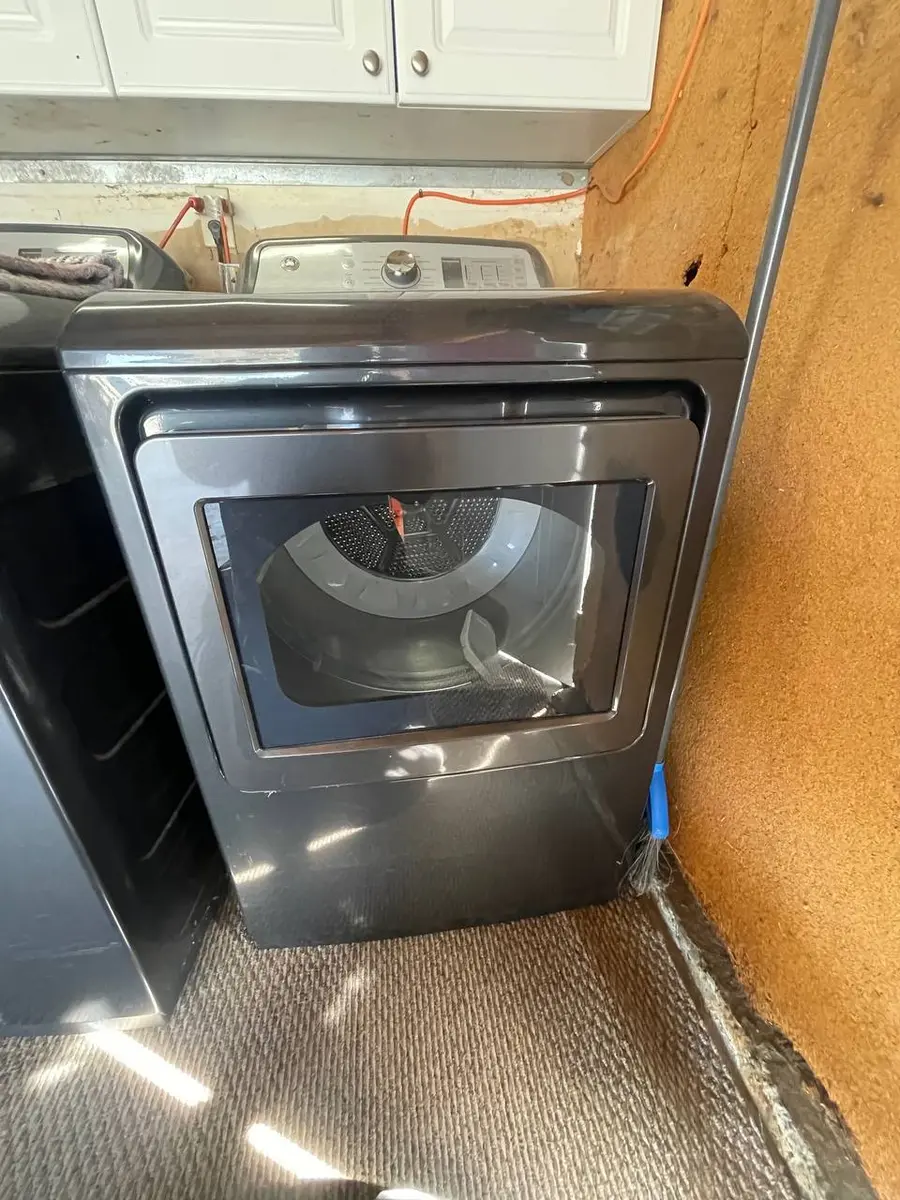
Most likely: your GE dryer has no drain to fail — it is a vented machine, so water inside or around the cabinet is exhaust condensing in a cold or restricted vent and running back. The other pattern is a moisture-sensing fault: fouled Sensor Dry bars end the cycle early and leave loads damp, which reads as "water not clearing." A clogged lint screen or a run past GE's 60-foot maximum drives the condensation. Confirm whether you own an electric GFD or a gas GTD model, then chase airflow before you touch a part.
Likely Causes at a Glance#
| Cause | Likelihood | What to check |
|---|---|---|
| Vent condensation | Most likely | moist exhaust cooling in a cold or restricted duct and draining back; a blown thermal fuse (WE04X10120) confirms the vent was restricted |
| Fouled Sensor Dry bars | Common | fabric-softener film on the two moisture bars ends cycles early, leaving loads wet; clean with 220-grit and alcohol |
| Blocked screen or over-long vent | Common | a clogged lint screen or a run past GE's 60-foot maximum traps humid air; an E5 logs an exhaust over-temp |
| Stuck exterior vent flap | Occasional | a flap held shut by lint or a bird nest keeps moist air from leaving |
Do You Have the Right Tools?
Gas leak detector ($130), thermal fuse tester ($95), belt tension gauge, and vent inspection camera ($180). Our technician arrives with $3,000+ in professional tools — your diagnostic is free.
Licensed & Insured · 90-Day Warranty · Same-Day Service
Walking Through the Diagnosis#
Kill the power the right way first: on an electric GFD, unplug from the 240V outlet — that is a lethal voltage — and on a gas GTD, turn off the gas supply valve and unplug. Because dryer lint is highly flammable, clean the lint screen and inspect the vent before any work, and never bypass the thermal fuse or the safety thermostats.
Treat this as a venting problem, not a plumbing one. Disconnect the exhaust duct at the rear and look for pooled water, then walk the whole run for crushed, kinked, or sagging sections and confirm the exterior flap opens when the dryer runs. GE recommends rigid four-inch metal duct within a 60-foot equivalent maximum, so replace flexible foil and insulate any run through a cold attic or exterior wall where the exhaust condenses. Then read the machine: put it in standby and hold Delay Start + My Cycle for three seconds to enter Service Mode (the display shows "88" then "t1"), and step through the moisture-sensor and thermistor tests with Start. An E5 exhaust over-temp confirms the vent restriction. If the vent is genuinely clear but loads still finish wet, the Sensor Dry bars are the suspect — the two parallel metal bars inside the drum collect fabric-softener film and stop reading moisture correctly, so clean them with fine 220-grit sandpaper and rubbing alcohol.
How to Prevent This#
Clean the Sensor Dry bars monthly, clean the lint screen before every load and wash it with soap and water monthly to clear dryer-sheet residue, have the vent professionally cleaned each year, and confirm the exterior flap opens — birds and wasps nest in vent exits seasonally.
Safety First — Know the Risks
Gas dryers carry carbon monoxide and explosion risk. Even electric dryers involve 240V circuits that can deliver a fatal shock. Our techs are licensed and insured — let them handle the risk.
Licensed & Insured · 90-Day Warranty · Same-Day Service
Repair or Replace? The Short Version#
Clearing a vent, cleaning the sensor bars, or freeing a stuck flap costs little or nothing, and even a thermal fuse is an inexpensive part on a GE dryer worth keeping. The value is in not replacing the wrong thing — most "not draining" GE dryers just need airflow restored. If reworking the exhaust or metering the sensor circuit in a 240V appliance is not for you, our technicians identify the model type and fix the real cause — book a repair.
Frequently Asked Questions#
How do I enter diagnostic mode on my GE dryer?#
Put the dryer in standby — plugged in, powered off, door closed — then press and hold Delay Start + My Cycle for three seconds. The display shows "88" then "t1" for Service Mode, and pressing Start steps you through the heating, thermistor, motor, and moisture-sensor tests, along with any stored E-codes.
Why does my GE dryer leave clothes wet even though it runs?#
Usually the Sensor Dry bars. Those two metal bars in the drum detect moisture, and when fabric-softener film coats them they misread and end the cycle early, leaving loads damp. Clean them with fine 220-grit sandpaper and rubbing alcohol, and check the vent, since trapped humid air also stalls drying.
Are GE electric and gas dryers diagnosed differently?#
They share the same drum and drive but differ in heating, so the safety step differs: an electric GFD unplugs from a 240V outlet, while a gas GTD needs the gas valve shut off as well as unplugged. The vent and moisture-sensor checks are the same for both.
My GE dryer smells like burning and stopped — is it dangerous?#
Yes, treat it as urgent. Unplug it (or shut the gas) and do not restart. A burning smell most often means lint has built up near the heat source, a belt is slipping and creating friction, or the motor is overheating — all fire risks that need the source identified before the dryer runs again.
Senior Gas Appliance Specialist · 18 years experience
AGA-certified gas appliance specialist with 18 years of experience in residential and commercial oven, range, and cooktop repairs.