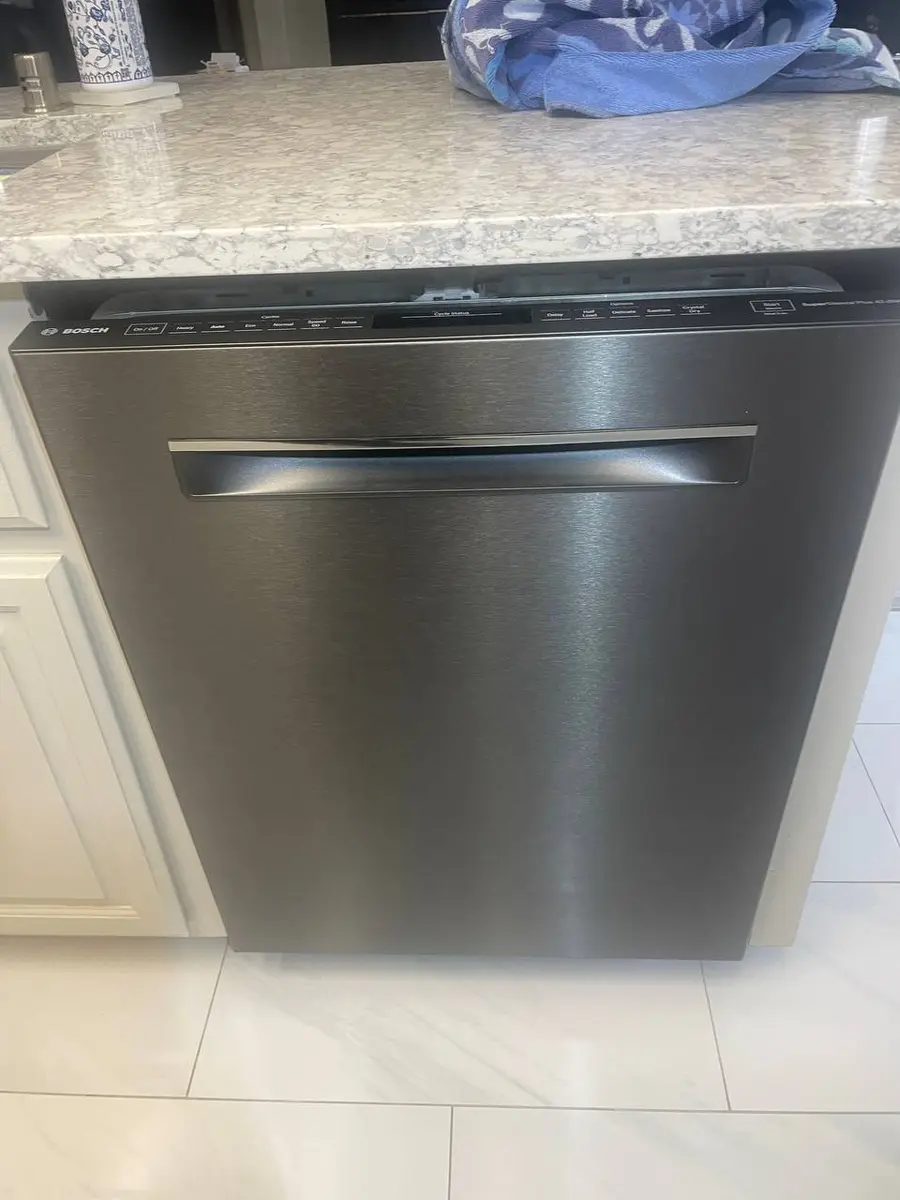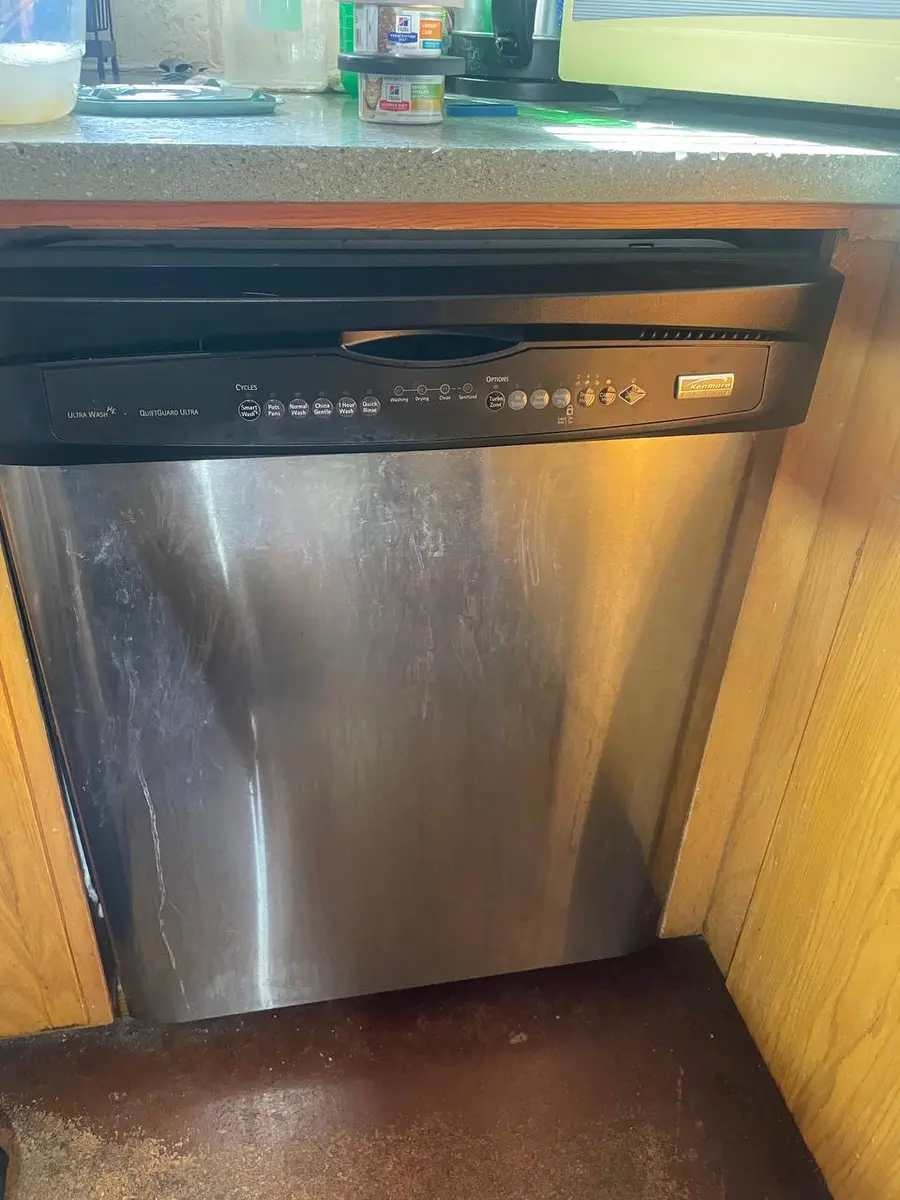
A GE [dishwasher](/blog/repair-or-replace-dishwasher) dries differently from a Bosch: it uses an actual heating element and, on many models, a vent or fan to exhaust moist air — so when it stops drying, there is a specific heated-dry system to check. The most common causes are simple: the heated-dry option is off, rinse aid is empty, or the element has failed. A failed heating element is the classic GE drying fault and a common, affordable repair. Work the settings and rinse aid first, then the element and vent.
Quick answer#
Confirm the heated-dry or Hi-Temp option is actually selected, top up the rinse aid, and feel the tub at cycle end — if it is not warm, the heating element has likely failed. Settings and rinse aid are free DIY fixes and solve many complaints; a dead element or a stuck vent is a technician repair, but a cheap and common one on GE. The tell is temperature: a warm tub with wet dishes is a rinse-aid or loading issue, a cold tub is an element issue.
Do You Have the Right Tools?
Water pressure gauge ($60), spray arm tester, float switch multimeter ($85), and drain inspection camera. Our technician arrives with $3,000+ in professional tools — your diagnostic is free.
Licensed & Insured · 90-Day Warranty · Same-Day Service
How GE drying works#
After the final hot rinse, the exposed heating element in the tub floor radiates heat to evaporate moisture, and a vent (passive or fan-assisted, depending on model) lets the humid air escape so it does not just re-condense on the dishes. Rinse aid still plays a role — it thins the water film so the element’s heat finishes faster. On GDT500-series and similar tubs, all three pieces — element, vent, rinse aid — have to work together, and any one failing leaves damp dishes.
Causes by likelihood#
| Cause | Share of drying complaints |
|---|---|
| Heating element failed or weak | 40 to 60% |
| Heated-dry / Hi-Temp option off | 25% |
| Empty or low rinse aid | 18% |
| Vent or vent fan not opening | 12% |
| Loading / plastics | 5% |
The heating element dominates the failures on GE precisely because it is a powered part that works hard every cycle — which is the opposite of Bosch, where there is no element to fail.
1. Check the settings first (free)#
Many "not drying" calls are simply the heated-dry or Hi-Temp option switched off, often to save energy or after someone changed the cycle. Select it explicitly and re-run. Also confirm you are not using a quick/eco cycle that skips the heated dry entirely.
2. Rinse aid#
Check and fill the rinse-aid reservoir and set the dosage for your water hardness. Without it, water beads and clings even under the element’s heat, leaving spots and damp spots — especially on glass.
3. The heating element — the main GE fault#
If dishes are cool and wet even on Hi-Temp and the tub floor is not warm at the end of the cycle, the element has failed. It is a visible loop in the tub bottom; a technician confirms it with a resistance reading and replaces it. This is one of the most common and most economical GE repairs.
4. The vent#
A vent that will not open — or a vent fan that has failed on models that use one — traps humid air so it re-condenses on the dishes. If the element is good but drying is still poor and the interior is very steamy at the end, suspect the vent. It is a technician check.
Safety First — Know the Risks
Live 120V wiring in a wet environment is one of the most dangerous DIY scenarios. Water + electricity = serious shock risk. Our techs are licensed and insured — let them handle the risk.
Licensed & Insured · 90-Day Warranty · Same-Day Service
Confirm it is the element with two quick tests#
Before booking a repair, two observations separate an element failure from everything else. First, run a heated-dry or Hi-Temp cycle and, the moment it ends, feel the tub floor and the exposed element loop — a working element leaves them clearly warm. Cold means no element heat. Second, look at whether washing also seems cooler than it used to; on many GE tubs the same heat system supports both, so a cold wash plus wet dishes points squarely at the element or its control rather than at rinse aid or loading.
Hard water, spotting, and the rinse-aid dose#
A GE with a healthy element can still leave dishes filmy if the water is hard and rinse aid is low. The element supplies heat, but rinse aid supplies the surface-tension break that lets water sheet off before it bakes into spots. If glasses come out dry but cloudy, raise the rinse-aid dosage rather than suspecting the element — that is a water-chemistry fix, not a heat one. Genuinely wet dishes with a cold tub are the element; dry-but-spotty dishes are rinse aid and hardness.
The Real Cost of DIY
Average DIY attempt: $150-400 in tools you may use once, plus the risk of further damage. Our diagnostic visit costs $0 — we find the problem and give you an honest quote.
Licensed & Insured · 90-Day Warranty · Same-Day Service
What a technician checks on a GE drying complaint#
- Measures the heating element for continuity — an open element reads no continuity and explains a cold tub outright.
- Confirms the element is actually getting voltage; if the element is good but unpowered, the control relay is the fault, not the element.
- Verifies the vent opens and, on fan-vented models, that the fan runs — a trapped-humidity failure mimics poor drying with a good element.
- Checks rinse-aid delivery and reviews cycle selection, since a heated-dry option left off is a no-cost fix.
On GDT500-series and similar tubs this sequence sorts an element job from a free setting fix in a few minutes.
Which causes need a technician#
- Heating element: resistance testing and replacement.
- Vent fan / vent actuator: confirming the fan runs and the flap opens.
- Control not powering the element: if the element is good but never gets voltage, the control or its relay is suspect — meter work.
Everything else — the option setting, rinse aid, and how you load — is yours to fix in a couple of minutes.
Don't Void Your Warranty
Opening your appliance yourself may void the manufacturer warranty. Our repair comes with a 90-day guarantee, and we document everything for warranty compliance.
Licensed & Insured · 90-Day Warranty · Same-Day Service
The eco-cycle tradeoff#
Modern GE cycles are tuned for energy efficiency, and the easiest way to save energy is to skip or shorten the heated-dry phase. That is why so many "stopped drying" complaints coincide with someone switching to a normal or eco cycle, or with a firmware default that favors efficiency. Heated dry costs a little energy for a lot of dryness; if you want dishes dry at the end, select it deliberately. This is a genuine tradeoff built into the machine, not a malfunction, and it is the first thing to confirm before assuming the element died.
Replacing a GE heating element: what is involved#
When the element has genuinely failed, the repair is well-defined. The exposed loop element sits in the tub floor, secured by two terminals that pass through the tub with sealing nuts. A technician disconnects power, removes the lower access panel, disconnects the two wires, backs off the mounting nuts, and lifts the old element out; the new one seats with fresh seals to prevent a leak. It is a common, moderate GE repair — far cheaper than a new machine — which is why an element failure is worth fixing rather than replacing the unit on a tub under about ten years old.
Is It Worth Your Time?
Dishwasher issues overlap between drain pump, wash motor, inlet valve, and control board. DIY diagnosis averages 3-5 hours. Our technician diagnoses the issue in about 30 minutes — same-day appointments available.
Licensed & Insured · 90-Day Warranty · Same-Day Service
Preventing wet dishes#
- Default to a cycle with heated dry or Hi-Temp for loads you need dry now.
- Keep rinse aid filled and dosed for your water.
- Give the load a few minutes and crack the door to let the last of the steam out.
- Load plastics on top and angle everything so water sheets off rather than pooling.
- In a hard-water area, raise the rinse-aid dose a notch and use a periodic dishwasher cleaner so mineral film does not build up and read as poor drying.
- After a new install, run one full heated-dry cycle empty to confirm the element and vent are working before you judge the drying on a real load.
- If only the plastics stay wet while glass and stainless dry, that is normal physics for any dishwasher, not a GE fault, so hand dry lightweight items and do not book a repair for it.
Frequently Asked Questions#
Why won't my GE dishwasher dry the dishes?#
GE dries with a heating element and a vent, so the usual causes are a failed heating element, the heated-dry option left off, empty rinse aid, or a vent that will not open. Confirm heated dry is selected and rinse aid is full before suspecting the element.
How do I know if the heating element failed in my GE dishwasher?#
If the dishes come out cool and soaking even on a Hi-Temp or heated-dry cycle, and the tub is not warm at the end, the element likely failed. A technician confirms it with a resistance check across the element terminals.
Does rinse aid matter on a GE dishwasher?#
Yes. Even with a heating element, rinse aid helps water sheet off so the heat can finish the job. An empty reservoir leaves spotting and damp dishes, so keep it filled and the dosage matched to your water hardness.
Is a GE dishwasher not drying worth repairing?#
Often the fix is free — a setting or rinse aid. A failed heating element or vent fan is a modest, common repair and worth doing on a unit under about ten years old rather than replacing the whole machine.
Senior Gas Appliance Specialist · 18 years experience
AGA-certified gas appliance specialist with 18 years of experience in residential and commercial oven, range, and cooktop repairs.