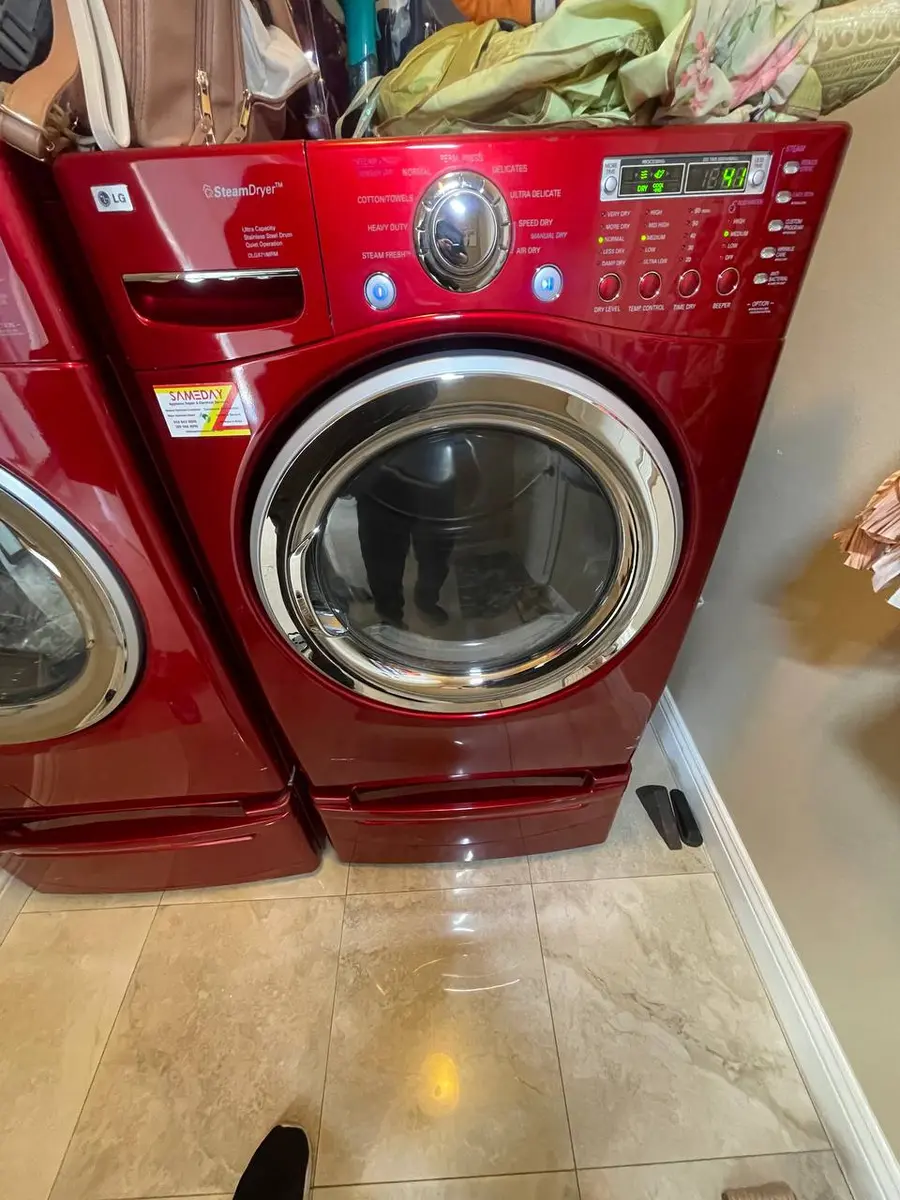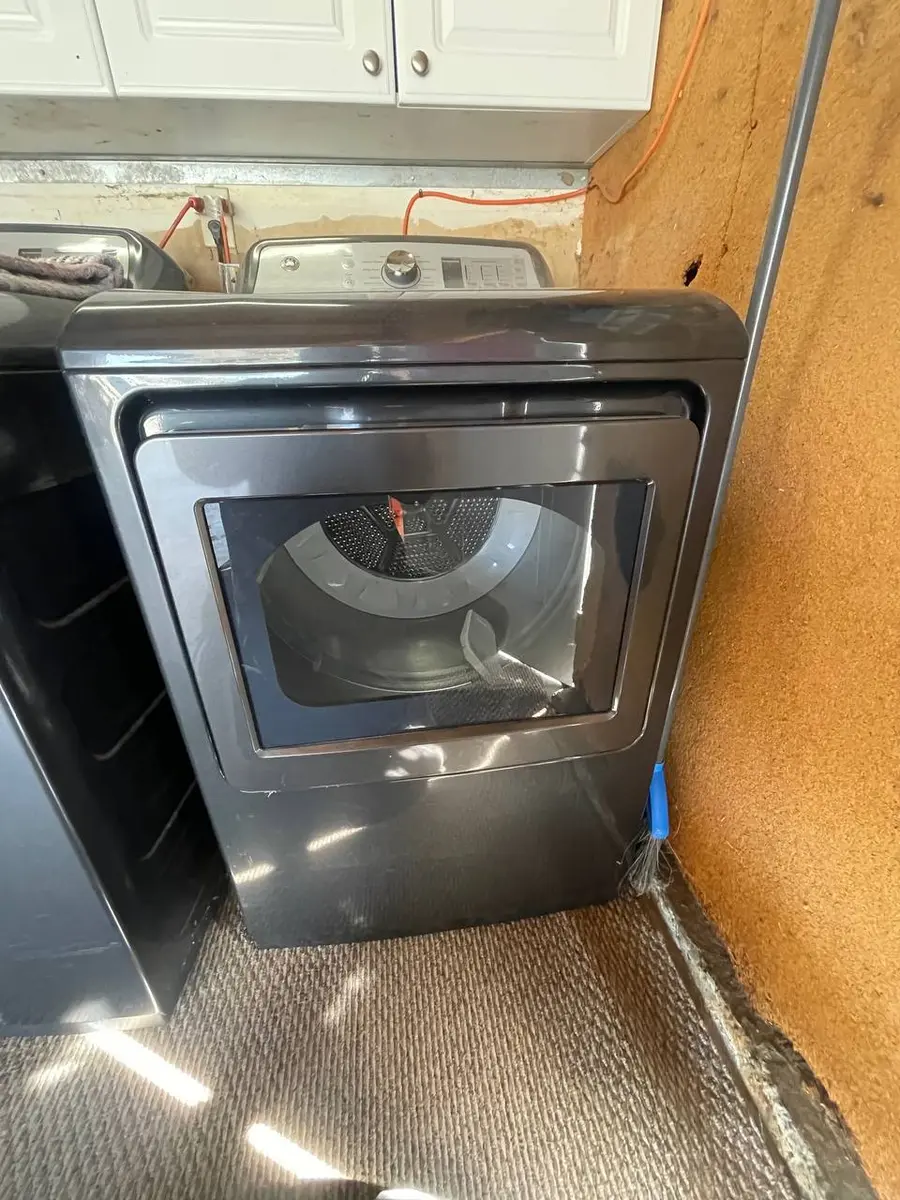
Fisher & Paykel dryers range from practical vented models to advanced heat pump condensing units. Their Auto-Sensing technology uses multiple sensors to detect exactly when clothes are dry — saving energy and preventing over-drying that damages fabrics. When the system detects a fault, F&P dryers display error codes that point you toward the problem.
This guide covers every Fisher & Paykel dryer error code across their product range — vented, condensing, and heat pump models.
How Fisher & Paykel Dryer Error Codes Work#
F&P dryers use a main control board (MCU) that monitors temperature sensors, moisture sensors, motor speed, door position, and airflow. On heat pump models, additional sensors monitor the refrigerant system. Error codes display as alphanumeric characters on the digital panel, or as LED blink codes on older models without displays.
The Auto-Sensing system is important context for troubleshooting: the dryer measures both temperature and conductivity (moisture) of the tumbling clothes to determine dryness. Sensor issues affect not just error codes but also drying accuracy.
Basic reset procedure:
- Press and hold the Power button for 5 seconds.
- Unplug from the outlet for 2 minutes.
- Clean the lint filter.
- Plug back in and run a short Refresh/Air cycle to test.
Do You Have the Right Tools?
Gas leak detector ($130), thermal fuse tester ($95), belt tension gauge, and vent inspection camera ($180). Our technician arrives with $3,000+ in professional tools — your diagnostic is free.
Licensed & Insured · 90-Day Warranty · Same-Day Service
E1 — Door Switch Error#
The dryer does not detect the door as properly closed. The cycle will not start or stops immediately.
Common causes:
- Door not fully latched
- Door switch failure (microswitch or magnetic type)
- Latch mechanism worn or broken
- Strike plate misaligned or worn
- Wiring fault between switch and MCU
How to fix:
- Check closure: Close the door firmly until you hear a positive click. Inspect the latch for lint accumulation or fabric softener residue preventing full engagement.
- Test switch: The door switch should show continuity when the door is closed and open circuit when open. Access the switch from behind the front panel. Test with multimeter.
- Inspect latch/strike: After thousands of cycles, plastic latch components wear. If the door closes but the switch does not actuate, the latch is not engaging deeply enough — replace the strike plate or latch.
- Check alignment: If the dryer was recently moved or the door was hit, alignment between latch and strike may be off. Loosen mounting screws, realign, retighten.
Part cost: Door switch varies by part. Latch assembly varies by part. Professional repair varies by part total.
E2 — Thermistor / Temperature Sensor Error#
One or more NTC temperature sensors are reading outside expected range. The dryer cannot regulate heat safely.
Common causes:
- NTC sensor open or shorted
- Sensor wire damaged by heat exposure
- Connector corrosion or looseness
- Exhaust sensor covered in lint (creating insulation, incorrect readings)
- MCU ADC circuit fault
How to fix:
- Identify which sensor: F&P dryers typically have 2–3 NTC sensors — inlet air, exhaust air, and drum. The service mode may indicate which sensor has failed.
- Test NTC resistance: At room temperature, F&P NTC sensors typically read 10,000–50,000 ohms (varies by model — check service manual). Infinite = open circuit (broken). Zero = shorted.
- Clean sensor: The exhaust sensor can become coated with lint, causing inaccurate readings that look like a high exhaust temperature. Clean the sensor head with a soft cloth.
- Check wiring: Follow the sensor wire path. Look for areas where the wire passes near the heater element — heat damage causes insulation breakdown.
Part cost: NTC sensor varies by part. Sensor harness varies by part. Professional repair varies by part total.
Safety First — Know the Risks
Gas dryers carry carbon monoxide and explosion risk. Even electric dryers involve 240V circuits that can deliver a fatal shock. Our techs are licensed and insured — let them handle the risk.
Licensed & Insured · 90-Day Warranty · Same-Day Service
E3 — Motor Error#
The drum motor is not operating, running at incorrect speed, or drawing abnormal current.
Common causes:
- Motor capacitor failure (humming but not starting)
- Motor thermal overload tripped (overheating from lint)
- Motor winding failure
- Drive belt broken (motor runs but drum does not turn)
- Motor bearing seizure
- MCU motor relay/triac failure
How to fix:
- Check capacitor: The most common cause of a humming-but-not-starting motor. The capacitor is near the motor — visually check for swelling or leaking. Test with a capacitor meter if available.
- Clear lint around motor: Remove panels to access the motor area. Lint accumulation restricts motor cooling, causing thermal overload trips. Clean thoroughly.
- Test motor windings: Disconnect motor. Measure winding resistance — should be 2–10 ohms. Infinite = open winding.
- Check drive belt: Open the door and try turning the drum by hand. Turns freely with no resistance = belt broken. Belt-drive F&P dryers typically use a stretch belt (no tensioner pulley).
- Motor thermal reset: Some F&P motors have a resettable thermal overload. After cleaning lint and allowing cooling, the motor may restart. If it trips repeatedly, the motor has an internal fault.
Part cost: Motor capacitor varies by part. Drive belt varies by part. Motor assembly varies by part. Professional repair varies by part total.
E4 — Heating Element Error#
The heating system is not functioning correctly. The dryer tumbles but produces no heat, or overheats.
Common causes:
- Heating element burnout (open circuit)
- High-limit thermostat tripped (safety cutoff)
- Cycling thermostat failure
- Wiring fault to element
- MCU heater relay failure
How to fix:
- Test heating element: Measure resistance across element terminals — should be 10–30 ohms for a 240V element. Infinite = burned out. Also check for earth leakage (element to ground) — any continuity = insulation failure.
- Check high-limit thermostat: This non-resettable safety device trips if the element overheats (usually from blocked airflow). Once tripped, it must be replaced. Do not bypass — it prevents fires.
- Test cycling thermostat: This controls normal heat cycling during operation. Should show continuity when cool and open when heated past its rating. Stuck open = no heat. Stuck closed = constant heat (overheating).
- Airflow check: A blocked lint filter, duct, or vent causes element overheating, which trips the high-limit. Always check airflow path when replacing a blown thermal fuse or tripped thermostat.
Part cost: Heating element varies by part. High-limit thermostat varies by part. Cycling thermostat varies by part. Professional repair varies by part total.
Critical: If the high-limit thermostat tripped, ALWAYS find and fix the airflow restriction before replacing it. Simply replacing the thermostat without fixing the root cause creates a fire hazard.
The Real Cost of DIY
Average DIY attempt: $150-400 in tools you may use once, plus the risk of further damage. Our diagnostic visit costs $0 — we find the problem and give you an honest quote.
Licensed & Insured · 90-Day Warranty · Same-Day Service
E5 — Motor Speed / Rotation Error#
The motor is running but not at the expected speed, or the rotation sensor is not detecting drum movement.
Common causes:
- Drive belt slipping (glazed or stretched)
- Motor brush wear (brushed models)
- Drum bearing drag
- Rotation sensor failure
- Motor capacitor weak (starting but not reaching full speed)
How to fix:
- Check belt condition: A shiny (glazed) belt surface indicates slipping. Replace. A stretched belt may still turn the drum at low speed but slip under full-load drying.
- Test rotation sensor: Some F&P models have a drum rotation sensor (optical or magnetic). Verify the sensor detects drum movement — clean the sensor face if dust-covered.
- Check bearings: Spin the drum by hand. Should rotate smoothly. Grinding or rumbling = bearing wear creating drag that slows the motor.
- Motor brushes (if equipped): Check brush length — minimum 8mm. Short brushes = poor contact = inability to maintain speed under load.
Part cost: Drive belt varies by part. Rotation sensor varies by part. Motor brushes varies by part. Professional repair varies by part total.
E6 — Communication Error#
Internal communication failure between the main control board and user interface/display board.
Common causes:
- Ribbon cable or connector loose from vibration
- Display board failure
- MCU communication circuit failure
- Power fluctuation
How to fix:
- Power cycle: Unplug 2 minutes. Communication errors are frequently transient.
- Reseat cables: If accessible, reseat the ribbon cable between MCU and display board. Check for bent pins or corroded contacts.
- Check for heat damage: The MCU is located near heat sources in a dryer. Verify the board area is not excessively hot during operation — poor ventilation around the board can cause thermal failure.
- Board replacement: Persistent E6 = board failure. Usually the display board (cheaper) rather than the MCU.
Part cost: Display board varies by part. MCU board varies by part. Professional repair varies by part total.
Don't Void Your Warranty
Opening your appliance yourself may void the manufacturer warranty. Our repair comes with a 90-day guarantee, and we document everything for warranty compliance.
Licensed & Insured · 90-Day Warranty · Same-Day Service
E7 — Lint Filter / Airflow Error#
The dryer detects restricted airflow through the lint system. Drying performance is degraded.
Common causes:
- Lint filter full or damaged (holes allowing lint past)
- Exhaust duct clogged with lint
- External vent blocked (bird nest, debris, crushed duct)
- Internal ductwork lint accumulation
- Condenser fins clogged (heat pump models)
How to fix:
- Clean lint filter: Remove and clean before every load. If the filter has holes or tears, replace it — lint passing through damages the duct system and is a fire hazard.
- Check exhaust duct: Disconnect from the back of the dryer and inspect for lint accumulation. Professional duct cleaning is recommended annually.
- External vent: Go outside and verify the vent flap opens freely. Clean any obstruction.
- Heat pump condenser (HP models): Remove the condenser filter panel and clean. Rinse the removable filter under water.
- Run timing test: Dry a small load of towels. If it takes more than 50 minutes on high heat, airflow is restricted even if E7 has not triggered yet.
Part cost: Lint filter varies by part. Exhaust duct cleaning varies by part. Professional repair for persistent E7: varies by part.
Fire safety: Lint accumulation in dryer ducts causes approximately 2,900 house fires annually in the US. If drying times are increasing, address immediately — do not wait for E7.
E8 — Moisture Sensor Error#
The Auto-Sensing moisture detection system is malfunctioning. The dryer cannot determine when clothes are dry.
Common causes:
- Moisture sensor bars corroded or coated with fabric softener residue
- Sensor wiring fault
- MCU sensor input circuit failure
- Sensor bars physically damaged
How to fix:
- Clean sensor bars: The moisture sensors are two metal bars inside the drum (usually near the lint filter). Fabric softener residue coats these bars, insulating them from the clothes. Clean with rubbing alcohol and a cloth. This resolves 80% of E8 codes.
- Check sensor condition: Look for corrosion, pitting, or physical damage on the sensor bars. If heavily corroded, replacement is needed.
- Test sensor wiring: Measure continuity from the sensor bars through the wiring to the MCU connector. Open circuit = wire break.
- Verify with Auto-Sensing test: Run a cycle on the timed-dry setting (bypasses sensors). If it dries normally, the issue is definitely the moisture sensing system.
Part cost: Moisture sensor bars varies by part. Professional repair varies by part total.
Maintenance tip: Use liquid fabric softener in the washer rather than dryer sheets. Dryer sheets coat the moisture sensors with a waxy residue that degrades Auto-Sensing accuracy over time.
Is It Worth Your Time?
A dryer not heating could be the element, thermal fuse, gas valve, igniter, or timer. Average DIY diagnosis: 3-4 hours with no guarantee of finding the issue. Our technician diagnoses the issue in about 30 minutes — same-day appointments available.
Licensed & Insured · 90-Day Warranty · Same-Day Service
Additional Codes Quick Reference#
- E9 — Control board EEPROM error. Power cycle; persistent = board replacement.
- dF — Demo/display mode active. Press and hold button combo to exit (varies by model).
- EC — Condenser full (heat pump models). Empty the water tank.
- EH — Heater relay stuck (safety shutdown). Professional repair required.
Fisher & Paykel Dryer Diagnostic Mode#
- LED blink codes (older models): With the dryer off, press and hold a specific button for 5+ seconds. LEDs blink in a pattern indicating the stored error.
- Digital display diagnostic: Hold the temperature and cycle buttons simultaneously for 5 seconds. The display shows sensor readings and component status.
- Auto-Sensing calibration: Some models allow recalibration of the moisture sensors through the service mode. This can resolve drying accuracy issues without part replacement.
The Risk of Getting It Wrong
A wrong diagnosis often turns a simple fix into a costly replacement. Without proper diagnostic tools, you might replace the wrong part — or cause additional damage. Our free diagnostic eliminates the guesswork.
Licensed & Insured · 90-Day Warranty · Same-Day Service
Frequently Asked Questions#
Q: How do I reset my Fisher & Paykel dryer after an error code? A: Hold Power for 5 seconds, unplug for 2 minutes, clean lint filter, plug back in. If code returns, the underlying issue needs repair.
Q: Why does my F&P dryer stop before clothes are fully dry? A: Usually dirty moisture sensor bars (E8 territory). Clean the metal bars inside the drum with rubbing alcohol. Also check that you are not using excessive dryer sheets — they coat the sensors.
Q: How often should I clean the exhaust duct? A: Professionally cleaned annually. DIY check quarterly — disconnect the duct at the dryer and feel for airflow restriction. If drying times have increased by 50%+, the duct needs immediate cleaning.
Q: Is it worth repairing a Fisher & Paykel dryer? A: Most F&P dryer repairs cost varies by model and region vs varies by model and region for replacement. Unless the machine is over 12 years old with multiple issues, repairs are almost always worthwhile. Heat pump models are more expensive but repairs still beat replacement.
Q: What is the difference between the high-limit thermostat and cycling thermostat? A: The high-limit is a one-shot safety device — once it trips from overheating, it must be replaced. The cycling thermostat opens and closes normally during operation to regulate temperature. If the high-limit trips, always fix the root cause (restricted airflow) before replacing.
When to Call a Professional#
- E4 with high-limit tripped — Must find airflow restriction before replacing. Fire risk if not resolved.
- E3 with seized motor — Motor bearing replacement or motor swap.
- E6 persistent — Board-level diagnosis needed.
- Heat pump system errors — Sealed refrigerant system work requires certification.
- Burning smell — Disconnect power immediately. Lint near hot components or failed element insulation.
- Multiple codes — Indicates systemic issue requiring professional diagnosis.
Fisher & Paykel dryers provide reliable performance for 10–15 years. Most repairs are straightforward and economical compared to replacement.
Fisher & Paykel dryer showing an error code? EasyBear's technicians are experienced with F&P vented, condensing, and heat pump dryers. We offer free diagnostic visits — our tech identifies the root cause, explains your options, and completes the repair on-site. Every repair backed by our 90-day warranty. Schedule your free diagnosis today.
Lead Appliance Repair Technician · 12 years experience
Experienced technician with 12 years specializing in washing machine and dryer repairs across all major brands.