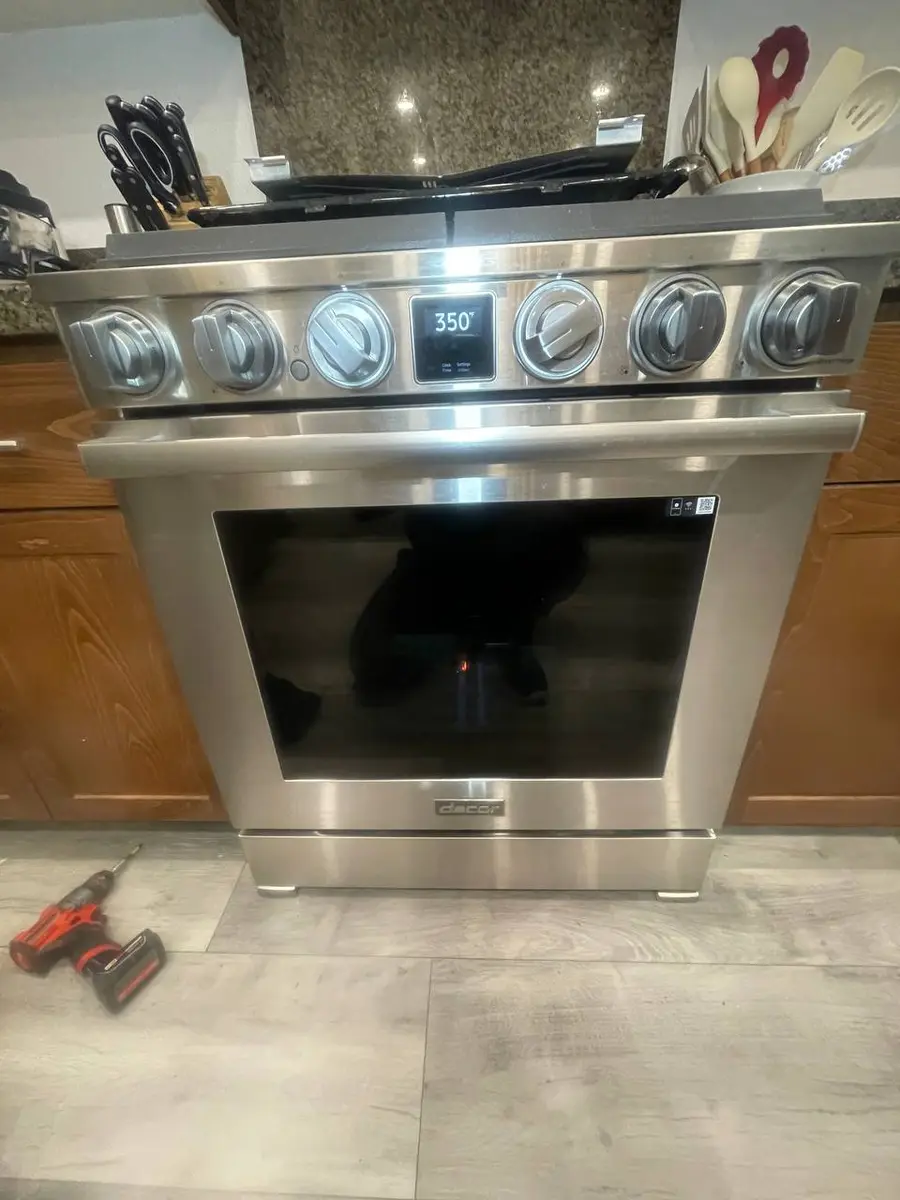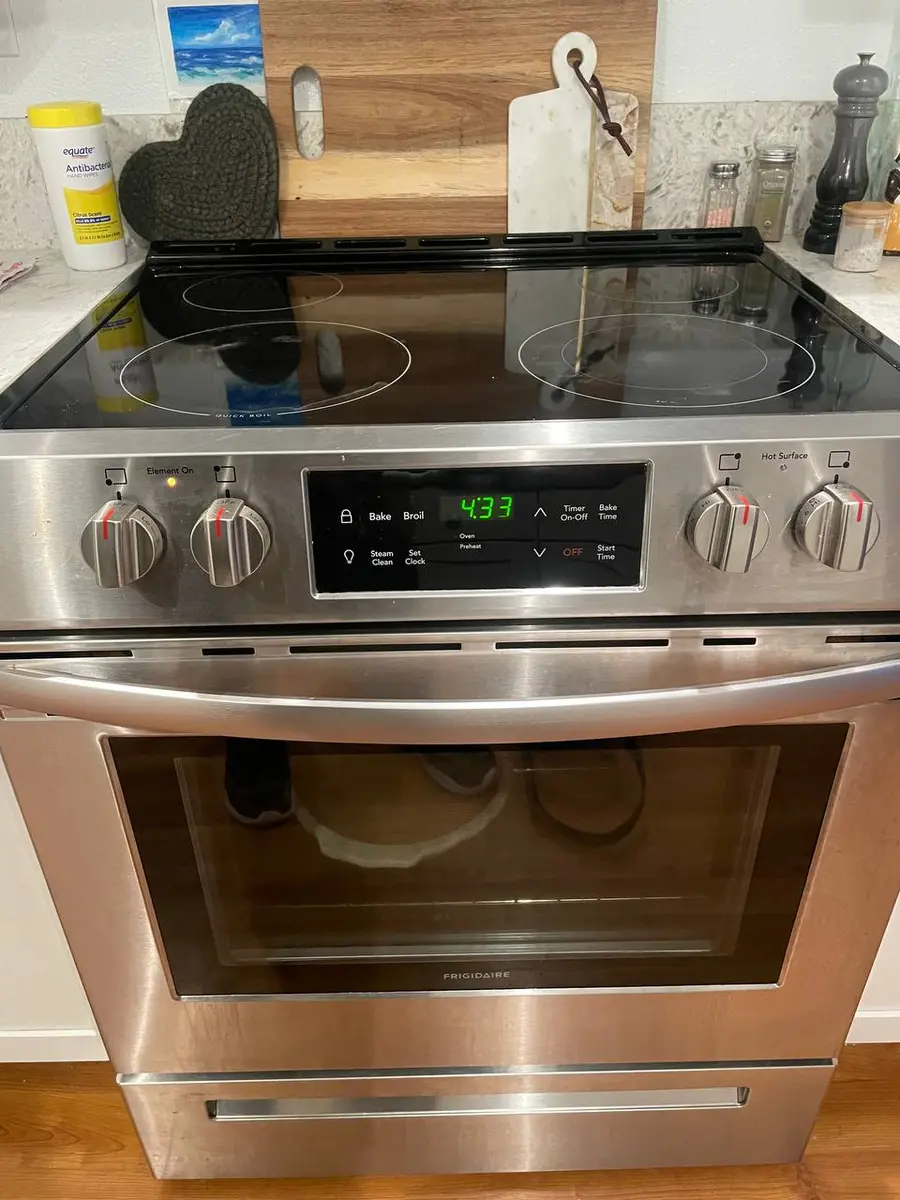
Electrolux wall ovens and ranges — including the EI30 series wall ovens, ECFI series induction ranges, and EW30 slide-in ranges — are premium cooking appliances with convection systems, precise temperature control, and smart connectivity. When a fault occurs, the oven displays an F-code or E-code on the digital panel. This guide covers every Electrolux oven error code with real diagnostics, Electrolux part numbers, and cost estimates.
Electrolux owns Frigidaire, and both brands share oven control platforms. Most F-codes below also apply to Frigidaire Gallery and Professional series ovens and ranges. Part numbers may differ, but the diagnostic process is identical.
How Electrolux Oven Error Codes Work#
Electrolux ovens use two error code formats:
- F-codes (F10, F11, F30, etc.) — Hardware faults detected by the electronic oven control (EOC) board
- E-codes (E15, E16) — Communication and configuration errors
F-codes typically appear during operation and lock out the oven until the fault is resolved. Some codes trigger the oven to shut down immediately for safety (especially overtemperature faults), while sensor errors may allow you to finish a cook cycle in manual mode.
Universal reset:
- Press Cancel to stop any active cycle.
- Turn off the oven at the circuit breaker for 5 minutes.
- Turn the breaker back on and attempt to set the oven to 350°F Bake for a test.
- If the code returns, the fault requires physical repair.
Safety first: Oven repairs involve 240V circuits and gas lines. Always disconnect power at the breaker before any inspection. For gas ranges, also close the gas shutoff valve behind the unit.
Do You Have the Right Tools?
Combustion analyzer ($300), igniter tester ($120), temperature calibrator ($150), and gas pressure manometer. Our technician arrives with $3,000+ in professional tools — your diagnostic is free.
Licensed & Insured · 90-Day Warranty · Same-Day Service
F10 — Runaway Temperature / Overtemperature#
F10 is the most critical Electrolux oven error code. It means the oven temperature has exceeded the safe maximum — typically 650°F during normal bake or 950°F during self-clean. This is a safety shutdown.
Common causes:
- Oven temperature sensor (RTD probe) failure giving false low readings — the board thinks the oven is cold and continues heating past the actual target
- Electronic oven control (EOC) board relay stuck closed — the bake or broil relay welds shut, applying continuous power to the heating element
- Wiring short in the temperature sensor circuit sending incorrect signal to the board
- Actual overtemperature from a blocked vent or damaged door seal during self-clean
How to diagnose and fix:
- Immediate action: If F10 appears, cancel the cycle and open the oven door to allow cool-down. If the oven continues heating despite pressing Cancel, turn off the breaker immediately — this confirms a stuck relay on the board.
- Test the temperature sensor (RTD probe). Located inside the oven cavity, usually at the top rear. Disconnect and measure resistance at room temperature — should read approximately 1080–1100 ohms at 72°F. Resistance increases linearly with temperature (approximately 1300 ohms at 250°F, 1500 ohms at 350°F). A reading outside the expected range, 0 ohms (shorted), or OL (open) confirms sensor failure.
- Check sensor wiring. Inspect the wire harness from the sensor connector to the EOC board. Look for pinched, burned, or frayed wires — especially where the harness exits the oven cavity through the rear wall.
- Test the EOC board relay. With the breaker off, measure continuity across the bake relay contacts on the board. If continuity exists when the relay should be open (oven off), the relay is welded shut. Replace the board immediately.
Parts and costs:
- Oven temperature sensor (part 316490000): varies by model and region
- Electronic oven control board (part 316560127 or model-specific): varies by model and region
- Professional repair total: varies by model and region
Critical safety note: F10 with a stuck relay is a fire hazard. If the oven continues to heat after pressing Cancel, do not rely on the door switch or timer — go directly to the breaker. A welded relay bypasses all software safety controls.
F11 — Shorted Temperature Sensor#
F11 indicates the oven temperature sensor (RTD) circuit is reading an abnormally low resistance — the sensor or its wiring has shorted.
Common causes:
- Sensor probe insulation breakdown (the ceramic insulation between the platinum wire and the probe sheath cracks from thermal cycling)
- Wiring harness pinched against the oven cavity wall
- Moisture in the sensor connector (less common in ovens than refrigerators, but possible after a spill or heavy steam event)
How to diagnose and fix:
- Measure sensor resistance. Disconnect the sensor at its connector (accessible behind the oven). Should read 1080–1100 ohms at room temperature. A reading under 900 ohms or close to 0 confirms a short.
- Inspect the sensor probe. Look for visible cracks in the ceramic body, darkened areas, or a bent probe that may be touching the oven wall.
- Check wiring. Trace the sensor wires from the probe through the oven rear wall to the board connector. Look for spots where the insulation has melted from proximity to a heating element.
Parts and costs:
- Oven temperature sensor (part 316490000): varies by model and region
- Professional repair total: varies by model and region
Quick test: If F11 appears, disconnect the sensor and measure resistance. If the sensor reads normally when disconnected from the harness, the problem is in the wiring — not the sensor. Reconnect and wiggle the harness to find the short.
Safety First — Know the Risks
Gas ovens involve live gas lines — a loose connection creates explosion and carbon monoxide risk. Electric ovens run on 240V circuits. Our techs are licensed and insured — let them handle the risk.
Licensed & Insured · 90-Day Warranty · Same-Day Service
F30 — Open Temperature Sensor Circuit#
F30 is the opposite of F11 — the sensor circuit reads infinite resistance (open). The oven cannot measure temperature and will not allow a heating cycle.
Common causes:
- Sensor probe element has failed open (the platinum resistance element inside breaks)
- Sensor connector pulled loose (vibration, accidental bump during cleaning)
- Wire break in the harness between the sensor and board
- Corroded connector pins
How to diagnose and fix:
- Check the sensor connector. Behind the oven (for wall ovens, access from inside the cabinet above; for ranges, pull out and access from the rear). The sensor has a two-pin connector. Push it firmly to reseat.
- Measure sensor resistance. Should read 1080–1100 ohms at room temperature. OL (infinite) confirms the open circuit.
- If sensor reads normally when disconnected from harness, the break is in the wiring. Test continuity through each wire from the sensor connector to the board connector.
Parts and costs:
- Oven temperature sensor (part 316490000): varies by model and region
- Wiring harness (model-specific): varies by model and region
- Professional repair total: varies by model and region
F31 — Shorted Meat Probe#
F31 indicates the meat probe (temperature probe inserted into food during cooking) has a short circuit. The oven may still function for normal baking but meat probe cooking will be disabled.
Common causes:
- Damaged meat probe cable (the probe is a user-removable accessory that gets bent, dropped, or stored wet)
- Moisture inside the probe connector jack on the oven wall
- Probe connector jack internal short
How to fix:
- Remove the meat probe from the oven jack. If F31 clears, the probe itself is faulty — replace it.
- Inspect the probe for visible damage — bent pins, cracked insulation near the tip, or a kinked cable.
- Test the probe. Measure resistance across the probe pins at room temperature — should read approximately 1080 ohms (same RTD as the main sensor). 0 or very low resistance confirms a short.
- Clean the oven-side jack. Use a dry cotton swab to clean inside the probe jack. Moisture or food splatter can create a conductive path.
Parts and costs:
- Replacement meat probe (part 316490001): varies by model and region
- Probe jack assembly (part 318254906): varies by model and region
- Professional repair total: varies by model and region
The Real Cost of DIY
Average DIY attempt: $150-400 in tools you may use once, plus the risk of further damage. Our diagnostic visit costs $0 — we find the problem and give you an honest quote.
Licensed & Insured · 90-Day Warranty · Same-Day Service
F90 — Door Lock Failure (Self-Clean)#
F90 appears when the oven door lock mechanism fails to lock or unlock during the self-clean cycle. The self-clean cycle heats the oven to approximately 900°F and requires the door to be securely locked for safety.
Common causes:
- Door lock motor/solenoid failure (the motor that drives the lock bar wears out or jams)
- Lock switch malfunction (the switch that confirms locked/unlocked position fails)
- Door latch misalignment from hinge wear or warped door
- Wiring harness issue between the lock mechanism and EOC board
How to diagnose and fix:
- Listen for the lock motor. Start a self-clean cycle and listen at the top of the oven door for the lock motor. If you hear it straining or not activating at all, the motor has failed.
- Manually cycle the lock. On many Electrolux ovens, you can manually slide the lock bar by removing the access panel. If it moves freely by hand, the motor or its drive gear is the issue. If it is stuck, the latch is misaligned.
- Test the lock motor. Measure motor resistance — should read 200–800 ohms. OL means the motor winding is open.
- Check the lock switches. There are typically two switches — one for locked position, one for unlocked. Test each for proper continuity when activated.
Parts and costs:
- Door lock assembly (part 316464300): varies by model and region
- Lock motor only (part 316464301): varies by model and region
- Professional repair total: varies by model and region
Note: If F90 occurs mid-self-clean with the door locked and the oven at high temperature, do NOT attempt to force the door open. Turn off the breaker and wait for the oven to cool completely (may take 2–3 hours). The lock will release when the oven temperature drops below 550°F.
F95 — Door Lock Timeout#
F95 is related to F90 and specifically indicates the lock mechanism started but did not reach the target position within the allowed time. The lock motor ran but the confirmation switch never triggered.
Common causes:
- Lock bar binding on the door frame (grease buildup, warped frame)
- Lock motor gear stripped (motor spins but does not drive the bar)
- Confirmation switch position shifted (switch cannot reach the contact)
How to fix:
- Clean the lock bar track. Remove the access panel and clean the lock bar guide channel with a damp cloth. Accumulated grease and carbonized food residue can cause binding.
- Check motor gear engagement. If the motor spins freely without moving the lock bar, the drive gear is stripped. Replace the lock assembly.
- Adjust the switch position if it appears to have shifted. The switch contact must align precisely with the lock bar actuator tab.
Parts and costs: Same as F90 above.
Don't Void Your Warranty
Opening your appliance yourself may void the manufacturer warranty. Our repair comes with a 90-day guarantee, and we document everything for warranty compliance.
Licensed & Insured · 90-Day Warranty · Same-Day Service
E15 — Communication Error (Double Ovens)#
E15 appears on Electrolux double wall ovens when the upper and lower oven control boards lose communication with each other.
Common causes:
- Ribbon cable between upper and lower boards damaged or disconnected
- One control board has failed
- Power supply issue affecting one board but not the other
How to fix:
- Power-cycle for 5 minutes. E15 can clear after a momentary communication glitch.
- Inspect the ribbon cable connecting the two boards. Look for physical damage, bent pins, or a connector that has worked loose.
- Test each oven independently. If one oven works normally and the other does not, the non-working oven's board has likely failed.
Parts and costs:
- Ribbon cable (model-specific): varies by model and region
- Electronic oven control board (part 316560127 or model-specific): varies by model and region
- Professional repair total: varies by model and region
E16 — Configuration Mismatch#
E16 indicates the control board's stored configuration does not match the installed hardware. This usually occurs after a board replacement with an incorrect part number or after a firmware update that did not complete.
How to fix:
- Verify the replacement board part number matches your specific model exactly. Electrolux uses different boards for gas vs. electric, single vs. double, and standard vs. convection configurations.
- Attempt a factory reset through the service mode (varies by model — consult the service manual for your specific unit).
- If the code appeared after a power surge (not a board replacement), power-cycle for 10 minutes to allow the board to re-detect the installed configuration.
Is It Worth Your Time?
Oven temperature issues require systematic testing of the igniter, gas valve, thermostat, and calibration. Average DIY: 4-6 hours. Our technician diagnoses the issue in about 30 minutes — same-day appointments available.
Licensed & Insured · 90-Day Warranty · Same-Day Service
Additional Electrolux Oven Error Codes#
- F1 — Control board internal fault. Usually requires board replacement. Power-cycle first — some F1 faults are caused by electrical noise from nearby appliances.
- F3 — Open oven sensor circuit. Same as F30 on newer models. Check sensor and wiring per F30 instructions.
- F9 — Door lock error during normal cooking. Similar to F90 but outside of self-clean. Check for a stuck or misaligned lock bar.
- F13 — Internal board processor error. Power-cycle for 5 minutes. If F13 persists, the board has failed and needs replacement.
- LOC / Lc — Not an error. Control lock is engaged. Press and hold the Lock button (or designated button pair) for 3–5 seconds to unlock.
Electrolux Oven Diagnostic Mode#
- Enter service mode: For most Electrolux wall ovens, press and hold Bake + Broil buttons simultaneously for 3 seconds. For ranges, hold the highest and lowest temperature buttons together.
- Stored errors: The display shows stored fault codes from memory. Note all codes — an F10 followed by F11 suggests the overtemperature was caused by sensor failure, not a stuck relay.
- Sensor calibration: Service mode allows you to view real-time temperature sensor readings. Compare the displayed temperature to an independent oven thermometer to verify calibration.
- Element test: The service mode can activate bake and broil elements individually for testing.
The Risk of Getting It Wrong
A wrong diagnosis often turns a simple fix into a costly replacement. Without proper diagnostic tools, you might replace the wrong part — or cause additional damage. Our free diagnostic eliminates the guesswork.
Licensed & Insured · 90-Day Warranty · Same-Day Service
Frequently Asked Questions#
Q: My Electrolux oven shows F10 — should I keep using it? A: No. F10 is an overtemperature safety code. The oven either actually overheated or the sensor is misreading. Either condition is dangerous — actual overtemperature is a fire risk, and a failed sensor means the oven cannot regulate temperature. Diagnose and fix before using the oven again.
Q: Can I bypass the F90 door lock error and skip self-clean? A: Yes — if you only need the oven for normal cooking and cannot repair the lock immediately, you can use all normal baking, broiling, and convection functions. The lock is only required for self-clean (above 550°F). However, get the lock fixed before running self-clean — the lock is a critical safety device at those temperatures.
Q: How do I calibrate my Electrolux oven temperature? A: Most Electrolux ovens allow temperature offset calibration of +/- 35°F. Access this through the settings menu (usually Settings > Temperature Calibration or through the service mode). Place an oven thermometer in the center of the middle rack, set to 350°F Bake, and wait 20 minutes for stabilization before adjusting.
Q: Why does my Electrolux oven take so long to preheat? A: Electrolux convection ovens typically preheat to 350°F in 7–12 minutes. If preheat takes over 15 minutes, check: (1) Is the bake element glowing? If not, F64 or similar element faults may be present without displaying a code. (2) Is the door seal intact? A damaged seal leaks heat. (3) For hidden-bake models, the element is under the oven floor — if it fails, you cannot see it glow. Test element resistance: bake element should read 15–30 ohms, broil 20–40 ohms.
Q: My Electrolux range smells like gas but the oven works — should I be concerned? A: Yes, always take gas smell seriously. A faint gas smell at ignition is normal for gas ovens (the igniter warms before the gas valve opens). But a persistent gas smell means either the igniter is too weak to open the gas valve reliably (causing delayed ignition with gas accumulation) or there is a gas valve/line leak. Have a professional inspect immediately. Do not use the oven until the smell is diagnosed.
When to Call a Professional#
- F10 with continuous heating — If the oven does not stop heating after pressing Cancel, the relay is welded shut. This is a fire hazard requiring immediate board replacement.
- Gas oven ignition issues — Gas valve, igniter, and flame sensor repairs on gas ranges involve the gas supply system. Improper repair creates explosion and carbon monoxide risks.
- F90/F95 with oven locked at high temperature — Never force a locked oven door open. Wait for cooling and call a professional if the lock does not release.
- Repeated F10 after sensor replacement — If the code returns with a new sensor and verified wiring, the EOC board relay is intermittently sticking — replace the board before the relay welds permanently.
- Any code with visible sparking or burning smell — Turn off the breaker immediately and do not attempt repair.
Need help with your Electrolux oven? EasyBear technicians carry common Electrolux oven parts — temperature sensors, control boards, door lock assemblies, and heating elements — on every service truck. We offer free diagnostic visits: our tech identifies the exact problem, explains your options, and repairs it on the spot in most cases. Every repair includes our 90-day parts and labor warranty. Schedule your free Electrolux oven diagnosis today.
Lead Appliance Repair Technician · 12 years experience
Experienced technician with 12 years specializing in washing machine and dryer repairs across all major brands.