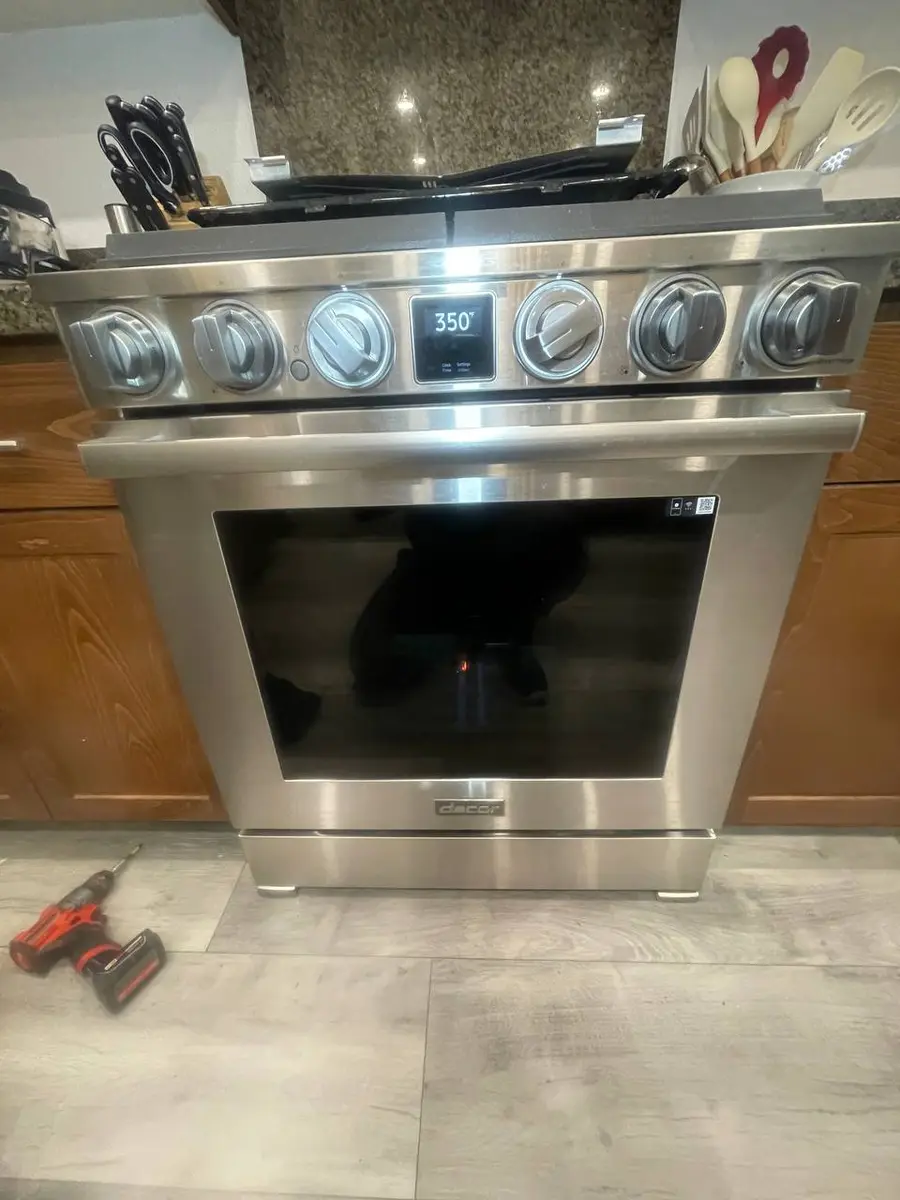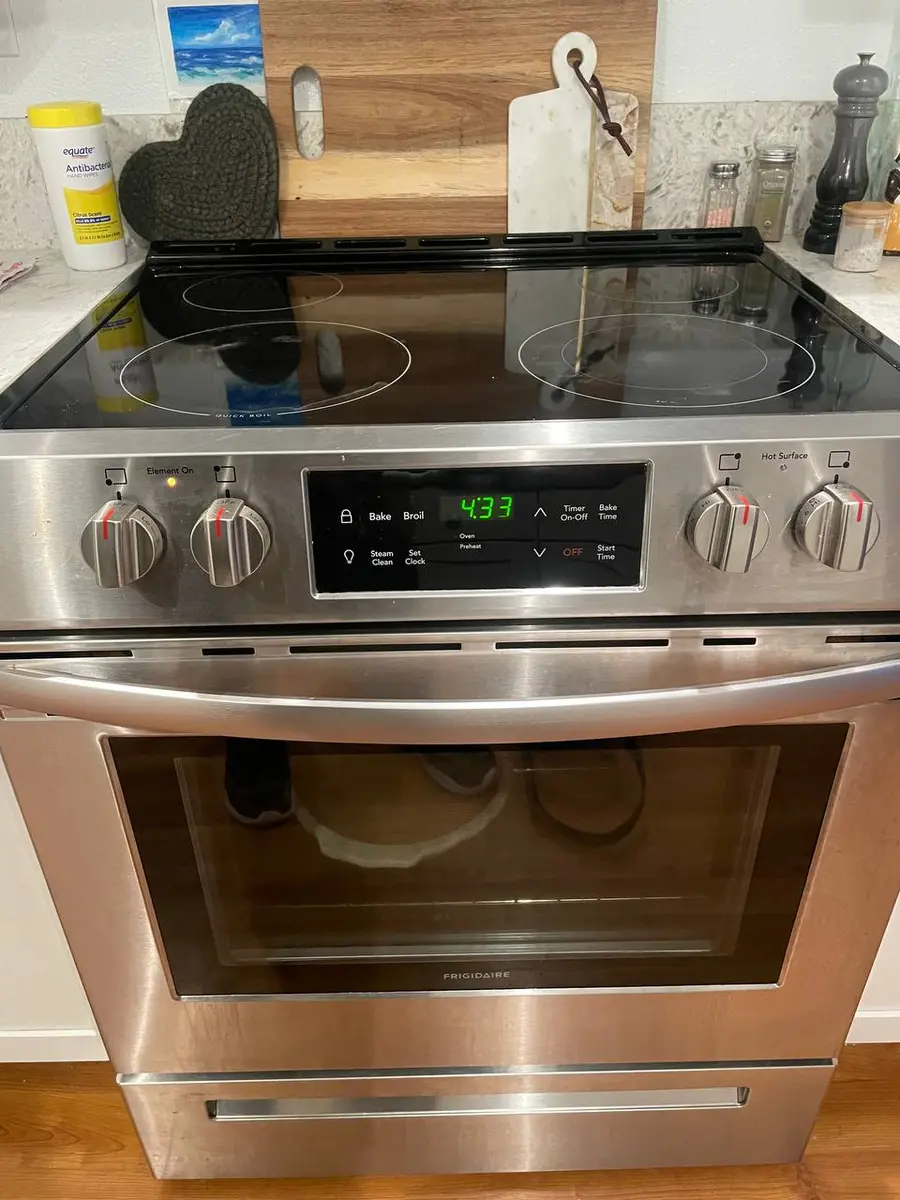
Bosch makes some of the most refined ovens on the market — from the 500 Series wall ovens to the Benchmark slide-in ranges and the specialty steam ovens. But when something goes wrong, these sophisticated appliances communicate through error codes that can be cryptic. This guide covers every Bosch oven error code across wall ovens (HBL8451UC, HBL5451UC), slide-in ranges (HGI8054UC, HII8056U), speed ovens (HMC87152UC), and steam ovens (HSG86072UC) — including the shared BSH platform codes that also appear on Thermador and Gaggenau units.
How Bosch Oven Error Codes Work#
Bosch ovens use an EPC (Electronic Power Control) platform shared across the BSH family — the same core architecture powers Bosch, Thermador, and Gaggenau ovens. The control board monitors the oven cavity temperature sensor, door lock mechanism, heating elements, and convection motor. When a fault is detected, the oven displays an E-code and typically locks out operation until the issue is resolved.
Important safety note: Bosch ovens operate on 240V circuits (electric) or 120V ignition with gas supply (gas ranges). Always turn off the circuit breaker — not just the oven controls — before any inspection. Verify power is off with a non-contact voltage tester.
Basic reset procedure:
- Turn off the oven at the control panel.
- Switch off the dedicated circuit breaker for 10 minutes (longer than a standard appliance reset — the oven control board firmware needs a full discharge).
- Restore power and attempt to set a bake cycle.
Do You Have the Right Tools?
Combustion analyzer ($300), igniter tester ($120), temperature calibrator ($150), and gas pressure manometer. Our technician arrives with $3,000+ in professional tools — your diagnostic is free.
Licensed & Insured · 90-Day Warranty · Same-Day Service
E1 — Control Board Error#
The main control board has detected an internal fault. This is the most serious Bosch oven error code.
Common causes:
- Power surge damage to the control board
- Failed component (relay, capacitor, or processor) on the main board
- Communication fault between the main control board and the UI (display) board
- Ribbon cable disconnection between boards
How to fix:
- Disconnect power at the breaker for a full 10 minutes. This allows the board firmware to fully reset.
- Check incoming voltage at the terminal block — should be 240VAC for electric ovens, 120VAC for gas range ignition circuits.
- Inspect the control board (behind the rear panel on wall ovens, behind the back guard on ranges) for visible damage: burnt traces, bulging capacitors, darkened components.
- Reseat the ribbon cable between the UI board and main board. Corrosion or loose pins are a common cause of intermittent E1.
- Main control board (part 00-709785) cost varies by model and region. UI display board (part 00-709786) cost varies by model and region.
Pro tip: BSH ovens (Bosch/Thermador/Gaggenau) share the same EPC platform. If E1 appears only on specific functions (convection but not standard bake), the relay cluster for that specific circuit on the main board is the failure point — not the entire board, though the board must still be replaced as relays are not individually serviceable.
E2 — Runaway Temperature (Safety Critical)#
E2 is the most urgent Bosch oven error. The oven detected the cavity temperature exceeding the set temperature by a dangerous margin. The safety relay cut power to the heating elements.
Common causes:
- Heating element relay welded closed on the control board (the relay fused in the "on" position due to arcing)
- Temperature sensor failure causing the board to misread the actual temperature
- Control board fault sending continuous heat commands
How to fix:
- Immediately disconnect power at the circuit breaker. Do not simply turn off the oven controls — a welded relay will re-energize the element the moment power is restored.
- Allow the oven to cool completely before any inspection.
- Measure the oven temperature sensor (NTC probe) resistance at room temperature — expect 1080–1100 ohms at 70F. At 350F operating temperature, the reading drops to approximately 200 ohms.
- If the sensor reads correctly, the control board relay is welded. The board must be replaced before the oven can be safely operated.
- Temperature sensor (part 00-492057) cost varies by model and region. Main board (part 00-709785) cost varies by model and region.
WARNING: E2 is safety-critical. Do NOT reset power without diagnosing the root cause. A welded relay will immediately re-energize the heating element on power-up, creating a fire risk. This error requires professional diagnosis.
Safety First — Know the Risks
Gas ovens involve live gas lines — a loose connection creates explosion and carbon monoxide risk. Electric ovens run on 240V circuits. Our techs are licensed and insured — let them handle the risk.
Licensed & Insured · 90-Day Warranty · Same-Day Service
E3 — Open Temperature Sensor#
The oven temperature sensor circuit is reading infinite resistance, meaning the sensor element or its wiring is broken (open circuit).
Common causes:
- Temperature sensor (NTC probe) wire broken inside the oven cavity
- Sensor connector unplugged or corroded at the control board
- Sensor element itself cracked or failed
How to fix:
- Disconnect power and locate the oven temperature sensor — a thin metal probe extending from the rear wall of the oven cavity (top-center on most wall ovens, rear-center on ranges).
- Check the sensor connector at the control board for loose or corroded pins.
- Measure sensor resistance at the connector (not at the sensor end — this tests the full circuit including the wire). Expect 1080–1100 ohms at room temperature. If open (infinite), trace the wiring for pinch points or heat damage.
- The sensor often fails at the point where the wire passes through the oven cavity wall — heat cycling fatigues the wire at this transition.
- Temperature sensor/NTC probe (part 00-492057) cost varies by model and region.
E4 — Shorted Temperature Sensor#
The opposite of E3 — the sensor circuit reads near 0 ohms, indicating a short circuit.
Common causes:
- Sensor wire insulation damaged by heat, creating a short to ground
- Moisture intrusion at the sensor connector causing a corrosion bridge
- Sensor element internal short
How to fix:
- Disconnect power. Measure sensor resistance — a reading of 0–50 ohms confirms the short.
- Disconnect the sensor plug at the board and measure the sensor alone. If the disconnected sensor reads correctly (1080–1100 ohms), the short is in the wiring harness, not the sensor itself.
- Inspect wire routing through the cavity wall for insulation damage from heat exposure.
- Sensor (part 00-492057) cost varies by model and region. Wiring harness (part 00-492060) cost varies by model and region.
Important: A shorted sensor makes the board read near-zero resistance, which it interprets as extremely high temperature. The board responds by refusing to heat — this is a safety feature. But on some older firmware versions, the board may misinterpret the reading and apply maximum heat instead. Disconnect power before diagnosis.
The Real Cost of DIY
Average DIY attempt: $150-400 in tools you may use once, plus the risk of further damage. Our diagnostic visit costs $0 — we find the problem and give you an honest quote.
Licensed & Insured · 90-Day Warranty · Same-Day Service
E5 — Board-to-Board Communication Error#
The main control board and the UI/display board cannot communicate.
Common causes:
- Ribbon cable between boards is loose, damaged, or oxidized
- One of the two boards has failed
- Power surge damaged communication circuits on one board
How to fix:
- Power cycle at the breaker for 10 minutes.
- Access the control boards and reseat all ribbon cables and flat-flex connectors. Clean oxidized contacts with an electronics contact cleaner.
- Check the ribbon cable for pinch damage — it often routes through a tight space where it can get crimped during installation or service.
- If reseating fails, swap the UI board first (it is cheaper and fails more often). If E5 persists with a new UI board, replace the main board.
- UI board (part 00-709786) cost varies by model and region. Main board (part 00-709785) cost varies by model and region.
E6 — Door Lock Error#
The oven door lock mechanism has failed or the lock position switch cannot confirm the door is locked. This typically appears during self-clean cycle initiation.
Common causes:
- Door lock motor failure
- Lock switch malfunction
- Lock mechanism physically jammed
- Wiring damage from heat exposure near the oven cavity
How to fix:
- Cancel any self-clean cycle and allow the oven to cool completely — the lock will not release until the cavity drops below 550F.
- Listen for the lock motor when initiating self-clean. A clicking sound indicates the motor is energized but the mechanism is jammed.
- Check the lock motor wiring connector for heat damage — wiring near the oven cavity deteriorates faster than other connections.
- Test the lock motor independently with 120VAC — it should extend and retract the latch smoothly.
- The lock assembly uses a motorized worm gear mechanism. If the motor runs but the latch does not move, the nylon worm gear is stripped — audible motor whine without lock engagement confirms this.
- Door lock assembly (part 00-648984) cost varies by model and region.
WARNING: Never force open a locked oven door during or after self-clean. The cavity may exceed 900F. Wait for the lock to release automatically.
Don't Void Your Warranty
Opening your appliance yourself may void the manufacturer warranty. Our repair comes with a 90-day guarantee, and we document everything for warranty compliance.
Licensed & Insured · 90-Day Warranty · Same-Day Service
E7 — Convection Fan Error#
The convection fan motor is not running or the board cannot detect fan rotation.
Common causes:
- Convection fan motor failure (seized bearings or open winding)
- Fan blade hitting the cavity wall (warped blade or loose mount)
- Wiring fault between the motor and control board
- Control board relay failure for the fan circuit
How to fix:
- Disconnect power and access the convection fan from the rear panel (wall ovens) or from behind the back cavity panel inside the oven.
- Try spinning the fan blade by hand. It should rotate freely without scraping.
- Check the motor winding — expect 15–40 ohms. An open or very low reading indicates motor failure.
- Inspect the fan blade mount bolt — if loose, the blade wobbles and can contact the cavity.
- Convection fan motor (part 00-489652) cost varies by model and region. Fan blade (part 00-486743) cost varies by model and region.
E8 — Broil Element Error#
The broil (upper) heating element has failed or the board detects no current draw when the broil circuit is activated.
Common causes:
- Broil element burned through (visible break or blister in the element)
- Element terminal connection loose or corroded
- Control board broil relay failure
How to fix:
- Visually inspect the broil element at the top of the oven cavity. Look for visible breaks, blisters, or hot spots (discolored areas).
- Disconnect power and measure element resistance — expect 15–30 ohms for most Bosch broil elements. An open reading confirms element failure.
- Check the element terminals at the rear of the oven — corrosion or loose push-on connectors are common.
- Broil element (part 00-663541) cost varies by model and region.
Is It Worth Your Time?
Oven temperature issues require systematic testing of the igniter, gas valve, thermostat, and calibration. Average DIY: 4-6 hours. Our technician diagnoses the issue in about 30 minutes — same-day appointments available.
Licensed & Insured · 90-Day Warranty · Same-Day Service
E10 — Bake Element Error#
Same as E8 but for the lower bake element.
Common causes:
- Bake element burned through
- Element terminal corrosion
- Hidden element connection failure (Bosch wall ovens often use concealed bake elements under the cavity floor)
How to fix:
- On ranges with a visible bake element, inspect for breaks or blisters.
- On wall ovens with a concealed bake element (under the oven floor panel), remove the floor panel to access the element. Measure resistance — expect 20–40 ohms.
- Bake element (part 00-663542) cost varies by model and region.
E11 — Steam System Error (Steam Ovens Only)#
Specific to Bosch steam ovens (HSG86072UC, HSG86072 Series) — the steam generation system has a fault.
Common causes:
- Water reservoir empty or not properly seated
- Steam generator scale buildup (mineral deposits)
- Steam temperature sensor failure
- Water pump failure
How to fix:
- Verify the water reservoir is full and properly seated in its housing. The reservoir must click into place.
- Run the descaling cycle — Bosch steam ovens require regular descaling, especially in hard water areas. Use Bosch descaling tablets (part 00-311556).
- If descaling does not resolve E11, the steam generator or water pump may need replacement. These are sealed components requiring professional service.
- Descaling tablet pack cost varies by model and region. Steam generator (part 00-752215) runs varies by model and region.
The Risk of Getting It Wrong
A wrong diagnosis often turns a simple fix into a costly replacement. Without proper diagnostic tools, you might replace the wrong part — or cause additional damage. Our free diagnostic eliminates the guesswork.
Licensed & Insured · 90-Day Warranty · Same-Day Service
Additional Error Codes Quick Reference#
- E15 — Water protection activated (steam ovens). Check for water leak at the steam generator connections.
- E16 — Door not fully closed. Check door hinges and door seal gasket.
- E18 — Fan speed deviation. Convection fan is running at incorrect RPM — usually a motor bearing issue.
Home Connect Diagnostics for Ovens#
Bosch Home Connect (800 Series and Benchmark ovens, 2019+) adds oven-specific diagnostics:
- Preheat tracking: The app shows preheat curves. Consistently slow preheating indicates a failing element or sensor drift before an error code appears.
- Self-clean monitoring: Monitor self-clean cycle progress remotely and receive alerts if the cycle is interrupted by an error.
- Calibration tools: Adjust oven temperature calibration +/- 25F through the app.
Free Diagnostic Visit — Zero Risk
Our certified technician comes to your home, diagnoses the problem with professional tools, and gives you an honest quote — all at zero cost. No parts markup, no hidden fees. If you decide not to proceed, you pay nothing.
Licensed & Insured · 90-Day Warranty · Same-Day Service
Frequently Asked Questions#
Q: How do I reset my Bosch oven after an error? A: Turn off the oven controls, switch off the circuit breaker for 10 full minutes (not 60 seconds — oven boards need a longer discharge), then restore power. If the error reappears, the underlying fault must be repaired.
Q: Why does my Bosch oven show E6 after self-clean? A: The door lock mechanism is failing. During self-clean, the oven reaches temperatures above 900F. The lock motor must engage the latch reliably at these extreme temperatures. If the nylon worm gear inside the lock assembly is weakened by heat cycling, it strips — the motor runs but the latch does not move. The entire lock assembly (part 00-648984) needs replacement.
Q: Is E2 (runaway temperature) dangerous? A: Yes — E2 is the most serious Bosch oven error. It means the oven reached temperatures significantly above the set point. The safety relay cut power, which is working as designed. Do NOT restore power until a technician confirms the cause. A welded relay will re-energize the heating element immediately on power-up.
Q: Can I use my Bosch oven without the convection fan? A: If E7 (convection fan error) appears but the oven otherwise functions, you can use standard bake and broil modes that do not require the fan. However, the fan should be repaired before using any convection mode. Running convection with a seized fan risks motor overheating.
Q: How often should I descale my Bosch steam oven? A: Bosch recommends descaling every 3 months with regular use, or more frequently in hard water areas. Bay Area water hardness varies significantly by city — San Jose and Fremont have harder water and may need monthly descaling. Use only Bosch-approved descaling tablets.
When to Call a Professional#
Bosch ovens operate on 240V circuits. Many repairs are not safe for DIY:
- E1, E2, E5 — board and safety errors — Require professional diagnosis. E2 in particular is a fire safety concern.
- E6 after self-clean — The lock assembly is inside the oven cavity and requires partial disassembly.
- E7, E8, E10 — element and motor replacements — Involve 240V wiring and should be handled by a licensed technician.
- E11 steam system errors — Sealed steam generator work requires specialized knowledge.
Bosch oven error code that will not clear? EasyBear technicians are trained on the full Bosch oven lineup — wall ovens, slide-in ranges, speed ovens, and steam ovens. We carry common Bosch heating elements, sensors, and control boards for fast repair. Free diagnostic visit with every appointment, backed by our 90-day parts and labor warranty. Schedule your free diagnosis today.
Lead Appliance Repair Technician · 12 years experience
Experienced technician with 12 years specializing in washing machine and dryer repairs across all major brands.