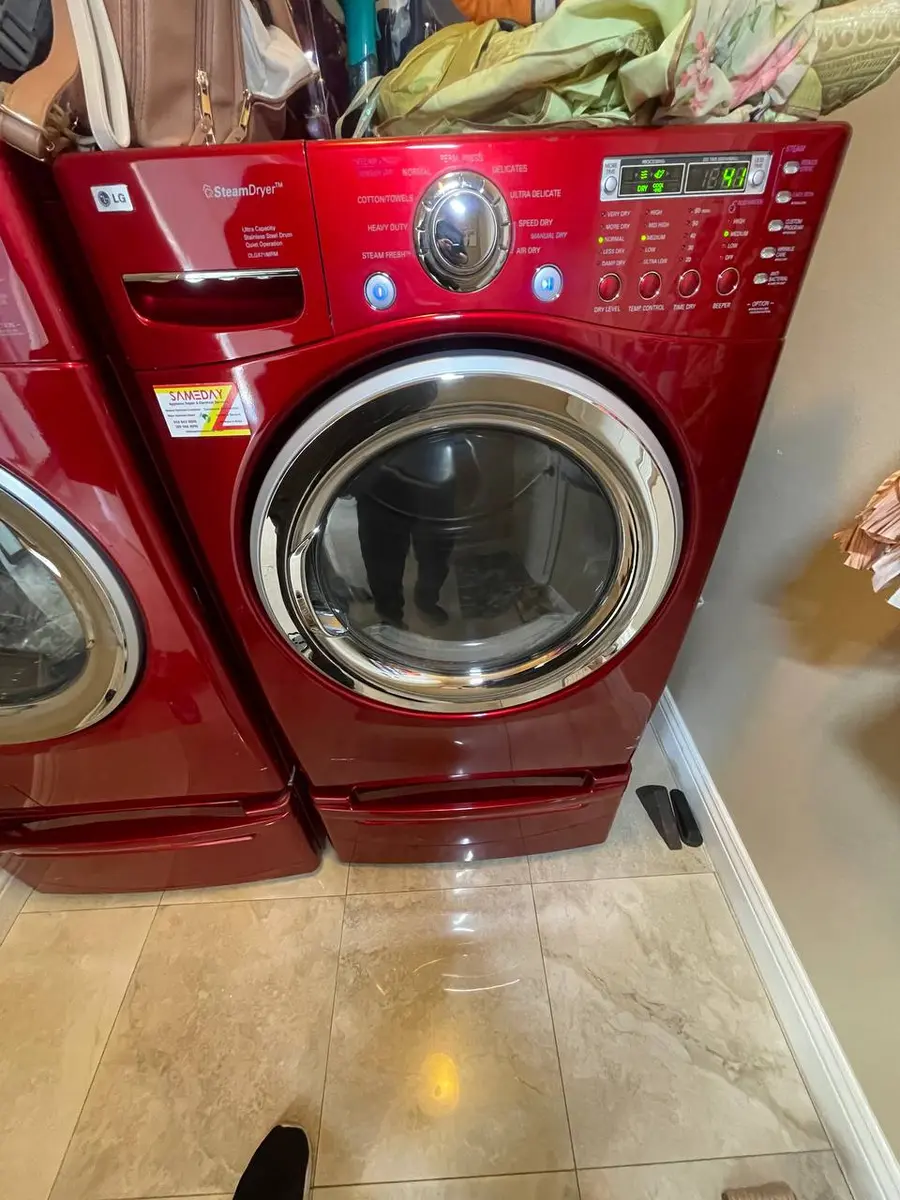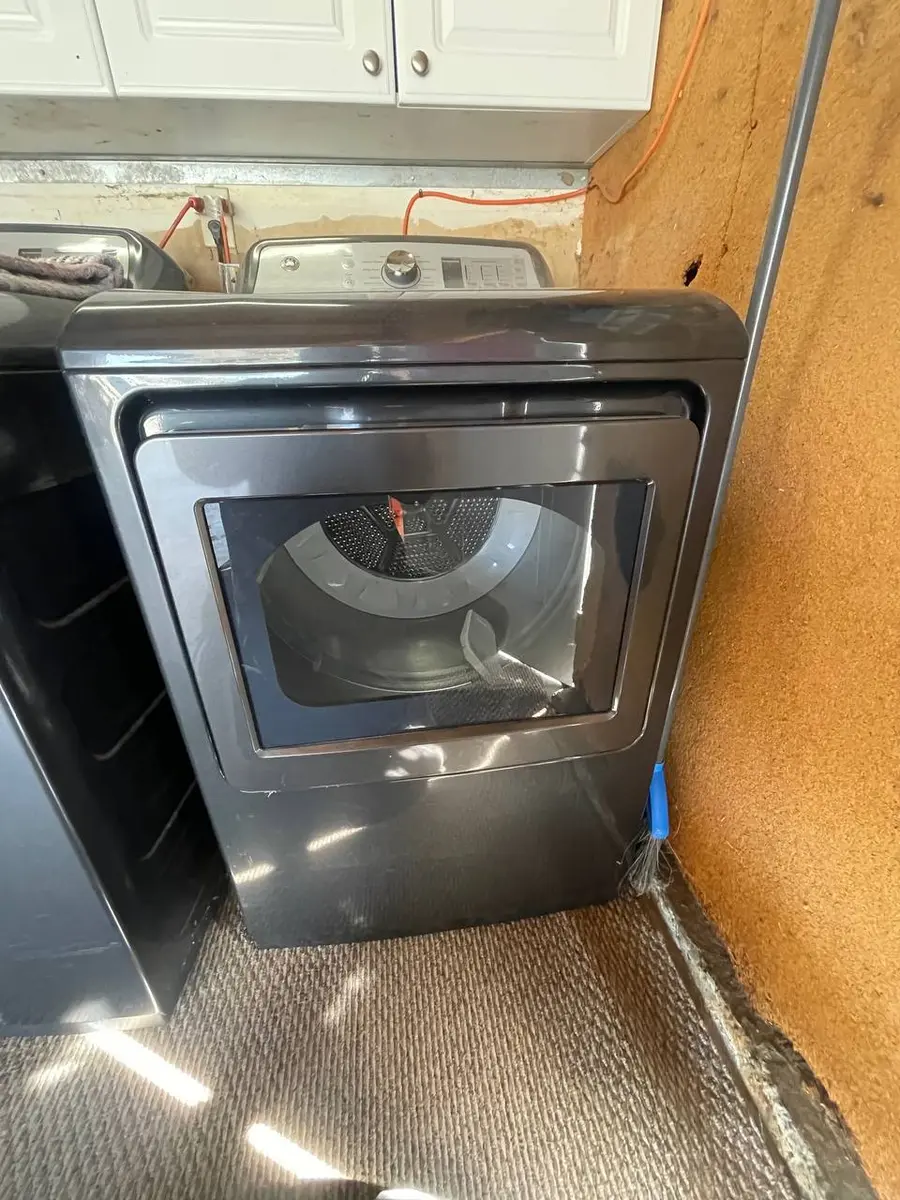
Water around a Whirlpool dryer surprises people, because a standard vented WED or WGD dryer has no water supply connection at all. So when you find water pooling under or inside one, the cause is almost never an internal leak — it is exhaust condensation from a restricted or cold vent. The exceptions are steam-equipped and heat-pump models, which do handle water.
1. Exhaust vent condensation (75% of cases)#
Hot, moisture-laden exhaust cools inside the duct before it reaches outside, condenses, and runs back toward the dryer. It shows up when the duct passes through unheated space (attic, crawlspace, garage wall), when the run is too long (over 25 feet equivalent, and each 90-degree elbow adds about 5 feet), when crushed or sagging foil duct traps water in low spots, or when the exterior cap does not close and cold air meets warm exhaust. The fix is to clean the whole run, swap flexible foil for rigid 4-inch metal duct, insulate any sections in cold spaces, and confirm the exterior flap closes when the dryer is off. Most Whirlpool dryers support 4-way venting, so rerouting to a shorter, warmer path through a different wall can eliminate it outright.
Do You Have the Right Tools?
Gas leak detector ($130), thermal fuse tester ($95), belt tension gauge, and vent inspection camera ($180). Our technician arrives with $3,000+ in professional tools — your diagnostic is free.
Licensed & Insured · 90-Day Warranty · Same-Day Service
2. Steam-equipped models#
Select Whirlpool models (the WED9290F series and similar) add a steam option with an actual water connection, and on those the water can come from an inlet valve stuck open or with a cracked diaphragm, a leaking steam-hose connection, or a mineral-blocked steam nozzle dripping instead of misting. Shut off the water supply, test the inlet-valve solenoid (900-1100 ohms is normal), inspect the hose connections, and clean the nozzle with vinegar.
3. Heat-pump (EcoBoost) models#
Whirlpool's ventless EcoBoost heat-pump dryers condense moisture internally into a reservoir, so they can leak from an overfull collection tank (empty it after each load), a failed drain pump, or a deteriorated tank seal. These are still uncommon in the US and troubleshoot differently from a standard vented unit.
Safety First — Know the Risks
Gas dryers carry carbon monoxide and explosion risk. Even electric dryers involve 240V circuits that can deliver a fatal shock. Our techs are licensed and insured — let them handle the risk.
Licensed & Insured · 90-Day Warranty · Same-Day Service
4. Room-humidity condensation (10% of cases)#
In a damp basement or a poorly ventilated laundry room, moisture condenses on the dryer's cold exterior as it heats up — that is ambient condensation, not a dryer fault. Improve the room's ventilation or add a dehumidifier.
How to Diagnose It#
First check the rear for a water connection — none means a standard vented dryer, so any water is condensation. Then locate the source: under the dryer toward the rear is vent condensation, inside the drum means severe vent restriction, and water at the wall connection is the steam valve on equipped models. Whirlpool's diagnostic mode helps too — an F4E1 (restricted airflow) or F4E3 (high exhaust temperature) code confirms a vent problem. Do not let it sit, though: standing water in the vent or dryer can grow mold within 48-72 hours.
The Real Cost of DIY
Average DIY attempt: $150-400 in tools you may use once, plus the risk of further damage. Our diagnostic visit costs $0 — we find the problem and give you an honest quote.
Licensed & Insured · 90-Day Warranty · Same-Day Service
Prevent It — and Protect the Floor#
Clean the vent run annually with a brush kit, use rigid metal duct rather than flexible foil or plastic, insulate any duct passing through cold spaces, and confirm the exterior cap seals when the dryer is off; on steam models descale the nozzle quarterly, and on EcoBoost models empty the collection tank after each load. After you fix the source, run a few empty high-heat cycles to dry out the duct and drum. Do not let condensation sit — clean water from the vent can still warp hardwood, laminate, and subfloor if it persists, and on a basement concrete floor it is a slip hazard that signals a vent problem cutting your drying efficiency.
Whirlpool dryer leaving water behind and no steam feature in sight? Our technicians clear and re-route the vent and check the diagnostics across [Sacramento](/sacramento/sacramento) and the Bay Area. Book a same-day visit.
Lead Appliance Repair Technician · 12 years experience
Experienced technician with 12 years specializing in washing machine and dryer repairs across all major brands.