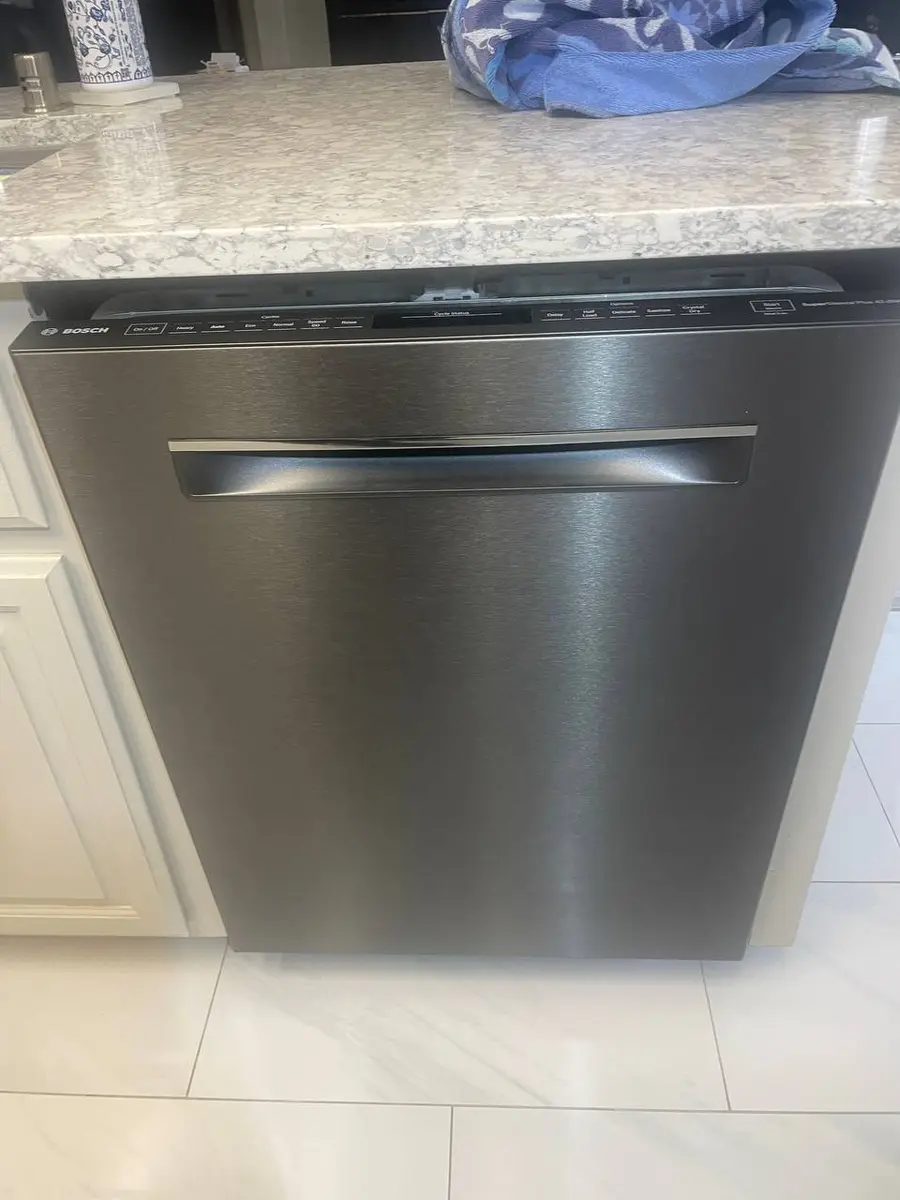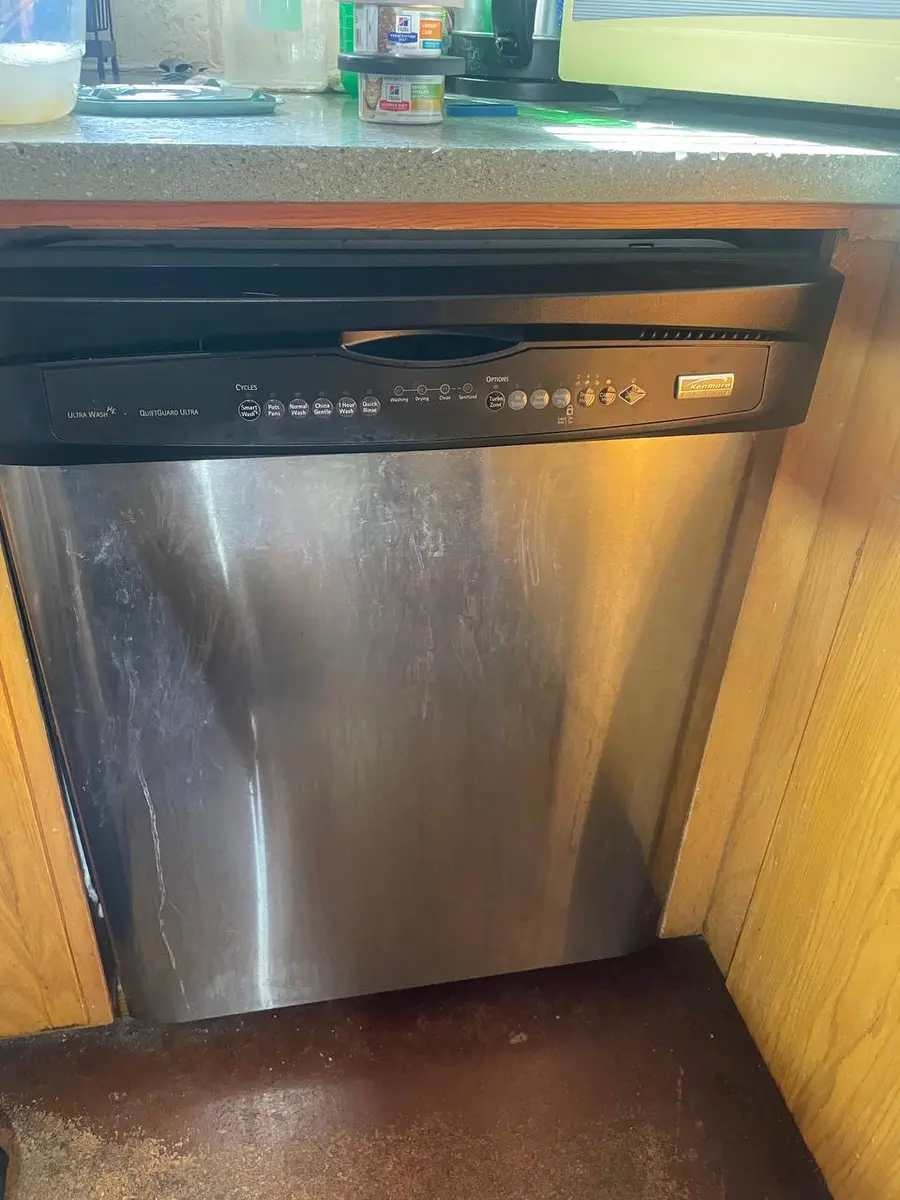
What is the Whirlpool Dishwasher F3E1 error?#
F3E1 flags the combined thermistor and optical water-clarity sensor. The common failure is a fouled OWI lens: this sensor measures how dirty the wash water is, and when food film or scale clouds its lens, the dishwasher thinks the water is still filthy and runs marathon cycles to compensate. Cleaning the lens comes before replacing anything.
F3E1 on a Whirlpool Dishwasher: likely causes and repair cost#
On a Whirlpool Dishwasher, the F3E1 code signals: thermistor / owi sensor.
| Likely cause | Typical likelihood |
|---|---|
| Optical water-clarity sensor lens fouled with food film or scale | Most common |
| Sump thermistor drifted outside its resistance band | Common |
| Broken lead or wet connector at the combined sensor assembly | Less common |
Typical professional repair: $100–$220 · Difficulty: hard · usually a technician job
Symptoms that often accompany F3E1: Wash cycles run much longer than expected; Water temperature seems incorrect; Dishes come out with food residue despite extended cycling; Normal cycle takes over 3 hours
Technician diagnostic sequence for F3E1:
- Locate the thermistor sensor in the sump area (bottom of the tub) near the wash pump
- Disconnect and measure resistance: should be approximately 55,000 ohms at 77F (25C)
- Check if the Optical Water Indicator (OWI) turbidity sensor lens is coated with food debris or hard water scale
- Clean the OWI lens with vinegar and a soft cloth
- If readings are out of range, replace the sensor assembly
Parts a technician may check or replace: Thermistor/OWI Sensor Assembly; Sensor Harness
Field note: The OWI (Optical Water Indicator) is unique to newer Whirlpool and KitchenAid dishwashers — it measures water turbidity to determine how dirty the wash water is and adjusts cycle time accordingly. A dirty OWI lens causes the dishwasher to run extremely long cycles because it thinks the water is still dirty. Clean the lens before replacing the sensor.
Do You Have the Right Tools?
Water pressure gauge ($60), spray arm tester, float switch multimeter ($85), and drain inspection camera. Our technician arrives with $3,000+ in professional tools — your diagnostic is free.
Licensed & Insured · 90-Day Warranty · Same-Day Service
How to troubleshoot the F3E1 error yourself#
This one has a genuinely cheap fix worth trying first. The OWI, or optical water indicator, reads water turbidity to decide cycle length, so a lens coated with food film or hard-water scale makes the machine run extremely long cycles chasing water it believes is dirty. Locate the sensor in the sump, at the bottom of the tub, and clean the lens carefully to clear the film. Run a normal cycle and see if it returns to a sensible length. Descaling the tub with a dishwasher cleaner also helps in hard-water areas. Where DIY ends is the sensor itself: if a clean lens does not restore normal timing, or dishes still come out with residue after a three-hour cycle, the sump thermistor has drifted or a lead is broken at the sensor assembly, and replacing it is a technician job.
Is the Whirlpool Dishwasher F3E1 error worth fixing?#
F3E1 is often nearly free — cleaning the OWI lens is the first move and frequently the only one. When the thermistor/OWI sensor assembly genuinely needs replacing, the repair runs $100 to $220 installed, well under a new dishwasher. On any machine worth keeping I would clean the lens, descale the tub, and only pay for the sensor if that does not hold. There is no replacement argument here unless the dishwasher is already failing elsewhere; even the top of this range is modest.
Safety First — Know the Risks
Live 120V wiring in a wet environment is one of the most dangerous DIY scenarios. Water + electricity = serious shock risk. Our techs are licensed and insured — let them handle the risk.
Licensed & Insured · 90-Day Warranty · Same-Day Service
Whirlpool Dishwasher F3E1: frequently asked questions#
What does F3E1 mean on a Whirlpool dishwasher?#
It is a thermistor / OWI sensor fault. Most often the optical water-clarity lens is fouled, so the machine runs very long cycles thinking the water is dirty.
Is it safe to keep using the dishwasher with F3E1?#
Yes, though cycles run extremely long and dishes may still have residue. Cleaning the sensor lens usually restores normal timing.
Can I clear F3E1 myself?#
Often. Clean the OWI sensor lens in the sump and descale the tub. If timing stays long, the sensor assembly needs a technician.
How much does it cost to repair F3E1?#
Frequently just a lens cleaning. A replacement thermistor/OWI sensor assembly runs $100 to $220 installed.
Which parts fail when a dishwasher throws F3E1?#
The optical water-clarity (OWI) sensor, usually just fouled, or the sump thermistor drifting out of its resistance band.
Is a dishwasher with F3E1 worth repairing?#
Yes — cleaning the lens is cheap, and even a sensor near $220 is minor against a new machine.
Why does a dirty OWI lens trigger F3E1?#
The OWI reads water turbidity to set cycle length. A film-coated lens reads the water as permanently dirty, so the dishwasher extends cycles and flags the sensor with F3E1.
Appliance Repair Technician · 11 years experience
Experienced technician with 11 years specializing in Frigidaire and Electrolux refrigerator and dryer repair with a focus on safety.