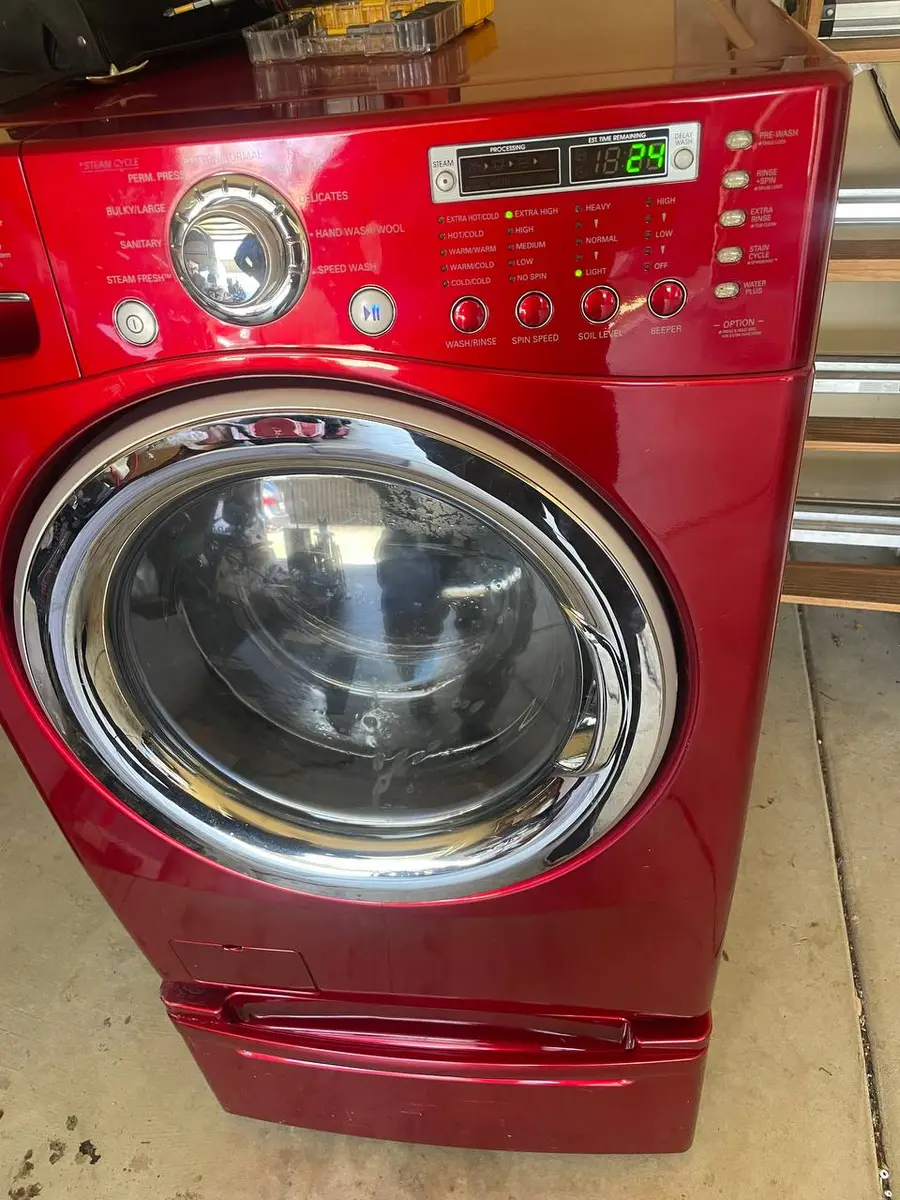
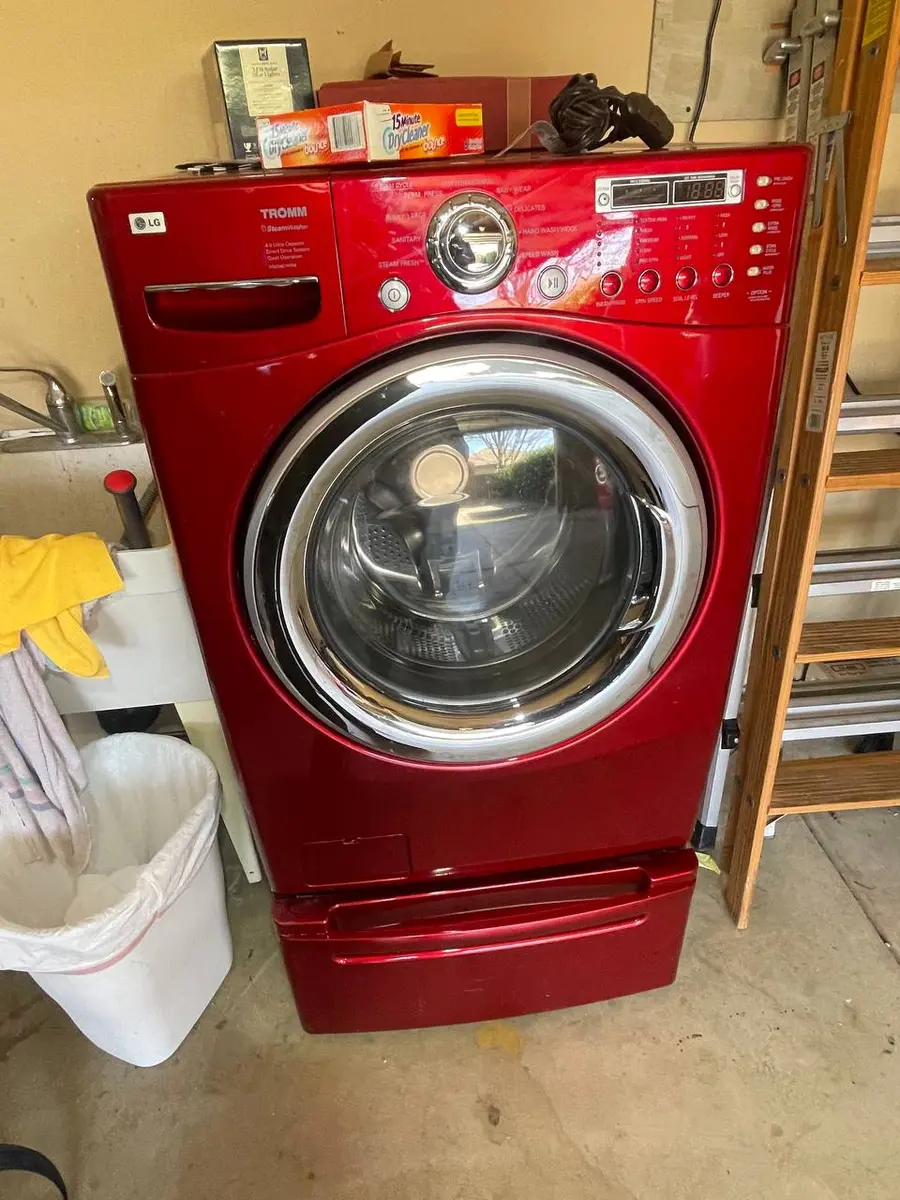
You load the washer, add detergent, close the lid or door, and press start — nothing. No lights, no water fill, no agitation. A washing machine that won't start is one of the most common service calls we handle in the Sacramento area, and the cause ranges from a simple lid switch to a failed electronic control board. Here are the six most common reasons and how to narrow down the problem before you call for service.
1. Lid Switch or Door Lock Failure#
The Problem: Federal safety standards require top-load washers to have a lid switch and front-load washers to have a door lock that prevents operation when open. These are the most frequently failing "won't start" components. The lid switch is a small actuator mounted under the washer lid that clicks when the lid closes. The door lock on front-loaders is a more complex assembly with a solenoid or wax motor that physically locks the door.
What to Check:
- Top-loaders: Close the lid and listen for a click. If there's no click, the switch isn't engaging. Push the lid switch plunger manually with a pen — does the washer respond?
- Front-loaders: Close the door — does the lock indicator light come on? Can you hear the lock mechanism engage? If the door doesn't lock, the washer won't fill or start.
- Check for obstructions preventing full closure
DIY or Pro: Lid switches cost varies by model and region and are one of the easiest washer repairs — two screws and one wire connector, accessible by lifting the washer top. Door lock assemblies cost varies by model and region and require front panel removal on most brands.
Typical Cost: varies by model and region for lid switch; varies by model and region for door lock.
Do You Have the Right Tools?
Bearing puller set ($120), drum spider wrench ($85), multimeter ($85), and diagnostic software. Our technician arrives with $3,000+ in professional tools — your diagnostic is free.
Licensed & Insured · 90-Day Warranty · Same-Day Service
2. Power Supply Issues#
The Problem: Washers use a standard 120V outlet (unlike dryers, which need 240V). The outlet may have tripped its GFCI protection, the breaker may have tripped, or the power cord connection may be loose. In older Sacramento homes, laundry rooms sometimes share circuits with other high-draw appliances, causing intermittent breaker trips.
What to Check:
- Is the outlet working? Plug in a phone charger or lamp to test
- Check the GFCI reset button on the outlet itself (if equipped)
- Check the circuit breaker panel for a tripped breaker
- Verify the power cord is fully plugged in — vibration can work plugs loose over time
DIY Fix: Reset the GFCI or breaker. If the breaker trips repeatedly, the washer may have an electrical fault — do not keep resetting. Have an electrician inspect the circuit. California electrical code requires GFCI protection in laundry areas — if your outlet isn't GFCI-protected, have it upgraded.
Typical Cost: $0 for reset; $100–$200 for electrician if circuit is faulty.
3. Failed Timer or Electronic Control Board#
The Problem: Older washers use an electromechanical timer — a clock motor that advances through wash, rinse, and spin cycles. When the timer motor fails or the internal contacts burn, the washer won't advance from the starting position. Modern washers use an electronic control board that manages all cycle functions. Board failures can be caused by power surges, moisture intrusion, or age.
What to Check:
- Timer-based washers: Turn the timer knob — does it feel normal, or does it spin freely without clicking into positions? Try different cycle positions to see if any work.
- Electronic washers: Are any lights or displays active? Error codes? Try a hard reset (unplug for 5 minutes).
- Check for error codes — most modern washers display codes that indicate the failing component.
DIY or Pro: Timer motors cost varies by model and region and are accessible from the control panel area. Electronic boards run varies by model and region depending on brand and model. Both repairs require handling wiring harnesses and are best done by a professional.
Typical Cost: varies by model and region for timer; varies by model and region for control board.
Safety First — Know the Risks
High-voltage components and pressurized water lines create flood and shock risk. A single loose fitting can cause thousands in water damage. Our techs are licensed and insured — let them handle the risk.
Licensed & Insured · 90-Day Warranty · Same-Day Service
4. Broken Motor Coupling (Direct-Drive Washers)#
The Problem: Whirlpool, Kenmore, and Roper direct-drive washers use a small plastic motor coupling that connects the motor to the transmission. This coupling is designed to break under excessive load as a protective measure — preventing motor or transmission damage. When it breaks, the motor runs (you'll hear it hum) but nothing inside the washer moves. It can also prevent the washer from starting if the broken coupling jams the motor.
What to Check:
- Does the motor hum when you press start, but nothing else happens?
- Tip the washer back and look at the coupling from underneath — visible cracks or separated pieces confirm failure
- This is specific to direct-drive models (no belt between motor and transmission)
DIY or Pro: The coupling cost varies by model and region. Replacement requires accessing the motor from underneath the washer — tilt the washer back against a wall, remove the motor mounting clips, and slide the motor out. You'll see the coupling between the motor and transmission shafts. Moderate DIY.
Typical Cost: varies by model and region with a technician.
5. Defective Start Switch or User Interface#
The Problem: The start switch is a momentary contact switch that sends the "go" signal to the timer or control board. On knob-type controls, pulling the knob to start activates the switch behind the knob. On push-button models, the membrane switch behind the button can fail. If only the start function is dead but other controls work, the start switch has failed.
What to Check:
- Do other buttons and controls respond normally (cycle selection, temperature)?
- If pulling the start knob feels different than before (no click, too loose, too stiff), the switch mechanism has failed
- On electronic models, if the display works but start doesn't respond to pressing, the membrane switch is the culprit
DIY or Pro: Start switches cost varies by model and region. On knob-type washers, the switch is behind the control panel and is a simple plug-in replacement. On electronic models, the user interface board may need replacement (varies by model and region).
Typical Cost: varies by model and region for mechanical switch; varies by model and region for electronic interface.
The Real Cost of DIY
Average DIY attempt: $150-400 in tools you may use once, plus the risk of further damage. Our diagnostic visit costs $0 — we find the problem and give you an honest quote.
Licensed & Insured · 90-Day Warranty · Same-Day Service
6. Thermal Fuse or Motor Protector Tripped#
The Problem: Washers have thermal protection devices that cut power to the motor if it overheats. The motor thermal protector is a resettable device on the motor housing — it trips when the motor draws excessive current (from a seized pump, overloaded drum, or worn bearings). The thermal fuse on the control board is a one-time device that blows if the board area overheats.
What to Check:
- If the washer worked, then stopped mid-cycle and won't restart, the motor thermal protector may have tripped. Wait 30 minutes for it to cool and try again.
- If it restarts after cooling, the motor is overheating — likely due to a seized pump or worn bearings causing excessive load.
- If the washer is completely dead (no lights, no response), the thermal fuse on the board may have blown.
DIY or Pro: The motor thermal protector resets itself — the real fix is addressing why the motor overheated. Thermal fuses cost varies by model and region but diagnosing the root cause of overheating requires professional evaluation.
Typical Cost: varies by model and region with a technician (including root cause diagnosis).
When to Call a Professional#
Start with the basics: power supply, lid switch engagement, and a hard reset. If those don't resolve the issue, internal components have failed. Control board and motor issues require disassembly and testing with a multimeter. For front-load washers in Sacramento stacked laundry configurations (common in condos and newer townhomes), accessing the washer for repair means unstacking the dryer — this is a two-person job and should factor into your DIY decision.
Don't Void Your Warranty
Opening your appliance yourself may void the manufacturer warranty. Our repair comes with a 90-day guarantee, and we document everything for warranty compliance.
Licensed & Insured · 90-Day Warranty · Same-Day Service
FAQ#
Q: My washer won't turn on at all — no lights, no sound. What's wrong? A: Complete electrical failure (no lights or display) points to the power supply chain: check the outlet, GFCI, breaker, power cord, and thermal fuse on the control board. If power is confirmed at the outlet, the thermal fuse or main board has likely failed.
Q: The washer fills with water but won't agitate. Is that a "won't start" problem? A: Not exactly — the washer did start (it filled). This is a drive system failure: motor coupling, belt, or transmission. The cause is mechanical, not electrical.
Q: How do I hard reset my washing machine? A: Unplug the washer for 5 minutes (or turn off the breaker). For Samsung, press and hold Power for 5 seconds after plugging back in. For LG, press Power, then Spin Speed until "CL" appears. For Whirlpool, open/close the lid 6 times within 12 seconds. Each brand has a specific sequence — check your manual.
Q: Should I repair or replace a washer that won't start? A: Control board replacement on a washer under 7 years old is usually worthwhile (varies by model and region vs. varies by model and region for a new washer). Simple component failures (lid switch, start switch, coupling) are always worth repairing regardless of age. If the washer needs multiple repairs totaling over 50% of replacement cost, buy new.
Lead Appliance Repair Technician · 12 years experience
Experienced technician with 12 years specializing in washing machine and dryer repairs across all major brands.