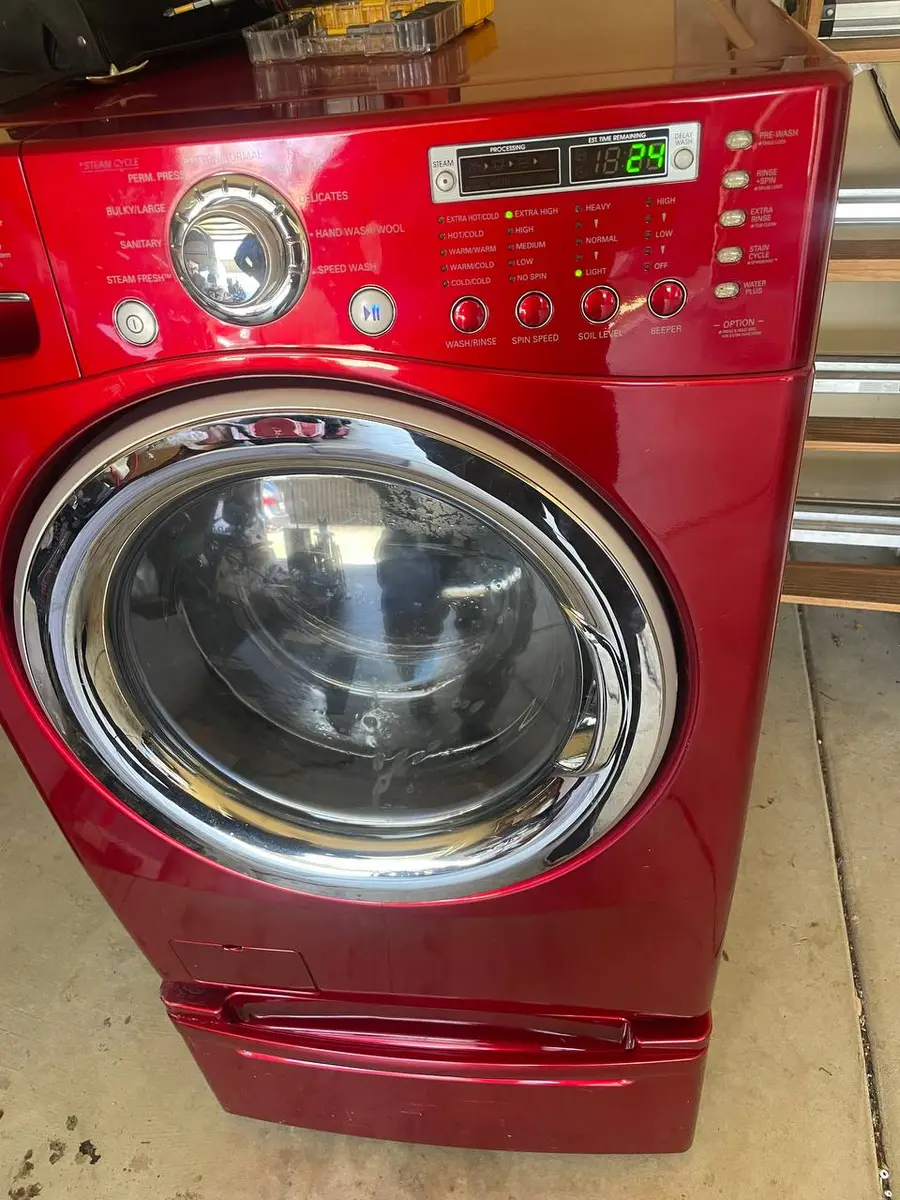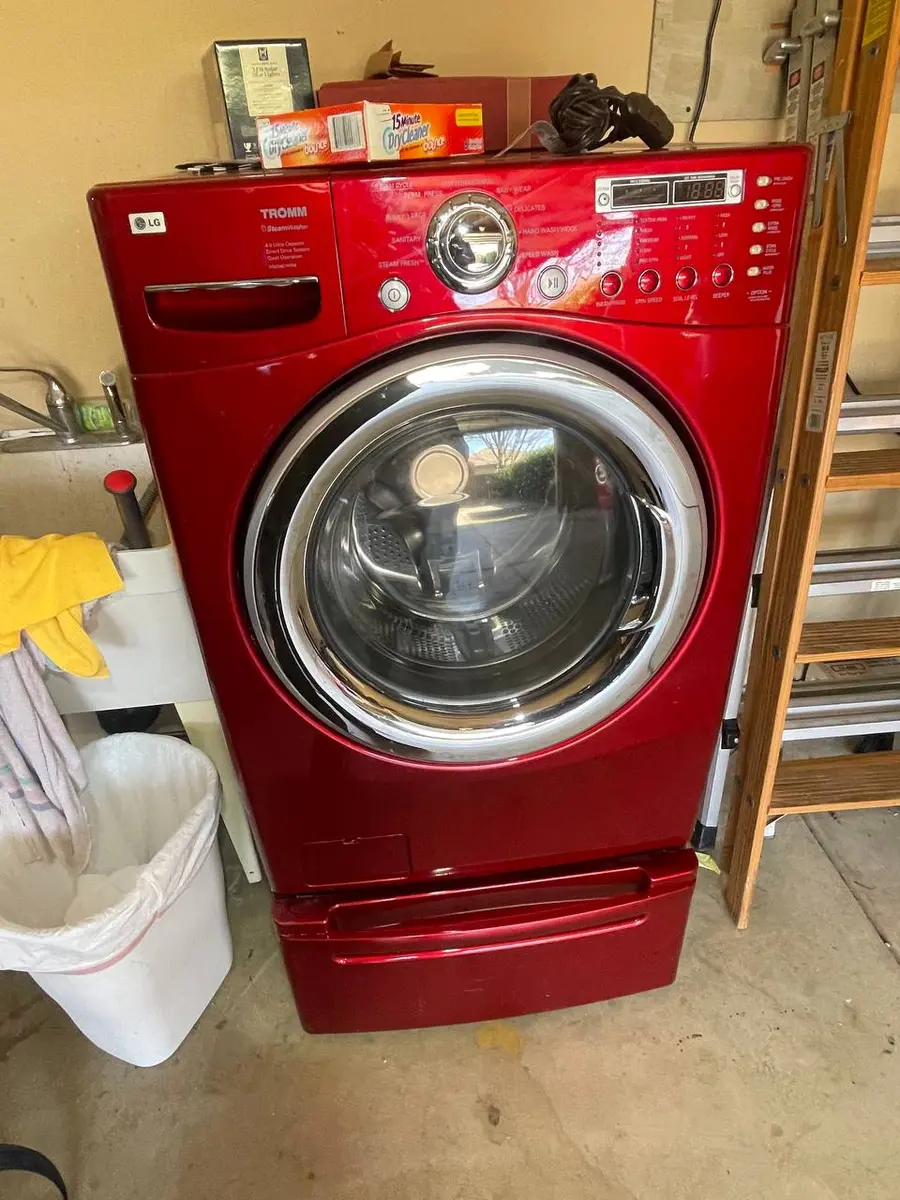
Every washer will eventually need repairs. The question is not if but when and what. This timeline maps the most common washer failures by age — so you know exactly what to expect, what it will cost, and when to start planning for replacement.
Average washer lifespan: 10-14 years. Premium brands push the upper range. Budget models land toward the lower end. Maintenance shifts the entire timeline by 2-4 years in your favor.
Washer Failure Timeline — Complete Breakdown#
| Age | Most Likely Failure | How Common |
|---|---|---|
| 0-2 years | Manufacturing defects (warranty covers) | Rare |
| 1-3 years | Door lock/lid switch assembly | Common |
| 2-4 years | Water inlet valve | Common |
| 3-5 years | Drain pump | Very common |
| 4-7 years | Shock absorbers/suspension | Common |
| 5-8 years | Control board | Common |
| 5-8 years | Belt replacement | Common |
| 7-10 years | Bearings and tub seal | Common |
| 8-12 years | Motor/stator assembly | Occasional |
| 10-14 years | Transmission (top-loaders) | Occasional |
Do You Have the Right Tools?
Bearing puller set ($120), drum spider wrench ($85), multimeter ($85), and diagnostic software. Our technician arrives with $3,000+ in professional tools — your diagnostic is free.
Licensed & Insured · 90-Day Warranty · Same-Day Service
Year 0-2: Warranty Period#
Manufacturing defects and infant mortality. Most issues in this period are covered by the manufacturer warranty. If your Washer fails within 1-2 years, contact Washer manufacturer support first — the repair should be covered.
Common failures in this period:
- Manufacturing defects (warranty covers) (0-2 years): (warranty) — rare occurrence. This failure is a normal wear item — proper maintenance extends the interval between replacements.
- Door lock/lid switch assembly (1-3 years): Costs vary — common occurrence. Door switches are mechanical components that wear from daily open/close cycles. Avoid slamming the door to extend switch life.
- Water inlet valve (2-4 years): Costs vary — common occurrence. Valves fail from mineral buildup in hard water areas. A water softener or periodic descaling extends valve life.
Year 1-3: Early Failures#
Certain components have higher early failure rates due to manufacturing variability. These are not full-unit defects but weak individual components that fail under normal use. Warranty may still cover some of these repairs depending on the specific failure and brand.
Common failures in this period:
- Door lock/lid switch assembly (1-3 years): Costs vary — common occurrence. Door switches are mechanical components that wear from daily open/close cycles. Avoid slamming the door to extend switch life.
- Water inlet valve (2-4 years): Costs vary — common occurrence. Valves fail from mineral buildup in hard water areas. A water softener or periodic descaling extends valve life.
- Drain pump (3-5 years): Costs vary — very common occurrence. Usually fails from debris accumulation. Monthly filter cleaning and avoiding foreign objects reduces risk significantly.
Safety First — Know the Risks
High-voltage components and pressurized water lines create flood and shock risk. A single loose fitting can cause thousands in water damage. Our techs are licensed and insured — let them handle the risk.
Licensed & Insured · 90-Day Warranty · Same-Day Service
Year 3-5: Early Wear Items#
Seals, gaskets, switches, and sensors reach their first stress threshold. These are the "consumable" components designed to be replaced periodically. Repairs in this window are typically affordable and represent normal wear rather than a sign of a defective unit.
Common failures in this period:
- Drain pump (3-5 years): Costs vary — very common occurrence. Usually fails from debris accumulation. Monthly filter cleaning and avoiding foreign objects reduces risk significantly.
- Shock absorbers/suspension (4-7 years): Costs vary — common occurrence. This failure is a normal wear item — proper maintenance extends the interval between replacements.
- Control board (5-8 years): Costs vary — common occurrence. Electronic boards are sensitive to power surges. A surge protector can prevent this failure.
- Belt replacement (5-8 years): Costs vary — common occurrence. Belts stretch and crack over time. A squealing noise during operation is the classic early warning sign.
Year 5-8: Mid-Life Failures#
Pumps, motors, heating elements, and control boards enter their failure window. These are the highest-cost repair years. A single mid-life repair is expected and cost-effective. Two or more major repairs in this window suggest the unit is aging faster than average.
Common failures in this period:
- Control board (5-8 years): Costs vary — common occurrence. Electronic boards are sensitive to power surges. A surge protector can prevent this failure.
- Belt replacement (5-8 years): Costs vary — common occurrence. Belts stretch and crack over time. A squealing noise during operation is the classic early warning sign.
- Bearings and tub seal (7-10 years): Costs vary — common occurrence. Bearings wear gradually — listen for a rumbling noise during operation as an early warning sign.
- Motor/stator assembly (8-12 years): Costs vary — occasional occurrence. Motors typically give warning signs (loud noise, burning smell, intermittent operation) before complete failure.
The Real Cost of DIY
Average DIY attempt: $150-400 in tools you may use once, plus the risk of further damage. Our diagnostic visit costs $0 — we find the problem and give you an honest quote.
Licensed & Insured · 90-Day Warranty · Same-Day Service
Year 8-14: End-of-Life Territory#
Major sealed-system components (compressors, transmissions), structural components (tub seals, bearings), and final electronic failures. Repairs in this window can be significant. The repair-vs-replace calculus shifts toward replacement.
Common failures in this period:
- Motor/stator assembly (8-12 years): Costs vary — occasional occurrence. Motors typically give warning signs (loud noise, burning smell, intermittent operation) before complete failure.
- Transmission (top-loaders) (10-14 years): Costs vary — occasional occurrence. This failure is a normal wear item — proper maintenance extends the interval between replacements.
Year 14+: Replacement Territory#
Beyond the expected lifespan. Any repair at this age is a gamble — fixing one component often reveals the next failure. New units offer significantly better energy efficiency, reducing operating costs significantly each year. Plan replacement proactively rather than waiting for a complete breakdown.
Don't Void Your Warranty
Opening your appliance yourself may void the manufacturer warranty. Our repair comes with a 90-day guarantee, and we document everything for warranty compliance.
Licensed & Insured · 90-Day Warranty · Same-Day Service
How Does Maintenance Shift the Timeline?#
Proactive maintenance shifts the washer failure timeline by 2-4 years. The highest-impact actions are running monthly clean cycles and drying the door gasket (front-loaders). Each maintenance action is low-cost but prevents premature repairs.
To visualize the impact: a well-maintained washer effectively pushes each failure window forward by 2-4 years. Mid-life failures that would occur at year 5 with poor maintenance may not appear until year 7-8 with proper care. This difference can extend total lifespan from 10 years to 14 years or beyond.
How Do Different Brands Compare?#
Not all brands follow the same failure timeline. Here is how the major brands compare for washer reliability:
- Miele: Failures shift 4-6 years later than the average timeline. Bearings may not need replacement until year 10-15.
- Whirlpool/Maytag: Direct-drive washers follow the standard timeline. Motor coupling is a unique Whirlpool-specific failure point but inexpensive to repair.
- Samsung/LG: Drain pump failures tend to occur 1 year earlier than the average. Door lock assemblies are more failure-prone on front-loaders.
These variations are generalizations based on service data. Individual units within any brand can outperform or underperform the average. Your maintenance habits matter more than the brand name on the front.
Is It Worth Your Time?
Washer problems have dozens of possible causes from bearings to control boards. Average DIY troubleshooting: 3-5 hours plus parts ordering delays. Our technician diagnoses the issue in about 30 minutes — same-day appointments available.
Licensed & Insured · 90-Day Warranty · Same-Day Service
How Do You Decide Based on Unit Age?#
Use this framework when your washer needs a repair:
- Under 5 years old: Almost always repair. The unit has significant life remaining.
- 5-10 years old: Repair if cost is under 50% of a new unit's price and this is the first or second major repair.
- 10-14 years old: Only repair for simple fixes within budget. Major component failures at this age favor replacement.
- Over 14 years old: Replace. Even if the repair is affordable, another failure is likely within 1-2 years.
Frequently Asked Questions#
What breaks first on a washer?#
The most common early failure on washers is the door lock/lid switch assembly at 1-3 years, with costs varying by model to repair. This is considered a common occurrence across all brands.
How old is too old for a washer?#
The industry average lifespan for a washer is 10-14 years. Once your unit reaches 11 years, start budgeting for replacement. If a single repair costs more than 50% of a new unit, replacement is usually the better investment.
What is the most expensive [washer repair](/bay-area/services/washer-repair)?#
The most expensive washer repair is typically motor/stator assembly replacement, usually occurring at 8-12 years. When this repair is needed on an older unit, replacement is often more cost-effective.
Can regular maintenance prevent washer breakdowns?#
Yes. Consistent maintenance shifts the typical failure timeline by 2-4 years. The single most impactful action is running a monthly clean cycle and using the correct amount of HE detergent. Maintenance does not prevent eventual wear-out but delays expensive repairs into the period where replacement may be planned.
Based on EasyBear service data, these failure patterns match what our technicians see daily. Book a free diagnostic to assess your specific washer’s condition and remaining lifespan.
Preventive maintenance extends your washer's lifespan by 20-30% — and our certified technicians can diagnose issues before they become expensive repairs.Book your maintenance appointment today.
Our repair data reinforces this point — washer failure timeline — what breaks and when
every washer will eventually need repairs..
Appliance Repair Technician · 11 years experience
Experienced technician with 11 years specializing in Frigidaire and Electrolux refrigerator and dryer repair with a focus on safety.