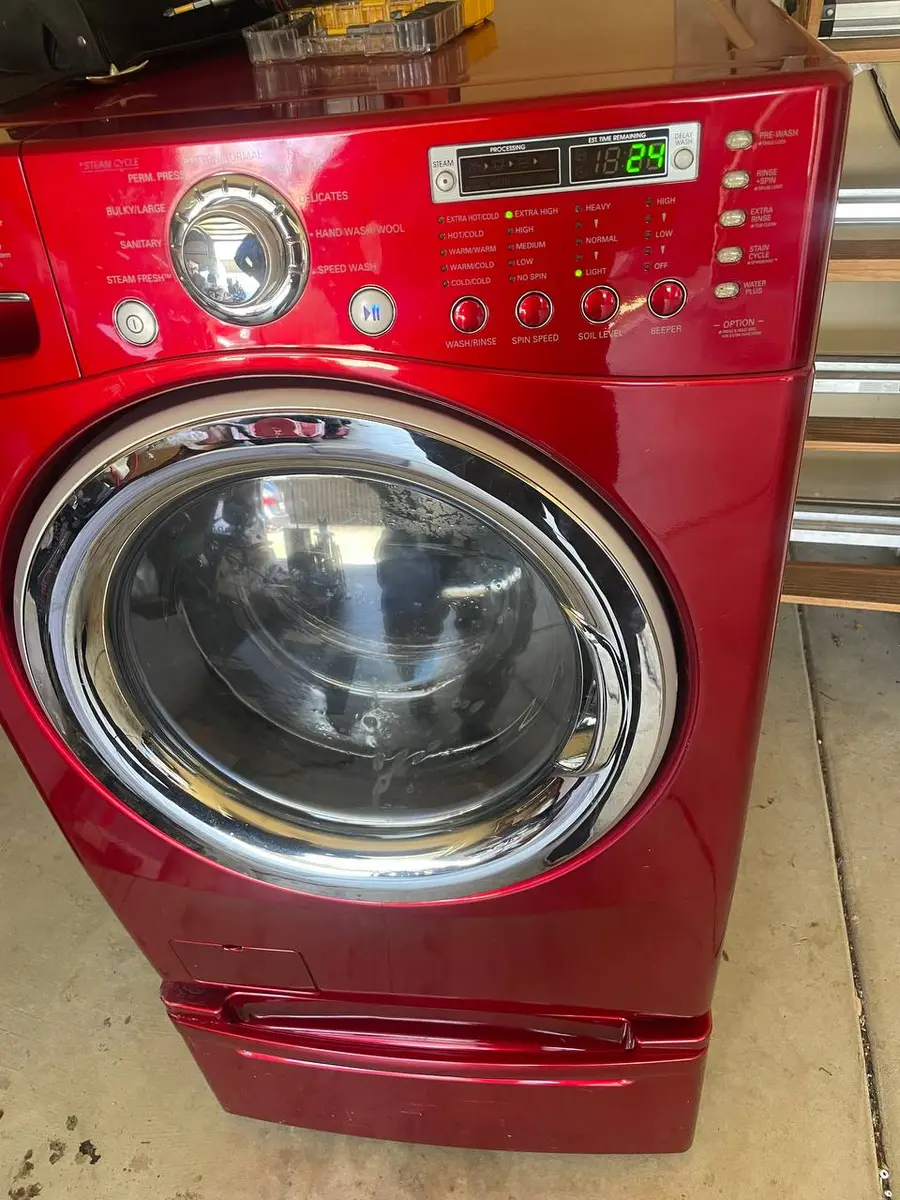
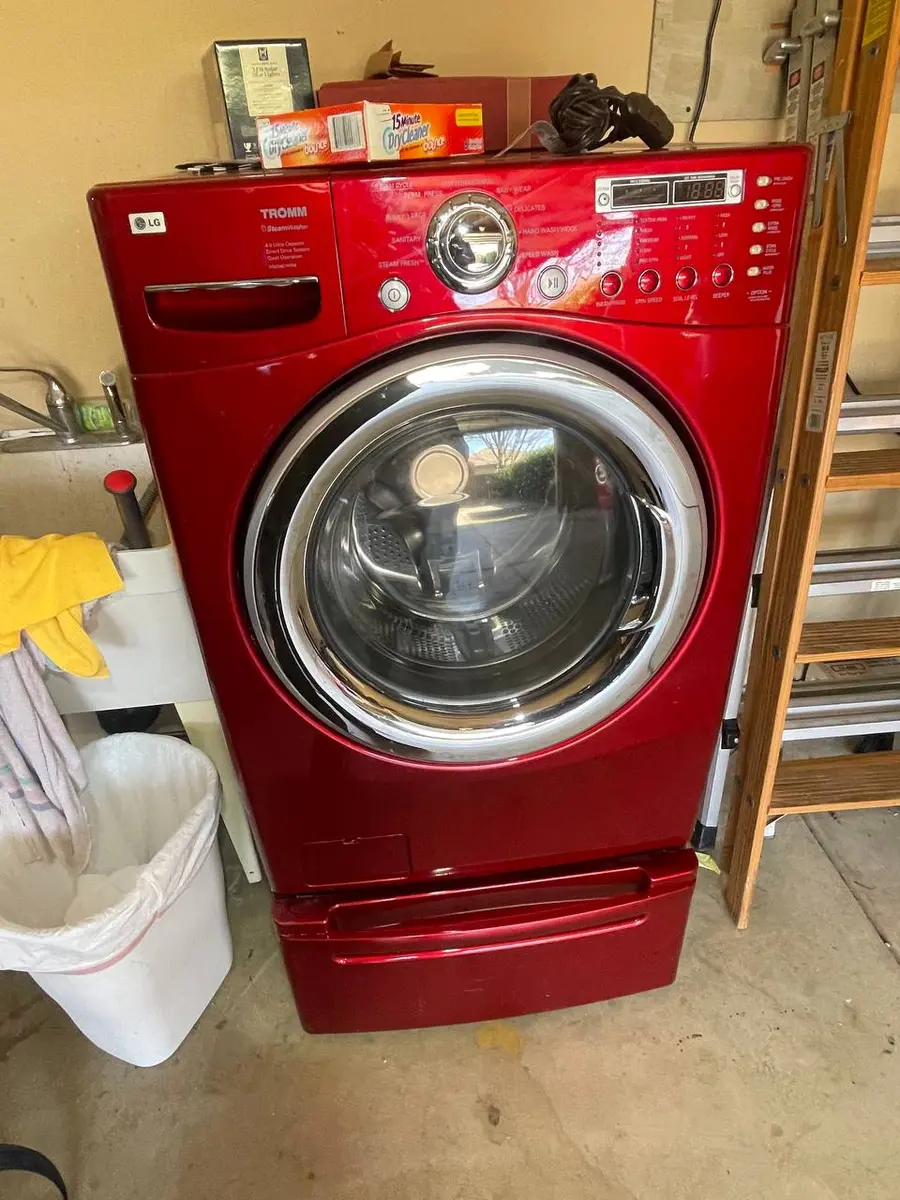
A washing machine that suddenly sounds like a jet engine during the spin cycle isn't just annoying — it's a sign that something mechanical has failed or is about to. Washers spin at 800–1,400 RPM during the final spin cycle, and at those speeds, even minor component wear creates dramatic noise. The good news is that washer noises are diagnostic: banging, grinding, squealing, and humming each point to specific components. Here's how to decode what your washer is telling you.
Loud Banging or Knocking During Spin#
The Problem: A rhythmic bang during the spin cycle usually means either the load is unbalanced (not a repair issue) or the shock absorbers / suspension springs have failed (definitely a repair issue). Front-load washers use two to four shock absorbers between the outer tub and the base frame. Top-load washers use suspension rods with dampers. When these components wear out, the tub moves excessively during spin, banging against the cabinet.
What to Check:
- Redistribute the load and try again — a single heavy item (jeans, towel) on one side causes imbalance
- If the banging occurs regardless of load distribution, the suspension system has failed
- Open the washer and push down on the tub — it should spring back smoothly without bouncing. Excessive bouncing means worn shocks or springs.
- Check if the washer is walking across the floor — this indicates a leveling issue combined with weak suspension
DIY or Pro: Shock absorbers cost varies by model and region each (replace in pairs). On front-load washers, access is through the front or rear panel. Suspension springs for top-load washers are varies by model and region for a set and hang from the cabinet frame. Moderate DIY difficulty.
Typical Cost: varies by model and region with a technician.
Do You Have the Right Tools?
Bearing puller set ($120), drum spider wrench ($85), multimeter ($85), and diagnostic software. Our technician arrives with $3,000+ in professional tools — your diagnostic is free.
Licensed & Insured · 90-Day Warranty · Same-Day Service
Grinding or Rumbling#
The Problem: A deep grinding or rumbling noise that gets louder during spin cycle is the hallmark of bearing failure. The tub bearing — a large sealed bearing that supports the inner tub's shaft — is the most expensive washer component to replace. When the bearing seal fails, water intrudes, corrodes the bearing races, and the smooth rotation becomes a grinding mess. This is especially common on Samsung and LG front-loaders after 5–8 years.
What to Check:
- With the washer empty and off, spin the inner drum by hand — a grinding, rough, or gritty feeling confirms bearing failure
- Look for rust-colored water stains around the outer tub seam at the rear — this indicates water is leaking past the bearing seal
- A failed bearing often produces rust-colored residue on clothing
DIY or Pro: Bearing replacement is one of the most labor-intensive appliance repairs. The entire tub assembly must be disassembled to access the bearing, which is pressed into the rear tub half. On many front-load models, this means removing the front panel, counterweight, motor, and separating the tub halves. Parts cost varies by model and region but the labor is extensive — 2–3 hours for an experienced technician.
Typical Cost: varies by model and region with a technician. On some Samsung models where the bearing is integrated into the outer tub (non-serviceable), the entire tub assembly is significant cost and repair may exceed the washer's value.
High-Pitched Squealing#
The Problem: Squealing during agitation or spin points to one of two things: the drive belt (on belt-driven models) or the clutch assembly (on direct-drive top-loaders). Belt-driven washers use a rubber V-belt that connects the motor to the transmission pulley. When the belt wears, glazes, or loosens, it slips on the pulleys and squeals. The clutch assembly on direct-drive models grips the basket to spin it — worn clutch pads slip and squeal, similar to worn brake pads on a car.
What to Check:
- Belt: accessible from the rear panel. Look for cracking, glazing (shiny surface), or excessive slack.
- Clutch: on Whirlpool/Kenmore direct-drive washers, the clutch is between the basket and the transmission. Brake dust (fine dark powder) under the washer is a telltale sign.
DIY or Pro:
- Belt: varies by model and region moderate DIY. Remove rear panel, release old belt, install new one.
- Clutch: varies by model and region part. Requires removing the basket, which involves a spanner nut and sometimes a basket removal tool. Professional repair recommended.
Typical Cost: Belt: varies by model and region. Clutch: varies by model and region.
Safety First — Know the Risks
High-voltage components and pressurized water lines create flood and shock risk. A single loose fitting can cause thousands in water damage. Our techs are licensed and insured — let them handle the risk.
Licensed & Insured · 90-Day Warranty · Same-Day Service
Humming or Buzzing Without Agitating#
The Problem: The washer fills with water, you hear a hum, but the agitator or basket doesn't move. This indicates the motor is receiving power but can't turn the transmission. Common causes: a seized pump (foreign object lodged in the drain pump), a failed motor coupling (on direct-drive washers), or a stripped drive block connecting the agitator to the transmission shaft.
What to Check:
- Motor coupling: common on Whirlpool direct-drive washers. A small plastic coupler between the motor and transmission breaks as a protective measure to prevent motor or transmission damage.
- Drain pump: check the pump filter (accessible from the front on most front-loaders) for coins, buttons, or debris.
- Drive block (agitator): the splined plastic connector on top of the transmission shaft strips out, causing the agitator to spin freely without moving clothes.
DIY or Pro:
- Motor coupling: varies by model and region moderate DIY. Requires tipping the washer to access from underneath.
- Pump cleaning: $0 if it's debris; $30–$60 for pump replacement.
- Drive block: varies by model and region but accessing it requires removing the agitator.
Typical Cost: varies by model and region depending on the specific component.
When to Call a Professional#
Banging from an unbalanced load is a user fix. Persistent banging, grinding, and squealing all indicate component failures that worsen with continued use. Bearing failure in particular should be addressed promptly — a catastrophic bearing collapse can damage the shaft seal, allowing water to reach the motor. For Bay Area and Sacramento homeowners with stacked washer-dryer units (common in apartments and townhomes), accessing the washer for repair requires unstacking, which is a two-person job.
The Real Cost of DIY
Average DIY attempt: $150-400 in tools you may use once, plus the risk of further damage. Our diagnostic visit costs $0 — we find the problem and give you an honest quote.
Licensed & Insured · 90-Day Warranty · Same-Day Service
FAQ#
Q: My washer is loud during spin but quiet during wash. Is that normal? A: The spin cycle runs at 800–1,400 RPM versus 50–100 RPM during wash. Component wear that's inaudible at low speed becomes very loud at high speed. This is the earliest warning sign of bearing or shock absorber failure.
Q: Can an unbalanced washer damage my floor? A: Yes. A washer with failed suspension walking across the floor during spin can crack tile, damage hardwood, and — in second-floor laundry rooms common in Sacramento two-story homes — cause vibration damage to the structure below.
Q: How long do washer bearings last? A: Tub bearings typically last 8–12 years. Front-load washers tend to fail sooner (6–8 years) due to the horizontal tub orientation putting different stress on the bearing than a vertical top-load design. Hard water in the Sacramento and Bay Area accelerates bearing seal degradation.
Q: Should I replace a washer if the bearings are bad? A: If the washer is under 6 years old, bearing replacement (varies by model and region) is worthwhile. For washers 8+ years old, the repair cost approaches 50% of a new washer, making replacement more economical — especially if you upgrade to a more water-efficient model that saves significant cost/year on California water and energy costs.
Lead Appliance Repair Technician · 12 years experience
Experienced technician with 12 years specializing in washing machine and dryer repairs across all major brands.