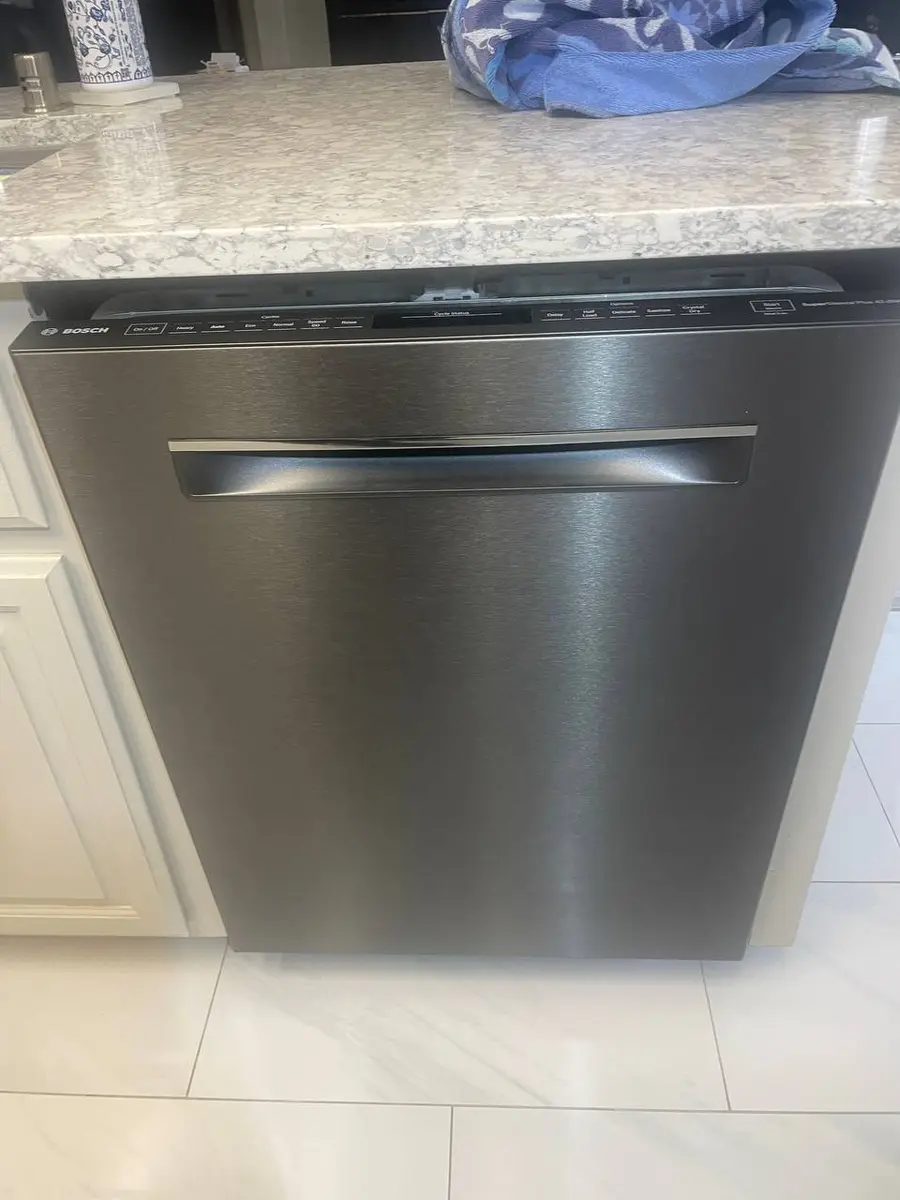
What is the Sub-Zero & Wolf Dishwasher E4 error?#
E4 on a Cove dishwasher is a temperature-sensor failure — the NTC thermistor that lets the unit control wash temperature has malfunctioned, so the dishwasher will not run rather than risk washing at the wrong temperature. It protects delicate items like fine china and crystal, and the first thing a technician checks is the thermistor's resistance on the wash sump.
E4 on a Sub-Zero & Wolf Dishwasher: likely causes and repair cost#
On a Sub-Zero & Wolf Dishwasher, the E4 code signals: temperature sensor failure.
| Likely cause | Typical likelihood |
|---|---|
| NTC sensor malfunction | Most common |
| Wiring issue | Common |
| Control board fault | Less common |
Typical professional repair: $350–$700 · Difficulty: hard · usually a technician job
Symptoms that often accompany E4: Dishwasher will not start any cycle; Water not heating during wash; Cycle completes but dishes are cold; Error appears at cycle start
Technician diagnostic sequence for E4:
- Locate the NTC thermistor on the Cove wash sump assembly
- Measure thermistor resistance — should read approximately 50k ohms at room temperature (NTC type, decreases with heat)
- Inspect the sensor wiring for damage from the wash environment — water intrusion into connectors causes corrosion
- If sensor tests normal, the control board analog-to-digital input circuit may have failed
Parts a technician may check or replace: NTC Temperature Sensor; Sensor Wiring Harness; Control Board Assembly
Field note: Cove dishwashers precisely control wash temperature for optimal cleaning of fine china and crystal. E4 prevents the unit from running to avoid washing at incorrect temperatures — this protects delicate items.
Do You Have the Right Tools?
Water pressure gauge ($60), spray arm tester, float switch multimeter ($85), and drain inspection camera. Our technician arrives with $3,000+ in professional tools — your diagnostic is free.
Licensed & Insured · 90-Day Warranty · Same-Day Service
How to troubleshoot the E4 error yourself#
Owner options for E4 are limited, but a bit of observation helps the technician. Notice the pattern: the dishwasher refusing to start any cycle, water that never heats, or a cycle that finishes with cold, poorly dried dishes all point to the temperature sensor rather than the pump or drain. What you cannot safely do is access and test the NTC thermistor yourself — as the table above shows, it sits on the Cove wash sump assembly and needs a resistance measurement, plus an inspection of the connectors for water-caused corrosion. There is no owner-level swap here, and probing the wrong wiring in a wet environment is a bad idea. Once you have noted the no-heat symptoms, hand it to a technician for the sensor and control-board check.
Is the Sub-Zero & Wolf Dishwasher E4 error worth fixing?#
E4 is worth fixing on a Cove in good condition. The table above lists the professional repair at $350 to $700 — the NTC sensor and its harness are modest parts, though the control-board cause sits at the higher end. Against a new Cove dishwasher at well over a thousand dollars, replacing the unit over a temperature sensor would not add up. I repair these because a sensor fault is isolated and says nothing about the wash pump, the heater, or the tub. The only time I would weigh replacement is if the control board is the culprit on an older unit already showing other faults; for the common sensor failure, repair is the clear call.
Appliance Repair Technician & Diagnostics Specialist · 10 years experience
Electronics and diagnostics specialist with 10 years of experience in modern smart appliance repair, specializing in LG and Samsung.