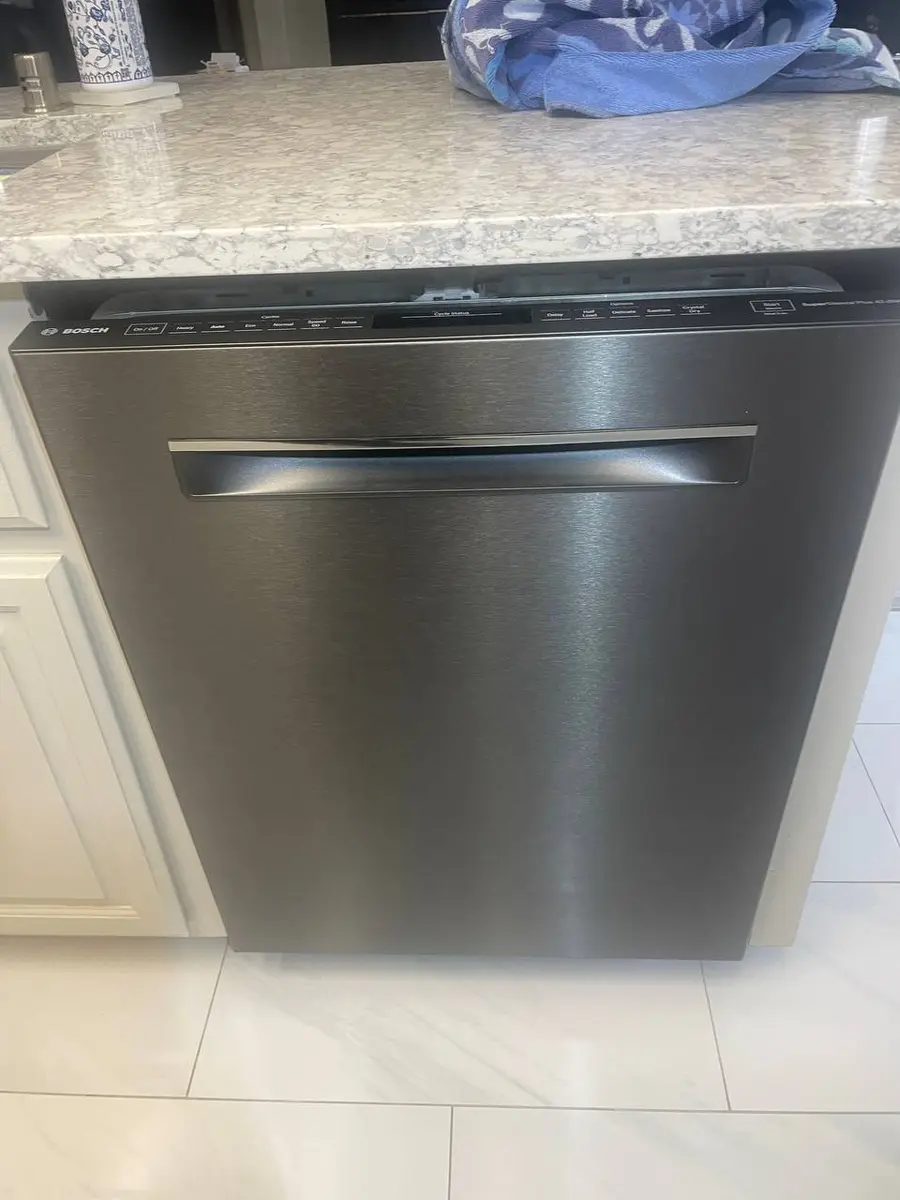
Cove Dishwasher E1: Water Leak Detected — Flood Protection Activated
E1 on a Sub-Zero/Wolf Cove dishwasher means the flood sensor in the base pan detected water where none should be. The Cove immediately stops all water-using functions and activates the drain pump to remove as much water as possible. The machine will not operate until the leak source is identified, repaired, and the base pan is dry.
Cove dishwashers (manufactured by Sub-Zero under the Cove brand) are premium units priced at $2,500-$3,000+. Their flood protection is more sensitive than most consumer dishwashers — detecting even small accumulations before they can damage flooring or cabinetry.
How Cove Leak Detection Works
The base pan (the lowest point of the dishwasher chassis) contains a float switch — a small polystyrene float that rises with water level. When as little as 1/4 inch of water accumulates in the base pan, the float rises enough to close the switch, sending an alarm signal to the control board.
The board's response:
- Immediately close the water inlet valve (stop all incoming water)
- Activate the drain pump (attempt to remove water from the tub and any leaked water that entered the base through the pump)
- Display E1 and emit an audible alarm
- Lock out all functions until manual reset
This cascade happens within seconds of detection — fast enough to prevent significant water damage in most scenarios.
Do You Have the Right Tools?
Water pressure gauge ($60), spray arm tester, float switch multimeter ($85), and drain inspection camera. Our technician arrives with $15K+ in professional tools — your diagnostic is free.
Licensed & Insured · 90-Day Warranty · Same-Day Service
Finding the Leak Source
Step 1: Cut power and pull the unit. Disconnect power and close the water supply valve. Carefully slide the dishwasher out from under the counter (Cove units have adjustable feet that may need lowering for extraction).
Step 2: Inspect the base pan. Tilt the unit back slightly (support it) and look underneath. Is there standing water? How much? The volume gives clues: a few tablespoons suggest a slow drip (gasket seepage, loose connection). A cup or more suggests an active leak (failed hose, cracked component).
Step 3: Dry the base pan completely. Use towels or a wet-dry vacuum. The float switch will not reset until the pan is dry.
Step 4: Identify the source. Run a test cycle with the unit pulled out and accessible. Watch all connection points:
Common leak locations on Cove dishwashers:
-
Door gasket: The precision-fitted door seal runs around the entire tub opening. If deformed, torn, or has debris in the seal groove, water escapes during wash and spray cycles. The Cove gasket is a single-piece molded design — not a generic rubber strip.
-
Supply hose connection (rear). Where the household water supply connects to the dishwasher's inlet. Check for drips at the compression fitting or braided hose connection.
-
Drain hose connection. Where the drain hose connects to the pump outlet or the air gap/disposer inlet. Clamp looseness or hose degradation causes slow leaks.
-
Spray arm bearing seal. The center bearing where the lower spray arm rotates can develop wear, allowing water to pass downward into the motor/sump area and eventually to the base pan.
-
Tub seam or fitting (rare). The Cove uses a stainless steel tub — corrosion is virtually impossible, but fitting connections (pump-to-tub gasket, heater element gasket) can leak if disturbed during installation or service.
Door Gasket Issues
The Cove door gasket is the most common E1 source. Unlike consumer dishwashers with simple rubber flaps, the Cove uses a multi-lip seal designed for silent operation and thermal insulation. Issues include:
- Food debris lodged in the lower gasket channel (prevents full seal)
- Gasket displaced from the retaining groove (usually at corners)
- Gasket aged and hardened (rare on units under 10 years, but possible in dry climates)
Clean the gasket and groove with warm soapy water. Inspect every inch for displacement — re-seat any section that has popped out of the groove. If the gasket material is cracked or permanently deformed, replace.
Safety First — Know the Risks
Live 120V wiring in a wet environment is one of the most dangerous DIY scenarios. Water + electricity = serious shock risk. Our techs are licensed and insured — let them handle the risk.
Licensed & Insured · 90-Day Warranty · Same-Day Service
Parts and Costs
| Part | Description | Cost |
|---|---|---|
| COVE-818863 | Door gasket seal | $120-$200 |
| 818920 | Float switch assembly | $40-$80 |
| COVE-818900 | Drain hose kit | $30-$60 |
| COVE-818950 | Supply inlet hose | $25-$50 |
| COVE-818920 | Pump-to-tub gasket | $35-$70 |
Professional repair: $250-$500 depending on leak source. Gasket replacement is the most common resolution.
Same-Day Appliance Repair
Fixed or It's Free
$89 → $0 Service Call & Diagnosis — offer ends May 25
Resetting E1 After Repair
After fixing the leak and drying the base pan:
- Restore power
- The float switch should be in the lowered position (no water lifting it)
- Press and hold the Start/Cancel button for 3 seconds to clear the stored error
- Run a short rinse cycle and check for leaks at the repaired location
If E1 returns immediately without any visible leak, the float switch itself may be stuck in the raised position (food debris under the float preventing it from settling) or the switch mechanism has failed closed.
The Real Cost of DIY
Average DIY attempt: $150-400 in tools you may use once, plus the risk of further damage. Our diagnostic visit costs $0 — we find the problem and give you an honest quote.
Licensed & Insured · 90-Day Warranty · Same-Day Service
FAQ
Q: E1 appeared but I see no water on the floor. Where is the leak? A: The base pan catches internal leaks before they reach the floor — that is its purpose. The leak may be small (slow drip from a connection) that the pan caught before floor-level overflow. You need to look inside/under the unit, not on the floor.
Q: Can hard water deposits cause E1? A: Indirectly. Hard water deposits on the spray arm bearings can create wear that eventually leaks. Hard water can also cause the door gasket to stiffen prematurely. However, hard water itself does not cause water to appear in the base pan — a physical leak or seal failure is always the immediate cause.
Q: My Cove is brand new and showing E1 during the first use. Defective? A: More likely an installation issue — water supply connection not fully tightened, drain hose clamp not secured, or the unit was not leveled correctly (causing water to pool at the door gasket's lowest point). Check all installation connections before assuming a defect.
Q: E1 appears only on heavy wash cycles, not light rinse. Why? A: Heavy wash uses higher water pressure and more vigorous spray patterns. A marginal gasket seal or loose connection that holds during gentle rinse may leak when spray pressure increases. The leak is real but only manifests under full pressure.
E1 on your Cove dishwasher? Our technicians identify leak sources and carry Cove gaskets and connection components for same-visit repair. Book your diagnostic.
Leak Source Identification for E1
E1 diagnosis focuses on locating the water leak that triggered the flood sensor. The Cove dishwasher's base pan collects water from any internal leak. With the machine pulled forward and the lower access panel removed, run a short wash cycle and observe with a flashlight from below.
Water dripping from the door seal area: the magnetic door gasket has lost seal integrity. Check for mineral deposits, warped gasket material, or food debris preventing full closure. Cove gaskets are precision-fitted and must be ordered model-specific.
Water dripping from the sump area: the pump housing gasket or sump-to-tub seal is leaking under wash pressure. These seals are compressed rubber that hardens over 8-12 years. Water dripping from hose connections: spring clamps have weakened or the hose material has compressed at the clamp point.
The float switch in the base pan should be tested: manually lift the float while the machine is powered on. The control board should immediately stop the fill valve and activate the drain pump. If it does not respond, the float switch itself may need replacement.