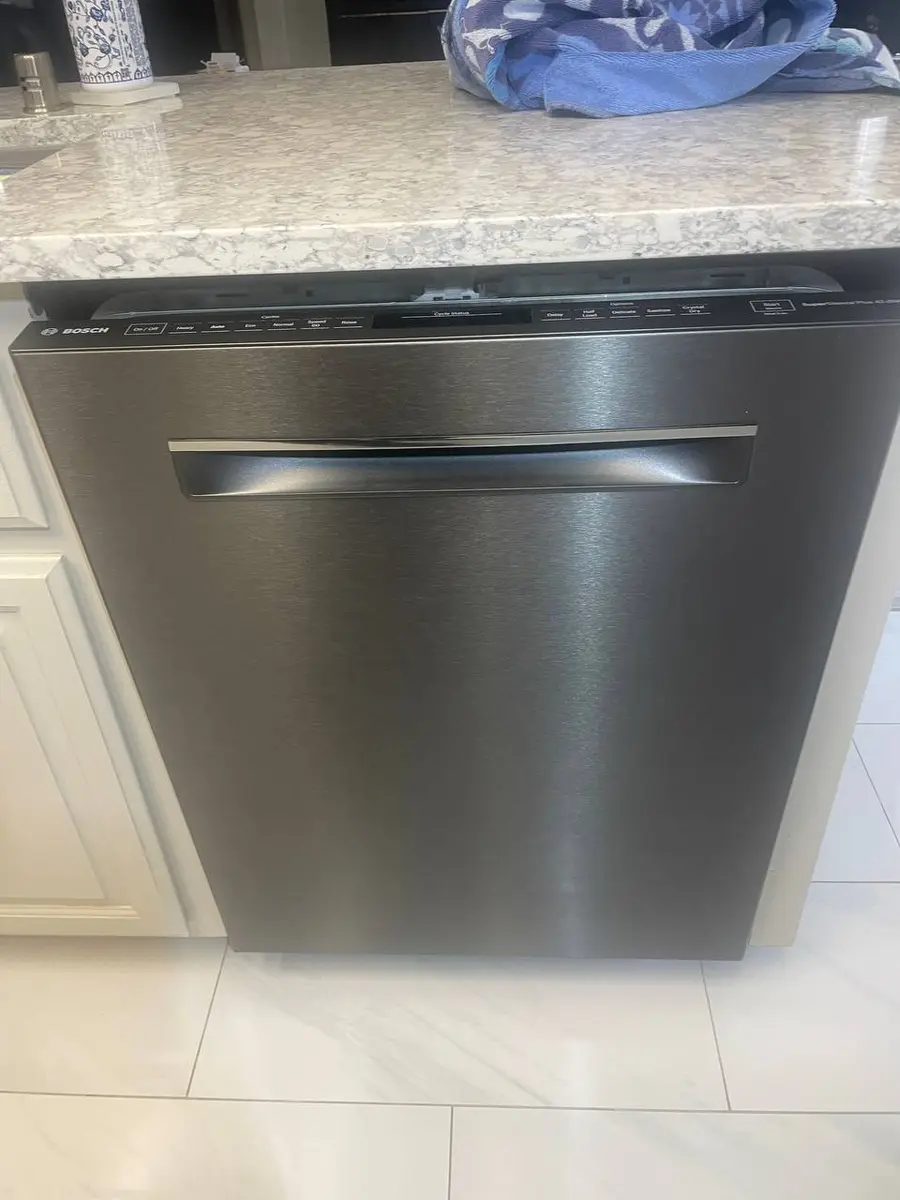
What is the Samsung Dishwasher tE error?#
tE on a Samsung dishwasher is a temperature-sensor fault — the thermistor that tells the board how hot the water is has drifted out of range or lost contact, so the machine can no longer trust its heat reading. That usually shows up as a dishwasher that runs cold all cycle, drags on trying to reach temperature, and never lights the sanitize indicator. It is not a hazard, just a wash that will not heat properly until the sensor reads true. Because the thermistor sits in a permanently humid sump, the first thing worth suspecting on an intermittent tE is a connector that vibration has worked loose rather than a truly dead sensor.
tE on a Samsung Dishwasher: likely causes and repair cost#
On a Samsung Dishwasher, the tE code signals: temperature sensor error.
| Likely cause | Typical likelihood |
|---|---|
| Thermistor failure | Most common |
| Corroded thermistor connector in the humid sump | Common |
| Wiring fault between the sensor and the control board | Less common |
| Control board temperature-sensing circuit fault | Occasional |
Typical professional repair: $125–$300 · Difficulty: hard · usually a technician job
Symptoms that often accompany tE: Dishwasher not heating water; Cycle runs cold throughout; Extended cycle times as the machine attempts to reach temperature; Sanitize light not illuminating
Technician diagnostic sequence for tE:
- Access the thermistor from below the tub by removing the base plate and lower access panel. The sensor is typically mounted in the sump area near the heater
- Disconnect the thermistor leads and test with a multimeter: at room temperature (77 °F), the resistance should be approximately 10-15 k-ohm. Significantly different readings indicate a failed sensor
- Inspect the wiring from the thermistor to the control board. The humid dishwasher environment can corrode connector pins over time
- If the thermistor and wiring test good, the main control board temperature sensing circuit may be faulty
Parts a technician may check or replace: Samsung DD32-00010A; Samsung DD82-01139A
Field note: Samsung dishwasher tE codes that appear intermittently (sometimes triggers, sometimes runs fine) usually indicate a loose connector rather than a failed thermistor. The vibration from the wash pump jiggles the connector loose. Secure the connection with dielectric grease on the pins and a zip tie on the harness.
Do You Have the Right Tools?
Water pressure gauge ($60), spray arm tester, float switch multimeter ($85), and drain inspection camera. Our technician arrives with $3,000+ in professional tools — your diagnostic is free.
Licensed & Insured · 90-Day Warranty · Same-Day Service
How to troubleshoot the tE error yourself#
tE is rated a technician repair, but there is useful triage an owner can do first. If the code is intermittent — sometimes it triggers, sometimes the machine runs fine — that pattern almost always means a loose connector rather than a failed thermistor, because the wash pump's vibration slowly jiggles the plug apart. With the dishwasher unplugged, if you are comfortable removing the base plate and lower access panel you can reach the sensor in the sump area near the heater and reseat that connector firmly; a dab of dielectric grease on the pins and a zip tie on the harness stops it recurring. Look for green corrosion on the pins while you are there, since the humid environment eats at them over time. Where you stop is the meter work: confirming the thermistor itself has failed versus a wiring break or a board-side sensing fault means a resistance reading, and that plus the parts is a technician's job. If a reseated connector does not clear tE, book the visit.
Is the Samsung Dishwasher tE error worth fixing?#
tE is usually worth repairing on a Samsung dishwasher. The professional cost runs $125 to $300, and when the fix is only reseating or replacing the thermistor it lands near the low end — a small fraction of a new machine and well under half its price. On any dishwasher that otherwise fills, drains, and washes normally, restoring proper hot, sanitizing cycles for that amount is a clear yes. I would only lean toward replacement on a very old unit already facing pump or board work, where tE is just one more item on the list. Given how often the real cause is an inexpensive sensor or a connector that costs nothing but labor to reseat, tE rarely tips a sound dishwasher toward replacement.
Safety First — Know the Risks
Live 120V wiring in a wet environment is one of the most dangerous DIY scenarios. Water + electricity = serious shock risk. Our techs are licensed and insured — let them handle the risk.
Licensed & Insured · 90-Day Warranty · Same-Day Service
Samsung Dishwasher tE: frequently asked questions#
What does the tE error mean on a Samsung Dishwasher?#
tE means the temperature sensor, or thermistor, is reading out of range, so the board cannot trust the water temperature and the wash runs cold. In the humid sump, a loose or corroded connector often causes it rather than a dead sensor.
Is it safe to keep using a Samsung Dishwasher that shows the tE error?#
It is safe to run, but dishes will not be heated or sanitized and cycles will drag as the machine waits for a valid reading. There is no hazard; results simply suffer until the sensor reads correctly.
Can I clear the tE error myself, or do I need a technician?#
You can reseat and clean the thermistor connector in the sump yourself, which cures many intermittent tE codes. Metering the sensor to confirm it has failed, and replacing it, is a technician job.
How much does it cost to repair the tE error on a Samsung Dishwasher?#
A professional tE repair typically runs $125 to $300, covering the thermistor or its wiring. A reseated connector, by contrast, costs only labor.
Which parts usually fail when a dishwasher throws the tE code?#
The thermistor is the usual failure, but a connector corroded or vibrated loose in the humid sump produces the same reading. A wiring fault or the board's sensing circuit are the less common suspects.
Why does thermistor failure trigger the tE error?#
The board reads water temperature from the thermistor's resistance. When the sensor drifts, its connector corrodes, or vibration loosens the plug, the reading falls out of range, so the board raises tE and lengthens the cycle to stay safe.
Appliance Repair Technician · 8 years experience
Experienced technician with 8 years specializing in dishwasher repairs and European appliance brands including Bosch and Thermador.