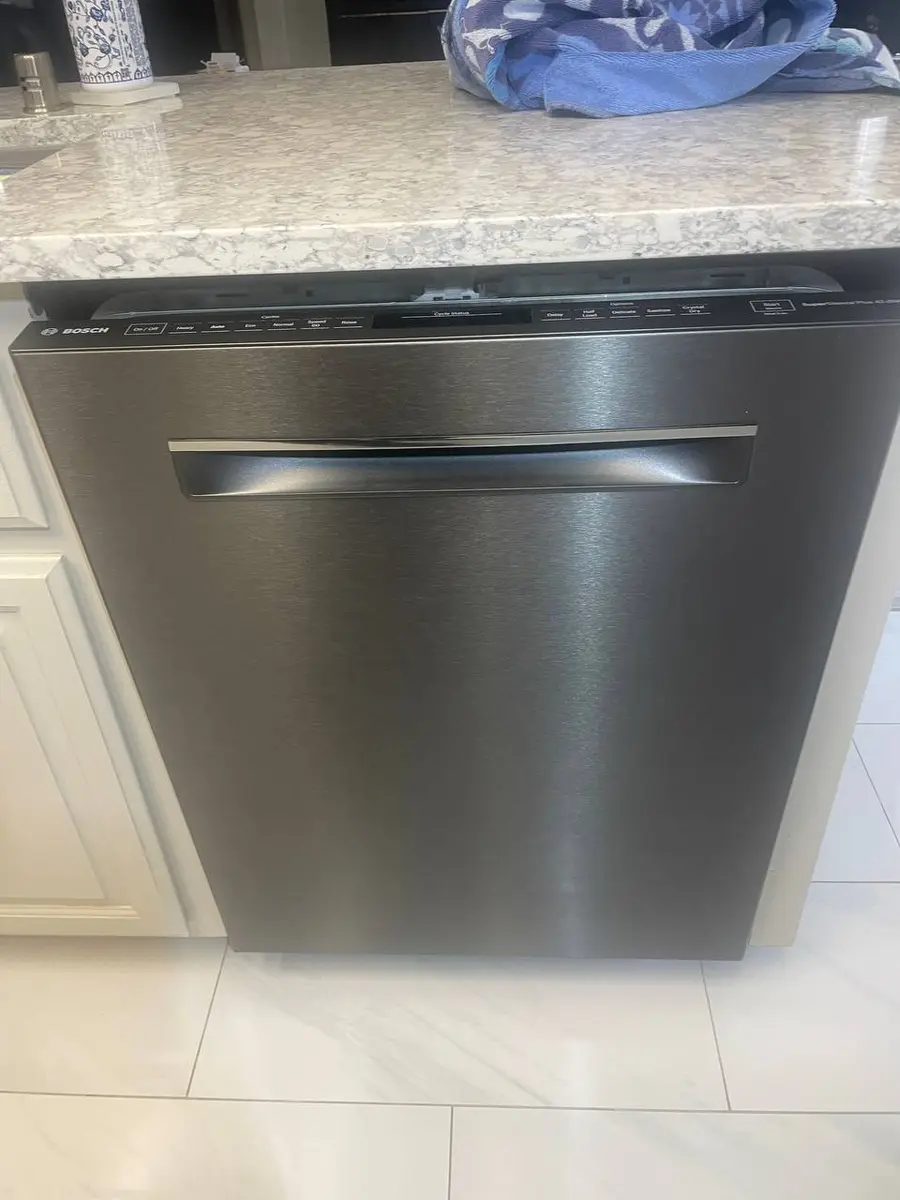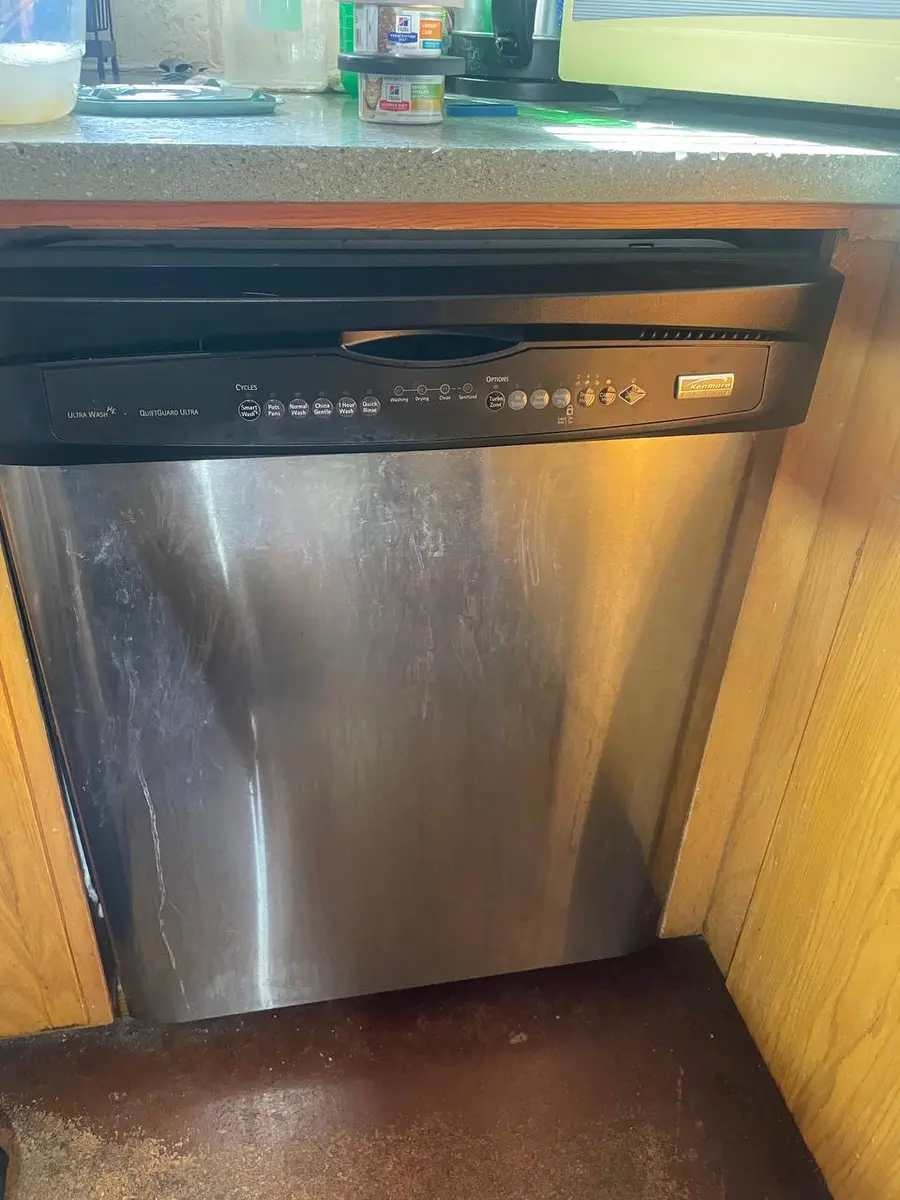
What is the Samsung Dishwasher LC error?#
An LC code means your Samsung dishwasher has detected a leak — water where it should not be, usually in the base pan under the tub. A float sensor in the base trips when it senses moisture, and the machine stops and often drains to limit the spill. This is a prompt-attention code: the causes in the table above are a failed door seal, a hose leak, or a pump seal, and an active leak can damage your cabinets and flooring. The tell-tales are water in front of or under the unit, a musty smell, and sometimes warping on adjacent cabinet panels. If you see active water, shut off the supply under the sink.
LC on a Samsung Dishwasher: likely causes and repair cost#
On a Samsung Dishwasher, the LC code signals: leak / water in base.
| Likely cause | Typical likelihood |
|---|---|
| Door seal failure | Most common |
| Hose leak | Common |
| Pump seal | Less common |
Typical professional repair: $150–$350 · Difficulty: hard · usually a technician job
Symptoms that often accompany LC: Water visible under or in front of the dishwasher; Musty smell from the dishwasher area; Warping or discoloration on adjacent cabinet panels; Error appears at any point during the cycle
Technician diagnostic sequence for LC:
- Samsung dishwashers have a leak sensor (float switch) in the base pan. First, pull the dishwasher out and remove the base plate to check for water. Mop up any water and locate the source
- Common leak sources: door gasket (check for tears or food debris preventing seal), spray arm connection (hand-tighten), hose clamps on the drain and fill lines, and the sump gasket where the pump meets the tub
- With the base dry, run a short cycle and watch from below for where water first appears. Use a flashlight and paper towels placed at suspected leak points
- If the door seal is the source, inspect the bottom corners where buildup is most common. Clean the gasket channel and check for warping
Parts a technician may check or replace: Samsung DD62-00057A; Samsung DD63-00100A; model-specific; Samsung DD81-01975A
Field note: If LC appears after using the dishwasher for the first time in weeks, condensation from the dormant sump area may have pooled in the base pan and triggered the float switch. Mop up, run a short cycle, and see if it recurs before replacing parts.
Safety note: Water leaks near dishwashers can cause significant damage to kitchen flooring and cabinetry. If the leak is persistent, turn off the water supply and avoid using the dishwasher until repaired. Check for mold growth if the leak has been ongoing.
Do You Have the Right Tools?
Water pressure gauge ($60), spray arm tester, float switch multimeter ($85), and drain inspection camera. Our technician arrives with $3,000+ in professional tools — your diagnostic is free.
Licensed & Insured · 90-Day Warranty · Same-Day Service
How to troubleshoot the LC error yourself#
The owner-safe steps on LC focus on finding an obvious leak source. With the supply off, inspect the door gasket for a torn or hardened section and clean any food buildup that keeps it from sealing — a failed door seal is a leading cause in the table above and a visible one. Check under and behind the machine for a dripping hose connection. Dry out the base pan so the float sensor can reset, then run a short cycle and watch for where water appears. Where DIY ends is a hose or pump-seal leak deep in the machine: those are a "hard" repair, since reaching the pump seal means pulling the dishwasher and partial disassembly. If the door gasket looks fine but LC returns, a technician should trace the internal leak.
Is the Samsung Dishwasher LC error worth fixing?#
LC is worth repairing on nearly any dishwasher with life left, because an unaddressed leak damages your home. The table above lists $150 to $350 to replace a door seal, hose, or pump seal and stop the leak. Weighed against a new machine plus the potential cost of water damage to cabinets and floor, that is money well spent. I would only lean toward replacement on a very old unit already unreliable elsewhere; otherwise, closing off a leak for $150 to $350 is clearly the right move. The math also favors repair because a small leak caught early is far cheaper than the cabinet and subfloor damage a slow drip causes over months, so acting on LC promptly protects value well beyond the appliance itself.
Safety First — Know the Risks
Live 120V wiring in a wet environment is one of the most dangerous DIY scenarios. Water + electricity = serious shock risk. Our techs are licensed and insured — let them handle the risk.
Licensed & Insured · 90-Day Warranty · Same-Day Service
Samsung Dishwasher LC: frequently asked questions#
What does the LC error mean on a Samsung Dishwasher?#
It means a leak sensor in the base detected water where it should not be. The dishwasher stops and drains to limit the spill.
Is it safe to keep using a Samsung Dishwasher that shows the LC error?#
No — an active leak can damage cabinets and flooring. Shut off the supply and hold off on running it until the leak is found.
Can I clear the LC error myself, or do I need a technician?#
You can inspect and clean the door gasket, check hose connections, and dry the base pan to reset the float. An internal hose or pump-seal leak needs a technician.
How much does it cost to repair the LC error on a Samsung Dishwasher?#
The table above lists $150 to $350 to replace the leaking seal or hose and confirm the leak is stopped.
Which parts usually fail when a dishwasher throws the LC code?#
A failed door seal, a leaking hose, or a worn pump seal, as shown in the table above.
Why does a door seal failure trigger the LC error?#
A torn or fouled door gasket lets water escape the tub into the base, where the leak sensor trips and reports LC to stop the machine before the spill spreads.
Appliance Repair Technician · 11 years experience
Experienced technician with 11 years specializing in Frigidaire and Electrolux refrigerator and dryer repair with a focus on safety.