Over-the-Range Microwave Power Requirements at a Glance#
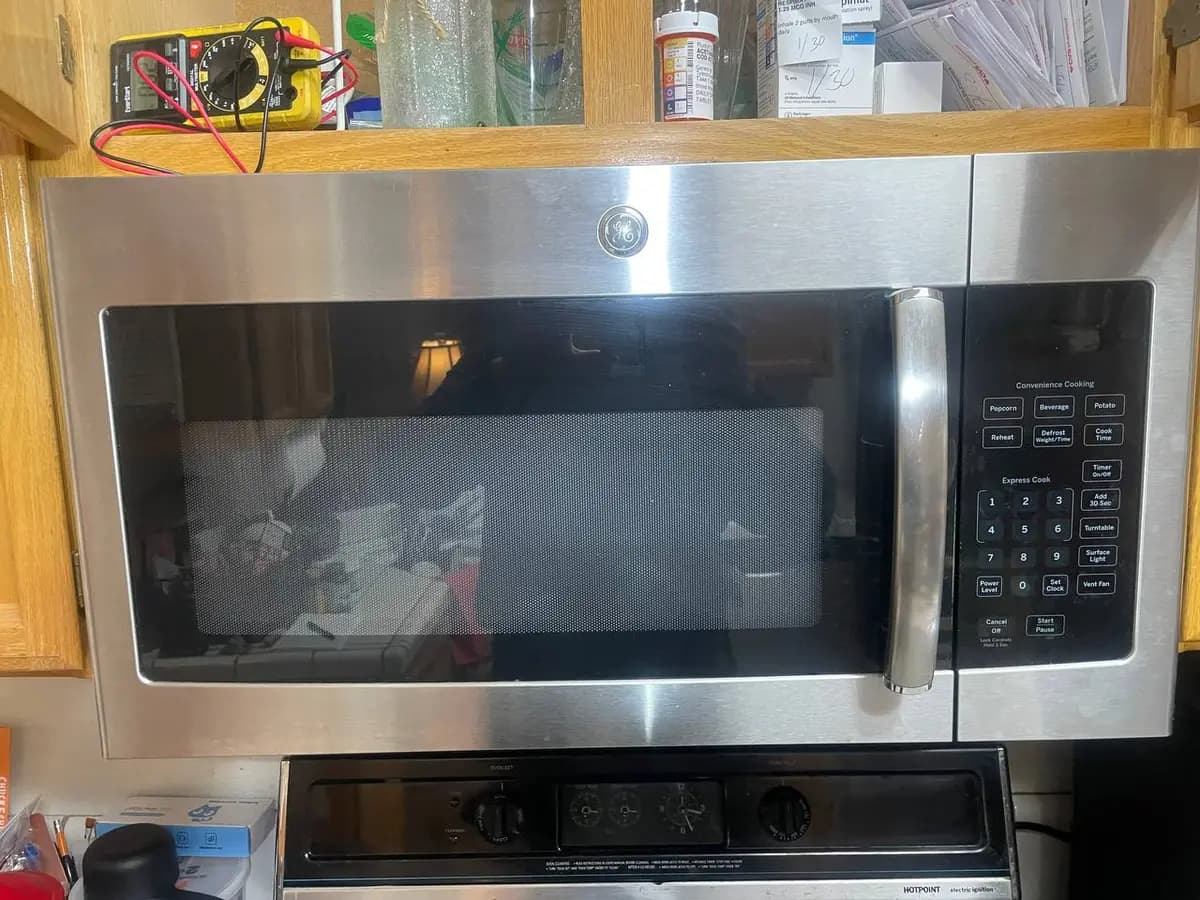
An over-the-range microwave draws about 12 to 13 A at 120 V, an input load of 1,500 W, and belongs on a dedicated 20 A circuit. Its power comes from a receptacle hidden in the cabinet directly above the unit, where a 5-15R outlet is fed by that dedicated circuit — not from the cooktop or range feed below it.
Over-the-Range Microwave Electrical Specifications#
| Configuration | Voltage | Amps | Watts (max load) | Breaker | Outlet (NEMA) |
|---|---|---|---|---|---|
| Over-the-range microwave on a cabinet outlet | 120 V | 12–13 A | 1,500 W | 20 A | 5-15R |
A built-in unit hangs above the cooktop and reaches an outlet tucked inside the cabinet directly overhead, wired back to a circuit of its own so the vent blower and the cooktop work lights never fight the cooking load for current. The installer leaves the cord long enough to drop the oven for service.
Do You Have the Right Tools?
High-voltage capacitor discharge tool ($90), magnetron tester ($200), microwave leakage detector ($150). Our technician arrives with $3,000+ in professional tools — your diagnostic is free.
Licensed & Insured · 90-Day Warranty · Same-Day Service
Circuit and Breaker Sizing for the Over-the-Range Microwave#
An over-the-range microwave is sized like its countertop cousin but wired to a specific place: a cabinet outlet above the range. At 12 to 13 A and 1,500 W of input it wants a dedicated 20 A circuit, with the conductor run up to the 5-15R receptacle tucked in the cabinet above. Keeping it on its own circuit matters because the appliance below is a cooking range on its own feed; borrowing power from that circuit would combine two heavy kitchen loads. The microwave's built-in ventilation blower adds a little to the draw when it runs, but the 20 A dedicated circuit carries the combined cook-and-vent load with room to spare.
Installation and Safety Notes for Over-the-Range Microwave Wiring#
Installation ties the electrical to the mounting: the microwave hangs on a wall bracket and vents through the cabinet or exterior, while its cord reaches up into a 5-15R receptacle placed in the cabinet above, fed by a dedicated 20 A circuit. Positioning that cabinet outlet and running the dedicated circuit is permitted-and-inspected work. Hanging the unit is a careful two-person homeowner job, but placing the cabinet receptacle and pulling the dedicated 20 A circuit — rather than tapping the range circuit — is a licensed electrician’s task, and the correct way to power an over-the-range unit.
Safety First — Know the Risks
Microwave capacitors store lethal voltage (4,000V+) even when unplugged. This is the single most dangerous DIY appliance repair. Our techs are licensed and insured — let them handle the risk.
Licensed & Insured · 90-Day Warranty · Same-Day Service
Over-the-Range Microwave Electrical FAQ#
Where does a built-in vent microwave find its outlet?#
An over-the-range microwave plugs into a 5-15R receptacle hidden in the cabinet directly above it, fed by a dedicated 20 A circuit. The cord runs up from the unit into that cabinet outlet.
Does the overhead unit need a dedicated 20-amp feed?#
Yes. Drawing 12 to 13 A and 1,500 W, an over-the-range microwave belongs on its own dedicated 20 A circuit rather than sharing with other kitchen loads.
Can it borrow power from the range receptacle instead?#
No. The range below is a separate appliance on its own circuit. The microwave must have its own dedicated 20 A circuit to a cabinet outlet; combining the two heavy loads would overload the feed.
What breaker size does the cabinet outlet carry?#
The cabinet receptacle above the range is fed by a dedicated 20 A circuit, matching the microwave’s 12 to 13 A input draw and its 1,500 W load.
How much does the draw rise with the blower running?#
The integrated ventilation blower adds a little to the microwave’s draw, but the combined cook-and-vent load stays within its 12 to 13 A rating, and the dedicated 20 A circuit carries it with headroom.
Why keep it off the shared cooktop circuit?#
The cooktop or range is already a heavy dedicated load. Adding the microwave’s 12 to 13 A to that feed risks overload, so the microwave gets its own dedicated 20 A circuit to a cabinet outlet.
Appliance Repair Technician & Diagnostics Specialist · 10 years experience
Electronics and diagnostics specialist with 10 years of experience in modern smart appliance repair, specializing in LG and Samsung.