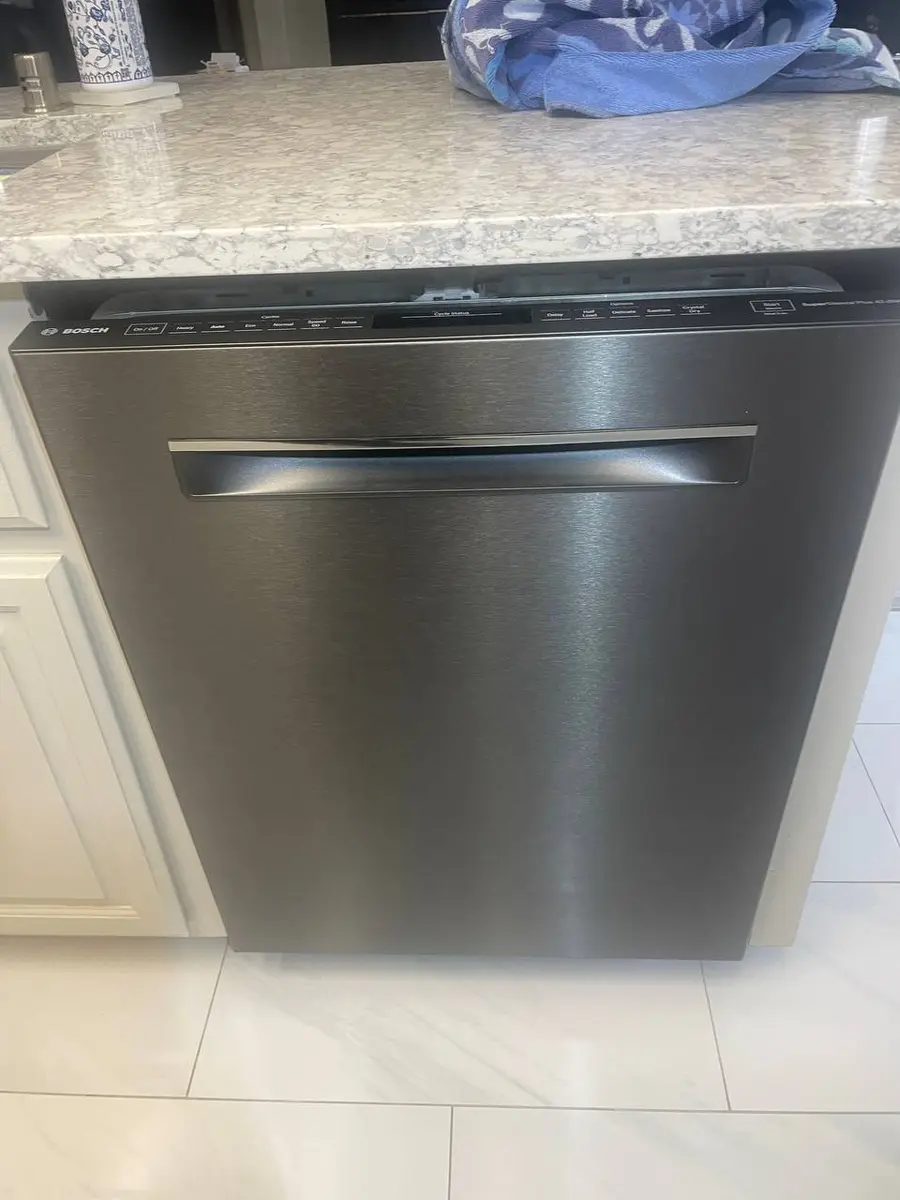
What is the Miele Dishwasher F32 error?#
F32 on a Miele dishwasher is a detergent-dispenser malfunction: the dispenser flap is not opening or closing as the board commands, so the cycle stops rather than run without releasing detergent. It is low-urgency and often self-inflicted by hardened detergent. The first thing to check is the dispenser compartment itself — clean out caked powder or gel around the flap and hinge, because buildup jamming the mechanism is a common and free fix.
F32 on a Miele Dishwasher: likely causes and repair cost#
On a Miele Dishwasher, the F32 code signals: detergent dispenser malfunction.
| Likely cause | Typical likelihood |
|---|---|
| Dispenser motor failure | Most common |
| Detergent buildup | Common |
| Latch mechanism issue | Less common |
Typical professional repair: $250–$500 · Difficulty: moderate · usually a technician job
Symptoms that often accompany F32: Detergent tab still in dispenser after cycle; Poor wash results; AutoDos indicator flashing
Technician diagnostic sequence for F32:
- Clean the dispenser compartment thoroughly with warm water
- Check dispenser door spring and latch mechanism
- On AutoDos models, verify the TwinDos cartridge is properly seated
- Test dispenser motor for continuity
- Check the wax motor actuator (bi-metallic type) on older models
Parts a technician may check or replace: Dispenser assembly; if TwinDos-equipped; Dispenser motor/actuator
Field note: On Miele models with AutoDos automatic dispensing, F32 may indicate a cartridge recognition issue rather than a mechanical failure. Remove and reseat the TwinDos cartridge first.
Safety note: Only use Miele-approved TwinDos cartridges on AutoDos models. Third-party cartridges may not be recognized and can trigger persistent F32 errors.
Do You Have the Right Tools?
Water pressure gauge ($60), spray arm tester, float switch multimeter ($85), and drain inspection camera. Our technician arrives with $3,000+ in professional tools — your diagnostic is free.
Licensed & Insured · 90-Day Warranty · Same-Day Service
How to troubleshoot the F32 error yourself#
Start where the grime is. First, open the detergent compartment and clean it thoroughly: dried powder and gel residue collect around the flap edges and latch, gluing the mechanism so it cannot spring open — warm water and an old toothbrush usually free it. Second, check that you are not overfilling or using a product that clumps, since that is what caused the buildup in the first place. Third, watch the flap during the pre-wash to see whether it releases; a flap that never moves points past cleaning toward a failed dispenser motor or actuator. That electrical failure, and any latch mechanism that is broken rather than just dirty, is where the job crosses into technician territory — rated moderate, and not worth forcing by hand.
Is the Miele Dishwasher F32 error worth fixing?#
Worth fixing, and frequently free. When F32 is just detergent buildup, a good clean resolves it at no cost. If the dispenser motor or actuator has failed, a professional repair runs $250–$500 — a modest sum against a new Miele and well under half its price. I have never seen an F32 justify replacing the machine; the dispenser is a self-contained assembly on the door, and swapping it leaves the rest of the dishwasher exactly as it was.
Safety First — Know the Risks
Live 120V wiring in a wet environment is one of the most dangerous DIY scenarios. Water + electricity = serious shock risk. Our techs are licensed and insured — let them handle the risk.
Licensed & Insured · 90-Day Warranty · Same-Day Service
Miele Dishwasher F32: frequently asked questions#
What does F32 mean on a Miele dishwasher?#
It is a detergent-dispenser fault: the dispenser flap is not opening or closing on command, so the machine stops instead of running a cycle without detergent.
Is it safe to keep using a dishwasher with F32?#
There is no hazard, but dishes will not be cleaned properly if detergent never releases. Clean the dispenser before relying on the machine.
Can I clear F32 myself?#
Often yes. Cleaning hardened detergent from around the flap and hinge frees a jammed dispenser; only a failed motor or broken latch needs a technician.
How much does F32 repair cost?#
Nothing if it is detergent buildup. A failed dispenser motor or actuator runs $250–$500 to replace professionally.
Which parts fail when a dishwasher shows F32?#
Usually none — it is detergent residue jamming the flap. When a part fails it is the dispenser motor, actuator, or latch mechanism.
Why does dispenser-motor failure trigger F32?#
The board expects confirmation the flap opened at the right moment. If the motor cannot drive it, that confirmation never comes and F32 is raised.
Lead Appliance Repair Technician · 12 years experience
Experienced technician with 12 years specializing in washing machine and dryer repairs across all major brands.