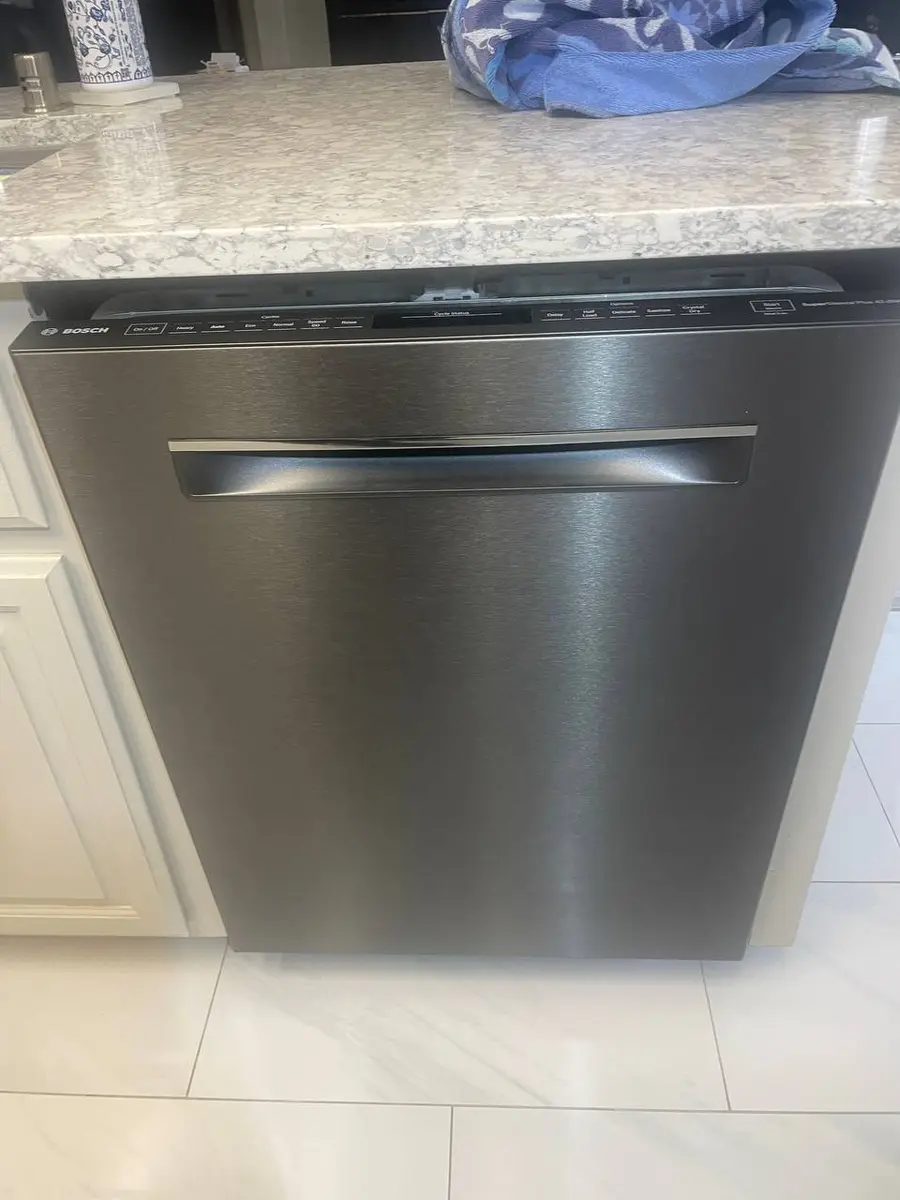
Quick Answer: The Breaker Is Catching a Ground Fault#
Most likely, a Maytag dishwasher tripping the breaker has a heating element leaking current to the metal tub — a ground fault — and the breaker is doing its job by cutting a shock and fire hazard. Because a dishwasher combines electricity and water in a sealed box, ground faults are its most common trip cause. The timing points the finger: an element ground fault usually trips 15 to 25 minutes into the cycle, when the board energizes the element for the main-wash heating phase, earlier on the high-intensity PowerBlast cycle. When it trips is the single most useful clue to which component is at fault.
Cause-by-Timing Table#
| When it trips | Most likely cause | Confirm |
|---|---|---|
| 15 to 25 minutes in, at heating | Heating-element ground fault | element-to-tub must read open; any reading is a fault |
| During the wash, not at heating | Wash-motor insulation breakdown | motor-to-ground reading below open |
| The instant you reset it | Wiring or junction-box short | inspect for water and damaged wire |
| Immediately on power, burn smell | Control-board short | look for burn marks or bulging caps |
| First 30 seconds or at cycle end | Drain-pump motor short | drain runs at the start and finish |
Do You Have the Right Tools?
Water pressure gauge ($60), spray arm tester, float switch multimeter ($85), and drain inspection camera. Our technician arrives with $3,000+ in professional tools — your diagnostic is free.
Licensed & Insured · 90-Day Warranty · Same-Day Service
Diagnose by Elimination#
Since you cannot run a dishwasher that trips instantly, work by elimination — always at the breaker panel, not the dishwasher switch. First note when the trip lands, then isolate components one at a time until the breaker holds. Start with the element: disconnect power, find the two element terminals at the bottom of the tub, and disconnect them. A healthy element reads about 15 to 30 ohms between terminals, and open (OL) means it is simply broken. The critical test is terminal-to-tub: touch one probe to a terminal and one to the metal tub, and it must read open — any reading at all, even one to two megohms, means moisture inside the element sheath is leaking current to ground, enough to trip a sensitive GFCI or arc-fault breaker.
Motor, Wiring, and Board#
If the breaker holds with the element disconnected, the element was it. If it still trips, move to the wash motor — Maytag's PowerBlast cycle spins it harder with the stainless chopper blade (W10083957) engaged, and marginal insulation plus that higher current pushes past the breaker threshold. Test motor windings at about 5 to 15 ohms and motor-to-ground, which should read open; any reading to the housing is insulation failure, and the wash motor assembly is WPW10348269 on most MDB models. A trip the instant you reset the breaker, before any cycle, is a hard short in the wiring or junction box — check for water inside the junction box, a sign of a leak from above — or a shorted control board, which sits behind the front door panel where steam from a leaking gasket rises and condenses on it, sometimes leaving a burn mark or a distinct electrical smell. Disconnect the board's main power connector and reset; if it holds, the board or something downstream is the fault. The drain pump can short too, tripping in the first thirty seconds or at cycle end when it runs.
Safety First — Know the Risks
Live 120V wiring in a wet environment is one of the most dangerous DIY scenarios. Water + electricity = serious shock risk. Our techs are licensed and insured — let them handle the risk.
Licensed & Insured · 90-Day Warranty · Same-Day Service
When Nothing Tests Bad#
Sometimes every component checks out, and the answer is the breaker itself. Newer homes — much California construction from about 2014 on — use GFCI or AFCI breakers on the kitchen circuit, and those are far more sensitive than standard breakers, tripping on normal motor inrush current or a minor fault a standard breaker would tolerate. If all components test normal electrically and you have a GFCI or AFCI breaker, its sensitivity is the likely cause. And never work around it with an extension cord or power strip — Maytag dishwashers must be hardwired or on a proper dedicated circuit, since cords add resistance and remove the ground protection the breaker provides.
An Intermittent Trip Is Still Urgent#
It is tempting to ignore a breaker that only trips now and then, but an intermittent trip is a warning, not a reprieve. It means a component has marginal insulation that fails only under certain conditions — extra heat late in a cycle, or humidity on a damp day — and that condition reliably worsens over time as the insulation degrades further. Left alone, the intermittent fault becomes a continuous short, and every trip in the meantime stresses the breaker mechanism while the underlying leak generates heat right at the fault point. So treat even an occasional trip as something to diagnose now, using the elimination method above, rather than a quirk to live with. Fixing it while it is intermittent is both cheaper and far safer than waiting for it to become constant.
The Real Cost of DIY
Average DIY attempt: $150-400 in tools you may use once, plus the risk of further damage. Our diagnostic visit costs $0 — we find the problem and give you an honest quote.
Licensed & Insured · 90-Day Warranty · Same-Day Service
Repair or Replace?#
A tripping dishwasher is repairable — element, wash motor, drain pump, and even the board are serviceable parts far cheaper than a new machine. But this one is about safety first: an unresolved ground fault is a shock and fire risk, and an intermittent trip only worsens as insulation degrades, so do not just keep resetting it. When the wash motor or the control board is the fault, book a Maytag dishwasher repair.
Lead Appliance Repair Technician · 12 years experience
Experienced technician with 12 years specializing in washing machine and dryer repairs across all major brands.