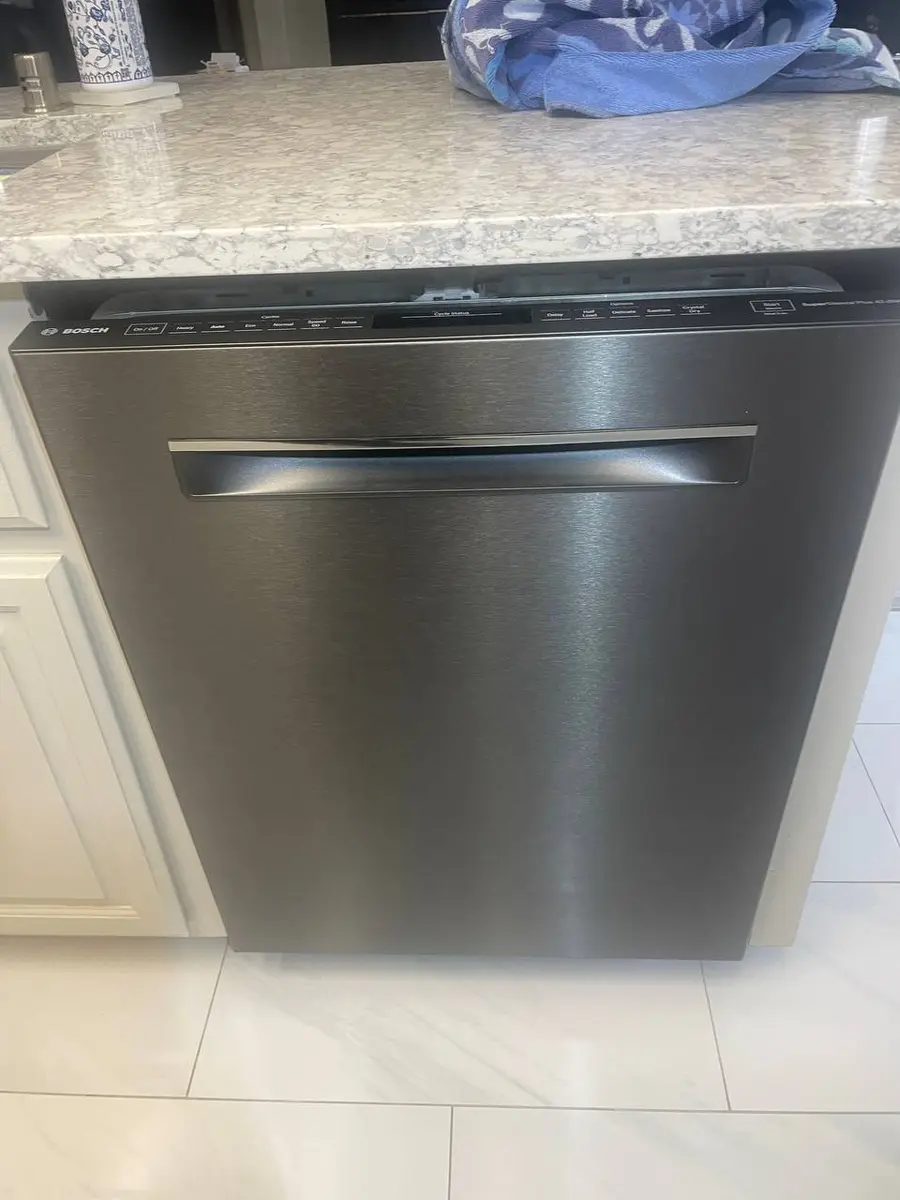
Maytag Dishwasher Overflowing — Float Switch, Inlet Valve, and Drain Causes
An overflowing dishwasher is a plumbing emergency. When water exceeds the normal fill level in a Maytag dishwasher, it exits through the door gasket, floods the kitchen floor, and can cause thousands of dollars in water damage to cabinets, subfloor, and adjacent rooms. The MDB-series dishwasher has a float switch system designed to prevent overfill — but when this safety system fails alongside the cause of the excess water, the result is an uncontrolled overflow.
Maytag dishwashers trigger error code F8-E4 when an overfill condition is detected by the float switch. However, if the float switch itself is the reason for the overflow (stuck in the down position, failing to detect rising water), no error code appears because the very sensor that would report the problem is the component that has failed.
Emergency Response — Water on the Floor
If your Maytag dishwasher is actively overflowing:
- Cut power at the breaker immediately — this de-energizes the inlet valve solenoid, stopping water inflow.
- Close the hot water supply valve beneath the sink as backup (in case the inlet valve is physically stuck open rather than electrically held open).
- Do NOT open the dishwasher door until you have towels ready — the tub may be completely full and opening the door releases the water suddenly.
- Mop and dry the area as quickly as possible — standing water on wood or laminate flooring begins causing damage within 30 minutes.
- Check below — if you have a basement or crawl space, check for water dripping through the floor. Kitchen flooring is rarely waterproof, and overflow water finds seams quickly.
Do You Have the Right Tools?
Water pressure gauge ($60), spray arm tester, float switch multimeter ($85), and drain inspection camera. Our technician arrives with $15K+ in professional tools — your diagnostic is free.
Licensed & Insured · 90-Day Warranty · Same-Day Service
Causes of Overflow
1. Float Switch Stuck in Down Position (35% of overflow cases)
The float switch is the primary overfill protection. It consists of a plastic dome (the float) sitting on a stem that passes through the tub floor, and a microswitch beneath the tub that activates when the float rises. When water reaches the correct level, the float rises, the switch triggers, and the control board closes the inlet valve. If the float is stuck down (unable to rise), the board never receives the "tub full" signal and continues filling indefinitely.
Why it sticks on Maytag models: The float dome sits at the left-front of the tub floor. Food debris, utensils, and sticker residue collect beneath the dome and cement the stem in place. On MDB models with the stainless tub, mineral scale can also build up on the stem where it passes through the tub floor.
DIY Difficulty: Easy Parts Cost: $0 (cleaning) or $10-$30 (switch replacement) Professional Repair Cost: $89-$145
Repair Steps:
- With power disconnected, open the dishwasher door.
- Locate the float dome — a cylindrical or dome-shaped plastic piece at the left-front of the tub floor.
- Push the float up and down. It should move freely (2-3cm of travel) with no resistance. If stuck, remove the dome (it lifts straight up as a friction-fit piece).
- Clean the stem and the well it sits in — remove food debris, mineral scale (vinegar soak), and any foreign objects.
- Reinstall the dome and verify free movement.
- If the dome moves freely but overflow occurred, the switch beneath the tub may have failed. Access via kick panel — test the switch with a multimeter. It should show open circuit when the float is down and closed circuit when the float is raised. No state change = failed switch. Replace.
2. Water Inlet Valve Stuck Open (30% of overflow cases)
The inlet valve is a solenoid-operated valve that opens when electrically energized and closes when power is removed. If the valve mechanism physically sticks open (mineral scale preventing the plunger from seating, or debris lodged in the valve seat), water flows continuously regardless of what the control board commands. This is the most dangerous overflow scenario because closing the valve electrically (via the control board) has no effect — only physically shutting the supply valve stops the flow.
Signs of stuck valve: Water continues to enter the dishwasher even after pressing Cancel, even after the cycle should have stopped filling. The only thing that stops it is turning off the water supply valve beneath the sink.
DIY Difficulty: Moderate Parts Cost: $30-$65 Professional Repair Cost: $110-$200
Repair Steps:
- Shut off the water supply valve beneath the sink (mandatory first step — the stuck valve won't respond to electrical commands).
- Disconnect power at the breaker. Remove the kick panel.
- Locate the inlet valve at the bottom-left of the chassis. Disconnect the water supply hose from the valve inlet.
- Inspect the valve inlet screen for mineral deposits. Remove and clean with vinegar if clogged (this may have caused debris to dislodge into the valve seat).
- The valve body is typically not field-serviceable (the internal components are sealed). Replace the entire valve assembly.
- Connect the new valve, tighten the supply hose fitting, reconnect the electrical connector, and reconnect the internal fill hose with its spring clamp.
- Turn on the water supply (with power still disconnected) and verify no water passes through the valve in its de-energized state. Any flow = defective new valve (rare but test before completing assembly).
- Restore power and run a fill test — the valve should open on command and close cleanly when the float reaches level.
3. Drain Backflow from Garbage Disposal (20% of overflow cases)
When the dishwasher drain hose connects to a garbage disposal inlet without a proper high loop or air gap, running the disposal (or even sink drainage without the disposal running) can force water back up the drain hose into the dishwasher. This backflow fills the tub while the dishwasher is not running — the overflow is discovered when the door is opened or when water seeps past the door gasket.
Signs: Water accumulates in the dishwasher between cycles (you find water in the tub when you open it, even though it drained properly at the end of the last cycle). The tub fills slowly over hours rather than rapidly during a cycle.
DIY Difficulty: Easy Parts Cost: $0-$20 (high loop bracket or air gap device) Professional Repair Cost: $75-$130
Repair Steps:
- Check the drain hose routing beneath the sink. It MUST include either:
- A high loop: the hose rises to within 2 inches of the countertop underside before descending to the disposal connection. This prevents backflow by gravity.
- An air gap: a device mounted on the countertop or sink rim that breaks the siphon path.
- If no high loop exists, secure the hose to the underside of the countertop using the factory bracket or a cable tie.
- If connected to a disposal: verify the knockout plug was removed during installation. A partial knockout can create a restriction that builds back-pressure.
- If the disposal connection appears correct, install a check valve in the drain hose (between the dishwasher and disposal) to prevent any backflow regardless of drainage conditions.
4. Control Board Valve Relay Stuck Closed (10% of overflow cases)
The control board relay that energizes the inlet valve solenoid can fail in the "stuck closed" (welded) state. This means the relay provides power to the inlet valve continuously, regardless of the board's programming. The float switch may trigger and the board may attempt to close the valve, but the welded relay keeps power flowing to the solenoid. Water fills until the supply is manually shut off.
Signs: The dishwasher fills normally at cycle start but doesn't stop filling at the correct level. Cancel/Drain command doesn't stop the fill (though it should de-energize the valve relay). The float switch may trigger F8-E4 while water is still flowing in.
DIY Difficulty: Advanced Parts Cost: $120-$295 (control board) Professional Repair Cost: $225-$475
Repair Steps:
- Confirm the valve is not physically stuck (per procedure above — shut supply, disconnect power, check if valve passes water with no electrical input).
- If the valve is fine mechanically (closes when de-energized), the relay is the issue. With the dishwasher attempting to stop fill, check for voltage at the valve connector — if 120V is present when the board should be commanding "off," the relay is welded.
- Replace the control board.
5. Fill Hose Leak (5% of overflow cases)
The internal fill hose (running from the inlet valve up to the tub) can develop a pinhole or loose clamp connection. Water sprays into the base pan rather than entering the tub. The tub never reaches the correct fill level (the float never rises), so the board keeps commanding the valve to fill. Meanwhile, water accumulates in the base pan and eventually overflows onto the floor from beneath the dishwasher.
Signs: Water appears beneath the dishwasher during fill (not from the door). The tub may be partially empty while the floor is wet.
DIY Difficulty: Moderate Parts Cost: $10-$25 (hose or clamp) Professional Repair Cost: $95-$165
Prevention
- Monthly: lift and drop the float dome by hand to verify free movement
- Annually: inspect the inlet valve screen for scale buildup (shut supply, disconnect hose, clean screen)
- Maintain the drain hose high loop — check annually that the support bracket hasn't failed
- Run the garbage disposal to clear it before starting the dishwasher
- If you notice the dishwasher fill cycle seems longer than usual (more than 90 seconds of water flow sound), investigate immediately — it may indicate a developing float or valve issue before overflow occurs
Same-Day Appliance Repair
Fixed or It's Free
$89 → $0 Service Call & Diagnosis — offer ends May 25
Safety First — Know the Risks
Live 120V wiring in a wet environment is one of the most dangerous DIY scenarios. Water + electricity = serious shock risk. Our techs are licensed and insured — let them handle the risk.
Licensed & Insured · 90-Day Warranty · Same-Day Service
FAQ
Q: My Maytag dishwasher overflowed once but seems fine now. Should I still repair it?
Yes. A single overflow event indicates one of the above conditions existed — and most will recur. A stuck float that freed itself may stick again (debris is still present). A valve that stuck open once has internal wear that will worsen. Diagnose and fix the root cause before the next occurrence.
Q: Will my homeowner's insurance cover water damage from a dishwasher overflow?
Most homeowner's policies cover sudden water damage from appliance failure (overflow due to a failed valve or switch). However, they typically exclude gradual leaks or damage from deferred maintenance. Document the failure, take photos of damage, and file the claim promptly. The dishwasher repair itself is usually not covered — only the resulting water damage.
Q: The dishwasher overflowed while I was away and ran for hours. How much water did it release?
A typical kitchen hot water supply delivers 1.5-2.5 gallons per minute. An inlet valve stuck open for 2 hours would release approximately 180-300 gallons of water. This volume can saturate subfloor, drywall, and insulation in adjacent rooms. Professional water damage restoration is likely needed for extended overflow events.
Maytag dishwasher overflow situation? Our technicians handle emergency calls for inlet valve and float switch failures. Request emergency service →