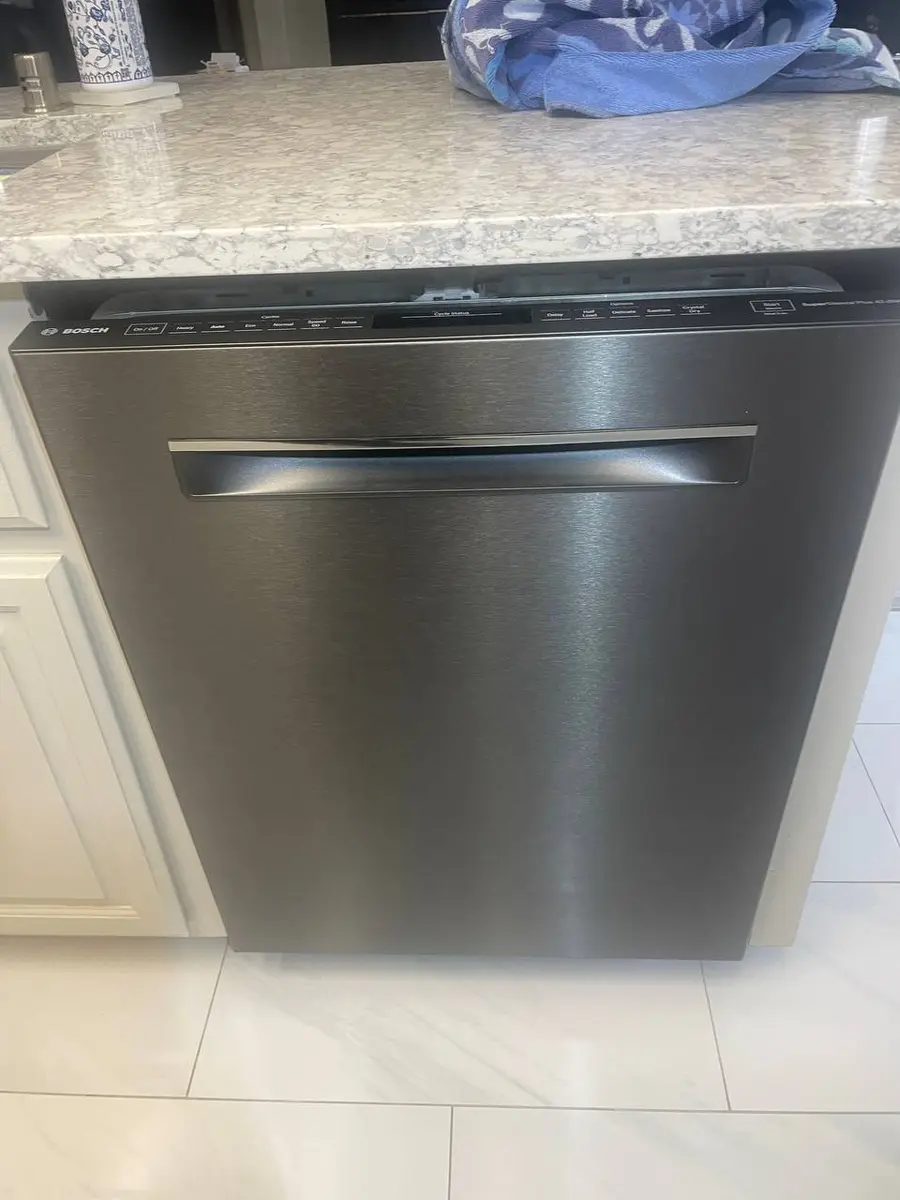
When a Maytag [dishwasher](/blog/repair-or-replace-dishwasher) is not heating, the diagnostic approach varies significantly depending on the model year and series. The MDB-series heating circuit consists of three components in series: the control board relay (sends power), the high-limit thermostat (safety cutoff), and the exposed heating element (converts electrical energy to heat). A failure in any one breaks the circuit and eliminates all heating function — both the water heating during wash phases and the radiant heat during the dry phase.
Quick Answer#
When a Maytag dishwasher is not heating, the diagnostic approach varies significantly depending on the model year and series.
Maytag dishwashers use the heating element for dual purposes: raising wash water temperature above the incoming supply temperature (important for detergent activation and grease removal) and providing direct radiant heat during the Heated Dry phase. The PowerBlast cycle relies on the element to reach 140°F+ water temperature for sanitization-level cleaning. When heating fails, PowerBlast becomes no more effective than a cold rinse.
Do You Have the Right Tools?
Water pressure gauge ($60), spray arm tester, float switch multimeter ($85), and drain inspection camera. Our technician arrives with $3,000+ in professional tools — your diagnostic is free.
Licensed & Insured · 90-Day Warranty · Same-Day Service
How to Confirm Heating Failure#
Before testing components, verify that heating is actually absent:
- Start a Normal or PowerBlast cycle. After 15 minutes (enough time for the element to heat the water), open the door.
- Touch the water at the tub bottom (carefully — if working, it should be hot). If the water is lukewarm or cold after 15 minutes of operation, heating has failed.
- Alternative test: start a cycle with Heated Dry selected. At the end of the cycle, open the door — the interior should be distinctly hot (110-140°F air temperature). Room temperature interior = no heat during dry phase.
Component-by-Component Diagnosis#
1. Heating Element — Open or Shorted (40% of no-heat cases)#
The heating element is the most common failure point. On Maytag MDB models, it's an exposed horseshoe-shaped or circular element mounted in the tub floor. Element failure modes:
Our field data from Maytag repairs confirms wear on the primary failure component drives most complaints of this nature that we diagnose.
- Open circuit (most common): A fracture develops in the heating wire inside the element sheath. No current flows, no heat produced. Multimeter reads infinite resistance (OL).
- Shorted to ground: The element wire contacts the metal sheath, sending current to ground rather than through the full element length. This trips the household breaker and may blow the thermal fuse. Multimeter shows near-zero resistance between either terminal and the element sheath.
- High resistance: The element hasn't fully failed but resistance has increased significantly (normal: 15-30 ohms; degraded: 40-80+ ohms). Heat output is reduced — water heats slowly or never reaches target temperature. Cycle runs extremely long.
DIY Difficulty: Moderate Parts Cost: Professional Repair Cost:
Repair Steps:
- Disconnect power at the breaker. Remove the lower kick panel to access the element terminals beneath the tub.
- Locate the two element terminal nuts. Disconnect one wire from its terminal (this isolates the element from the rest of the circuit for accurate testing).
- Set your multimeter to resistance (ohms). Touch probes to both element terminals:
- 15-30 ohms = element is good (problem is upstream — thermostat or board relay)
- Infinite (OL) = element is open (failed — replace)
- Below 10 ohms = element is shorted (failed — replace)
- Also test ground leakage: touch one probe to either element terminal and the other to the metal element sheath or tub. Should read infinite (OL). Any continuity reading = element shorted to ground (replace).
- To replace: disconnect both wires. Inside the tub, remove the mounting nuts (3/8" socket) where the element passes through the tub floor. Pull the element up and out through the tub.
- Install the new element: feed terminal posts through the holes in the tub floor. Ensure rubber sealing grommets are properly seated to prevent leaks. Tighten mounting nuts (snug, not over-torqued). Reconnect wires.
- Run a fill cycle, check for leaks at the element mounting points, then test heating function.
2. High-Limit Thermostat Tripped or Failed (25% of no-heat cases)#
The high-limit thermostat is a bimetallic disc switch mounted on the tub bottom near the element connections. It opens if temperature exceeds a safety threshold (around 200°F), cutting power to the element. Unlike the thermal fuse (which protects the whole appliance and is one-time), the thermostat specifically protects against element overheating and is normally resettable or self-resetting.
However, if the thermostat has failed in the OPEN position, it permanently blocks element power regardless of temperature. The element tests fine (normal resistance), but no power ever reaches it because the thermostat is interrupting the circuit upstream.
DIY Difficulty: Moderate Parts Cost: Professional Repair Cost:
Repair Steps:
- Disconnect power. Access the thermostat beneath the tub via the kick panel — it's a small disc (about the size of a quarter) with two wires, mounted on the tub floor or sump housing near the element.
- Disconnect one wire from the thermostat. Test continuity through the thermostat: at room temperature (well below the trip point), it should show continuity (closed circuit).
- No continuity at room temperature = thermostat failed open. Replace.
- If the thermostat tests good (shows continuity), the problem is further upstream — the control board relay.
- Install the new thermostat in the same mounting position (it clips onto the tub surface). Reconnect wires.
- Investigate why the original thermostat may have tripped repeatedly before failing: check element for partial short (resistance dropping below 10 ohms), verify proper ventilation clearances around the dishwasher (manufacturer spec: minimum 1/4" air gap on all sides).
3. Control Board Heating Relay Failure (20% of no-heat cases)#
The control board relay that routes power to the heating element circuit can fail while all other relays (motor, pump, valve) operate normally. The dishwasher washes, drains, and fills correctly but produces no heat because the heating relay never closes. This is confirmed when the element tests good (15-30 ohms), the thermostat tests good (continuity at room temperature), but no voltage reaches the element terminals during operation.
DIY Difficulty: Advanced (requires live voltage testing) Parts Cost: (control board) Professional Repair Cost:
Repair Steps:
- Confirm element and thermostat are both good (as tested above).
- Reconnect all wires. With the dishwasher running a heated cycle (restore power), carefully measure voltage at the element terminals beneath the tub: set multimeter to AC volts, touch probes to both element terminals during the wash phase (when the element should be actively heating).
- If 120V is present at the terminals but the element doesn't heat → element is at fault (retest — possible intermittent open under thermal stress).
- If 0V at the terminals during a phase where heating should be active → the control board relay is not closing. Replace the control board.
- After board replacement, run a calibration cycle (Cancel/Drain followed by a Normal cycle) to initialize the new board.
4. Wiring Connection Issue (10% of no-heat cases)#
Corroded terminals, loose push-on connectors, or heat-damaged wire insulation at the element connection points can create high resistance in the heating circuit. The connection may show continuity on a multimeter (ohms test passes) but fail to carry the required 10+ amps needed for element operation. This is the most overlooked cause of heating failure.
Signs: Discolored or melted wire insulation near the element terminals, a burning smell localized to the connection area (not from the element itself), or connections that feel loose when touched.
DIY Difficulty: Moderate Parts Cost: (new connector terminals) Professional Repair Cost:
Repair Steps:
- Disconnect power. Inspect the element terminal connections beneath the tub — look for discoloration (heat-damaged insulation turns brown/black), melted plastic on push-on connectors, or green corrosion on the metal terminals.
- If connectors are damaged: cut the old connectors off, strip 1/2 inch of fresh wire insulation, and install new push-on female connectors rated for 15A minimum. Crimp firmly.
- If the element terminals themselves are corroded, clean with fine sandpaper until bright metal is visible. Apply a thin film of dielectric grease to prevent future corrosion.
- Reconnect, restore power, and verify heating function.
5. Incoming Water Temperature Too Low (5% of perceived "no heat")#
Not a component failure, but sometimes misidentified as one: if the household hot water supply is delivering 90°F instead of 120°F, the dishwasher's element may struggle to raise water temperature to the target (especially on Normal cycle, which has shorter heating time than PowerBlast). The dishwasher is heating — just not enough to overcome the cold starting point.
Action: Test incoming hot water temperature at the kitchen faucet (run for 60 seconds first). If below 120°F, adjust the water heater. Also run the kitchen hot water for 30-60 seconds before starting the dishwasher to purge cold water from the pipe run.
Safety First — Know the Risks
Live 120V wiring in a wet environment is one of the most dangerous DIY scenarios. Water + electricity = serious shock risk. Our techs are licensed and insured — let them handle the risk.
Licensed & Insured · 90-Day Warranty · Same-Day Service
Maytag 10-Year Warranty Relevance#
The heating element is NOT covered under Maytag's 10-year limited parts warranty (which covers the tub, racks, chopper, and motor). It's covered only during the 1-year full warranty period. The element is considered a wear item with a typical lifespan of 6-12 years depending on cycle frequency and water hardness (mineral deposits insulate the element surface, forcing it to run hotter to compensate — accelerating wire fatigue). In [Sacramento](/sacramento/sacramento) and Bay Area cities where water hardness averages 10-17 grains per gallon, this issue is especially common.
FAQ#
Q: My Maytag dishwasher heats during wash but not during dry. Is the element failing?
Possibly — but more likely the control board relay for the dry phase has failed, or the thermostat is tripping before the dry phase activates. During wash, the element heats water (which acts as a heat sink keeping element temperature moderate). During dry, the element heats air (less efficient heat dissipation), causing higher element surface temperatures that may trigger the thermostat. Test the thermostat response specifically during the dry phase.
Q: Can I use my Maytag dishwasher without heating working?
You can operate it, but expect significantly reduced cleaning performance (detergent won't activate properly below 120°F) and completely eliminated drying (no heat means condensation drying only — minimal effect). Plastics will be fully wet; even ceramics and glass will be damp.
Q: Does the Sanitize light mean the water reached the correct temperature?
On Maytag models with a Sanitize indicator, the light illuminates ONLY when the thermistor confirmed water reached the NSF sanitization threshold (150°F). If you run a Sanitize cycle and the light doesn't illuminate at the end, the heating system did not achieve target temperature — even if the cycle completed (some models time-out and advance without reaching temperature, but they don't certify sanitization by illuminating the light).
Need help with your Maytag dishwasher? EasyBear technicians carry OEM parts and diagnostic tools on every service call. Schedule service
Lead Appliance Repair Technician · 12 years experience
Experienced technician with 12 years specializing in washing machine and dryer repairs across all major brands.