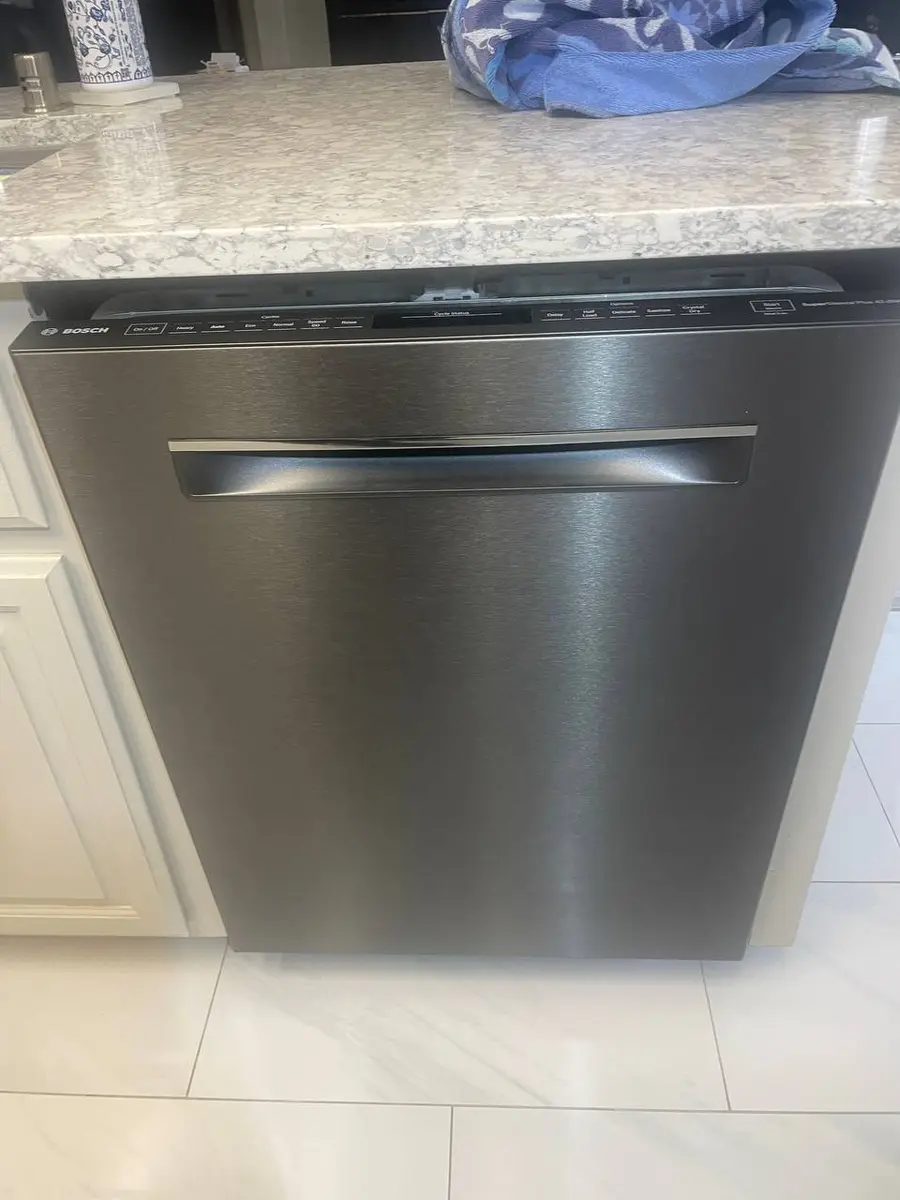
Maytag Dishwasher Not Drying Dishes — Causes and Solutions
Wet dishes emerging from a completed Maytag dishwasher cycle are a common frustration, but the cause isn't always a component failure. Maytag MDB-series dishwashers use a heated dry system (exposed heating element at the tub floor) combined with the thermal mass of the stainless steel interior tub to provide drying through both direct heat and condensation transfer. Understanding how this system works reveals why plastic items are always harder to dry and why certain failures produce partial drying rather than complete failure.
The drying sequence on Maytag dishwashers works through two mechanisms: the heating element raises the air temperature inside the tub (causing water to evaporate from dish surfaces), and the stainless steel tub walls — being cooler than the heated air — attract moisture through condensation (water migrates from warm dishes to the cooler tub walls and drains down). This dual mechanism is why the stainless steel interior is a functional component of the drying system, not merely a durability upgrade. Plastic items dry poorly in any dishwasher because they lack the thermal mass to stay warm — they cool quickly and condensation forms on them rather than migrating away.
Normal vs. Abnormal Drying Performance
Before troubleshooting, confirm you have an actual failure:
Normal (not a failure):
- Plastics (containers, lids, measuring cups) are wet — this is physics, not a malfunction
- Items concave-up (bowls, cups) hold pooled water — loading issue
- A few water drops on the door inner panel — condensation collects here normally
Abnormal (indicates component failure):
- All ceramic and glass items are wet (these should dry effectively)
- The dishwasher interior is not warm when you open it immediately after the cycle
- The Heated Dry indicator didn't illuminate during the cycle
- Water is pooled in the bottom of the tub after the dry phase
Do You Have the Right Tools?
Water pressure gauge ($60), spray arm tester, float switch multimeter ($85), and drain inspection camera. Our technician arrives with $15K+ in professional tools — your diagnostic is free.
Licensed & Insured · 90-Day Warranty · Same-Day Service
Causes of Poor Drying in Maytag Dishwashers
1. Heating Element Failure (30% of drying complaints)
The heating element in Maytag MDB dishwashers is an exposed resistive element (similar to an oven bake element, but smaller) mounted at the bottom of the tub. It serves dual duty: heating wash water during certain cycles AND providing radiant heat during the dry phase. When it fails, the dry phase runs (timer continues) but produces no heat.
You can test this without tools: immediately after a cycle with Heated Dry selected, open the door. The interior should feel distinctly warm (110-140°F air temperature). If it feels room temperature, the element didn't activate. A visual inspection of the element may reveal blistering, visible breaks in the element surface, or discoloration — all indicators of failure.
DIY Difficulty: Moderate Parts Cost: $35–$75 (heating element, model-specific) Professional Repair Cost: $130–$235
Repair Steps:
- Disconnect power at the breaker. Use a multimeter to test the element: access the element terminals beneath the tub via the kick panel. Set the meter to resistance (ohms) and touch probes to both element terminals. Normal reading: 15-30 ohms. Infinite resistance (OL) = open element (failed). Near-zero = shorted element (also failed, and likely tripped the thermal fuse).
- If confirmed failed, disconnect the two wire connectors from the element terminals.
- Inside the tub, note the element mounting nuts — these are visible at the tub floor where the element passes through. Using a 3/8" socket or wrench, remove the mounting nuts from inside the tub (you may need to hold the element terminal from spinning on the outside simultaneously).
- Pull the element up and out through the tub floor.
- Feed the new element through the same holes, ensuring the rubber grommets/gaskets seat properly to prevent leaking.
- Tighten the mounting nuts inside the tub (do not over-torque — the bracket can crack).
- Reconnect the wires beneath, restore power, and run a heated dry test.
2. Rinse Aid Depleted or Dispenser Malfunction (25% of drying complaints)
Rinse aid (such as Jet-Dry or Maytag-branded rinse aid) dramatically improves drying by reducing water surface tension. Without rinse aid, water sheets across dish surfaces and pools rather than beading up and running off. The difference between "with" and "without" rinse aid is visible on every glass and ceramic item in the load.
The rinse aid dispenser on Maytag MDB models has a dial to control the amount dispensed per cycle and a clear window or indicator to show the fill level. If the dispenser mechanism fails (common after 6-8 years), rinse aid is not released even when the reservoir is full.
Signs: Spotting or filming on glasses, water pooling on flat items that previously dried well, but the dishwasher does get warm (confirming the element works).
DIY Difficulty: Easy Parts Cost: $0 (refill) or $25–$60 (dispenser replacement) Professional Repair Cost: $89–$155
Repair Steps:
- Check the rinse aid reservoir level through the indicator window on the inner door. If empty, refill and test over the next 3-4 cycles.
- If the reservoir is full but drying is poor: the dispensing mechanism may have failed. Open the dishwasher mid-cycle (during the final rinse phase) and check whether the rinse aid cap area is wet with fresh rinse aid. If dry despite a full reservoir, the dispenser isn't releasing.
- To replace the dispenser: open the inner door panel (Torx T20 screws). The dispenser is mounted inside the door with 2-3 screws and a wiring connector for the cycle-release mechanism.
- Remove the old dispenser, transfer the rinse aid to the new unit, mount, and reconnect.
- Set the dispenser dial to the midpoint initially, then adjust up if drying is still insufficient after 3 cycles.
3. Vent and Fan Assembly Issue (20% of drying complaints)
Some Maytag MDB models include a vent opening (with or without a fan) at the top of the door that opens during the dry phase to allow steam to escape. If this vent sticks closed, moisture stays trapped inside the tub and condensation drying cannot occur effectively — the air saturates with moisture and can hold no more water from the dishes.
On models with a fan-assisted vent, a small fan motor pushes moist air out through the vent. If this motor fails, the vent may still open but steam escape is passive rather than active.
Signs: Door and tub are excessively steamy when you open after the cycle (more steam than usual), and the vent area at the top of the door shows no signs of warm air movement during dry phase.
DIY Difficulty: Moderate Parts Cost: $20–$55 (vent assembly) or $35–$75 (fan motor) Professional Repair Cost: $110–$195
Repair Steps:
- During a dry cycle, feel the vent area at the top of the door. You should detect warm moist air escaping. If the vent area is sealed (no air movement), the vent door mechanism has stuck.
- Disconnect power. Open the door and access the inner door panel (Torx T20 screws).
- Locate the vent assembly at the top of the door — it includes a wax motor or solenoid that opens the vent flap at the correct cycle point. Test the actuator with a multimeter for proper resistance.
- If the actuator is functional but the flap is stuck, clean the hinge points of mineral/grease buildup.
- If the fan motor is present and not running (listen during dry phase — you should hear a faint whir), test the motor winding resistance. Replace if open circuit.
- Reassemble and test with a heated dry cycle.
4. High-Limit Thermostat Tripped or Failed (15% of drying complaints)
A high-limit thermostat protects against overheating by cutting power to the heating element if temperature exceeds a safety threshold. If this thermostat has drifted (opening at lower-than-designed temperature), the element cuts off before the tub reaches proper drying temperature. The element activates briefly (you may notice initial warmth) but shuts off prematurely.
DIY Difficulty: Moderate Parts Cost: $12–$35 (thermostat) Professional Repair Cost: $95–$170
Repair Steps:
- Disconnect power. Access beneath the tub via the kick panel.
- Locate the high-limit thermostat — mounted on the tub bottom near the heating element connection. It's a small disc with two wires.
- Test continuity at room temperature — it should show continuity (closed circuit). If open at room temperature, it has failed in the open state and is preventing element activation.
- Replace by disconnecting wires and releasing the mounting clip. Install the new thermostat in the same position and reconnect wires.
- Run a heated dry cycle and verify the element stays active throughout the full dry phase (interior should reach 140°F+).
5. Control Board Not Activating Dry Phase (10% of drying complaints)
The control board relay that sends power to the heating element can fail while all other cycle phases operate normally. The dishwasher washes and drains correctly but the dry phase produces no heat because the relay never closes.
Signs: All wash functions normal, but Heated Dry never activates (interior cold after cycle, element tests good with multimeter but never receives power during cycle).
DIY Difficulty: Advanced Parts Cost: $120–$295 (control board) Professional Repair Cost: $225–$475
Repair Steps:
- Confirm the element is good (resistance test = 15-30 ohms between terminals).
- With power connected and a cycle running in the dry phase, carefully test for 120V AC at the element terminals beneath the tub. No voltage during the dry phase with a good element = board relay failure.
- Replace the control board per the standard procedure (document all wire connections, swap board).
Improving Drying Performance (Even With Working Components)
Maytag's drying system has inherent limitations that loading technique can mitigate:
- Angle everything — items should tilt so water runs off rather than pooling. Concave items face down.
- Don't crowd — air circulation between items allows heat to reach all surfaces.
- Plastics on top rack — keeping them farther from the element reduces re-condensation (warm air rises past them rather than pooling around them on the lower level).
- Use rinse aid at maximum setting for Sacramento hard water — hard water minerals dramatically reduce sheeting action.
- Select Heated Dry explicitly — some cycles default to "energy saver" dry (no heat) unless Heated Dry is manually selected.
- Open the door immediately after the cycle completes — the temperature differential between the tub and room air accelerates final moisture evaporation. A closed tub equalizes temperature and trapped moisture resettles.
Same-Day Appliance Repair
Fixed or It's Free
$89 → $0 Service Call & Diagnosis — offer ends May 25
Safety First — Know the Risks
Live 120V wiring in a wet environment is one of the most dangerous DIY scenarios. Water + electricity = serious shock risk. Our techs are licensed and insured — let them handle the risk.
Licensed & Insured · 90-Day Warranty · Same-Day Service
FAQ
Q: My Maytag dishwasher used to dry perfectly but now leaves everything wet. What changed?
If the decline was sudden, suspect the heating element or thermostat. If it was gradual over months, rinse aid depletion or slow mineral buildup on the element surface (insulating it and reducing radiant output) are the likely causes. Clean the element surface with vinegar and a non-abrasive pad if mineral coating is visible.
Q: Are Maytag dishwashers supposed to dry better than other brands because of the stainless tub?
Yes — the stainless steel tub is functionally part of the drying system. Its thermal mass stays warm longer and its smooth surface sheds condensation efficiently (unlike textured plastic tubs that trap water droplets). However, it still cannot overcome the physics of plastic items, concave shapes holding water, or a depleted rinse aid supply.
Q: Should I use the Heated Dry option on every cycle? Does it waste energy?
Heated Dry adds approximately $0.05-$0.08 per cycle in electricity cost (the element runs 20-30 minutes at 1000-1200W). Whether to use it depends on whether you plan to unload immediately — if dishes sit in a closed tub overnight, Heated Dry prevents stale moisture odor. If you open the door immediately after the cycle, you can save energy by skipping it and letting residual heat plus door-open airflow handle drying.
Maytag dishwasher leaving dishes consistently wet? Our technicians test element output, thermostat function, and vent operation to identify exactly which drying component needs service. Book a repair →