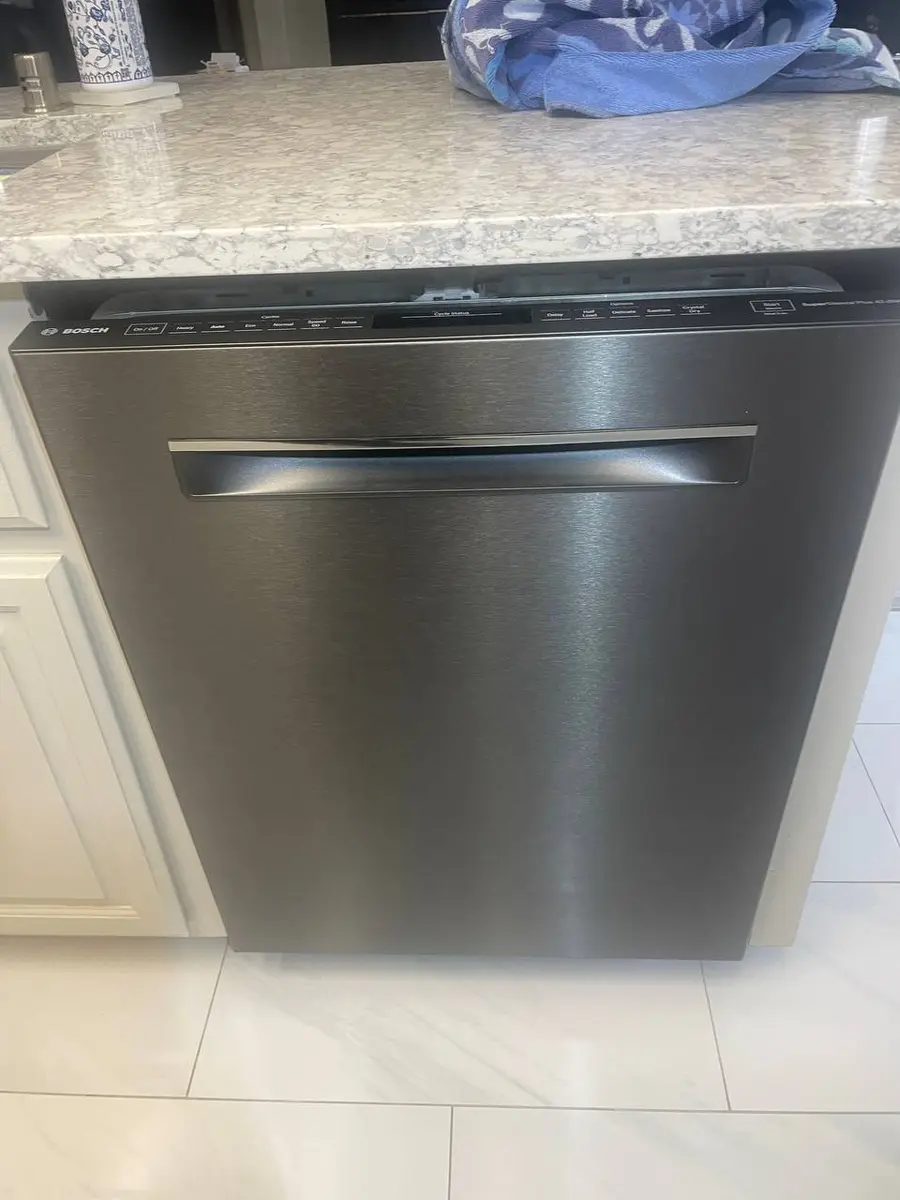
Maytag Dishwasher Making Loud Noise — Identifying the Source
Maytag dishwashers are inherently louder than filter-only designs because of the 4-blade stainless steel chopper assembly that actively grinds food waste during every wash cycle. This mechanical grinding is a normal operating sound — a low rhythmic crunching during the wash phase that indicates the chopper is functioning correctly. However, when the noise changes character, increases in volume, or occurs during cycle phases where it shouldn't, you have a mechanical issue developing.
Understanding what normal sounds like on your MDB-series Maytag is essential before diagnosing a problem. During a normal cycle, you should hear: the fill valve hissing during fill (30-60 seconds), the motor humming and water swishing during wash (this is the loudest normal phase), intermittent chopper grinding (food particle processing), the drain pump whirring during drain phases (higher pitched than the wash motor), and near-silence during heated dry except for occasional element clicking.
Noise Categories and Their Meanings
Before troubleshooting, identify which noise type matches your experience:
- Grinding/crunching (during wash): Chopper blade obstruction, worn chopper bearing, or foreign object in sump
- Grinding (during drain): Debris in drain pump impeller or failed pump bearing
- Humming without water movement: Motor running but impeller detached or pump seized
- Banging/knocking (intermittent): Spray arm hitting obstruction, loose item in rack, or water hammer in supply line
- High-pitched whining/squealing: Motor bearing failure, worn pump seal, or spray arm bushing friction
- Buzzing (brief, at cycle start): Normal — this is the water inlet valve solenoid opening. Continuous buzzing indicates valve failure.
- Rattling during drain: Check valve flapping or loose drain hose vibrating against cabinet
Do You Have the Right Tools?
Water pressure gauge ($60), spray arm tester, float switch multimeter ($85), and drain inspection camera. Our technician arrives with $15K+ in professional tools — your diagnostic is free.
Licensed & Insured · 90-Day Warranty · Same-Day Service
Causes Ranked by Service Frequency
1. Chopper Assembly Obstruction or Wear (30% of noise complaints)
The 4-blade stainless steel chopper (part W10083957) in Maytag dishwashers spins at high speed to macerate food particles before they reach the drain pump. When non-food items enter the chopper zone — glass fragments, broken ceramic, fruit pit fragments, or detergent pod mesh — the sound changes dramatically from the normal rhythmic grinding to a harsh metallic scraping or rattling.
Additionally, the chopper bearing (integrated into the assembly) wears over time, particularly in households running PowerBlast cycles frequently. A worn bearing produces a lower-pitched grinding that is present throughout the entire wash phase rather than intermittently.
DIY Difficulty: Moderate Parts Cost: $25–$55 (full chopper assembly W10083957) Professional Repair Cost: $110–$195
Repair Steps:
- Cancel any active cycle and disconnect power at the breaker.
- Remove the lower rack, lower spray arm (quarter-turn counterclockwise), and the Dual Power Filtration assembly (cylindrical filter + flat screen) to expose the sump area.
- Shine a flashlight into the sump opening and inspect around the chopper blades. Look for glass shards, broken dish fragments, bones, or metallic objects wedged between the blades and housing.
- Using wooden chopsticks or a plastic tool, attempt to dislodge any visible debris. Try rotating the chopper manually — it should spin with minimal resistance and no scraping sound.
- If the chopper spins freely with no debris visible but noise persists, the internal bearing is worn. This requires replacing the entire chopper assembly (bearing is not separately serviceable).
- To replace: access from beneath through the kick panel, or if the assembly is sump-accessible on your model, remove the retaining hardware visible in the sump cavity (consult the tech sheet behind the kick panel or inside the door for your specific MDB model).
- Install the new assembly, reassemble filters and spray arm, and run a test cycle.
2. Wash Motor Bearing Failure (25% of noise complaints)
The main circulation motor drives both spray arm water circulation and the chopper assembly. When motor bearings fail, the sound progresses from a high-pitched whine during startup to a continuous grinding or growling throughout operation. This is distinct from chopper noise because motor bearing noise continues even during the drain phase (when the chopper is not active) if the motor remains energized.
Maytag motors are warranted for 10 years on parts (the limited warranty explicitly covers the motor). If your unit is within this window, contact Maytag directly for a warranty parts claim before paying retail for the motor.
DIY Difficulty: Advanced — motor replacement requires tipping the unit Parts Cost: $95–$220 (motor assembly, covered under 10-year warranty if applicable) Professional Repair Cost: $225–$400
Repair Steps:
- Confirm motor bearing failure vs. chopper noise: enter diagnostic mode (three-button sequence) and advance to the drain test step. If the grinding persists during drain pump activation (when the wash motor should be off), the drain pump is the issue, not the wash motor. If grinding occurs only during wash motor activation, motor bearings are confirmed.
- Disconnect power and water supply. Remove the kick panel and disconnect drain hose and supply hose.
- With a helper, tip the dishwasher onto its back (protect the floor with moving blankets).
- The motor mounts to the underside of the sump with 4 bolts in a square pattern. Disconnect the wiring connector and remove the mounting bolts.
- Pull the motor straight down — the shaft separates from the pump impeller (press-fit connection on most models).
- Install the new motor, aligning the shaft with the impeller. Torque bolts evenly in a cross pattern.
- Right the dishwasher, reconnect all lines, and test.
3. Spray Arm Obstruction (18% of noise complaints)
A rhythmic knocking or thumping during the wash cycle almost always indicates a spray arm hitting something during rotation. Common culprits: tall items in the lower rack extending above the rack line, a misaligned upper rack dropping low enough for the upper spray arm to contact dishes, or the spray arm itself loose on its hub and wobbling during rotation.
On Maytag MDB dishwashers, the lower spray arm mounts on a center hub and should spin freely with no up-down play. If the hub is worn, the arm tilts during operation and contacts items near the center of the lower rack.
DIY Difficulty: Easy Parts Cost: $0 (rearranging load) or $15–$35 (spray arm/hub replacement) Professional Repair Cost: $89–$145
Repair Steps:
- Verify it's a spray arm issue: open the door mid-cycle (hold Cancel first on models that don't auto-pause). Check for water splash patterns indicating the arm struck something — you'll see concentrated water deposits on specific items.
- Remove the lower rack and spin the lower spray arm by hand. It should rotate freely and remain flat (parallel to the tub floor). If it wobbles or has vertical play, the hub or arm bushing is worn.
- Check the upper spray arm similarly — remove the upper rack to access it. Spin and verify no wobble.
- If the arm is structurally sound, rearrange the load: ensure no items extend above the rack tines where they could block arm rotation. Sheet pans, cutting boards, and large plates in the lower rack are the most common blocking items.
- If hub wear is confirmed, replace the arm assembly (includes the hub bushing). The lower arm lifts straight up after a counterclockwise twist; the upper arm unscrews from its feed tube.
4. Drain Pump Noise (15% of noise complaints)
The drain pump activates during mid-cycle drains (between wash and rinse) and the final drain. It's a high-pitched whir that lasts 1-2 minutes. When the pump impeller is damaged or debris has bypassed the filtration system and lodged in the pump housing, the sound becomes a loud grinding, rattling, or buzzing during every drain phase.
DIY Difficulty: Moderate Parts Cost: $45–$85 (drain pump WPW10348269) Professional Repair Cost: $140–$250
Repair Steps:
- Confirm drain pump vs. motor: noise during the drain phase only (not during wash) points to the drain pump. Use diagnostic mode to isolate — the drain test activates only the drain pump.
- Disconnect power. Remove the kick panel and locate the drain pump at the left side of the motor assembly.
- Squeeze the spring clamp on the rubber boot connecting to the pump and remove the boot to access the pump inlet. Inspect for debris (glass, bones, label fragments) inside the pump housing.
- If debris is present, clear it and reassemble. Test.
- If clear but noise persists, the pump impeller or bearing has failed. Twist the pump counterclockwise to release from its mount, disconnect the electrical connector, and install the replacement pump (WPW10348269, same across all Whirlpool Corporation brands).
- Reconnect boot with clamp, reconnect electrical, run a drain test.
5. Water Inlet Valve Buzzing (7% of noise complaints)
A loud buzzing during the fill phase (first 60-90 seconds of a cycle) indicates the water inlet valve solenoid is struggling. Some buzz is normal — it's a solenoid-operated valve, and a faint hum during fill is expected. Loud buzzing, especially accompanied by slow fill or no fill, indicates the valve is partially clogged with mineral scale or the solenoid is failing.
DIY Difficulty: Moderate Parts Cost: $30–$65 (inlet valve assembly) Professional Repair Cost: $110–$185
Repair Steps:
- Confirm the timing: the noise occurs only during the first 60-90 seconds when you hear water entering the tub. This is definitively the inlet valve.
- Disconnect power and water supply. Remove the kick panel.
- Disconnect the water supply hose from the valve. Inspect the valve inlet screen — a small mesh filter at the inlet port. If clogged with scale or debris, clean with vinegar and a small brush. This alone often resolves the buzzing.
- If the screen is clean but buzzing persists, the valve solenoid is failing. Disconnect the electrical connector and the internal fill hose, remove the mounting screw, and install the replacement valve.
- Reconnect all lines, restore water, and test. The fill should be quiet (faint hum acceptable) and complete within 90 seconds.
6. Water Hammer in Supply Line (5% of noise complaints)
A loud bang or thump at the beginning or end of the fill cycle is water hammer — a pressure surge in the supply pipe when the inlet valve opens or closes suddenly. This is not a dishwasher failure but a plumbing issue amplified by the dishwasher's solenoid valve.
DIY Difficulty: Easy to Moderate Parts Cost: $15–$40 (water hammer arrestor) Professional Repair Cost: $75–$150
Repair Steps:
- Confirm water hammer: the noise is a single loud thump coinciding exactly with fill start or fill stop — not a continuous noise during operation.
- Install a water hammer arrestor on the hot water supply line beneath the sink. These are small devices (mini expansion chambers) that screw onto the supply line ahead of the dishwasher connection.
- Alternatively, slightly close the supply valve (not fully shut, just reduce flow) — reducing flow rate reduces the pressure surge when the valve cycles.
When Noise Indicates Urgent Repair
- Grinding + burning smell = Motor bearing failure with overheating. Stop use immediately.
- Loud continuous rattling from beneath = Drain pump impeller broken, fragments circulating. Continued use may damage the motor.
- Metal-on-metal scraping = Chopper blade contact with housing (blade bent or loose). Continued use destroys the sump housing.
Same-Day Appliance Repair
Fixed or It's Free
$89 → $0 Service Call & Diagnosis — offer ends May 25
Safety First — Know the Risks
Live 120V wiring in a wet environment is one of the most dangerous DIY scenarios. Water + electricity = serious shock risk. Our techs are licensed and insured — let them handle the risk.
Licensed & Insured · 90-Day Warranty · Same-Day Service
FAQ
Q: My Maytag dishwasher is louder during PowerBlast. Is that normal?
Yes. PowerBlast runs the motor at higher RPM and activates more aggressive spray patterns, producing noticeably louder wash noise. The chopper also works harder on PowerBlast because the cycle is designed for heavily soiled loads with more food debris to process. This is normal operational behavior.
Q: Is the chopper supposed to make noise?
Yes. A rhythmic crunching or grinding during the wash phase is the chopper processing food particles — this is the sound of the 4-blade stainless steel assembly doing its job. It's audibly different from the smooth swishing of water through spray arms. Concerning noises are metallic scraping, continuous loud grinding (vs. intermittent), or rattling that wasn't present in previous cycles.
Q: My dishwasher makes noise only at the end of the cycle. What is it?
End-of-cycle noise is typically the drain pump evacuating the final rinse water. A brief whirring sound lasting 1-2 minutes at cycle completion is normal. If this sound has become louder or includes grinding/rattling, the drain pump impeller needs inspection.
Unusual noise from your Maytag dishwasher? Our technicians diagnose and repair chopper assemblies, motors, and drain pumps on MDB-series machines. Schedule a diagnostic visit →