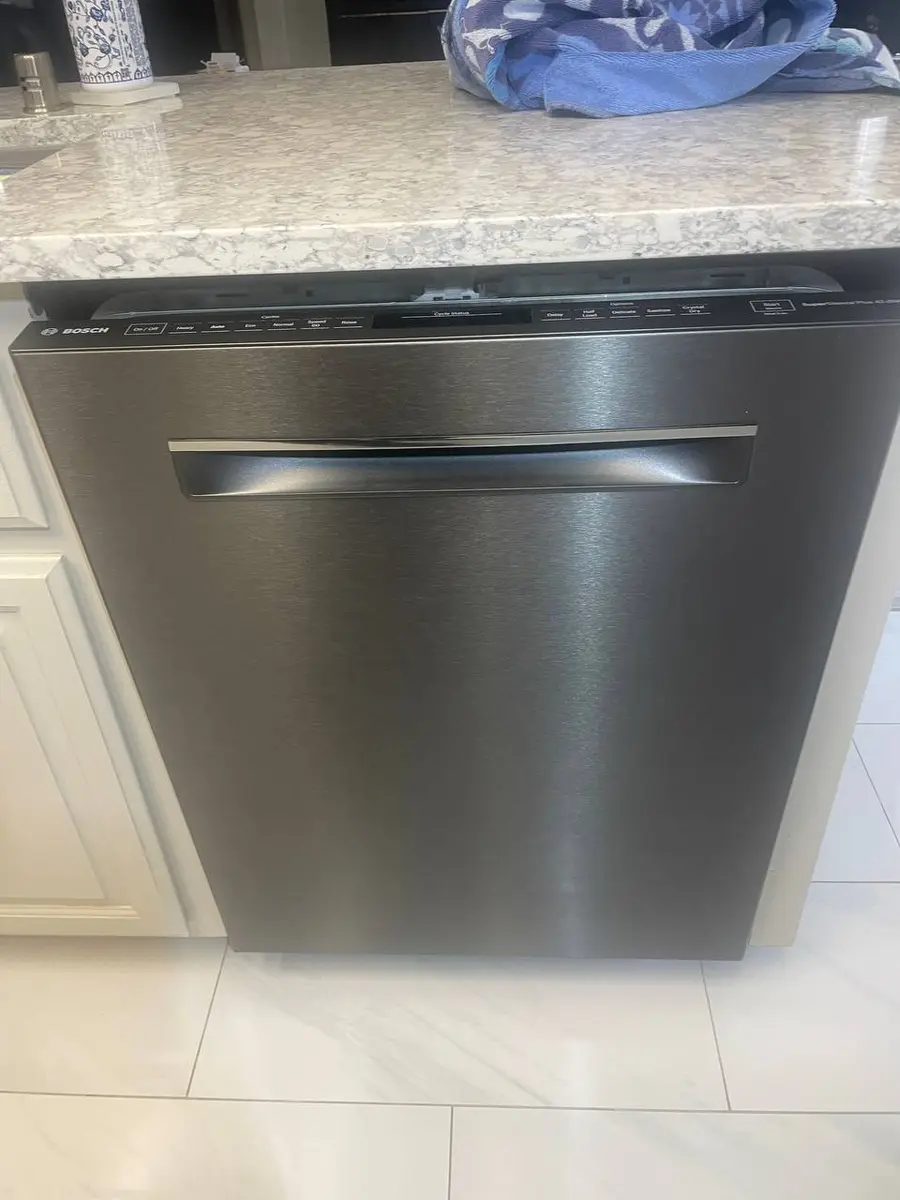
Maytag Dishwasher Heating Element Replacement Guide
The heating element in a Maytag dishwasher serves two critical functions: raising wash water temperature during the sanitize and heavy-duty cycles, and providing heat during the drying phase. It is a circular calrod-style element mounted at the bottom of the tub, visible as a loop of exposed metal when you open the door and look below the lower spray arm. On Maytag dishwashers with the stainless steel tub, the element works in conjunction with the condensation drying system — it heats the final rinse water to approximately 160 degrees F, then the stainless tub walls cool faster than the dishes, causing moisture to condense and drain.
How the Heating Element Functions in Maytag Dishwashers
The element is a resistive calrod that converts electrical energy to heat. It is controlled by a relay on the main control board and receives either 120V (standard models) or 240V (some commercial-grade Maytag models). The element activates during specific cycle phases: it may pre-heat incoming water if the supply temperature is below the target, it engages during the sanitize cycle to reach 150+ degrees F for NSF compliance, and it runs during the Heated Dry phase.
Maytag's stainless steel tub enhances the element's effectiveness during drying — stainless conducts heat away from the tub walls faster than plastic, promoting condensation. A failed element in a stainless tub Maytag still produces marginally acceptable drying through condensation alone, which can mask an element failure for weeks before the issue becomes obvious.
Do You Have the Right Tools?
Multimeter ($85), vacuum pump ($250), diagnostic software, and specialized hand tools. Our technician arrives with $15K+ in professional tools — your diagnostic is free.
Licensed & Insured · 90-Day Warranty · Same-Day Service
Signs the Heating Element Is Failing
- Dishes and glasses come out wet after the Heated Dry cycle — the element is not generating heat during the dry phase, though condensation drying still removes some moisture
- Sanitize cycle fails to reach temperature and flashes an error — the control board monitors water temperature and aborts the sanitize cycle if 150 degrees F is not reached within the allotted time
- Water feels lukewarm when opening the door mid-cycle — the element is not supplementing incoming water temperature, resulting in reduced cleaning effectiveness
- Visible damage to the element — black spots, blistering, cracks, or a broken section visible on the calrod loop at the tub bottom
- Tripping the kitchen circuit breaker during dishwasher operation — a short circuit in the element or its terminal connections can draw excessive current
Test the element before replacement: disconnect power, access the element terminals through the lower kickplate, and measure resistance with a multimeter. A good element reads 15–30 ohms. Infinite resistance (open circuit) confirms a burned-out element. Near-zero resistance indicates a short circuit that explains breaker trips.
Cost Breakdown
| Component | Typical Range |
|---|---|
| OEM heating element | $30–$80 |
| Whirlpool cross-reference element | $25–$70 |
| Element terminal nuts and insulators | $5–$10 |
| Professional labor | $100–$180 |
| Total DIY | $30–$90 |
| Total professional | $120–$350 |
The element itself is inexpensive. Labor cost reflects the need to access the element terminals from below and sometimes remove the lower spray arm assembly to extract the element from above.
Safety First — Know the Risks
Appliances involve high voltage (120-240V), pressurized water, gas lines, and chemical refrigerants. Over 400 DIY repair injuries are reported yearly. Our techs are licensed and insured — let them handle the risk.
Licensed & Insured · 90-Day Warranty · Same-Day Service
Step-by-Step Replacement
- Disconnect power at the breaker — the heating element carries line voltage and a shock hazard exists even when the dishwasher is off if power is connected
- Remove the lower kickplate (two quarter-inch hex screws) to access the element terminals underneath the tub
- Photograph the terminal connections — two wires attach with nuts to the element terminals protruding through the tub bottom
- Remove the wire nuts and disconnect the wires from the element terminals
- Remove the terminal lock nuts — these brass or plastic nuts thread onto the element posts from below, holding the element against the tub bottom with rubber gaskets
- From inside the tub, remove the lower dish rack and lower spray arm (it lifts or twists off) to access the element
- Lift the old element out through the tub — it loops around the sump area and may need to be flexed slightly to clear the spray arm mount
- Inspect the rubber gaskets on the terminal posts — replace them if compressed, cracked, or hardened (leaks at the terminal penetrations are common with reused gaskets)
- Insert the new element from inside the tub, threading the terminal posts down through the holes in the tub bottom
- From below, install new gaskets and terminal lock nuts — hand-tighten plus one-quarter turn, do not overtighten or the gaskets will deform and leak
- Reconnect the wires to the correct terminals and restore power
- Run a Sanitize cycle and verify the water reaches target temperature — open the door mid-cycle (carefully, hot steam) and check water temperature with a kitchen thermometer
Tools needed: Quarter-inch hex driver, adjustable wrench or pliers for terminal nuts, multimeter, Phillips #2 for spray arm removal on some models.
Element Failure and Water Temperature
The heating element is not the only factor in wash water temperature. Maytag dishwashers with a temperature boost feature use the element to raise incoming cold water by 20–30 degrees F. If your hot water heater is set to 120 degrees F (recommended for safety), the dishwasher element boosts this to 140–150 degrees F for effective cleaning. A failed element means the dishwasher washes at whatever temperature arrives from the supply — often producing greasy dishes and poor sanitation even though the spray arms work normally.
The Real Cost of DIY
Average DIY attempt: $150-400 in tools you may use once, plus the risk of further damage. Our diagnostic visit costs $0 — we find the problem and give you an honest quote.
Licensed & Insured · 90-Day Warranty · Same-Day Service
Sanitize Cycle and NSF Standards
Maytag dishwashers with the sanitize option must reach 150 degrees F in the final rinse to meet NSF/ANSI Standard 184. The control board monitors a thermistor in the sump and will abort the sanitize cycle if the target temperature is not reached. If your sanitize cycle fails consistently, the heating element is the most likely cause — but also check the thermistor, which can misread temperature and signal a false failure.
Same-Day Appliance Repair
Fixed or It's Free
$89 → $0 Service Call & Diagnosis — offer ends May 25
Maytag Dishwasher Platform and Parts Cross-Reference
Maytag dishwashers are built on the Whirlpool Corporation platform, sharing approximately 80 percent parts compatibility with Whirlpool, KitchenAid, and Amana dishwashers. The same component listed under the Whirlpool brand name is manufactured in the same factory to the same specifications — often at a lower retail price. When ordering any replacement part, search both the Maytag model-specific part number and the Whirlpool Corporation cross-reference number (W10 or WP prefix) for the best price.
Maytag dishwashers include features not found on standard Whirlpool models: the PowerBlast cycle delivers intensified spray pressure for heavily soiled loads, the Dual Power Filtration system adds an extra mesh filtration stage, and the stainless steel chopper blade grinds food waste rather than filtering it. These features may put additional stress on specific components compared to standard Whirlpool operation.
Don't Void Your Warranty
Opening your appliance yourself may void the manufacturer warranty. Our repair comes with a 90-day guarantee, and we document everything for warranty compliance.
Licensed & Insured · 90-Day Warranty · Same-Day Service
Warranty Coverage — Check Before Ordering Parts
Maytag offers a 10-year limited parts warranty on select dishwasher components including the chopper blade, racks, and stainless steel tub — significantly longer than standard Whirlpool coverage. Before purchasing any replacement part, check your model's warranty documentation. Filing a warranty claim could save you the entire parts cost. Contact Maytag directly or visit their warranty lookup page with your model and serial number.
Diagnostic Mode Access
Enter the Whirlpool-platform diagnostic mode by pressing the button sequence documented on the tech sheet label inside the console panel (visible when you open the door and look at the top edge). Diagnostic mode displays stored fault codes and real-time sensor readings, allowing you to pinpoint failures before ordering parts. This diagnostic system is identical across all Whirlpool Corporation brands.
Is It Worth Your Time?
The average DIY appliance repair takes 4-6 hours of research, troubleshooting, and parts ordering — with no guarantee of a correct diagnosis. Our technician diagnoses the issue in about 30 minutes — same-day appointments available.
Licensed & Insured · 90-Day Warranty · Same-Day Service
FAQ
How much does it cost to replace a Maytag Dishwasher Heating Element?
The OEM element costs $30–$80. Professional installation adds $100–$180. Total cost is $120–$350 with professional labor. DIY cost is $30–$90 including replacement gaskets.
Can I run my Maytag dishwasher without a working heating element?
Yes — the dishwasher will wash and rinse using incoming water temperature. Cleaning effectiveness decreases, the sanitize cycle will not function, and drying performance drops significantly. The dishwasher remains operational but at reduced performance.
Why does my Maytag dishwasher trip the breaker?
A heating element with a short circuit is the most common cause. Test the element for near-zero resistance with a multimeter. Other causes include a shorted wash motor or a failed control board relay.
How long does a dishwasher heating element last?
Typically 8–12 years. Hard water accelerates scale buildup on the element surface, which insulates the calrod and causes it to overheat and crack. Descaling the element annually with a vinegar rinse cycle extends its lifespan.
Need professional help with your Maytag Heating Element replacement? Our technicians service Maytag and all Whirlpool Corporation brands daily, with same-day availability and a 90-day labor warranty. Book a technician →